

Tested Applications
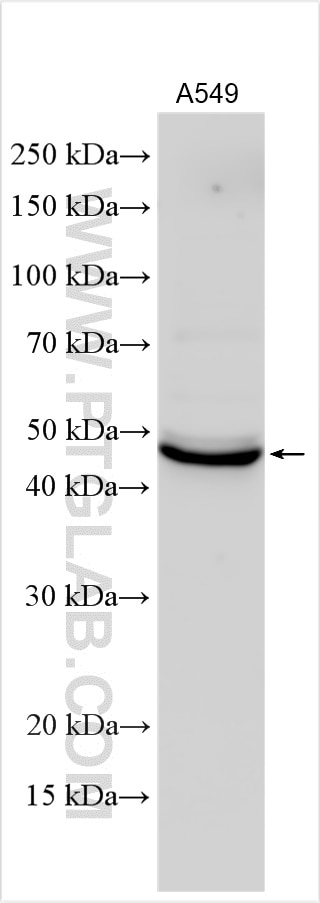
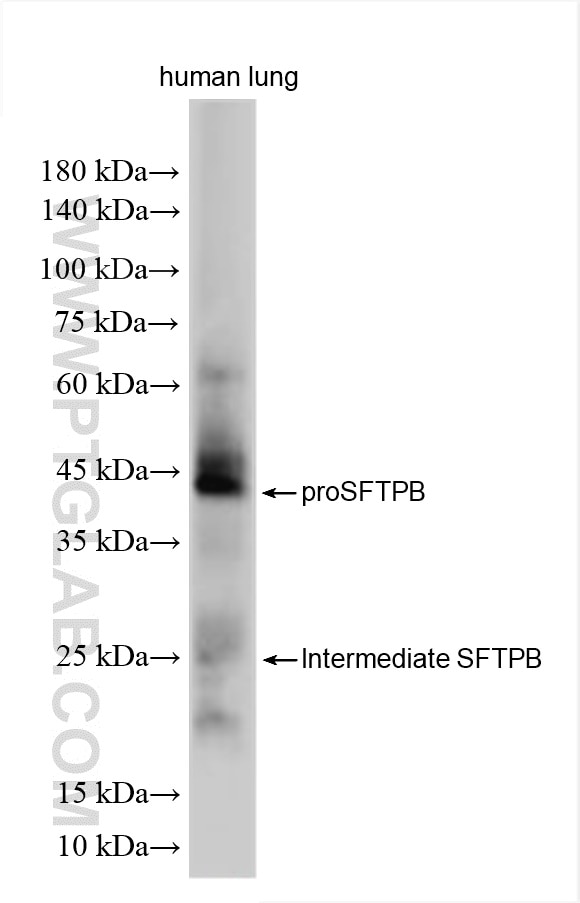
| Positive WB detected in | human lung tissue, A549 cells |
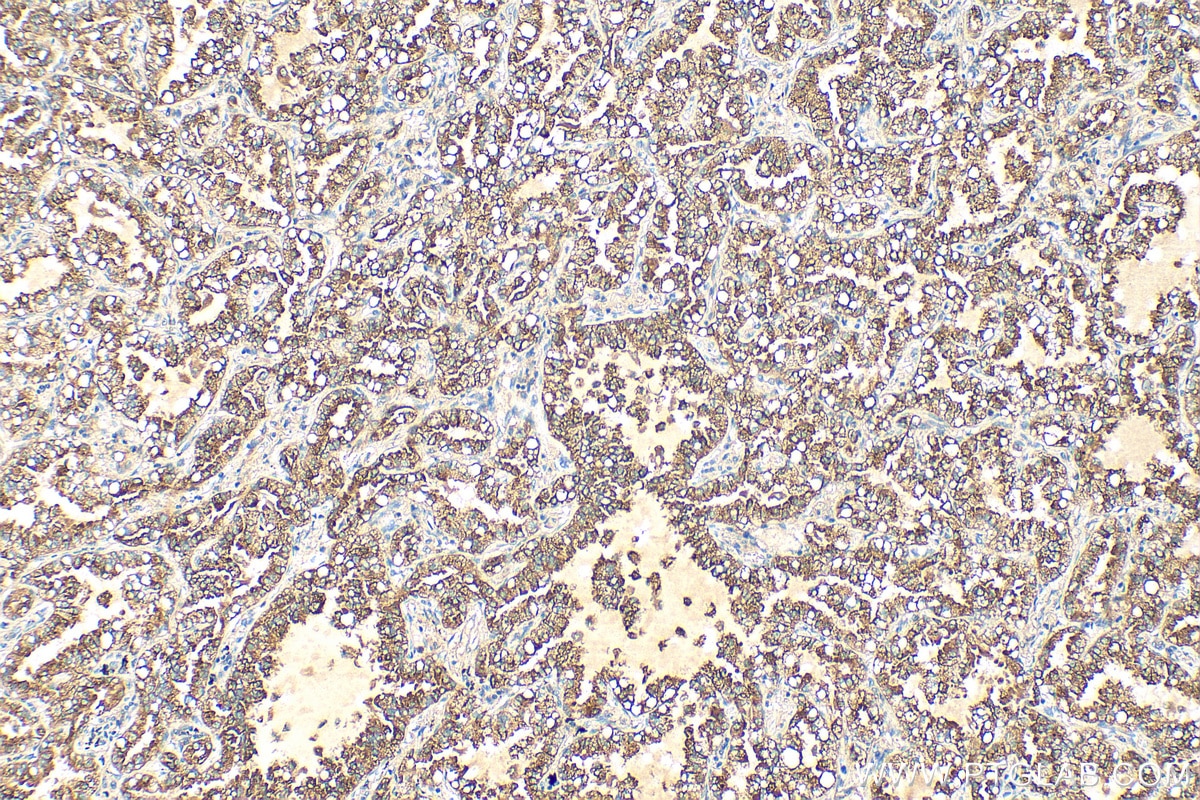
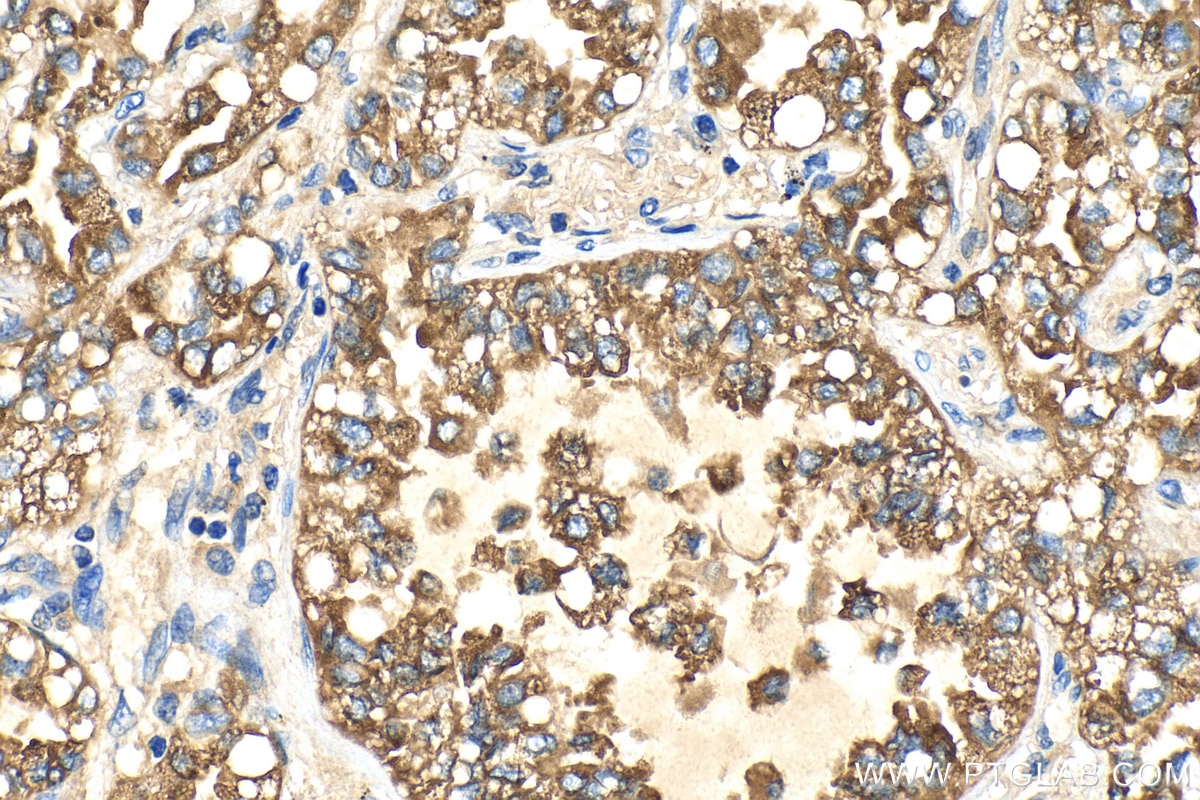
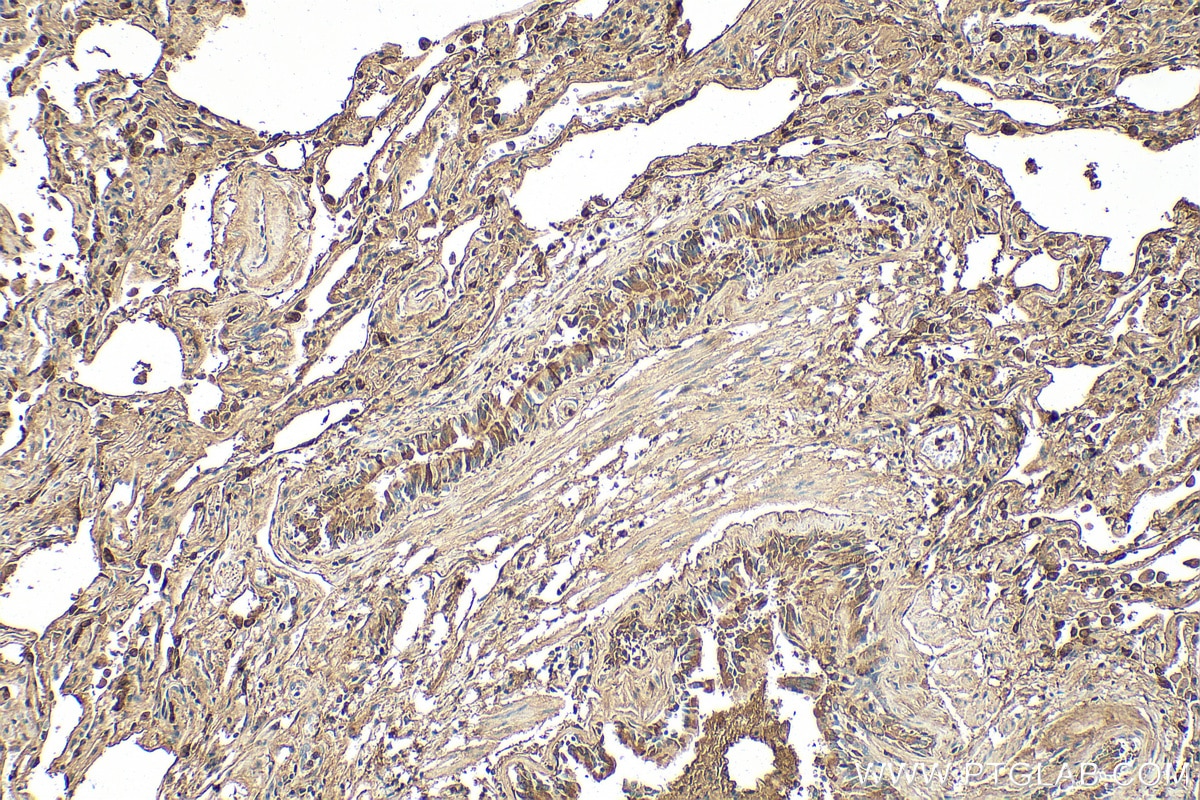
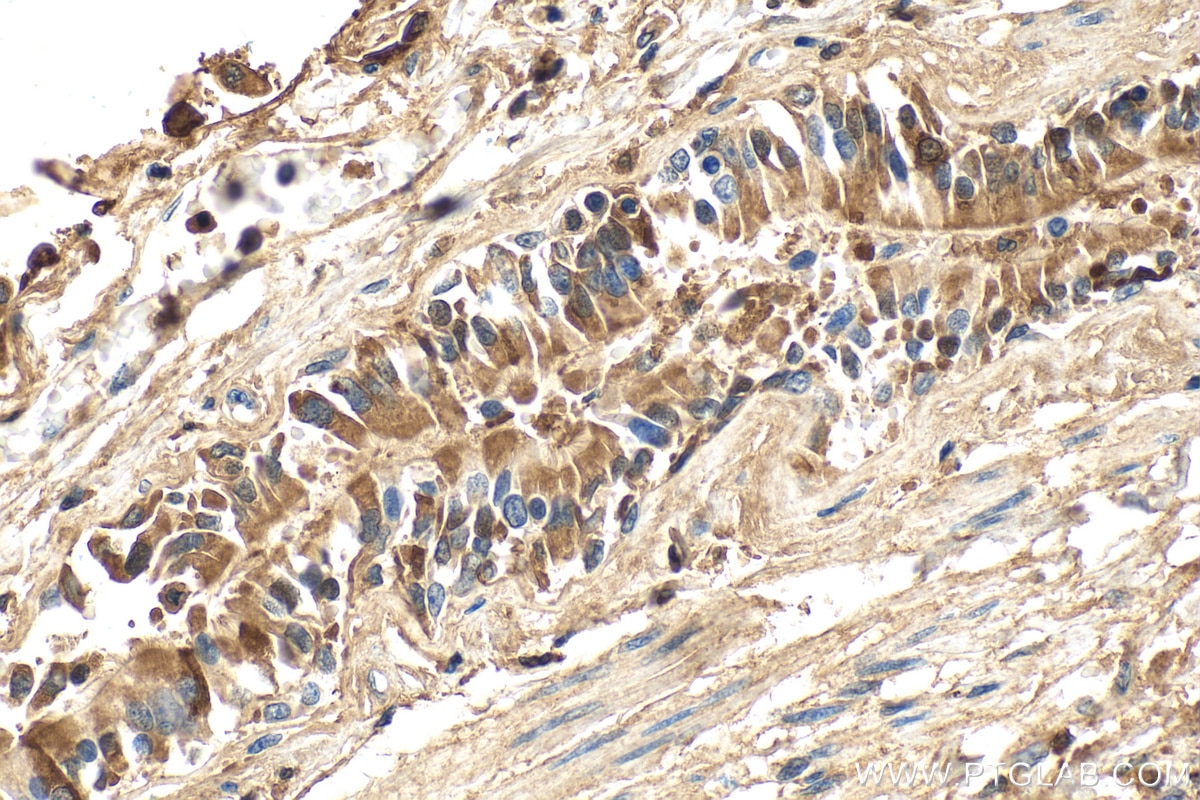
| Positive IHC detected in | human lung cancer tissue, human lung tissue Note: suggested antigen retrieval with TE buffer pH 9.0; (*) Alternatively, antigen retrieval may be performed with citrate buffer pH 6.0 |
Recommended dilution
| Application | Dilution |
|---|---|
| Western Blot (WB) | WB : 1:500-1:2000 |
| Immunohistochemistry (IHC) | IHC : 1:200-1:800 |
| It is recommended that this reagent should be titrated in each testing system to obtain optimal results. | |
| Sample-dependent, Check data in validation data gallery. | |
Product Information
13664-1-AP targets SFTPB in WB, IHC, IF, ELISA applications and shows reactivity with human samples.
| Tested Reactivity | human |
| Cited Reactivity | human, mouse |
| Host / Isotype | Rabbit / IgG |
| Class | Polyclonal |
| Type | Antibody |
| Immunogen |
CatNo: Ag4576 Product name: Recombinant human SFTPB protein Source: e coli.-derived, PGEX-4T Tag: GST Domain: 1-381 aa of BC032785 Sequence: MAESHLLQWLLLLLPTLCGPGTAAWTTSSLACAQGPEFWCQSLEQALQCRALGHCLQEVWGHVGADDLCQECEDIVHILNKMAKEAIFQDTMRKFLEQECNVLPLKLLMPQCNQVLDDYFPLVIDYFQNQTDSNGICMHLGLCKSRQPEPEQEPGMSDPLPKPLRDPLPDPLLDKLVLPVLPGALQARPGPHTQDLSEQQFPIPLPYCWLCRALIKRIQAMIPKGALAVAVAQVCRVVPLVAGGICQCLAERYSVILLDTLLGRMLPQLVCRLVLRCSMDDSAGPRSPTGEWLPRDSECHLCMSVTTQAGNSSEQAIPQAMLQACVGSWLDREKCKQFVEQHTPQLLTLVPRGWDAHTTCQALGVCGTMSSPLQCIHSPDL Predict reactive species |
| Full Name | surfactant protein B |
| Calculated Molecular Weight | 381 aa, 42 kDa |
| Observed Molecular Weight | 43 kDa |
| GenBank Accession Number | BC032785 |
| Gene Symbol | SFTPB |
| Gene ID (NCBI) | 6439 |
| RRID | AB_2185487 |
| Conjugate | Unconjugated |
| Form | Liquid |
| Purification Method | Antigen affinity purification |
| UNIPROT ID | P07988 |
| Storage Buffer | PBS with 0.02% sodium azide and 50% glycerol, pH 7.3. |
| Storage Conditions | Store at -20°C. Stable for one year after shipment. Aliquoting is unnecessary for -20oC storage. 20ul sizes contain 0.1% BSA. |
Background Information
Pulmonary surfactant-associated protein B(SFTPB) also named SFTP3, is a hydrophobic peptide that facilitates the formation and maintenance of a phospholipid-rich film at the alveolar air-liquid interface. SP-B is necessary for postnatal lung function. SFTPB as a risk biomarker for lung cancer. (PMID:36460583).
Protocols
| Product Specific Protocols | |
|---|---|
| IHC protocol for SFTPB antibody 13664-1-AP | Download protocol |
| WB protocol for SFTPB antibody 13664-1-AP | Download protocol |
| Standard Protocols | |
|---|---|
| Click here to view our Standard Protocols |
Publications
What published studies show
The SFTPB Polyclonal antibody (Cat# 13664-1-AP) has 8 citations published in journals including Experimental Hematology Oncology, Journal of Genetics and Genomics, Journal of Agricultural and Food Chemistry, International Journal of Molecular Sciences, International Immunopharmacology, Laboratory Investigation, Environmental Toxicology, and Heliyon. Research fields span lung cancer, pulmonary lipid homeostasis, blood-testis barrier disruption, embryonic lung development, tumor microenvironment, liquid biopsy, oxidative stress signaling, and disulfidptosis.
| Species | Application | Title |
|---|---|---|
Exp Hematol Oncol Downregulation of pro-surfactant protein B contributes to the recurrence of early-stage non-small cell lung cancer by activating PGK1-mediated Akt signaling
| ||
J Genet Genomics Tapt1 deficiency in mice impairs pulmonary lipid homeostasis and normal postnatal respiration by targeting ABCA3 for autophagy-lysosomal degradation. | ||
J Agric Food Chem Curcumin Alleviates Bisphenol A-Induced Blood-Testis Barrier Disruption in Mice by Targeting Surfactant Protein B (SFTPB) to Suppress Oxidative Stress-Activated NLRP3 Inflammasome.
| ||
Int Immunopharmacol The impact of POSTN on tumor cell behavior and the tumor microenvironment in lung adenocarcinoma | ||
Int J Mol Sci Kub3 Deficiency Causes Aberrant Late Embryonic Lung Development in Mice by the FGF Signaling Pathway. | ||
Lab Invest Liquid Biopsy in Lung Cancer: Nano-Flow Cytometry Detection of Non-Small Cell Lung Cancer in Blood |







