

Tested Applications
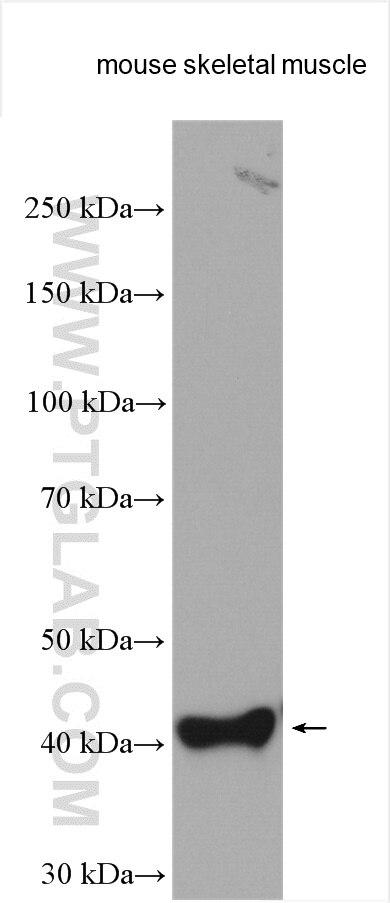
| Positive WB detected in | mouse skeletal muscle tissue |
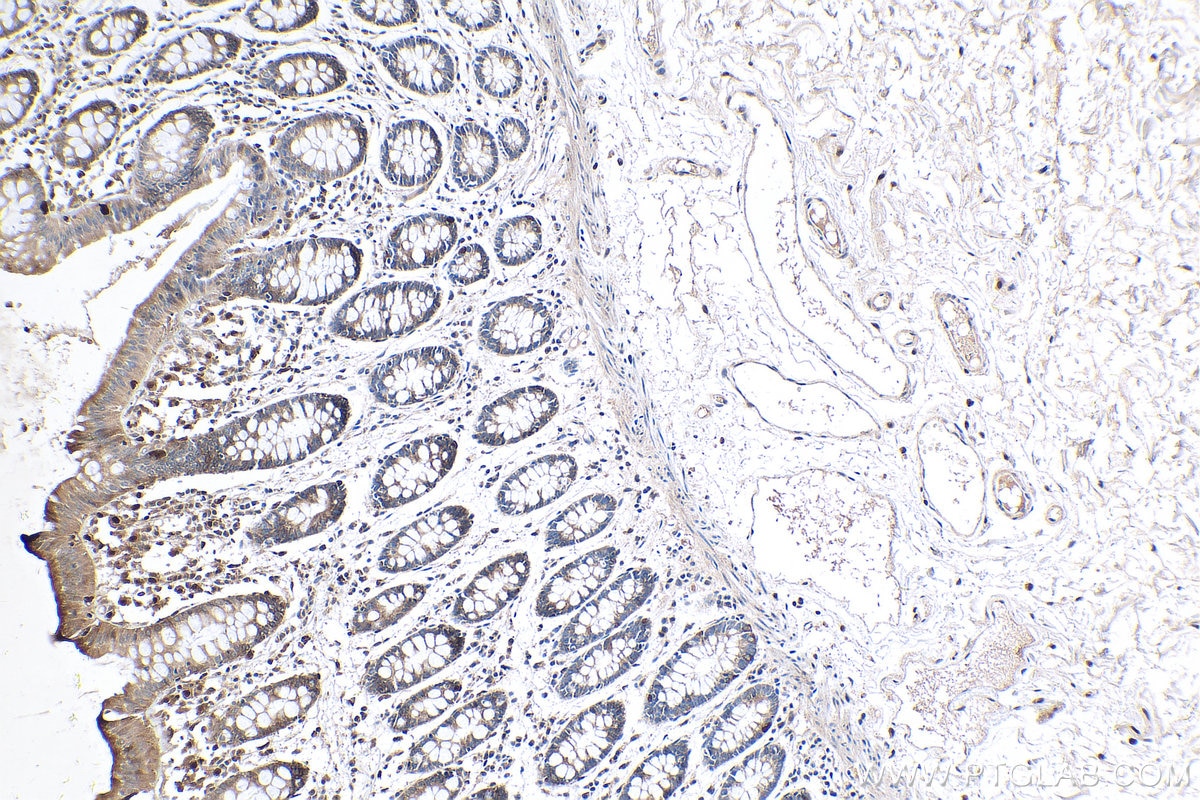
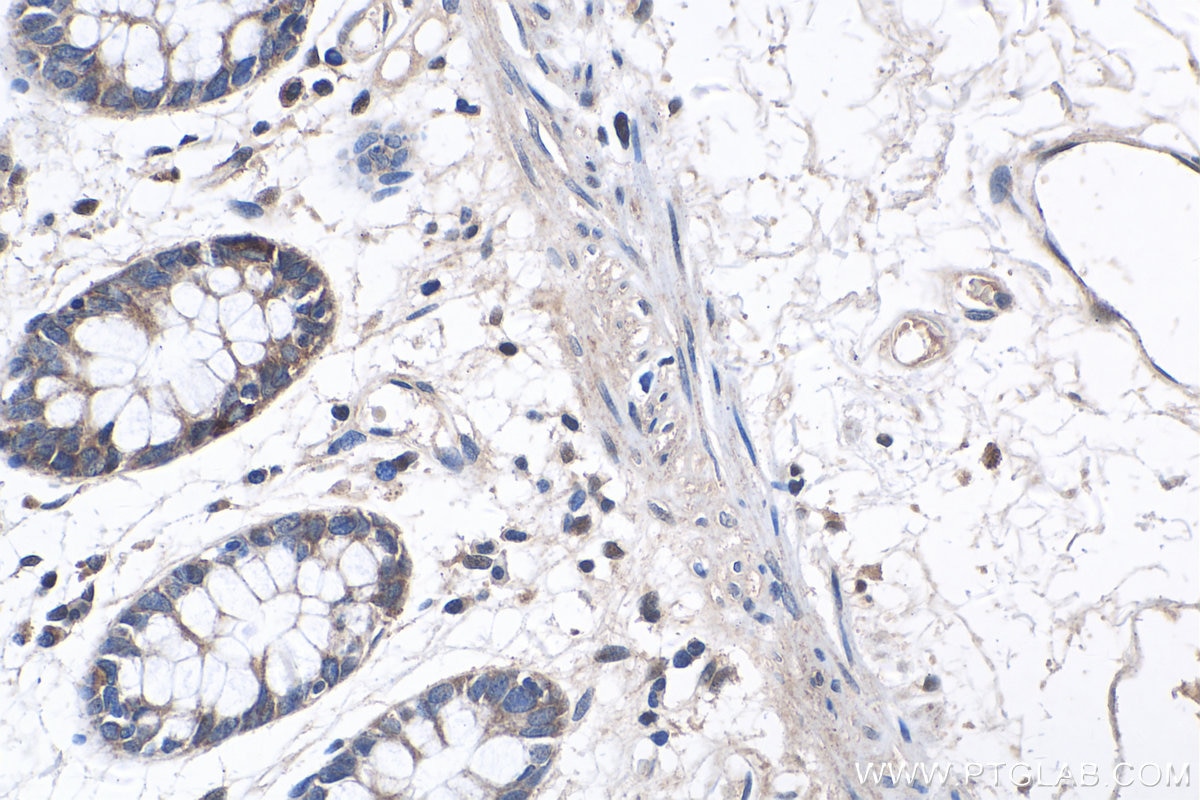
| Positive IHC detected in | human colon tissue Note: suggested antigen retrieval with TE buffer pH 9.0; (*) Alternatively, antigen retrieval may be performed with citrate buffer pH 6.0 |
Recommended dilution
| Application | Dilution |
|---|---|
| Western Blot (WB) | WB : 1:1000-1:6000 |
| Immunohistochemistry (IHC) | IHC : 1:250-1:1000 |
| It is recommended that this reagent should be titrated in each testing system to obtain optimal results. | |
| Sample-dependent, Check data in validation data gallery. | |
Product Information
11936-1-AP targets Beta Sarcoglycan in WB, IHC, IF, ELISA applications and shows reactivity with human, mouse, rat samples.
| Tested Reactivity | human, mouse, rat |
| Cited Reactivity | human, mouse, rat |
| Host / Isotype | Rabbit / IgG |
| Class | Polyclonal |
| Type | Antibody |
| Immunogen |
CatNo: Ag2533 Product name: Recombinant human SGCB protein Source: e coli.-derived, PGEX-4T Tag: GST Domain: 5-318 aa of BC020709 Sequence: AAAAAEQQSSNGPVKKSMREKAVERRSVNKEHNSNFKAGYIPIDEDRLHKTGLRGRKGNLAICVIILLFILAVINLIITLVIWAVIRIGPNGCDSMEFHESGLLRFKQVSDMGVIHPLYKSTVGGRRNENLVITGNNQPIVFQQGTTKLSVENNKTSITSDIGMQFFDPRTQNILFSTDYETHEFHLPSGVKSLNVQKASTERITSNATSDLNIKVDGRAIVRGNEGVFIMGKTIEFHMGGNMELKAENSIILNGSVMVSTTRLPSSSSGDQLGSGDWVRYKLCMCADGTLFKVQVTSQNMGCQISDNPCGNTH Predict reactive species |
| Full Name | sarcoglycan, beta (43kDa dystrophin-associated glycoprotein) |
| Calculated Molecular Weight | 318 aa, 35 kDa |
| Observed Molecular Weight | 45-48 kDa |
| GenBank Accession Number | BC020709 |
| Gene Symbol | Beta Sarcoglycan |
| Gene ID (NCBI) | 6443 |
| RRID | AB_10699870 |
| Conjugate | Unconjugated |
| Form | Liquid |
| Purification Method | Antigen affinity purification |
| UNIPROT ID | Q16585 |
| Storage Buffer | PBS with 0.02% sodium azide and 50% glycerol, pH 7.3. |
| Storage Conditions | Store at -20°C. Stable for one year after shipment. Aliquoting is unnecessary for -20oC storage. 20ul sizes contain 0.1% BSA. |
Background Information
SGCB is a 43-kD component of the dystrophin-glycoprotein complex.
Protocols
| Product Specific Protocols | |
|---|---|
| IHC protocol for Beta Sarcoglycan antibody 11936-1-AP | Download protocol |
| WB protocol for Beta Sarcoglycan antibody 11936-1-AP | Download protocol |
| Standard Protocols | |
|---|---|
| Click here to view our Standard Protocols |
Publications
What published studies show
The Beta Sarcoglycan Polyclonal antibody (Cat# 11936-1-AP) has 6 total citations across six journals: Phytomedicine, International Journal of Biological Macromolecules, Journal of Pharmaceutical and Biomedical Analysis, Pain Research and Management, Acta Histochemica, and Oncotarget. Research fields span diabetic cardiomyopathy and myocardial fibrosis, lung adenocarcinoma and mitophagy, chronic heart failure, pain management via TRPV1/TRPA1 pathways, bladder cancer progression, and obesity-related brown fat differentiation.
| Species | Application | Title |
|---|---|---|
Phytomedicine Cardioprotective effect of icariin against myocardial fibrosis and its molecular mechanism in diabetic cardiomyopathy based on network pharmacology: Role of ICA in DCM. | ||
Int J Biol Macromol Transmembrane protein 106C promotes lung adenocarcinoma progression through GSPT1-mediated compensatory mitophagy. | ||
J Pharm Biomed Anal Study on the mechanism of Xinmailong injection against chronic heart failure based on transcriptomics and proteomics | ||
Pain Res Manag Exploring the Analgesic Initiation Mechanism of Tuina in the Dorsal Root Ganglion of Minor CCI Rats via the TRPV1/TRPA1-cGMP Pathway | ||
Acta Histochem Exploring the oncogenic role of RGS19 in bladder cancer progression and prognosis | ||
Oncotarget Liraglutide suppresses obesity and induces brown fat-like phenotype via Soluble Guanylyl Cyclase mediated pathway in vivo and in vitro. |
Reviews
What customers say
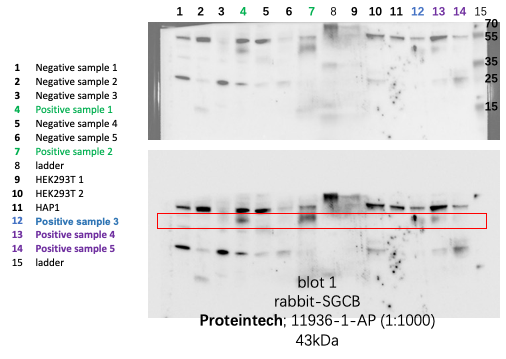
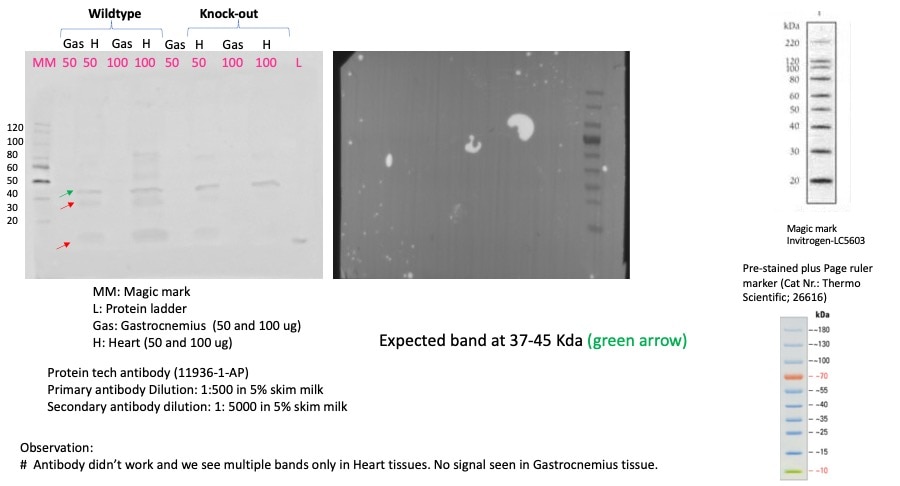
Both reviewers used this antibody for Western Blot and rated it 3 out of 5. One tested it at 1:1000 on primary muscle cells and HEK/HAP1 cells, noting that while bands of the expected size appeared in most positive samples, numerous nonspecific bands were also present, requiring further optimization. The other tested it at 1:500 on mouse cardiac and skeletal muscle tissues (50–100 µg protein per lane) and reported that expected bands were not consistently visible across all samples, with most observed bands being nonspecific. Overall, users indicate the antibody shows partial reactivity but suffers from significant background and nonspecific binding, suggesting dilution and protocol optimization may be necessary.
The reviews below have been submitted by verified Proteintech customers who received an incentive for providing their feedback.
Shushu (Verified Customer) (07-24-2025) | The antibody appears to work for the most part, as bands of the expected size are present in most of the positive samples. However, there are also numerous nonspecific bands of varying sizes. Optimization is needed.
 |
Venkata (Verified Customer) (01-03-2022) | I have loaded 50 and 100ug of protein in each of the lanes and the samples are from mouse heart and skeletal muscle tissues. I don't see expected bands in all the samples and most of the bands are non specific.
 |




