
Filter:

Able AI
What's the best dilution for SHISA8 in ?
Tested Applications
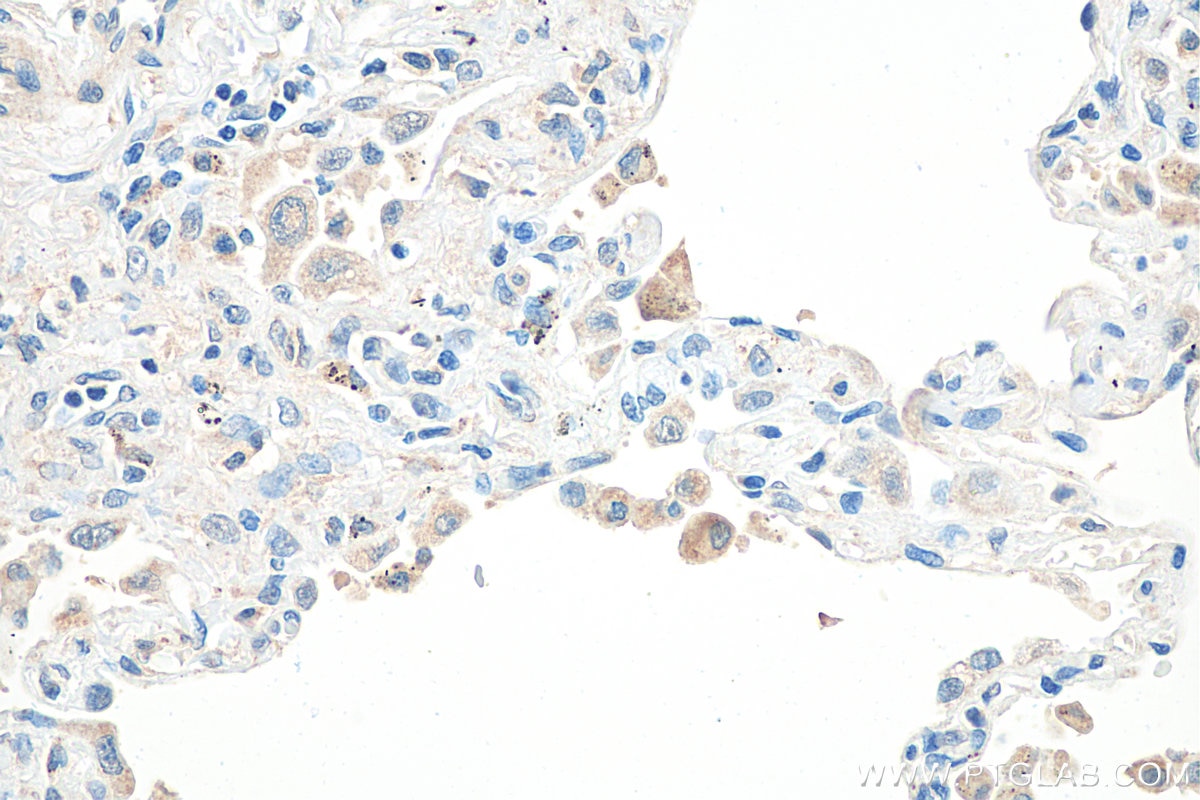
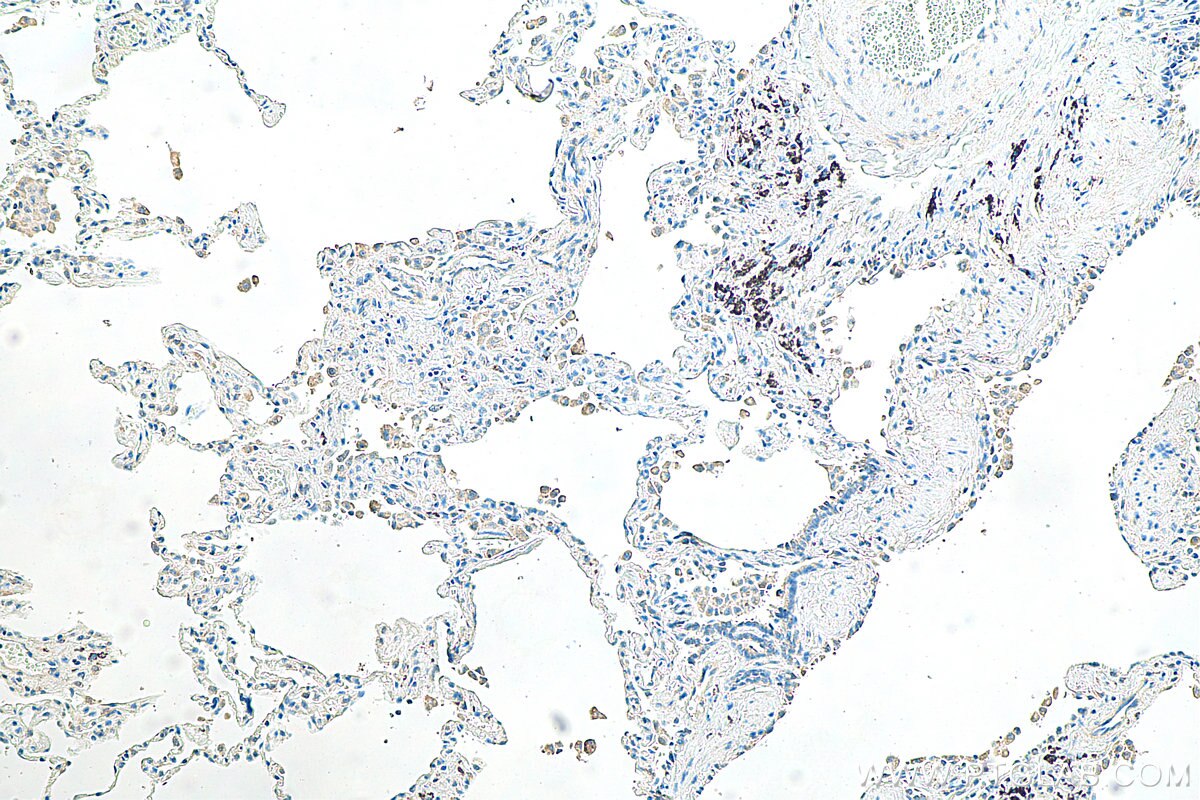
| Positive IHC detected in | human lung tissue Note: suggested antigen retrieval with TE buffer pH 9.0; (*) Alternatively, antigen retrieval may be performed with citrate buffer pH 6.0 |
Recommended dilution
| Application | Dilution |
|---|---|
| Immunohistochemistry (IHC) | IHC : 1:50-1:500 |
| It is recommended that this reagent should be titrated in each testing system to obtain optimal results. | |
| Sample-dependent, Check data in validation data gallery. | |
Product Information
30240-1-AP targets SHISA8 in IHC, ELISA applications and shows reactivity with Human samples.
| Tested Reactivity | Human |
| Host / Isotype | Rabbit / IgG |
| Class | Polyclonal |
| Type | Antibody |
| Immunogen |
CatNo: Ag31420 Product name: Recombinant human SHISA8 protein Source: e coli.-derived, PGEX-4T Tag: GST Domain: 160-300 aa of NM_001353438 Sequence: RLGLERAHSPRARRTVTRALTELLKQPGPQEPLPPTLGPPLGGCVQVQMGDGLPRGSPHNSADKKRLNNAPRGSAAPGPPRGPRLQGGGSLTLQPDYAKYATFKAAALKAAEAAPRDFCQRFPALEPSPRQPPARAPRPSP Predict reactive species |
| Full Name | transmembrane protein 46-like |
| Calculated Molecular Weight | 42KD |
| GenBank Accession Number | NM_001353438 |
| Gene Symbol | SHISA8 |
| Gene ID (NCBI) | 440829 |
| RRID | AB_3086274 |
| Conjugate | Unconjugated |
| Form | Liquid |
| Purification Method | Antigen affinity purification |
| UNIPROT ID | B8ZZ34 |
| Storage Buffer | PBS with 0.02% sodium azide and 50% glycerol, pH 7.3. |
| Storage Conditions | Store at -20°C. Stable for one year after shipment. Aliquoting is unnecessary for -20oC storage. 20ul sizes contain 0.1% BSA. |
Background Information
The least studied AMPAR-interacting member of the Shisa protein family is SHISA8 (CKAMP39). In HEK293 cells, SHISA8 significantly affected AMPAR-mediated current kinetics, such as current amplitude, as well as AMPAR desensitization and recovery from desensitization (PMID:33892364).
Protocols
| Product Specific Protocols | |
|---|---|
| IHC protocol for SHISA8 antibody 30240-1-AP | Download protocol |
| Standard Protocols | |
|---|---|
| Click here to view our Standard Protocols |



