
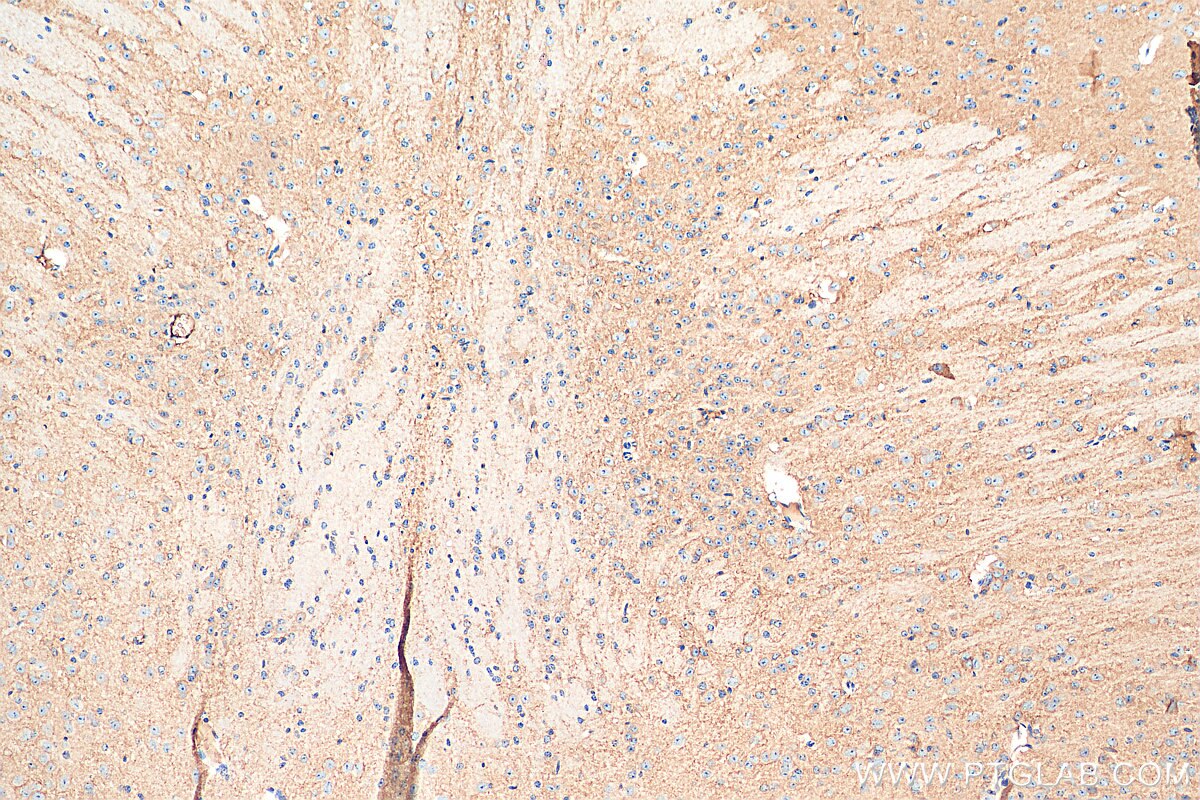
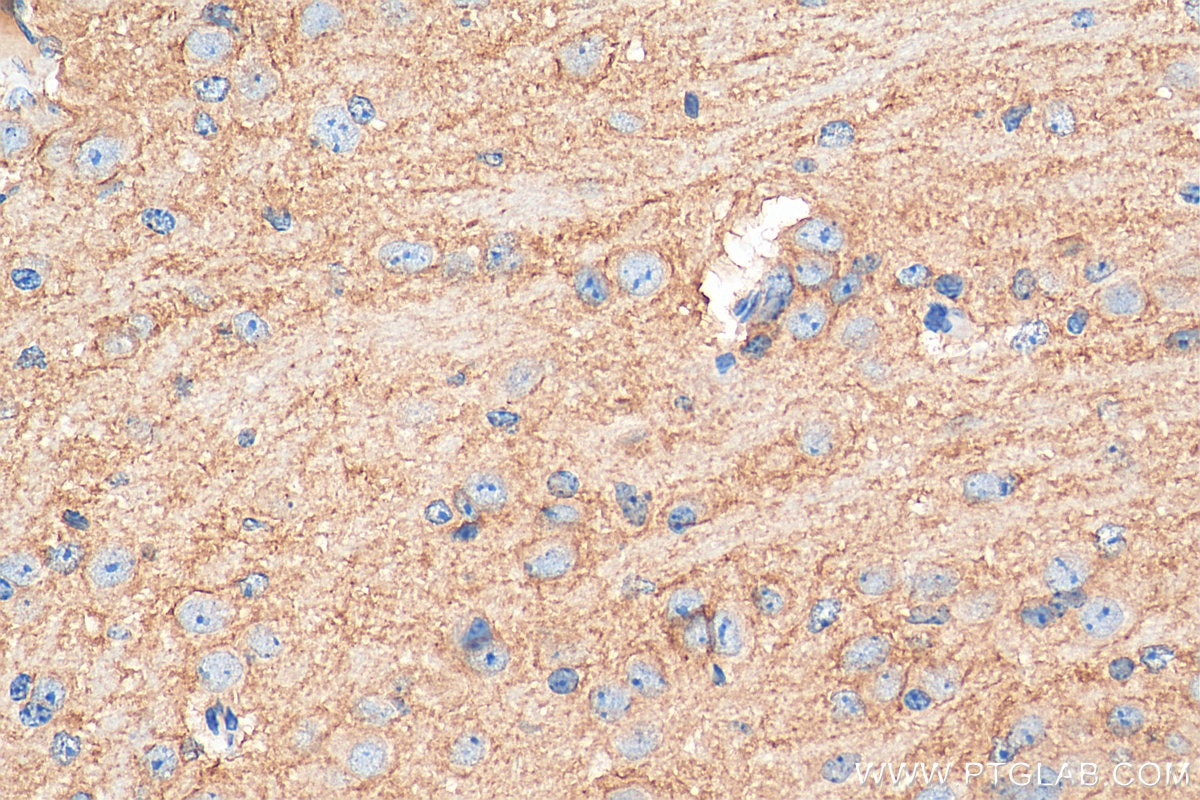
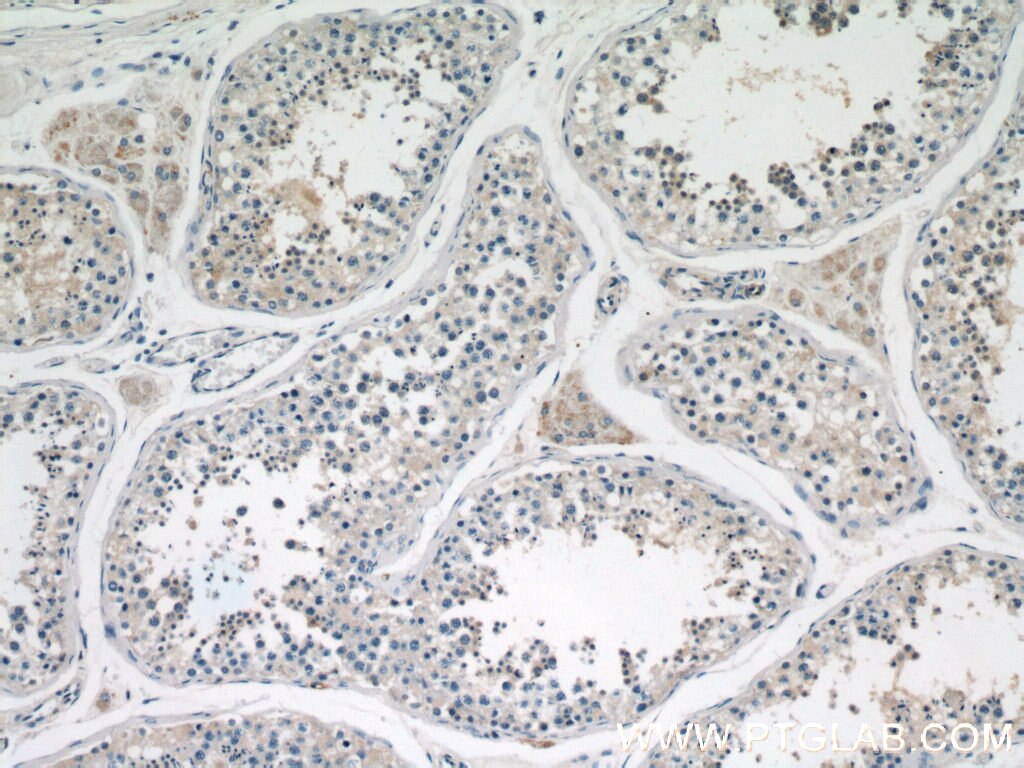
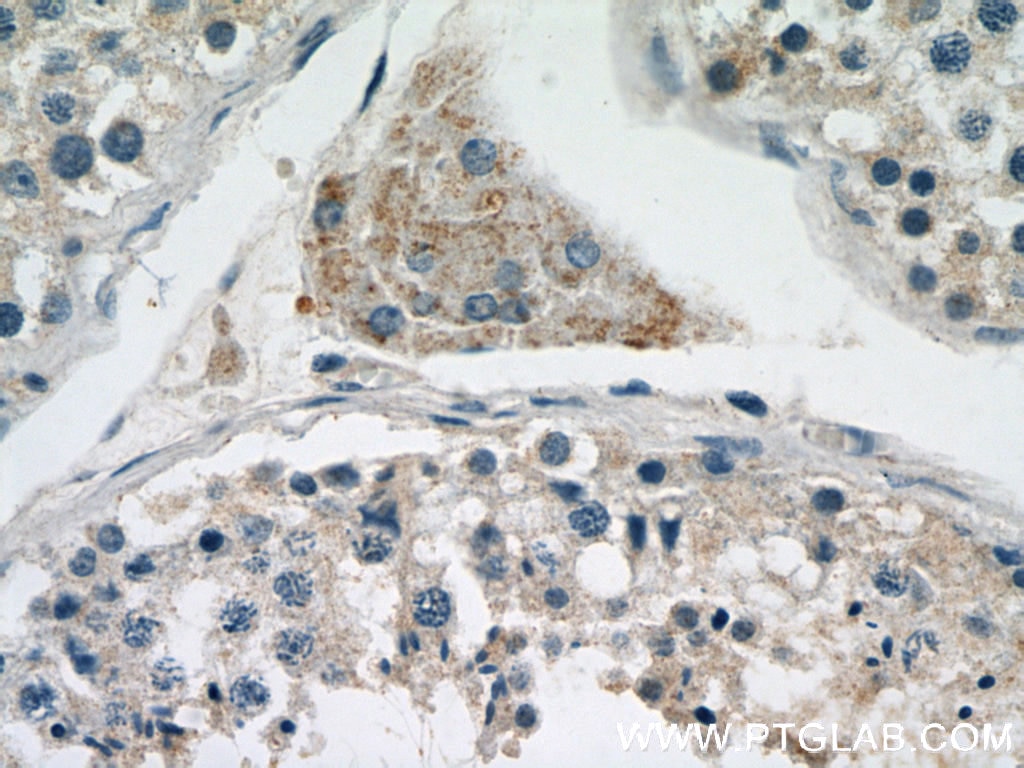
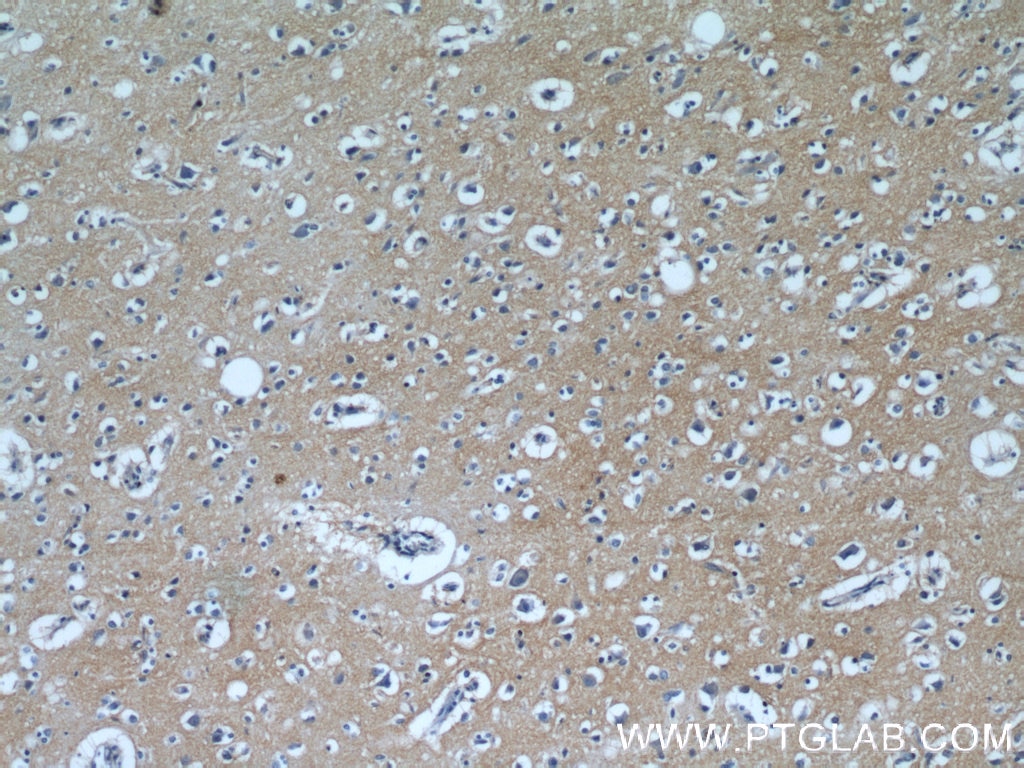
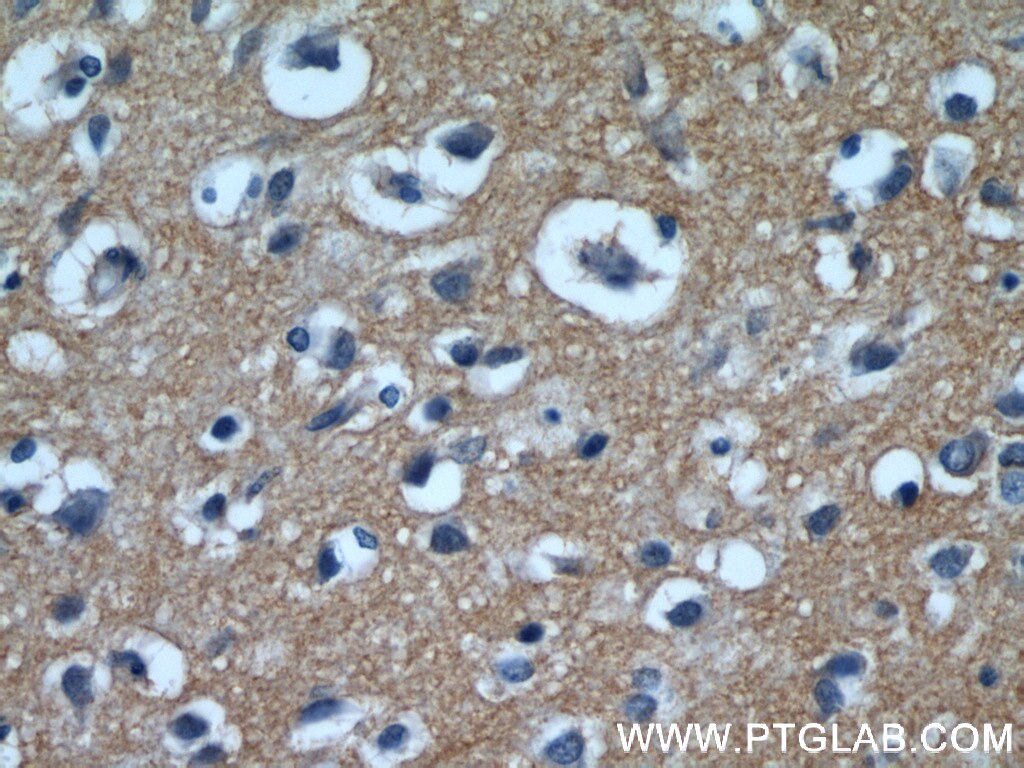

Tested Applications
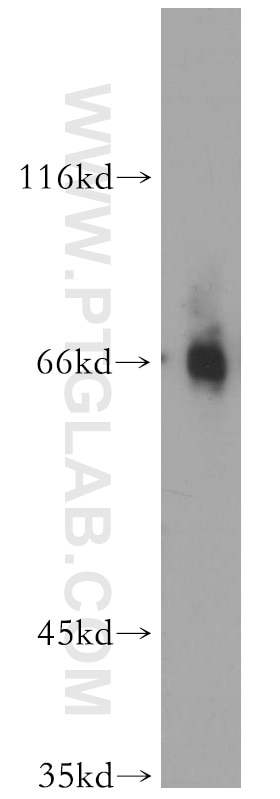
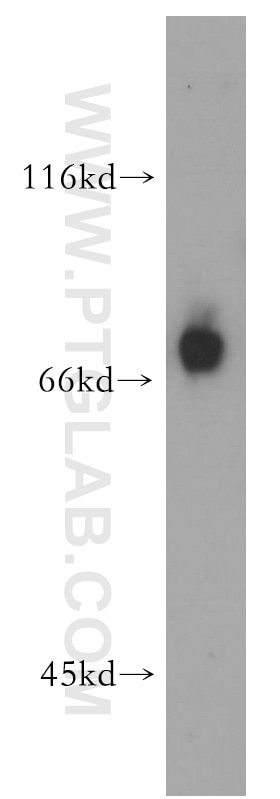
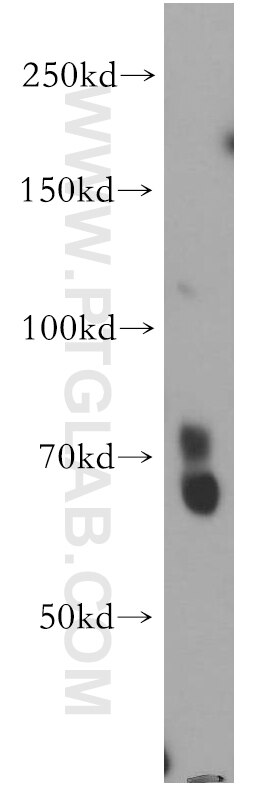
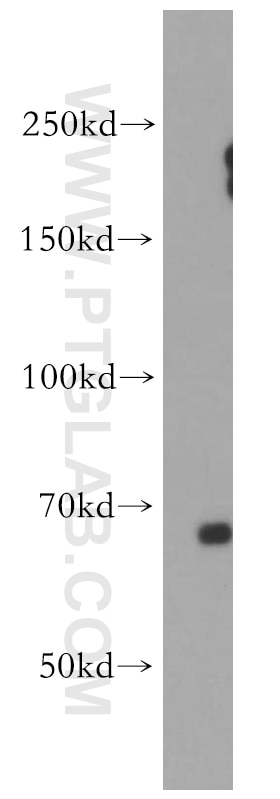
| Positive WB detected in | mouse ovary tissue, human brain tissue, mouse testis tissue |
| Positive IHC detected in | mouse brain tissue, human brain tissue, human testis tissue Note: suggested antigen retrieval with TE buffer pH 9.0; (*) Alternatively, antigen retrieval may be performed with citrate buffer pH 6.0 |
Recommended dilution
| Application | Dilution |
|---|---|
| Western Blot (WB) | WB : 1:500-1:1000 |
| Immunohistochemistry (IHC) | IHC : 1:50-1:500 |
| It is recommended that this reagent should be titrated in each testing system to obtain optimal results. | |
| Sample-dependent, Check data in validation data gallery. | |
Product Information
12686-1-AP targets EAAT3 in WB, IHC, IF, ELISA applications and shows reactivity with human, mouse, rat samples.
| Tested Reactivity | human, mouse, rat |
| Cited Reactivity | human, mouse, rat, pig, chicken, goat |
| Host / Isotype | Rabbit / IgG |
| Class | Polyclonal |
| Type | Antibody |
| Immunogen |
CatNo: Ag3379 Product name: Recombinant human SLC1A1 protein Source: e coli.-derived, PGEX-4T Tag: GST Domain: 430-524 aa of BC033040 Sequence: AEDVTLIIAVDWLLDRFRTMVNVLGDAFGTGIVEKLSKKELEQMDVSSEVNIVNPFALESTILDNEDSDTKKSYVNGGFAVDKSDTISFTQTSQF Predict reactive species |
| Full Name | solute carrier family 1 (neuronal/epithelial high affinity glutamate transporter, system Xag), member 1 |
| Calculated Molecular Weight | 524 aa, 57 kDa |
| Observed Molecular Weight | 66 kDa |
| GenBank Accession Number | BC033040 |
| Gene Symbol | EAAT3 |
| Gene ID (NCBI) | 6505 |
| RRID | AB_2188001 |
| Conjugate | Unconjugated |
| Form | Liquid |
| Purification Method | Antigen affinity purification |
| UNIPROT ID | P43005 |
| Storage Buffer | PBS with 0.02% sodium azide and 50% glycerol, pH 7.3. |
| Storage Conditions | Store at -20°C. Stable for one year after shipment. Aliquoting is unnecessary for -20oC storage. 20ul sizes contain 0.1% BSA. |
Background Information
EAAT3 (Excitatory Amino Acid Transporter 3), encoded by human SLC1A1 (Gene ID: 6505), is a neuronal high-affinity glutamate transporter of the SLC1 family. It is expressed mainly in CNS neurons, and also in intestinal and renal epithelial cells. EAAT3 is the only EAAT subtype that efficiently transports L-cysteine, supplying substrate for neuronal glutathione (GSH) synthesis and antioxidant defense. Its transport cycle couples uptake of L-glutamate, L-aspartate, or L-cysteine to 3 Na⁺/1 H⁺ co-transport and 1 K⁺ counter-transport. EAAT3 also contributes to metabolic reprogramming in activated B cells and cancer cells, and can transport the oncometabolite R-2-hydroxyglutarate (R-2HG). SLC1A1 mutations are linked to dicarboxylic aminoaciduria and schizophrenia susceptibility.
Protocols
| Product Specific Protocols | |
|---|---|
| IHC protocol for EAAT3 antibody 12686-1-AP | Download protocol |
| WB protocol for EAAT3 antibody 12686-1-AP | Download protocol |
| Standard Protocols | |
|---|---|
| Click here to view our Standard Protocols |
Publications
What published studies show
Anti-SLC1A1 (Cat# 12686-1-AP) has 15 citations published in journals including Nature Communications, Journal of Clinical Investigation, Cancer Research, Cell Death & Disease, Aging Cell, Neurotherapeutics, Life Sciences, Neuropharmacology, and others. Research fields span neuroscience (Alzheimer's, Parkinson's, depression, pain), oncology (lung cancer, ferroptosis), metabolism & nutrition, aging, and animal science. Applications include WB and IHC across mouse, human, pig, rat, chicken, and goat species.
| Species | Application | Title |
|---|---|---|
Cancer Res Dysregulated Glutamate Transporter SLC1A1 Propels Cystine Uptake via Xc- for Glutathione Synthesis in Lung Cancer. | ||
Nat Commun Astrocytic neuroligin 3 regulates social memory and synaptic plasticity through adenosine signaling in male mice | ||
J Clin Invest Arteriovenous metabolomics in pigs reveals CFTR regulation ofmetabolism inmultiple organs | ||
Cell Death Dis NF-κB-mediated EAAT3 upregulation in antioxidant defense and ferroptosis sensitivity in lung cancer | ||
Neurotherapeutics A combination of Δ9-tetrahydrocannabinol and cannabidiol modulates glutamate dynamics in the hippocampus of an animal model of Alzheimer's disease |











