

Tested Applications
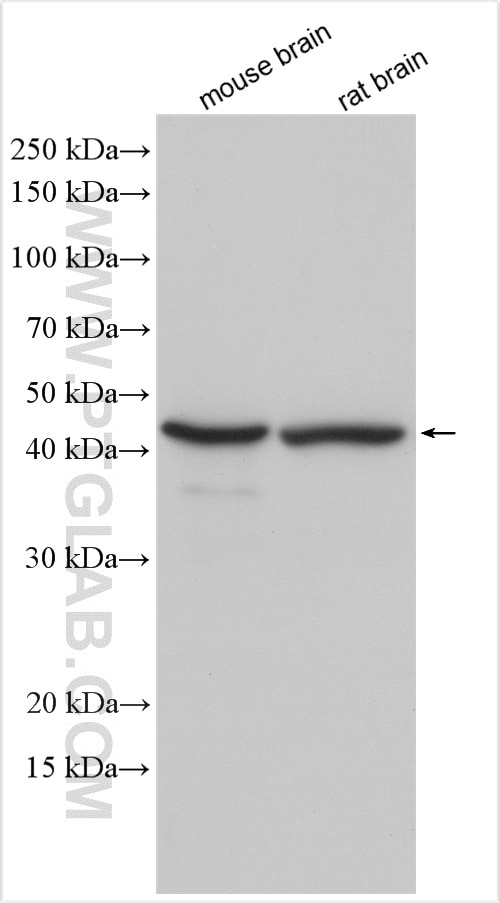
| Positive WB detected in | mouse brain tissue, rat brain tissue |
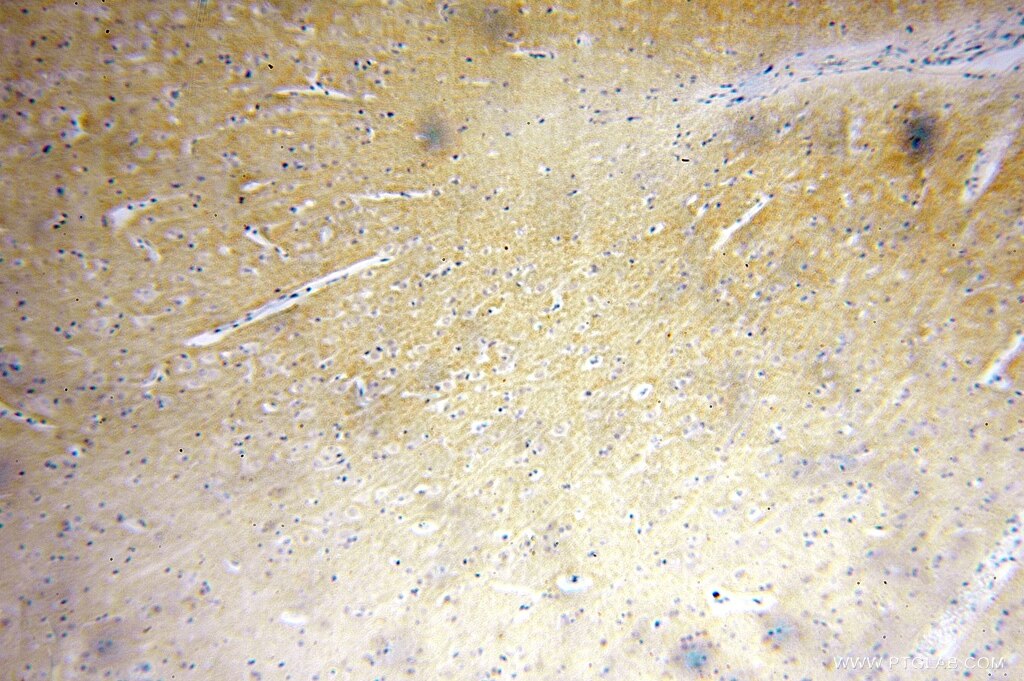
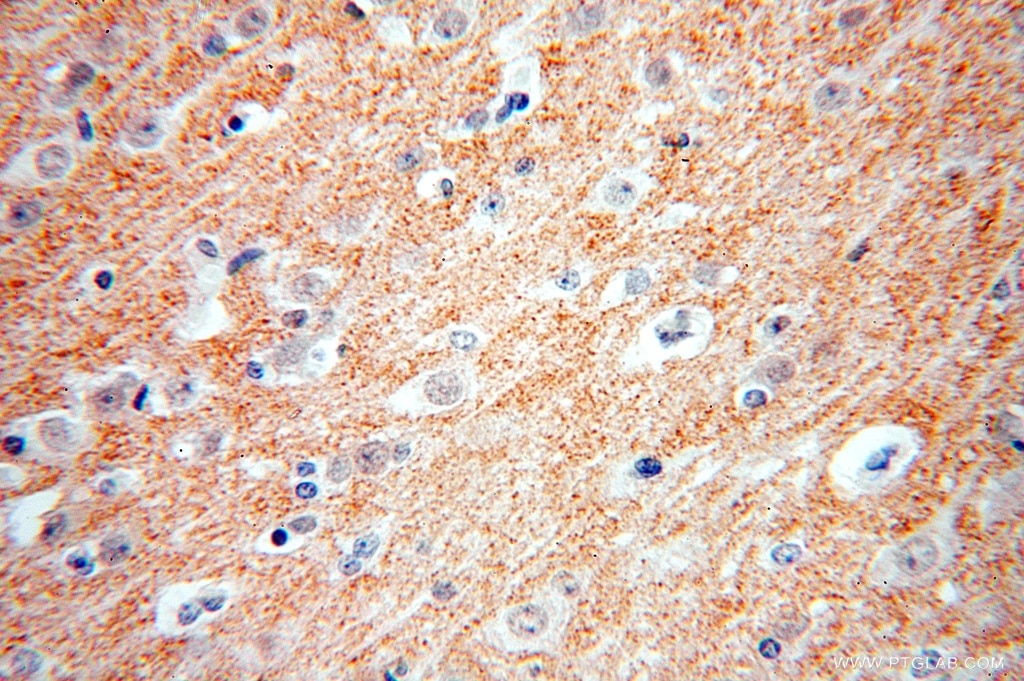
| Positive IHC detected in | human brain tissue Note: suggested antigen retrieval with TE buffer pH 9.0; (*) Alternatively, antigen retrieval may be performed with citrate buffer pH 6.0 |
Recommended dilution
| Application | Dilution |
|---|---|
| Western Blot (WB) | WB : 1:1000-1:6000 |
| Immunohistochemistry (IHC) | IHC : 1:20-1:200 |
| It is recommended that this reagent should be titrated in each testing system to obtain optimal results. | |
| Sample-dependent, Check data in validation data gallery. | |
Product Information
17363-1-AP targets ZnT3 in WB, IHC, IF, ELISA applications and shows reactivity with human, mouse, rat samples.
| Tested Reactivity | human, mouse, rat |
| Cited Reactivity | human, mouse, rat |
| Host / Isotype | Rabbit / IgG |
| Class | Polyclonal |
| Type | Antibody |
| Immunogen |
CatNo: Ag10735 Product name: Recombinant human SLC30A3 protein Source: e coli.-derived, PET28a Tag: 6*His Domain: 288-388 aa of BC028358 Sequence: VLRILMEGTPRNVGFEPVRDTLLSVPGVRATHELHLWALTLTYHVASAHLAIDSTADPEAVLAEASSRLYSRFGFSSCTLQVEQYQPEMAQCLRCQEPPQA Predict reactive species |
| Full Name | solute carrier family 30 (zinc transporter), member 3 |
| Calculated Molecular Weight | 388 aa, 42 kDa |
| Observed Molecular Weight | 42 kDa, 48 kDa |
| GenBank Accession Number | BC028358 |
| Gene Symbol | ZnT3 |
| Gene ID (NCBI) | 7781 |
| RRID | AB_2239335 |
| Conjugate | Unconjugated |
| Form | Liquid |
| Purification Method | Antigen affinity purification |
| UNIPROT ID | Q99726 |
| Storage Buffer | PBS with 0.02% sodium azide and 50% glycerol, pH 7.3. |
| Storage Conditions | Store at -20°C. Stable for one year after shipment. Aliquoting is unnecessary for -20oC storage. 20ul sizes contain 0.1% BSA. |
Background Information
ZnT3, encoded by SLC30A3, is a member of SLC30A family which is zinc transporter sequestrating cytosolic zinc into intracellular compartments or effluxing zinc to the extracellular space. Excessive zinc level can cause neuron apoptosis and lead to cognitive impairments. Znt3 facilitates the transport and storage of zinc in synaptic vesicles. Abnormal ZnT3 expression has been linked to some neurodegenerative disorders.
Protocols
| Product Specific Protocols | |
|---|---|
| IHC protocol for ZnT3 antibody 17363-1-AP | Download protocol |
| WB protocol for ZnT3 antibody 17363-1-AP | Download protocol |
| Standard Protocols | |
|---|---|
| Click here to view our Standard Protocols |
Publications
What published studies show
The ZnT3 Polyclonal antibody (Cat# 17363-1-AP) has 19 citations published in journals including Advanced Science, Molecular Medicine, Cell Biosciences, Acta Neuropathologica Communications, International Journal of Molecular Sciences, Scientific Reports, Journal of Cerebral Blood Flow & Metabolism, Brain Research Bulletin, Frontiers in Molecular Neuroscience, Journal of Biological Chemistry, Journal of Neuroscience Research, Genes, Life Science Alliance, Prostate, Biochemical & Biophysical Research Communications, Journal of Comparative Neurology, Journal of Reproduction and Development, and Biological Open. Research fields span zinc homeostasis, neurodegeneration (ALS, Huntington's, Alzheimer's), epilepsy, cognitive dysfunction, bone regeneration, oxidative stress, and reproductive biology.
| Species | Application | Title |
|---|---|---|
Adv Sci (Weinh) Ion-Driven Regulation of Ca(2) (+) Flow by Ti/Zn Composite Activates ERK/MAPK Signaling and Maintains Mitochondrial Homeostasis to Promote Macrophage-Mediated Bone Regeneration. | ||
Mol Med Estrogen improves sevoflurane-induced cognitive dysfunction by regulating synaptic zinc homeostasis. | ||
Cell Biosci Disruption of zinc transporter ZnT3 transcriptional activity and synaptic vesicular zinc in the brain of Huntington's disease transgenic mouse. | ||
Acta Neuropathol Commun Deregulation of subcellular biometal homeostasis through loss of the metal transporter, Zip7, in a childhood neurodegenerative disorder. | ||
Int J Mol Sci MicroRNA-5572 Is a Novel MicroRNA-Regulating SLC30A3 in Sporadic Amyotrophic Lateral Sclerosis. | ||
Sci Rep Putative long range mossy fiber sprouting and regional cytochrome c oxidase alteration in the hippocampus of patients with mesial temporal lobe epilepsy. |




