
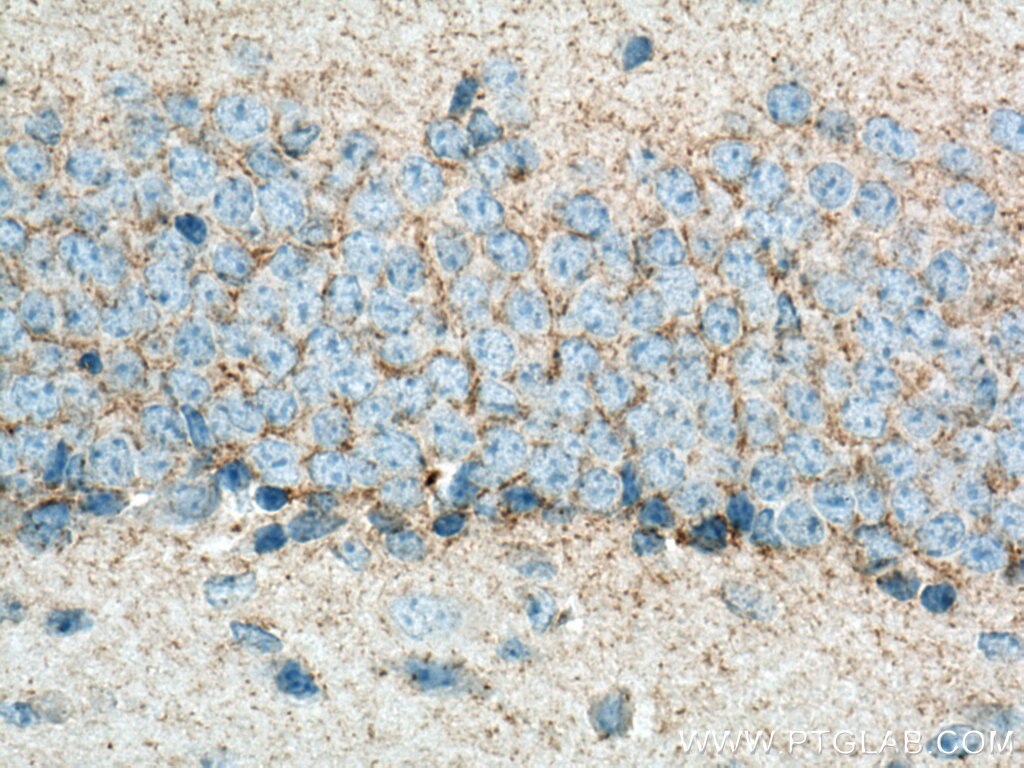

Tested Applications
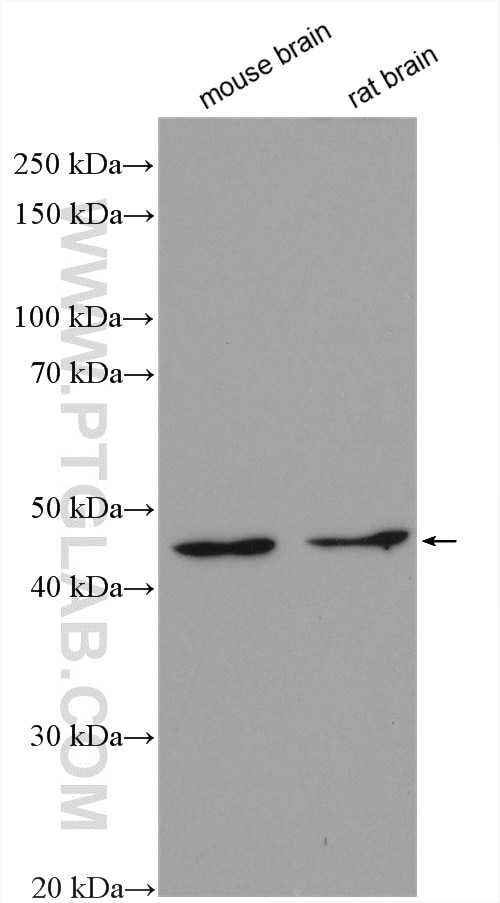
| Positive WB detected in | mouse brain tissue, rat brain tissue |
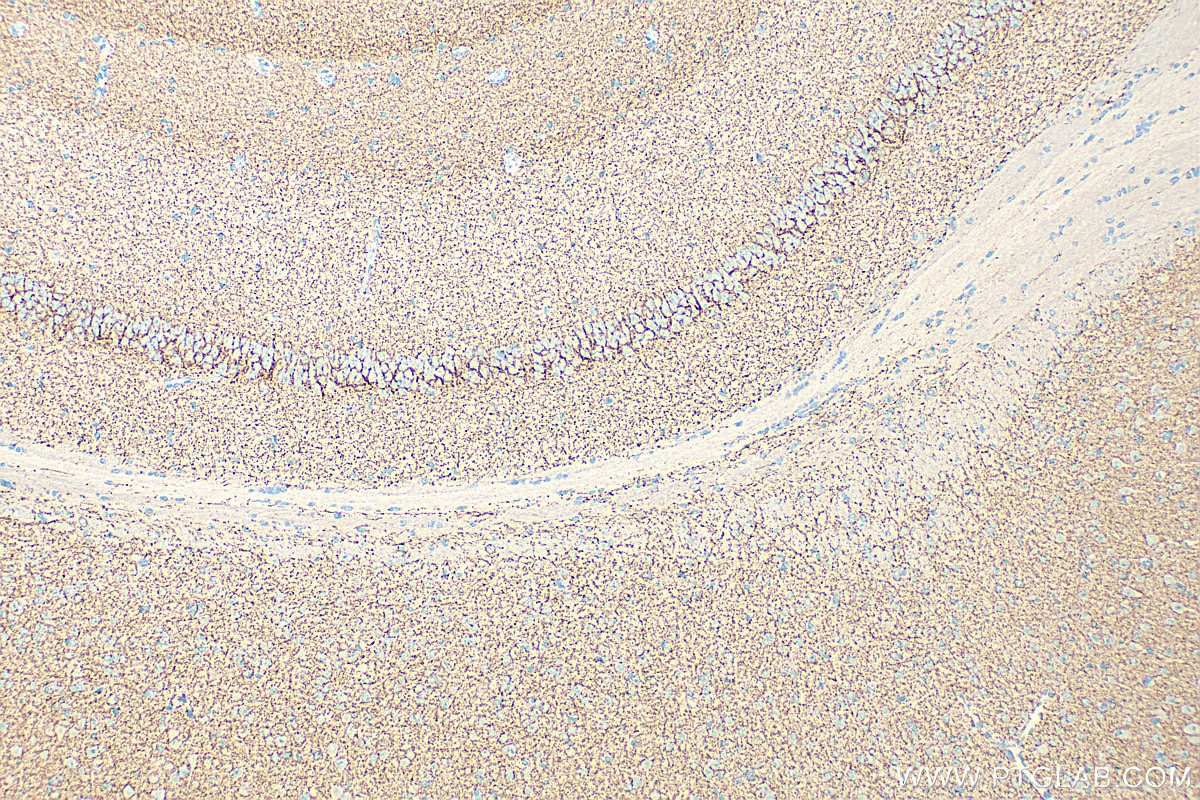
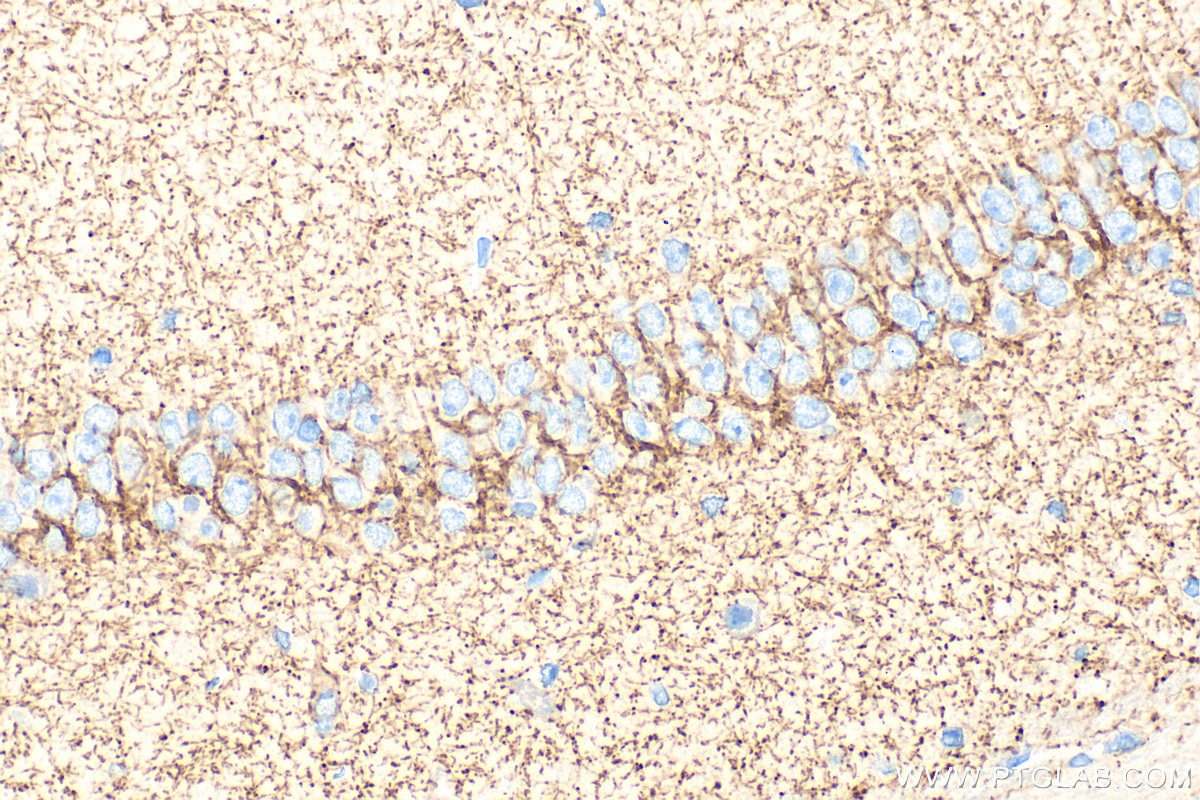
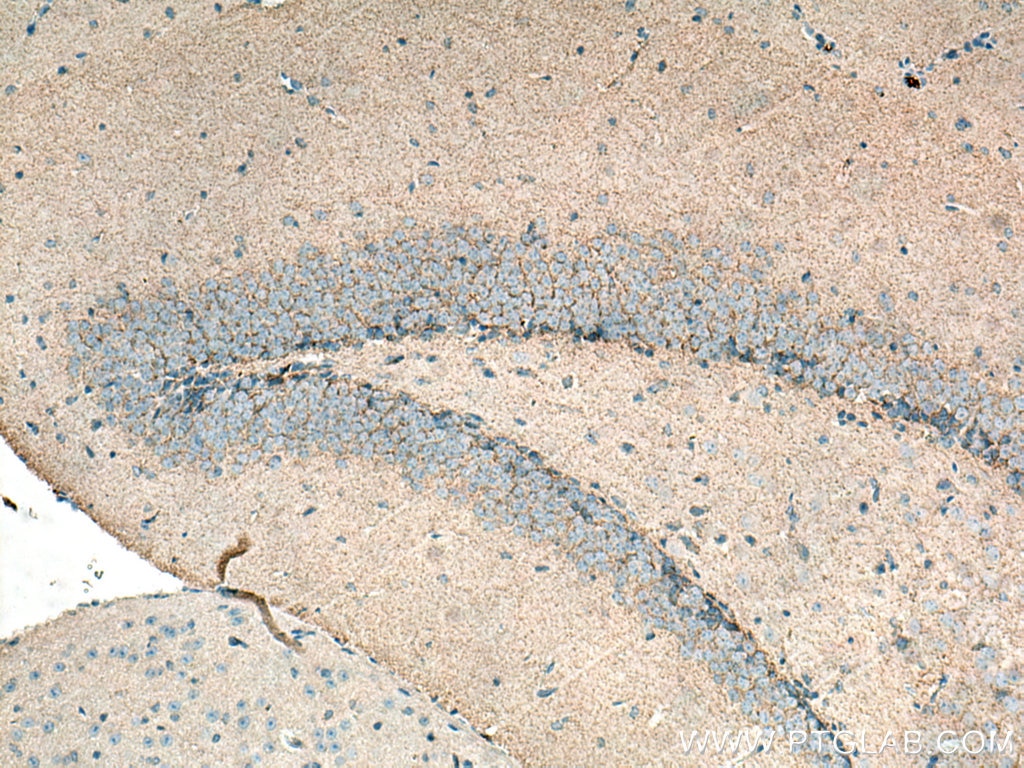
| Positive IHC detected in | mouse brain tissue Note: suggested antigen retrieval with TE buffer pH 9.0; (*) Alternatively, antigen retrieval may be performed with citrate buffer pH 6.0 |
Recommended dilution
| Application | Dilution |
|---|---|
| Western Blot (WB) | WB : 1:500-1:2000 |
| Immunohistochemistry (IHC) | IHC : 1:50-1:500 |
| It is recommended that this reagent should be titrated in each testing system to obtain optimal results. | |
| Sample-dependent, Check data in validation data gallery. | |
Product Information
28488-1-AP targets GAT1 in WB, IHC, IF, ELISA applications and shows reactivity with human, mouse, rat samples.
| Tested Reactivity | human, mouse, rat |
| Cited Reactivity | mouse |
| Host / Isotype | Rabbit / IgG |
| Class | Polyclonal |
| Type | Antibody |
| Immunogen |
CatNo: Ag29712 Product name: Recombinant human SLC6A1 protein Source: e coli.-derived, PGEX-4T Tag: GST Domain: 1-52 aa of BC033904 Sequence: MATNGSKVADGQISTEVSEAPVANDKPKTLVVKVQKKAADLPDRDTWKGRFD Predict reactive species |
| Full Name | solute carrier family 6 (neurotransmitter transporter, GABA), member 1 |
| Calculated Molecular Weight | 67 kDa |
| Observed Molecular Weight | 42 kDa |
| GenBank Accession Number | BC033904 |
| Gene Symbol | GABA Transporter 1/GAT1 |
| Gene ID (NCBI) | 6529 |
| RRID | AB_2881154 |
| Conjugate | Unconjugated |
| Form | Liquid |
| Purification Method | Antigen affinity purification |
| UNIPROT ID | P30531 |
| Storage Buffer | PBS with 0.02% sodium azide and 50% glycerol, pH 7.3. |
| Storage Conditions | Store at -20°C. Stable for one year after shipment. Aliquoting is unnecessary for -20oC storage. 20ul sizes contain 0.1% BSA. |
Background Information
GAT1 (GABA Transporter 1) is a vital membrane transporter in the central nervous system, which is mainly responsible for clearing the inhibitory neurotransmitter-GABA in synaptic cleft. GAT1 belongs to Solute Carrier Family 6(SLC6), and GABA in synaptic cleft is reabsorbed into presynaptic neurons or astrocytes by using the gradient of sodium ion (Na) and chloride ion (Cl). It is a key regulator to regulate inhibitory signal transduction in nervous system. By limiting the existence time of GABA in synaptic cleft, GAT1 directly controls the intensity and duration of inhibitory nerve transmission. GAT1 is a famous target of antiepileptic drugs. For example, Tiagabine is an efficient GAT1 inhibitor, which can block GAT1 function and increase the concentration of GABA in synaptic cleft, thus enhancing the inhibition and treating epilepsy.
Protocols
| Product Specific Protocols | |
|---|---|
| IHC protocol for GAT1 antibody 28488-1-AP | Download protocol |
| WB protocol for GAT1 antibody 28488-1-AP | Download protocol |
| Standard Protocols | |
|---|---|
| Click here to view our Standard Protocols |
Publications
What published studies show
GAT1 Polyclonal antibody (Cat# 28488-1-AP) has 6 citations published in J Exp Clin Cancer Res, Aging Cell, Cell Biosci, Neuropharmacology, J Neurosci, and Bio Protoc. The research fields span oncology (colon tumor proliferation), neurodegeneration (Alzheimer's and Parkinson's disease), neuroscience (GABAergic signaling and ciliary pathways), and pharmacology (ketamine's antidepressant effects).
| Species | Application | Title |
|---|---|---|
J Exp Clin Cancer Res GABA induced by sleep deprivation promotes the proliferation and migration of colon tumors through miR-223-3p endogenous pathway and exosome pathway | ||
Aging Cell Gamma frequency light flicker regulates amyloid precursor protein trafficking for reducing β-amyloid load in Alzheimer's disease model. | ||
Cell Biosci Amelioration of olfactory dysfunction in a mouse model of Parkinson's disease via enhancing GABAergic signaling | ||
Neuropharmacology A role of GABAA receptor α1 subunit in the hippocampus for rapid-acting antidepressant-like effects of ketamine | ||
J Neurosci Identification of New Ciliary Signaling Pathways in the Brain and Insights into Neurological Disorders | ||
Bio Protoc Using Combined Fluorescent In Situ Hybridization With Immunohistochemistry to Co-localize mRNA in Diverse Neuronal Cell Types. |






