
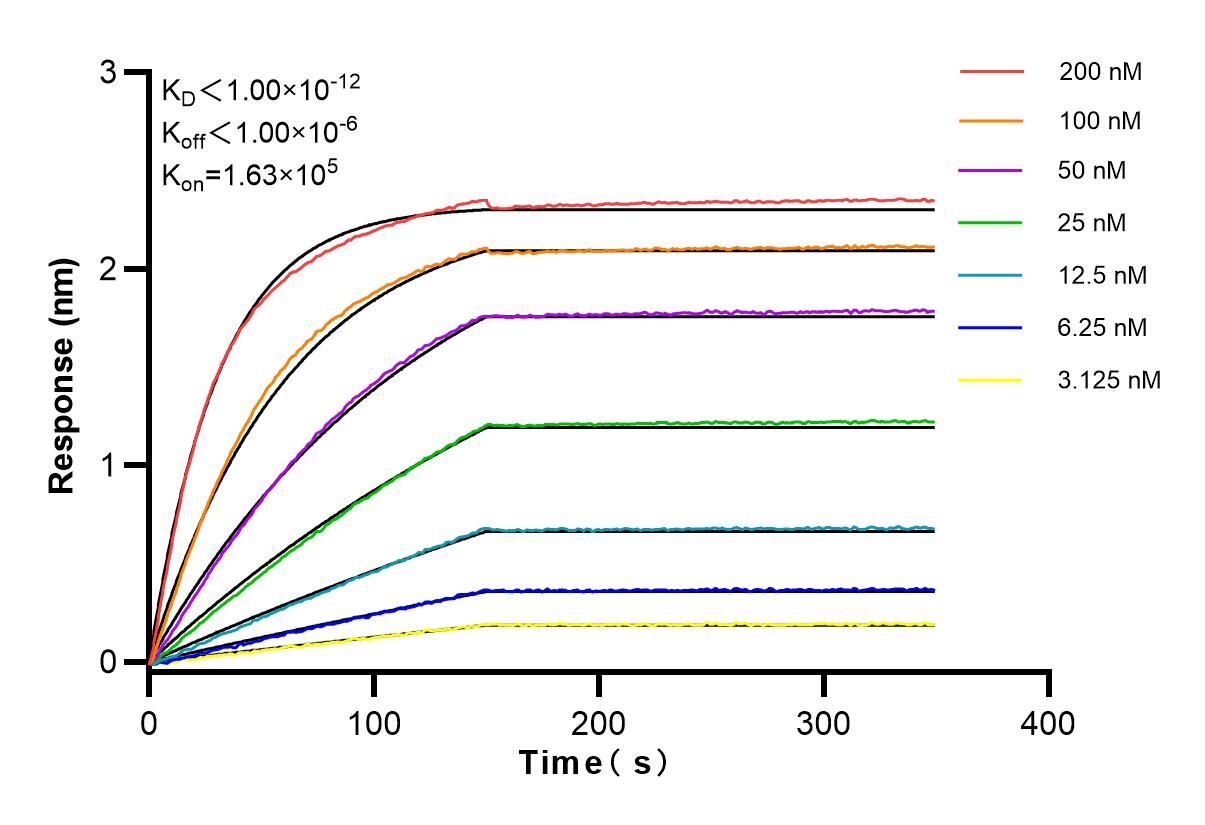

Tested Applications
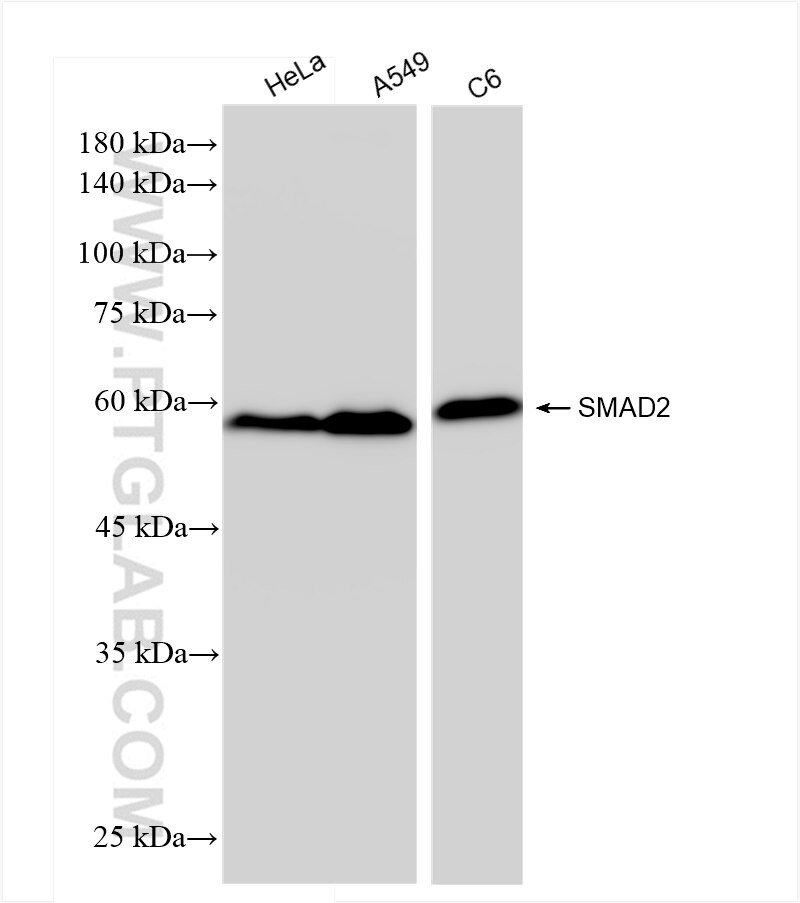
| Positive WB detected in | HeLa cells, A549 cells, C6 cells |
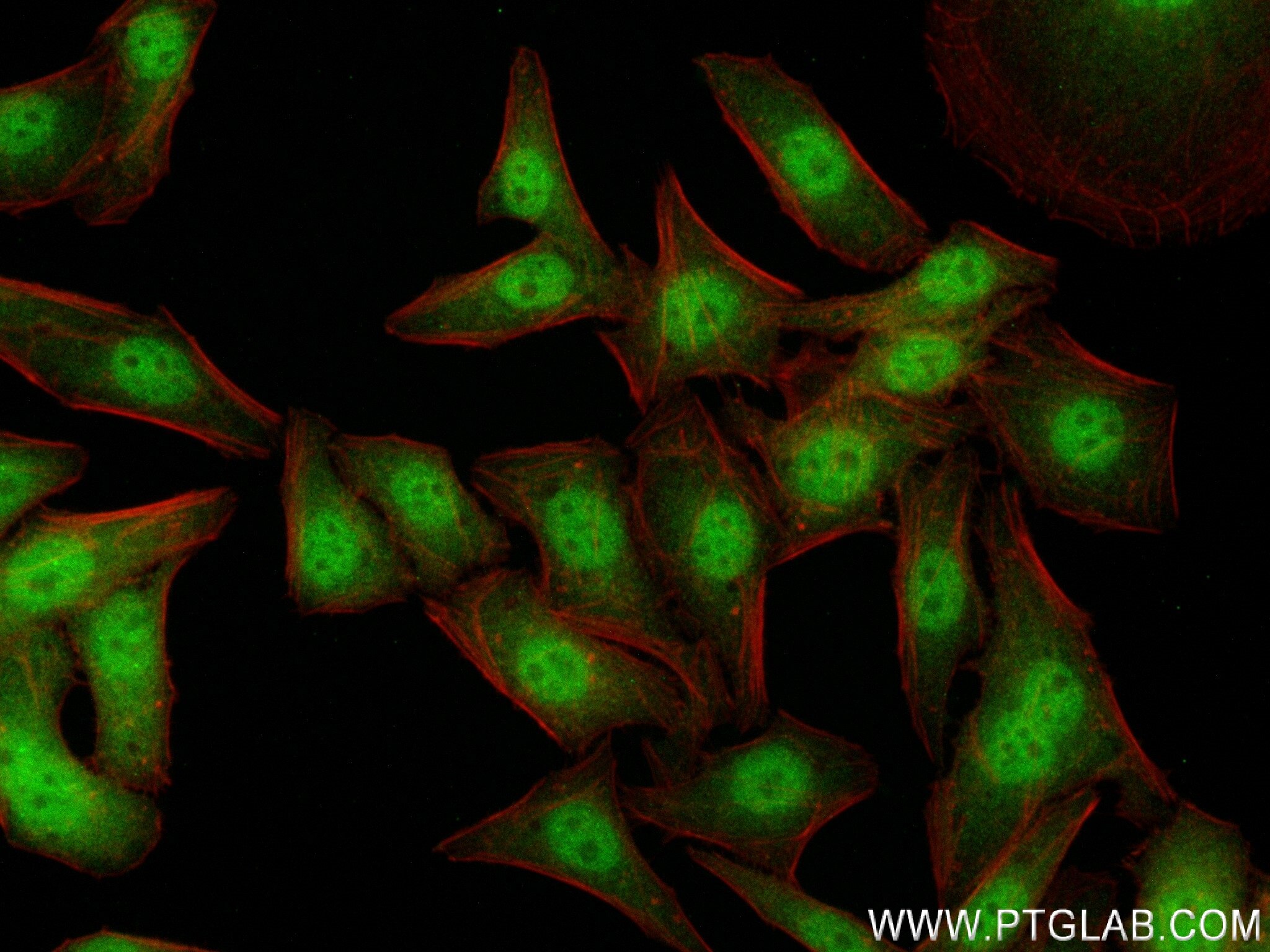
| Positive IF/ICC detected in | HepG2 cells |
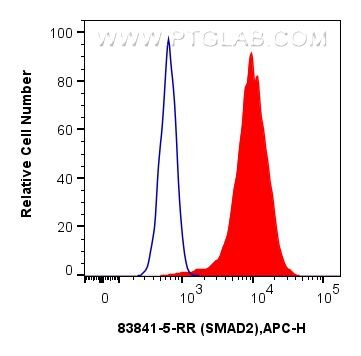
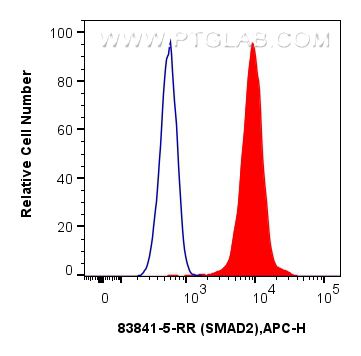
| Positive FC (Intra) detected in | Jurkat cells, HeLa cells |
Recommended dilution
| Application | Dilution |
|---|---|
| Western Blot (WB) | WB : 1:5000-1:50000 |
| Immunofluorescence (IF)/ICC | IF/ICC : 1:200-1:800 |
| Flow Cytometry (FC) (INTRA) | FC (INTRA) : 0.25 ug per 10^6 cells in a 100 µl suspension |
| It is recommended that this reagent should be titrated in each testing system to obtain optimal results. | |
| Sample-dependent, Check data in validation data gallery. | |
Product Information
83841-5-RR targets SMAD2 in WB, IF/ICC, FC (Intra), ELISA applications and shows reactivity with human, rat samples.
| Tested Reactivity | human, rat |
| Cited Reactivity | human |
| Host / Isotype | Rabbit / IgG |
| Class | Recombinant |
| Type | Antibody |
| Immunogen |
CatNo: Ag3237 Product name: Recombinant human SMAD2 protein Source: e coli.-derived, PGEX-4T Tag: GST Domain: 1-355 aa of BC014840 Sequence: MSSILPFTPPVVKRLLGWKKSAGGSGGAGGGEQNGQEEKWCEKAVKSLVKKLKKTGRLDELEKAITTQNCNTKCVTIPSTCSEIWGLSTPNTIDQWDTTGLYSFSEQTRSLDGRLQVSHRKGLPHVIYCRLWRWPDLHSHHELKAIENCEYAFNLKKDEVCVNPYHYQRVETPVLPPVLVPRHTEILTELPPLDDYTHSIPENTNFPAGIEPQSNYIPETPPPGYISEDGETSDQQLNQSMDTGSPAELSPTTLSPVNHSLDLQPVTYSEPAFWCSIAYYELNQRVGETFHASQPSLTVDGFTDPSNSERFCLGLLSNVNRNATVEMTRRHIGRGVRLYYIGGEVFAECLSDSAI Predict reactive species |
| Full Name | SMAD family member 2 |
| Calculated Molecular Weight | 467 aa, 52 kDa |
| Observed Molecular Weight | 58 kDa |
| GenBank Accession Number | BC014840 |
| Gene Symbol | SMAD2 |
| Gene ID (NCBI) | 4087 |
| RRID | AB_3671426 |
| Conjugate | Unconjugated |
| Form | Liquid |
| Purification Method | Protein A purification |
| UNIPROT ID | Q15796 |
| Storage Buffer | PBS with 0.02% sodium azide and 50% glycerol, pH 7.3. |
| Storage Conditions | Store at -20°C. Stable for one year after shipment. Aliquoting is unnecessary for -20oC storage. 20ul sizes contain 0.1% BSA. |
Background Information
SMAD2, also named as MADH2 and MADR2, belongs to the dwarfin/SMAD family, contains 1 MH1 (MAD homology 1) domain and 1 MH2 (MAD homology 2) domain. SMAD2 is a receptor-regulated SMAD(R-SMAD) that is an intracellular signal transducer and transcriptional modulator activated by TGF-beta and activin type 1 receptor kinases. This protein may act as a tumor suppressor in colorectal carcinoma. It is phosphorylated on one or several of Thr-220, Ser-245, Ser-250, and Ser-255. In response to TGF-beta, It is phosphorylated on Ser-465/467 by TGF-beta and activin type 1 receptor kinases, and then able to interact with SMURF2, recruiting other proteins, such as SNON, for degradation. In response to decorin, the naturally occurring inhibitor of TGF-beta signaling, it is phosphorylated on Ser-240 by CaMK2. It is phosphorylated by MAPK3 upon EGF stimulation; which increases transcriptional activity and stability, and is blocked by calmodulin. In response to TGF-beta, it is ubiquitinated by NEDD4L, which promotes its degradation. In response to TGF-beta signaling, it is acetylated on Lys-19 by coactivators, which increases transcriptional activity. The molecular weight of unphosphorylated forms of Smad2 is 52 kDa and phosphorylated forms of Smad2 is 58 kDa. (PMID: 9006934)
Publications
What published studies show
The SMAD2 Recombinant monoclonal antibody (240950A11), catalog number 83841-5-RR, has 1 citation to date. It was cited in Biomolecules (2025) in a study investigating GSR deficiency, oxidative stress, and pulmonary fibrosis in human samples, using the antibody for Western blot. The research falls within the fields of redox biology, lung disease, and TGF-β/SMAD signaling.
| Species | Application | Title |
|---|---|---|






