
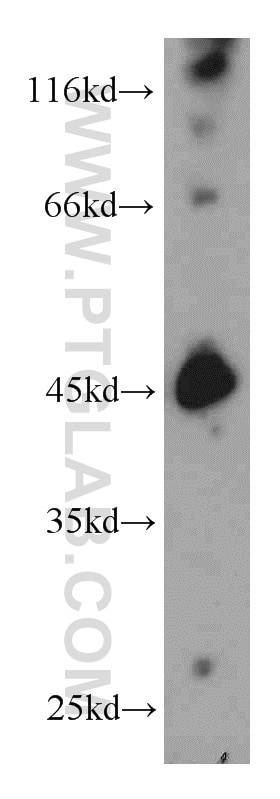
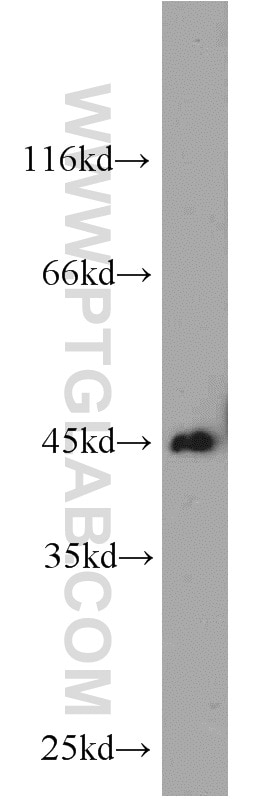
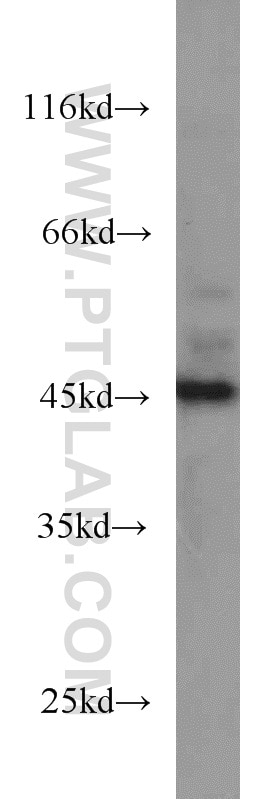
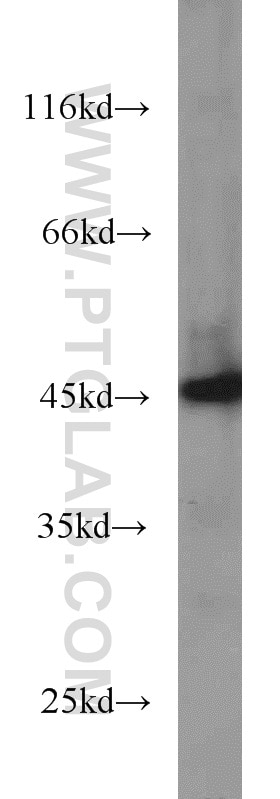

Tested Applications
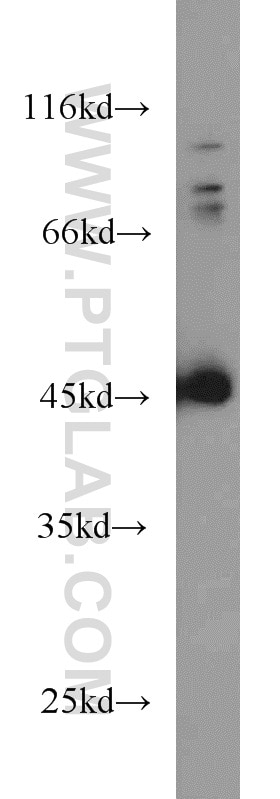
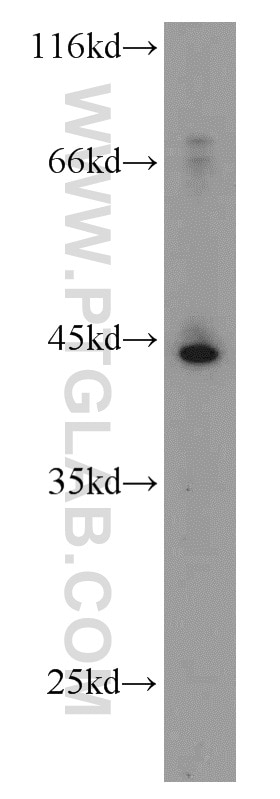
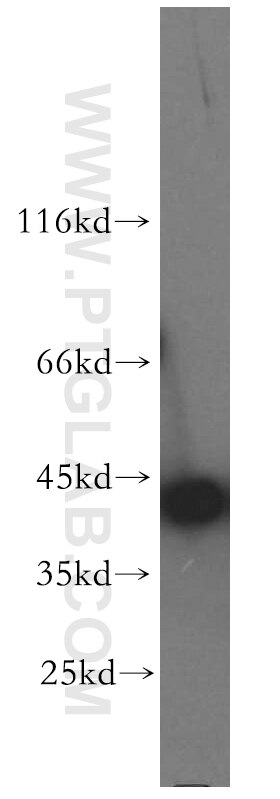
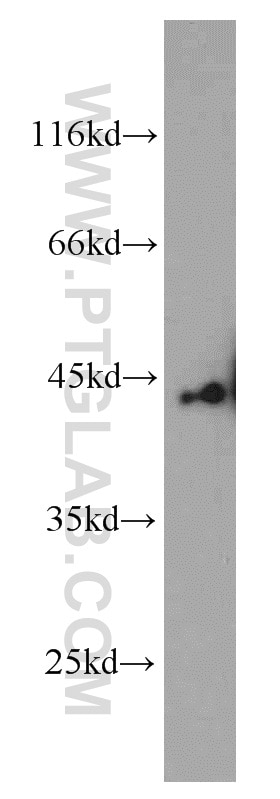
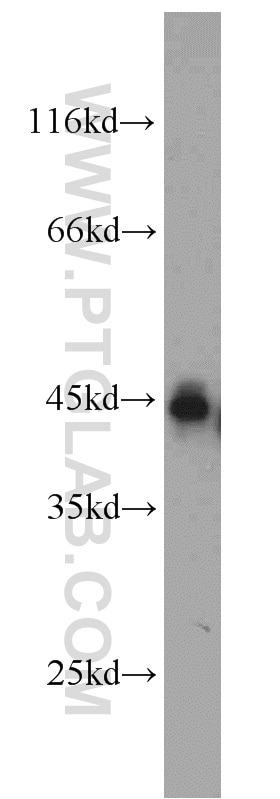
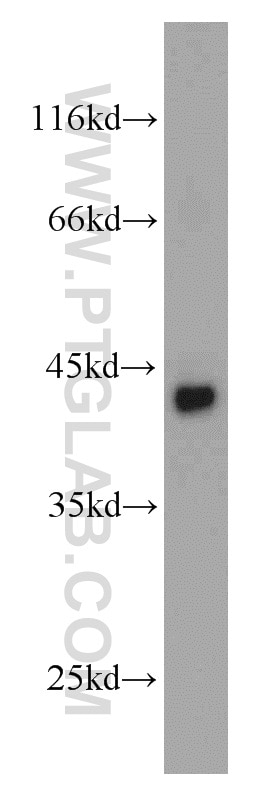
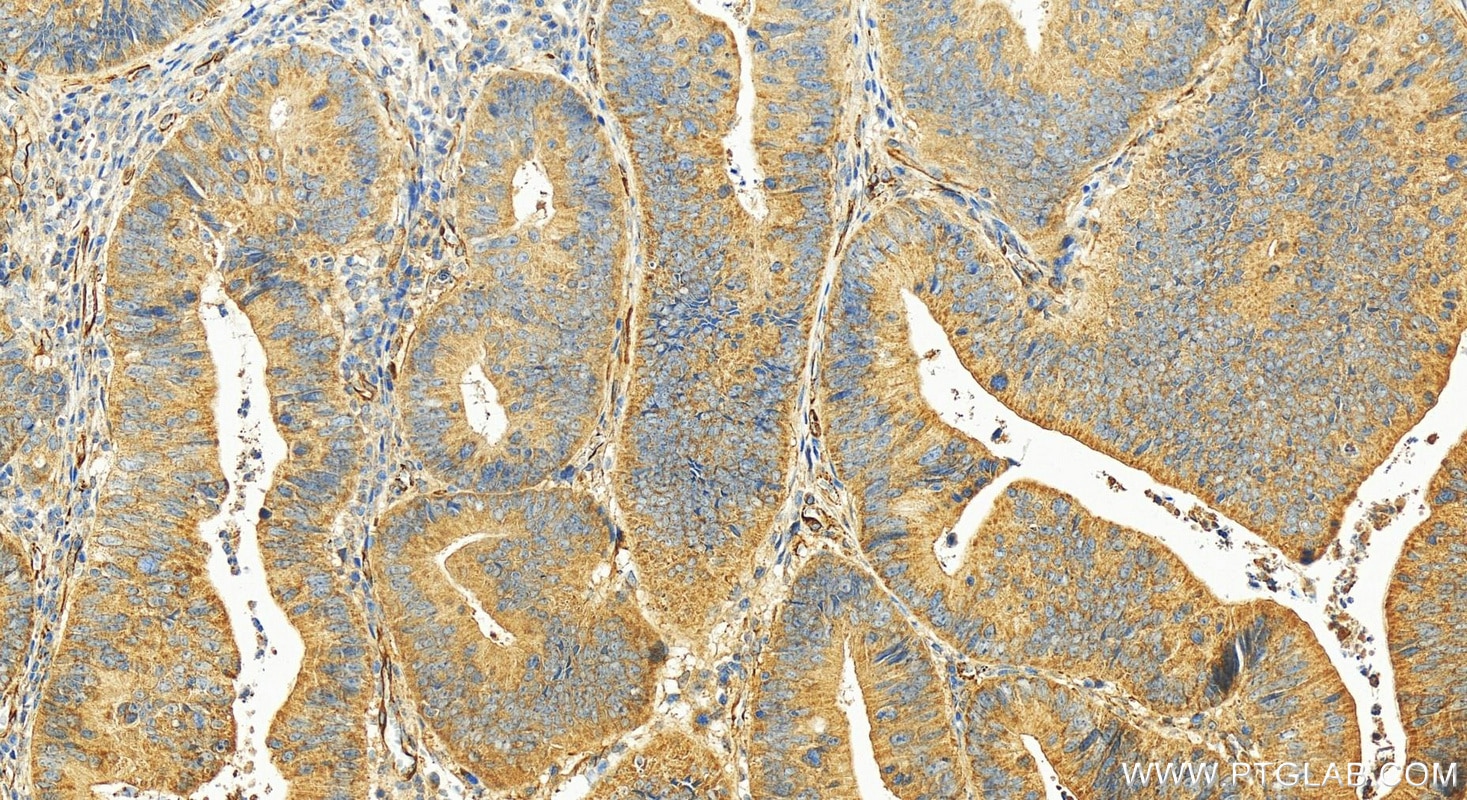
| Positive WB detected in | mouse brain tissue, COLO 320 cells, HeLa cells, HepG2 cells |
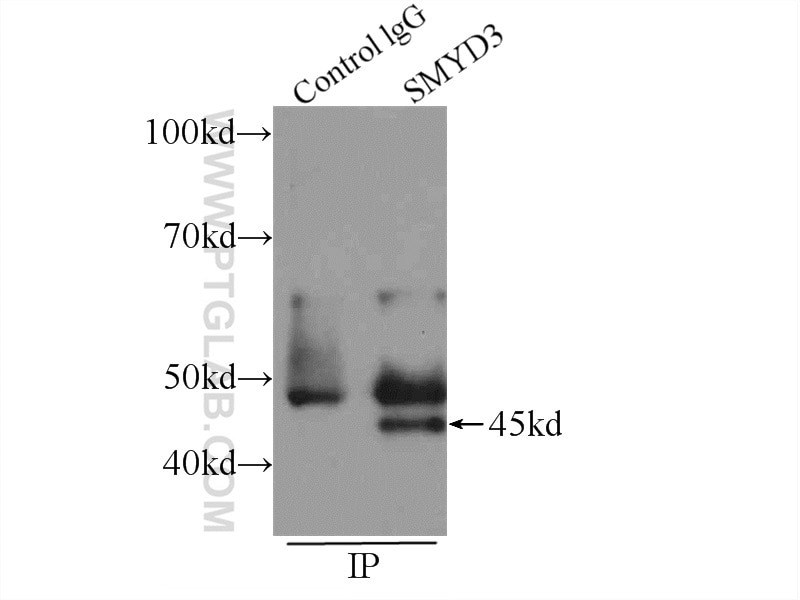
| Positive IP detected in | COLO 320 cells |
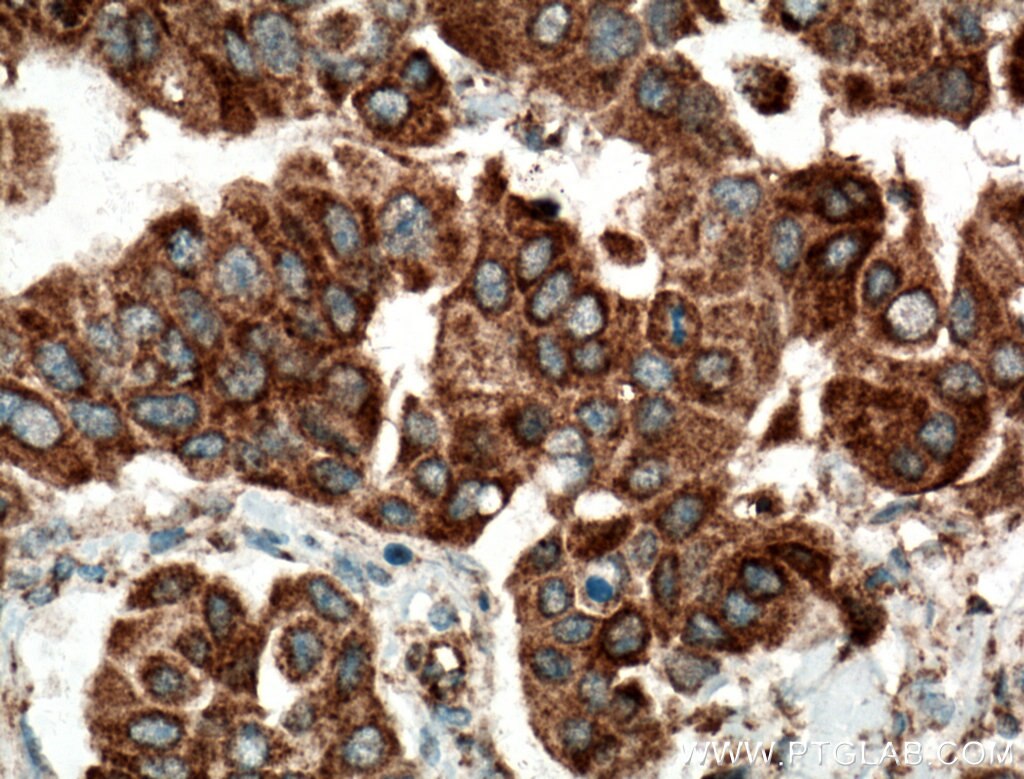
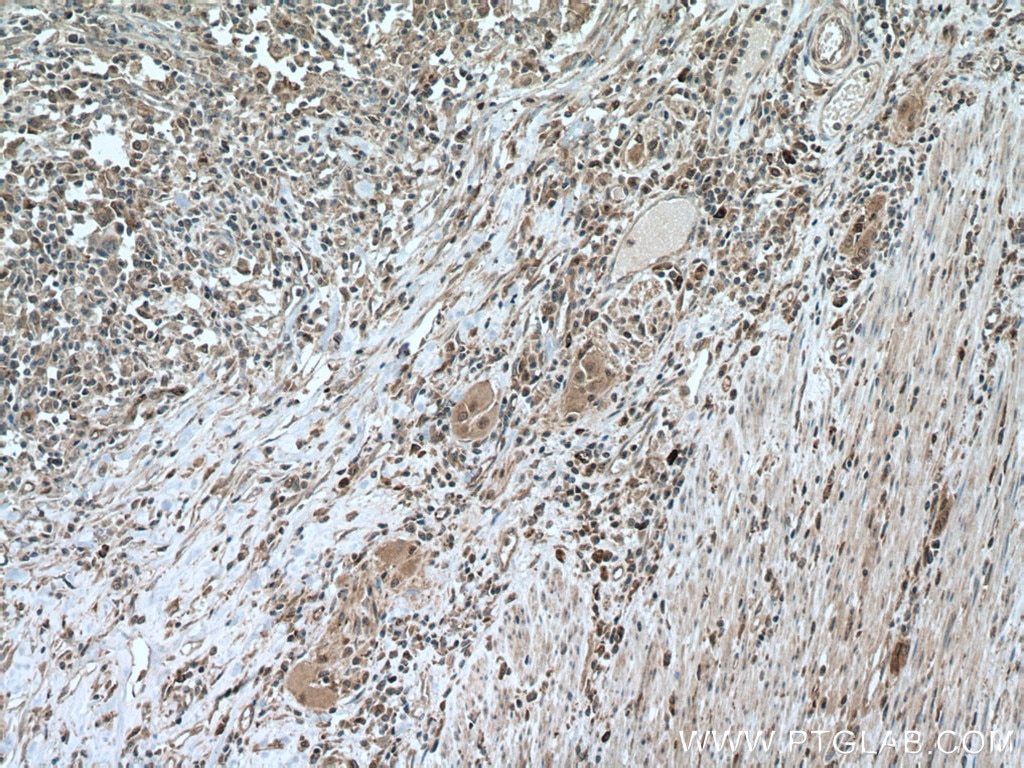
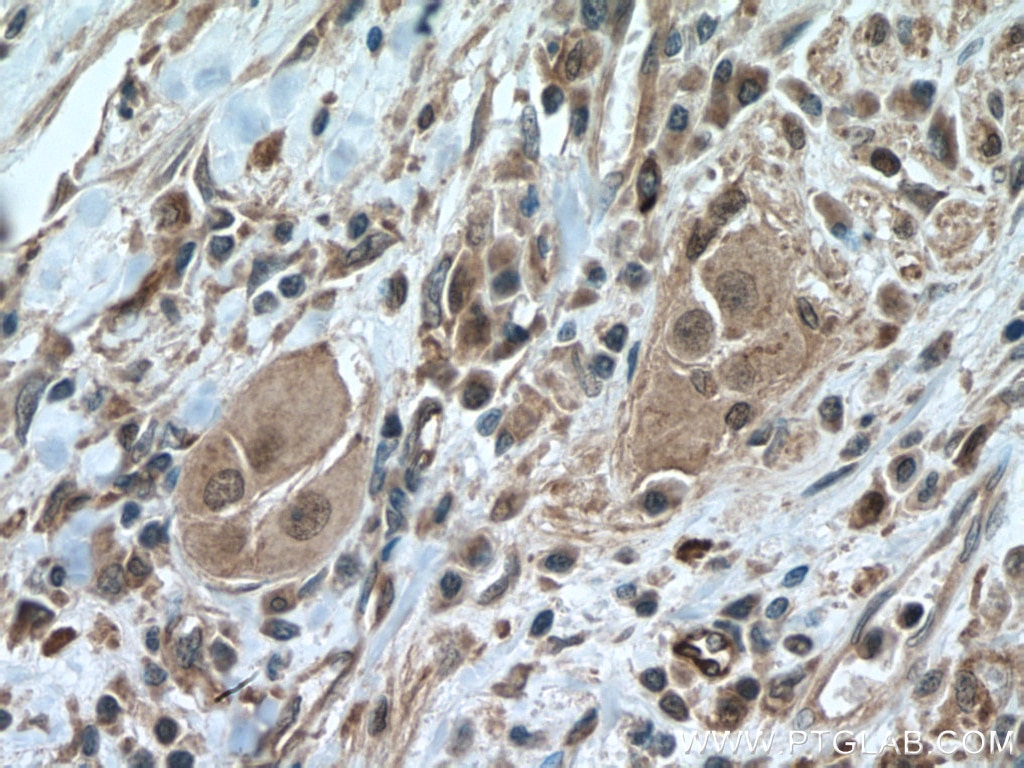
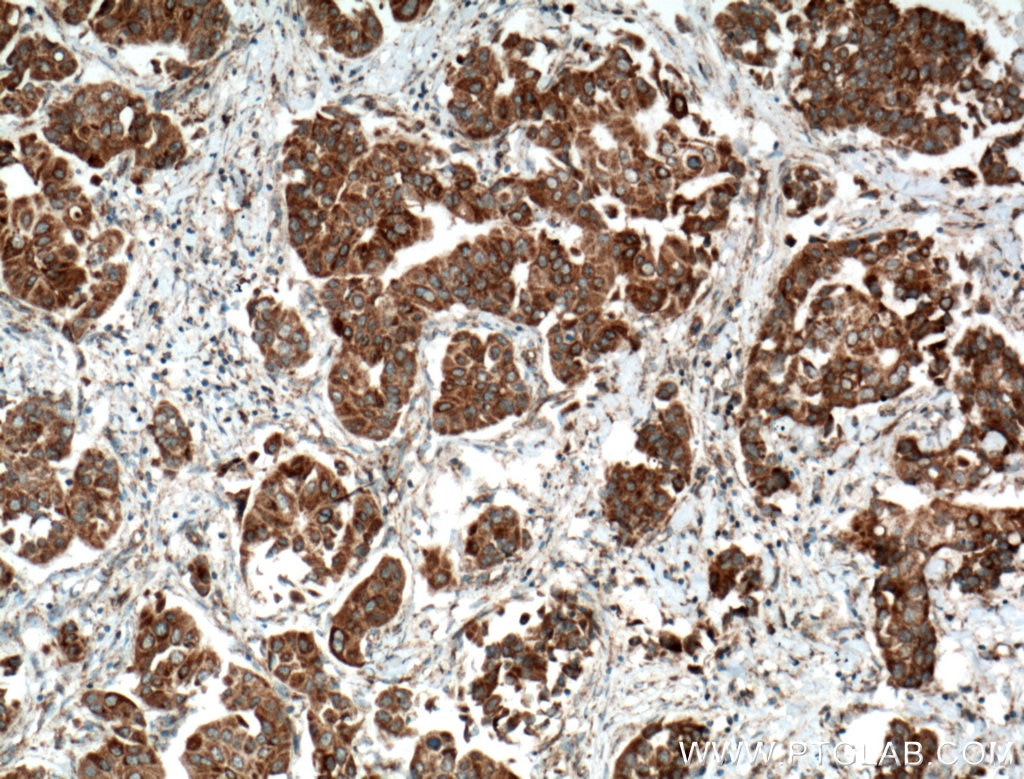
| Positive IHC detected in | human breast cancer tissue, human colon cancer tissue Note: suggested antigen retrieval with TE buffer pH 9.0; (*) Alternatively, antigen retrieval may be performed with citrate buffer pH 6.0 |
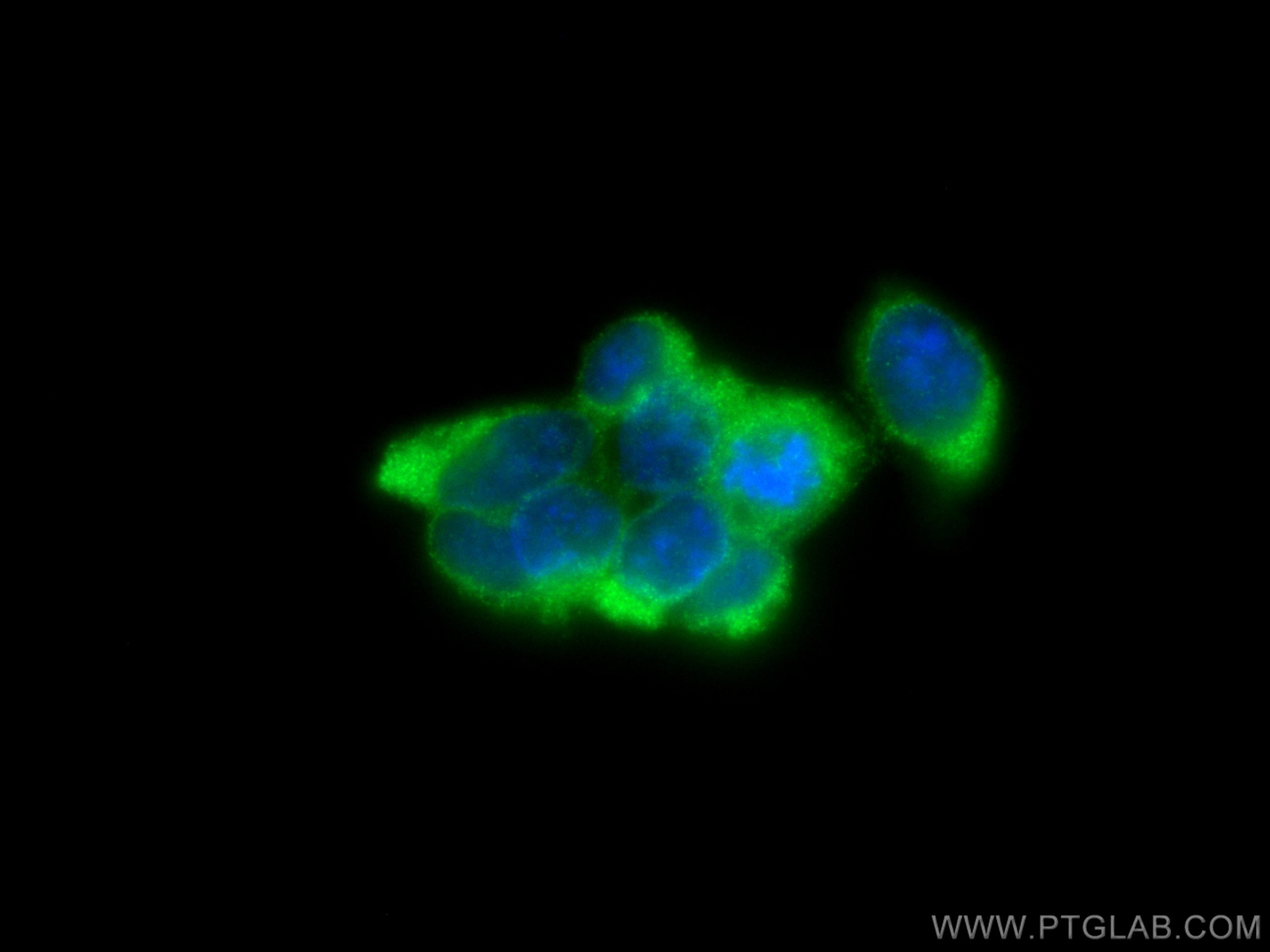
| Positive IF/ICC detected in | HEK-293 cells |
Recommended dilution
| Application | Dilution |
|---|---|
| Western Blot (WB) | WB : 1:500-1:1000 |
| Immunoprecipitation (IP) | IP : 0.5-4.0 ug for 1.0-3.0 mg of total protein lysate |
| Immunohistochemistry (IHC) | IHC : 1:50-1:500 |
| Immunofluorescence (IF)/ICC | IF/ICC : 1:50-1:500 |
| It is recommended that this reagent should be titrated in each testing system to obtain optimal results. | |
| Sample-dependent, Check data in validation data gallery. | |
Product Information
12011-1-AP targets SMYD3 in WB, IHC, IF/ICC, IP, CoIP, ChIP, ELISA applications and shows reactivity with human, mouse, rat samples.
| Tested Reactivity | human, mouse, rat |
| Cited Reactivity | human, mouse, rat |
| Host / Isotype | Rabbit / IgG |
| Class | Polyclonal |
| Type | Antibody |
| Immunogen |
CatNo: Ag2624 Product name: Recombinant human SMYD3 protein Source: e coli.-derived, PGEX-4T Tag: GST Domain: 60-428 aa of BC031010 Sequence: MRCSQCRVAKYCSAKCQKKAWPDHKRECKCLKSCKPRYPPDSVRLLGRVVFKLMDGAPSESEKLYSFYDLESNINKLTEDRKEGLRQLVMTFQHFMREEIQDASQLPPAFDLFEAFAKVICNSFTICNAEMQEVGVGLYPSISLLNHSCDPNCSIVFNGPHLLLRAVRDIEVGEELTICYLDMLMTSEERRKQLRDQYCFECDCFRCQTQDKDADMLTGDEQVWKEVQESLKKIEELKAHWKWEQVLAMCQAIISSNSERLPDINIYQLKVLDCAMDACINLGLLEEALFYGTRTMEPYRIFFPGSHPVRGVQVMKVGKLQLHQGMFPQAMKNLRLAFDIMRVTHGREHSLIEDLILLLEECDANIRAS Predict reactive species |
| Full Name | SET and MYND domain containing 3 |
| Calculated Molecular Weight | 428aa,49 kDa; 369aa,42 kDa |
| Observed Molecular Weight | 42-45 kDa |
| GenBank Accession Number | BC031010 |
| Gene Symbol | SMYD3 |
| Gene ID (NCBI) | 64754 |
| RRID | AB_2193981 |
| Conjugate | Unconjugated |
| Form | Liquid |
| Purification Method | Antigen affinity purification |
| UNIPROT ID | Q9H7B4 |
| Storage Buffer | PBS with 0.02% sodium azide and 50% glycerol, pH 7.3. |
| Storage Conditions | Store at -20°C. Stable for one year after shipment. Aliquoting is unnecessary for -20oC storage. 20ul sizes contain 0.1% BSA. |
Background Information
SMYD3,also name as ZMYND1 and ZNFN3A1, belongs to the histone-lysine methyltransferase family.It is a histone methyltransferase that plays an important role in transcriptional regulation in human carcinogenesis. It can specifically methylate histone H3 at lysine 4 and activate the transcription of a set of downstream genes, including several oncogenes (e.g., N-myc, CrkL, Wnt10b, RIZ and hTERT) and genes involved in the control of cell cycle.(PMID: 20957523). It plays an important role in transcriptional activation as a member of an RNA polymerase complex. SMYD3 is frequently overexpressed in different types of cancer cells. It functions as a coactivator of Era and potentiates Era activity in response to ligand. SMYD3 as a new coactivator for ER-mediated transcription, providing a possible link between SMYD3 overexpression and breast cancer. (PMID: 19509295) The common variable number of tandem repeats polymorphism in SMYD3 is a susceptibility factor for some types of human cancer. (PMID:16155568 ) . SMYD3 exists some isoforms with MV 49, 43 and 30 kDa.
Protocols
| Product Specific Protocols | |
|---|---|
| IF protocol for SMYD3 antibody 12011-1-AP | Download protocol |
| IHC protocol for SMYD3 antibody 12011-1-AP | Download protocol |
| IP protocol for SMYD3 antibody 12011-1-AP | Download protocol |
| WB protocol for SMYD3 antibody 12011-1-AP | Download protocol |
| Standard Protocols | |
|---|---|
| Click here to view our Standard Protocols |
Publications
What published studies show
The SMYD3 antibody (Cat# 12011-1-AP) has 11 citations published in journals including Acta Pharm Sin B, Cancer Immunol Res, Oncogenesis, Int J Mol Sci, CNS Neurosci Ther, Int Immunopharmacol, Med Oncol, Immunotargets Ther, Carcinogenesis, Int J Androl, and Cell Physiol Biochem. Research fields span epigenetics and histone methylation, oncology (colorectal, endometrial, breast, thyroid, testicular, hepatocellular cancers), cardiovascular disease, hypertension-induced renal injury, ciliogenesis, and neurotoxicity.
| Species | Application | Title |
|---|---|---|
Acta Pharm Sin B SMYD3-PARP16 axis accelerates unfolded protein response and mediates neointima formation.
| ||
Cancer Immunol Res USP15 Facilitates Colorectal Cancer Immune Evasion through SMYD3/CCL2-Dependent Myeloid-Derived Suppressor Cell Recruitment | ||
CNS Neurosci Ther Integration of Methylation and Gene Expression Deciphered Candidate Biomarkers DAB2IP and SMYD3 in Delayed Encephalopathy After Carbon Monoxide Poisoning | ||
Oncogenesis SMYD3 promotes endometrial cancer through epigenetic regulation of LIG4/XRCC4/XLF complex in non-homologous end joining repair | ||
Int J Mol Sci SMYD3 Controls Ciliogenesis by Regulating Distinct Centrosomal Proteins and Intraflagellar Transport Trafficking | ||
Int Immunopharmacol SMYD3-mediated H3K4 trimethylation aggravates hypertension-induced renal injury via TXNIP transcriptional activation.
|
Reviews
What customers say
One reviewer (Deyong Xiao) rated this antibody 4 out of 5 stars for Western Blot. They used a 1/500 dilution on HEK293T cells with human SMYD3 overexpression and reported that it worked well. The review was posted in March 2022 for lot LOT00010737. Overall, the single review reflects a positive experience with the antibody performing as expected in its tested application.
The reviews below have been submitted by verified Proteintech customers who received an incentive for providing their feedback.
Deyong (Verified Customer) (03-11-2022) | It worked well in the HEK293T cells with human SMYD3 overexpression.
|


















