
Tested Applications
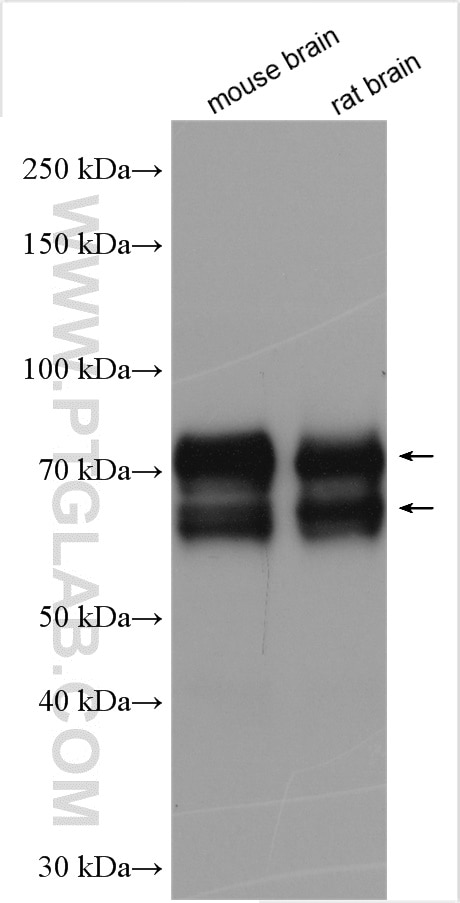
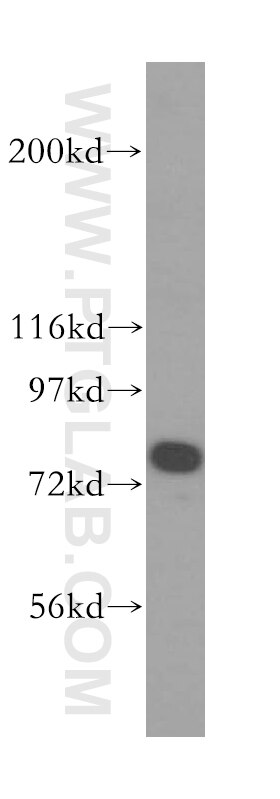
| Positive WB detected in | mouse brain tissue, mouse trachea tissue, rat brain tissue |
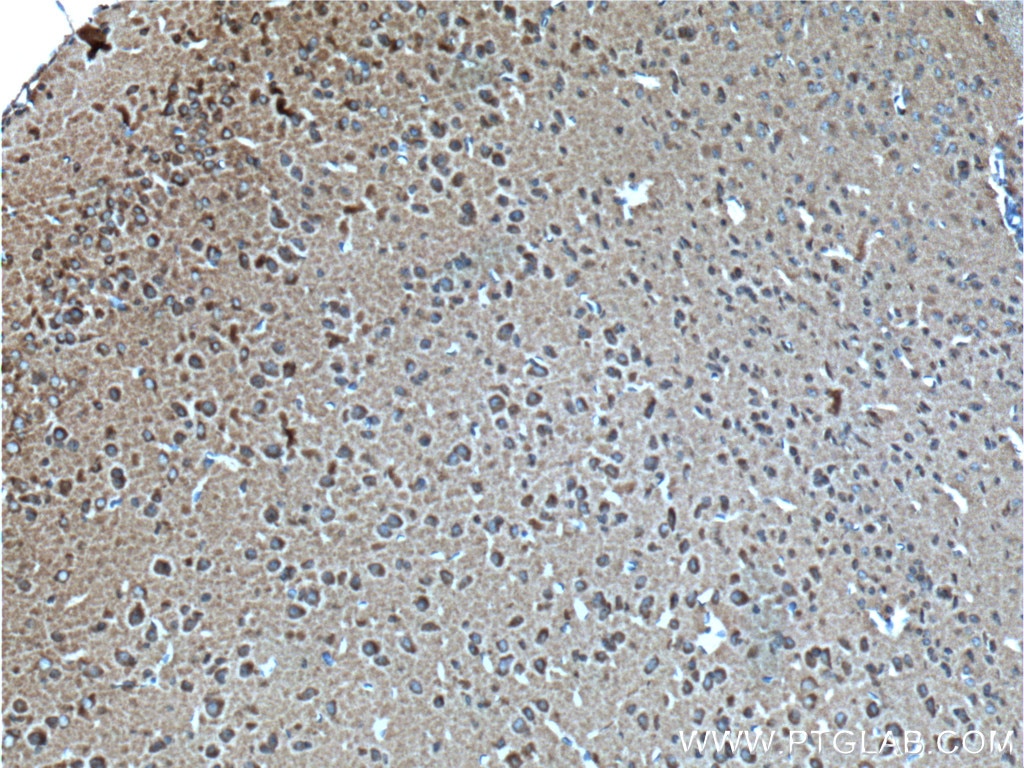
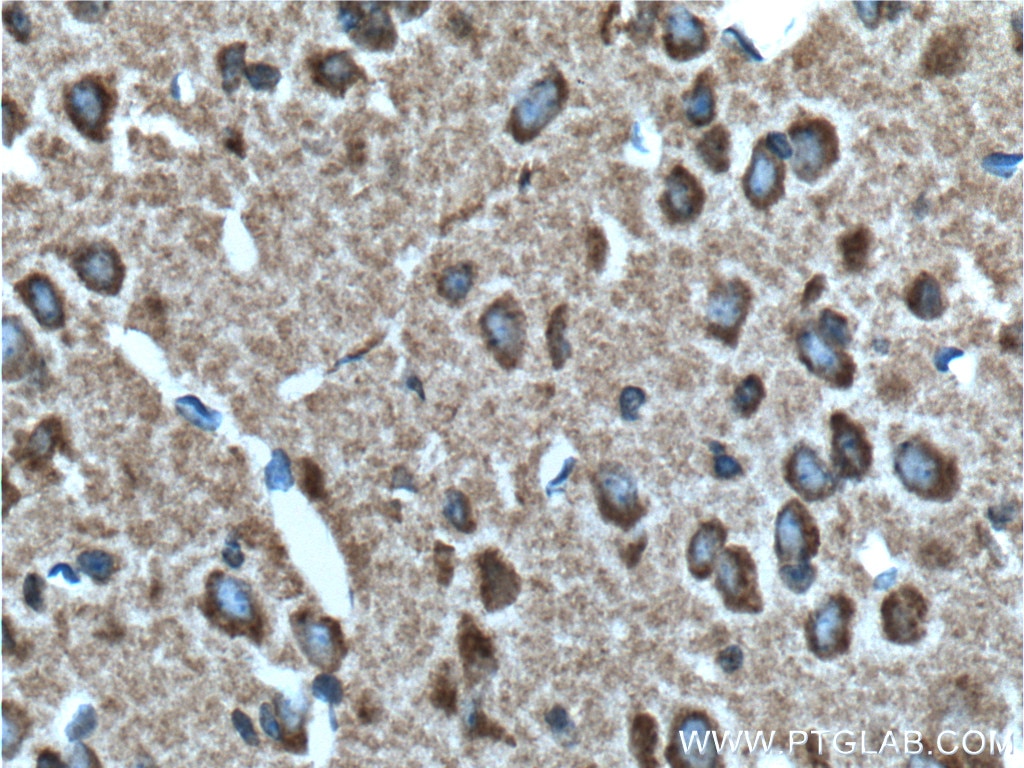
| Positive IHC detected in | mouse brain tissue Note: suggested antigen retrieval with TE buffer pH 9.0; (*) Alternatively, antigen retrieval may be performed with citrate buffer pH 6.0 |
Recommended dilution
| Application | Dilution |
|---|---|
| Western Blot (WB) | WB : 1:2000-1:10000 |
| Immunohistochemistry (IHC) | IHC : 1:50-1:500 |
| It is recommended that this reagent should be titrated in each testing system to obtain optimal results. | |
| Sample-dependent, Check data in validation data gallery. | |
Product Information
13646-1-AP targets Syntaphilin in WB, IHC, IF, CoIP, ELISA applications and shows reactivity with human, mouse, rat samples.
| Tested Reactivity | human, mouse, rat |
| Cited Reactivity | human, mouse, rat |
| Host / Isotype | Rabbit / IgG |
| Class | Polyclonal |
| Type | Antibody |
| Immunogen |
CatNo: Ag4594 Product name: Recombinant human SNPH protein Source: e coli.-derived, PGEX-4T Tag: GST Domain: 121-424 aa of BC035788 Sequence: WIEEECHRVEAQLALKEARKEIKQLKQVIDTVKNNLIDKDKGLQKYFVDINIQNKKLETLLHSMEVAQNGMAKEDGTGESAGGSPARSLTRSSTYTKLSDPAVCGDRQPGDPSSGSAEDGADSGFAAADDTLSRTDALEASSLLSSGVDCGTEETSLHSSFGLGPRFPASNTYEKLLCGMEAGVQASCMQERAIQTDFVQYQPDLDTILEKVTQAQVCGTDPESGDRCPELDAHPSGPRDPNSAVVVTVGDELEAPEPITRGPTPQRPGANPNPGQSVSVVCPMEEEEEAAVAEKEPKSYWSRH Predict reactive species |
| Full Name | syntaphilin |
| Calculated Molecular Weight | 538 aa, 58 kDa |
| Observed Molecular Weight | 70-75 kDa, 65 kDa |
| GenBank Accession Number | BC035788 |
| Gene Symbol | SNPH |
| Gene ID (NCBI) | 9751 |
| RRID | AB_2193555 |
| Conjugate | Unconjugated |
| Form | Liquid |
| Purification Method | Antigen affinity purification |
| UNIPROT ID | O15079 |
| Storage Buffer | PBS with 0.02% sodium azide and 50% glycerol, pH 7.3. |
| Storage Conditions | Store at -20°C. Stable for one year after shipment. Aliquoting is unnecessary for -20oC storage. 20ul sizes contain 0.1% BSA. |
Background Information
Syntaphilin is a protein selectively expressed in brain. Syntaphilin competes with SNAP-25 for binding to syntaxin-1 and inhibits SNARE complex formation by absorbing free syntaxin-1, and thereby regulates synaptic vesicle exocytosis (PMID: 10707983). The deduced 537-amino acid syntaphilin protein contains an N-terminal proline-rich domain, a predicted coiled-coil domain, a putative C-terminal transmembrane domain, and numerous consensus sites for protein phosphorylation. Whereas the calculated molecular mass of syntaphilin is 58 kDa, the apparent molecular mass of 70-75 kDa is larger than the predicted mass, suggesting a posttranslational modification of syntaphilin (PMID: 9205841; 10707983). An extra band of 65 kDa was also detected by this antibody that may represent an alternative syntaphilin gene product or a stable degradation product (PMID: 10707983; 24457644).
Protocols
| Product Specific Protocols | |
|---|---|
| IHC protocol for Syntaphilin antibody 13646-1-AP | Download protocol |
| WB protocol for Syntaphilin antibody 13646-1-AP | Download protocol |
| Standard Protocols | |
|---|---|
| Click here to view our Standard Protocols |
Publications
What published studies show
| Species | Application | Title |
|---|---|---|
Sci Rep Identification of a novel interaction of FUS and syntaphilin may explain synaptic and mitochondrial abnormalities caused by ALS mutations. | ||
Mol Brain Disrupted-in-schizophrenia 1 (DISC1) and Syntaphilin collaborate to modulate axonal mitochondrial anchoring. | ||
Brain Res Miro1 provides neuroprotection via the mitochondrial trafficking pathway in a rat model of traumatic brain injury. | ||
Front Genet Systematic profiling of mitochondria-related transcriptome in tumorigenesis, prognosis, and tumor immune microenvironment of intrahepatic cholangiocarcinoma: a multi-center cohort study | ||
J Ethnopharmacol Buyang Huanwu decoction promotes neurological recovery after ischemic stroke by activating the Akt/PAK5/SNPH axis to enhance mitochondrial recruitment and axonal remodeling. | ||
J Biol Chem Bisphenol-A impairs hippocampal neurogenesis by disrupting Kinesin-1-dependent mitochondrial trafficking. |





