

Tested Applications
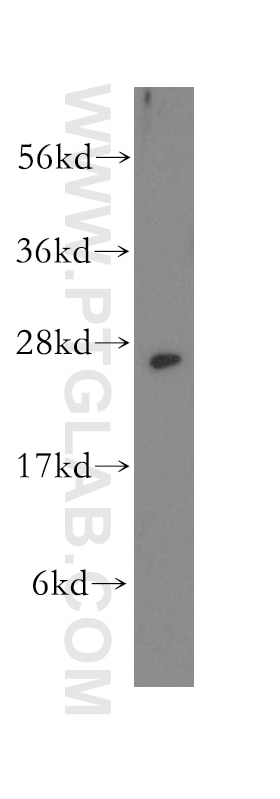
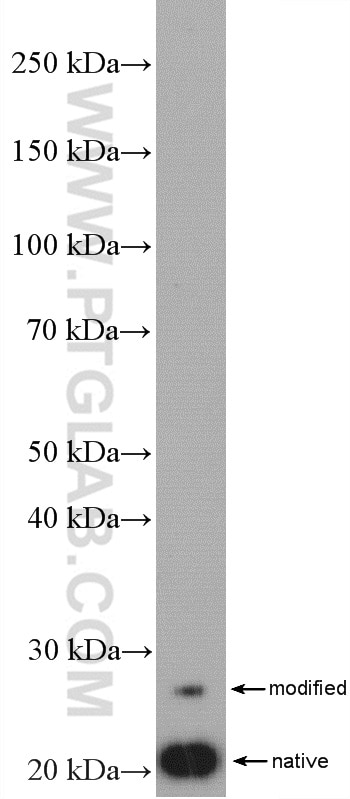
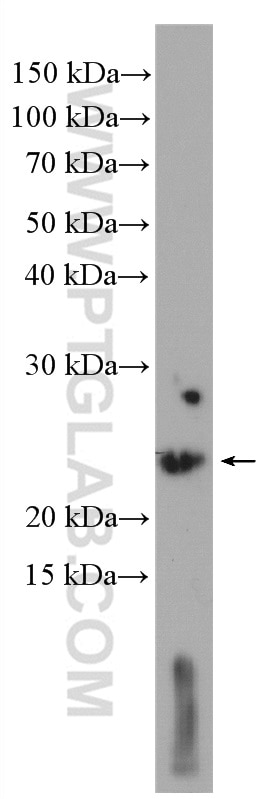
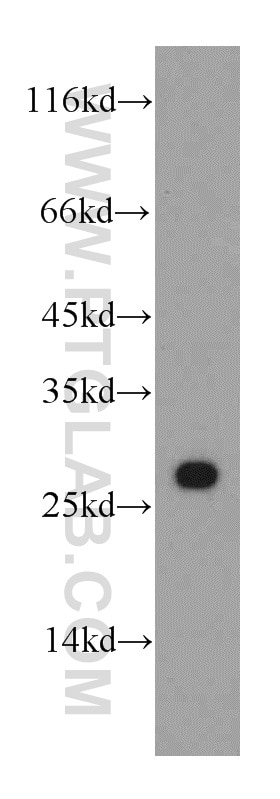
| Positive WB detected in | HeLa cells, A549 cells, NIH/3T3 cells |
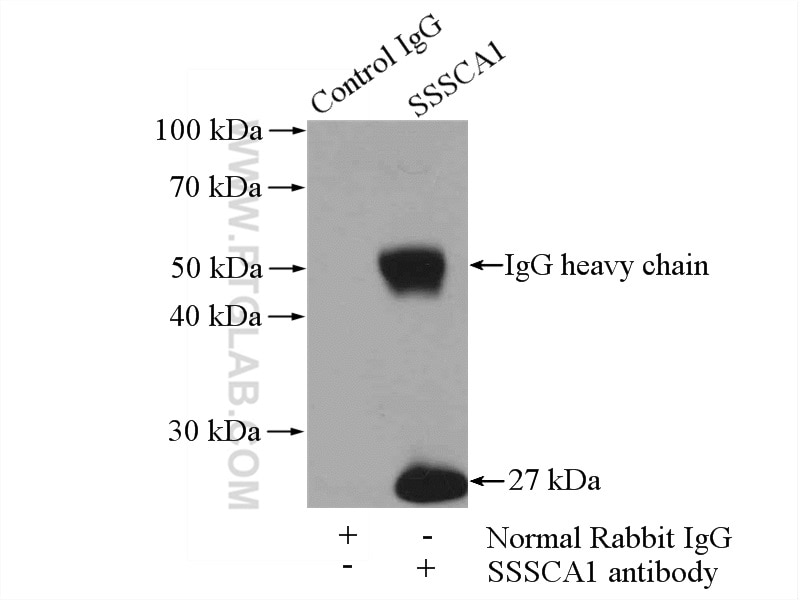
| Positive IP detected in | HeLa cells |
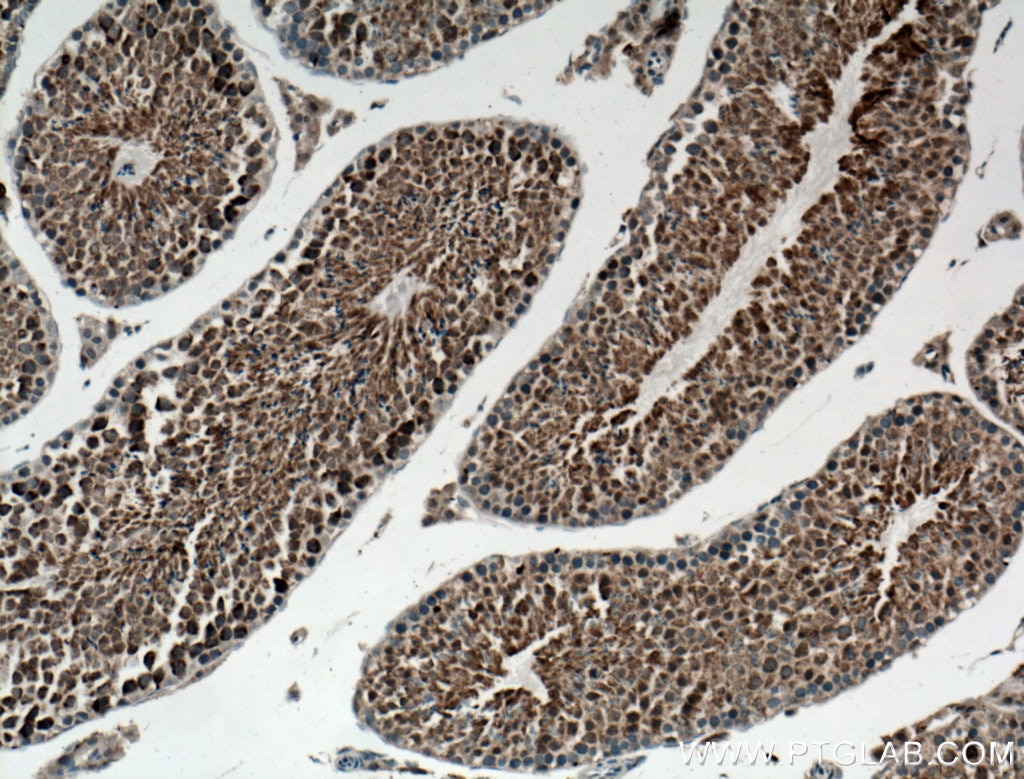
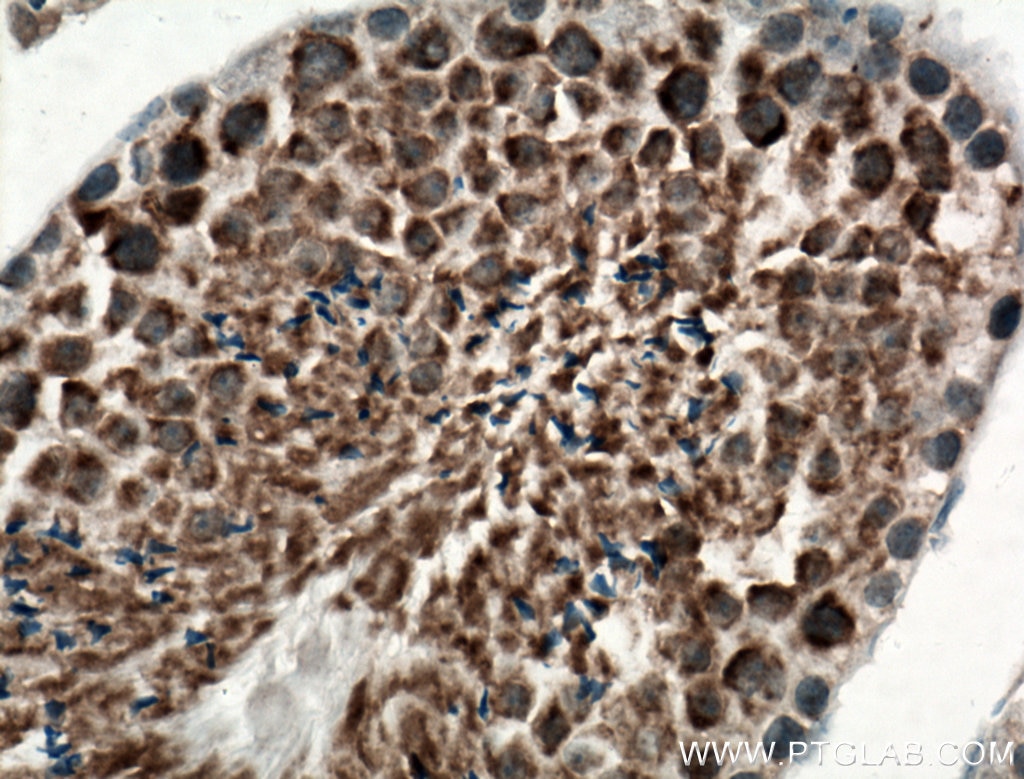
| Positive IHC detected in | mouse testis tissue Note: suggested antigen retrieval with TE buffer pH 9.0; (*) Alternatively, antigen retrieval may be performed with citrate buffer pH 6.0 |
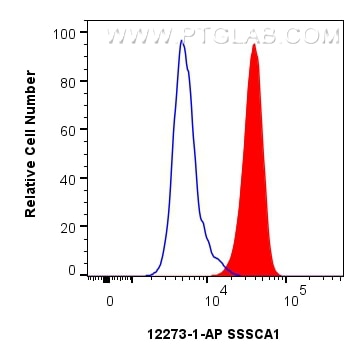
| Positive FC (Intra) detected in | HeLa cells |
Recommended dilution
| Application | Dilution |
|---|---|
| Western Blot (WB) | WB : 1:500-1:1000 |
| Immunoprecipitation (IP) | IP : 0.5-4.0 ug for 1.0-3.0 mg of total protein lysate |
| Immunohistochemistry (IHC) | IHC : 1:50-1:500 |
| Flow Cytometry (FC) (INTRA) | FC (INTRA) : 0.25 ug per 10^6 cells in a 100 ul suspension |
| It is recommended that this reagent should be titrated in each testing system to obtain optimal results. | |
| Sample-dependent, Check data in validation data gallery. | |
Product Information
12273-1-AP targets SSSCA1 in WB, IHC, FC (Intra), IP, ELISA applications and shows reactivity with human, mouse, rat samples.
| Tested Reactivity | human, mouse, rat |
| Cited Reactivity | human, mouse |
| Host / Isotype | Rabbit / IgG |
| Class | Polyclonal |
| Type | Antibody |
| Immunogen |
CatNo: Ag2916 Product name: Recombinant human SSSCA1 protein Source: e coli.-derived, PGEX-4T Tag: GST Domain: 1-199 aa of BC014791 Sequence: MALNGAEVDDFSWEPPTEAETKVLQARRERQDRISRLMGDYLLRGYRMLGETCADCGTILLQDKQRKIYCVACQELDSDVDKDNPALNAQAALSQAREHQLASASELPLGSRPAPQPPVPRPEHCEGAAAGLKAAQGPPAPAVPPNTDVMACTQTALLQKLTWASAELGSSTSLETSIQLCGLIRACAEALRSLQQLQH Predict reactive species |
| Full Name | Sjogren syndrome/scleroderma autoantigen 1 |
| Calculated Molecular Weight | 199 aa, 21 kDa |
| Observed Molecular Weight | 27 kDa |
| GenBank Accession Number | BC014791 |
| Gene Symbol | SSSCA1 |
| Gene ID (NCBI) | 10534 |
| RRID | AB_2195902 |
| Conjugate | Unconjugated |
| Form | Liquid |
| Purification Method | Antigen affinity purification |
| UNIPROT ID | O60232 |
| Storage Buffer | PBS with 0.02% sodium azide and 50% glycerol, pH 7.3. |
| Storage Conditions | Store at -20°C. Stable for one year after shipment. Aliquoting is unnecessary for -20oC storage. 20ul sizes contain 0.1% BSA. |
Background Information
SSSCA1, also named as Autoantigen p27, is centromere-associated protein. It may induce anti-centromere antibodies. SSSCA1 plays a role in mitosis. It's involved in Sjogren syndrome/scleroderma. The calculated MW of SSSCA1 is 21.5 kDa (native form), with modification the MW is about23- 27 kDa.
Protocols
| Product Specific Protocols | |
|---|---|
| FC protocol for SSSCA1 antibody 12273-1-AP | Download protocol |
| IHC protocol for SSSCA1 antibody 12273-1-AP | Download protocol |
| IP protocol for SSSCA1 antibody 12273-1-AP | Download protocol |
| WB protocol for SSSCA1 antibody 12273-1-AP | Download protocol |
| Standard Protocols | |
|---|---|
| Click here to view our Standard Protocols |
Publications
What published studies show
The SSSCA1 Polyclonal antibody (Cat# 12273-1-AP) has 2 citations. One appears in Cell (2023), studying orphan subunit recognition during assembly quality control in human samples via Western blot. The other is in Journal of Ethnopharmacology (2024), investigating Centipeda minima extracts and sesquiterpene lactones suppressing the Skp2/p27 signaling pathway in non-small cell lung cancer, using WB and IHC in mouse and human samples. The associated research fields are protein quality control and cancer/ethnopharmacology.
| Species | Application | Title |
|---|---|---|
J Ethnopharmacol Centipeda minima extracts and the active sesquiterpene lactones have therapeutic efficacy in non-small cell lung cancer by suppressing Skp2/p27 signaling pathway |









