

Tested Applications
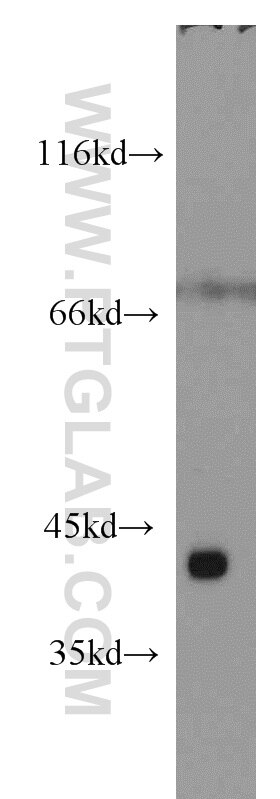
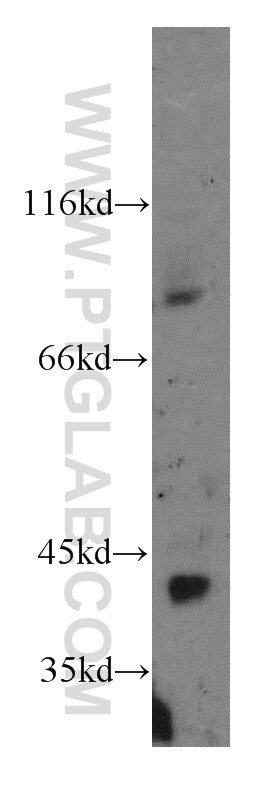
| Positive WB detected in | mouse heart tissue |
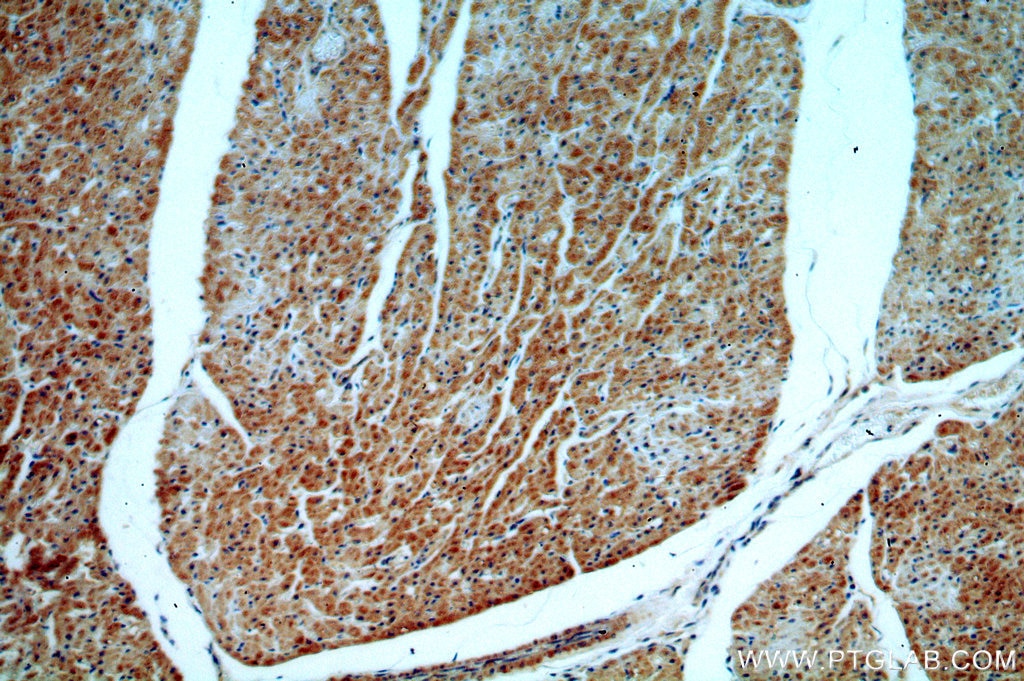
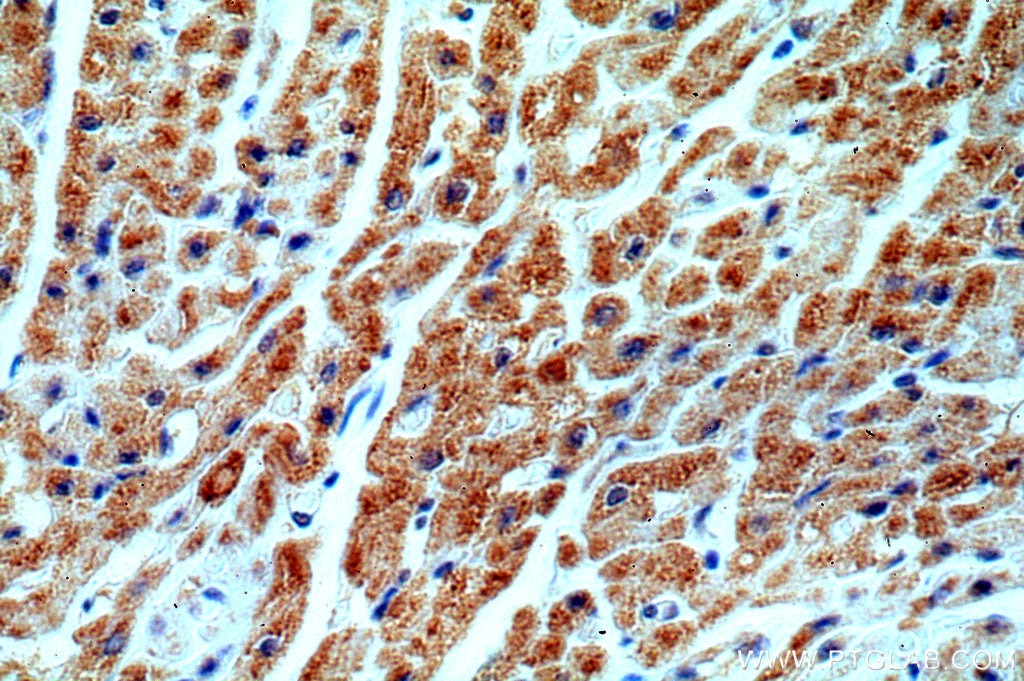
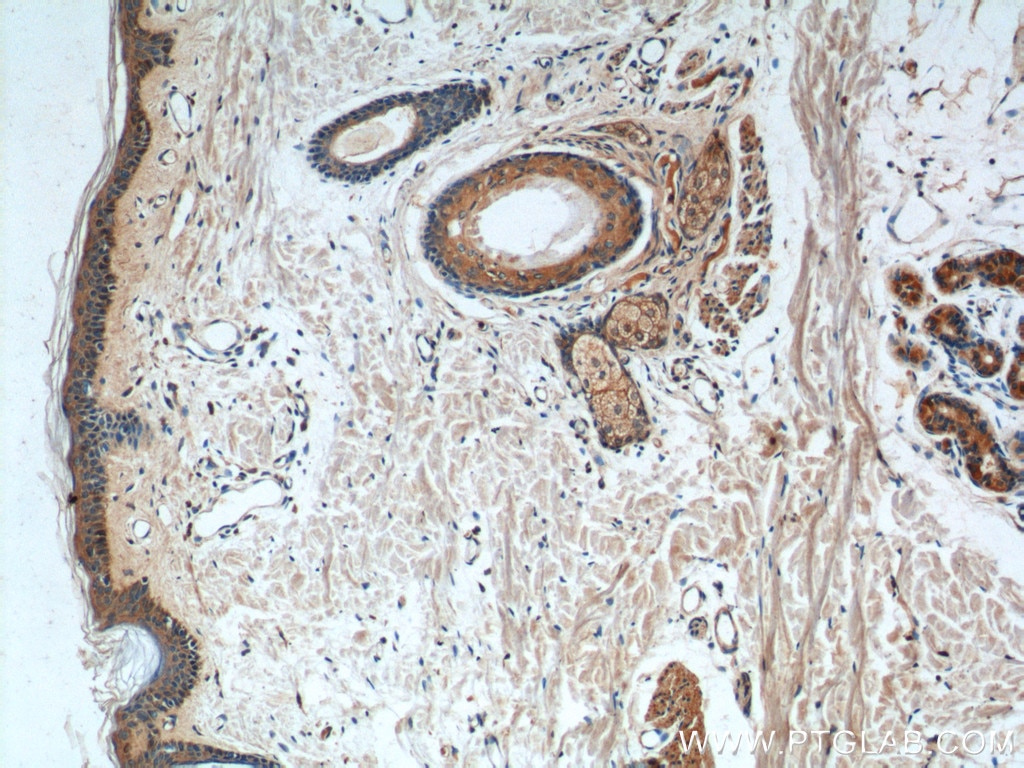
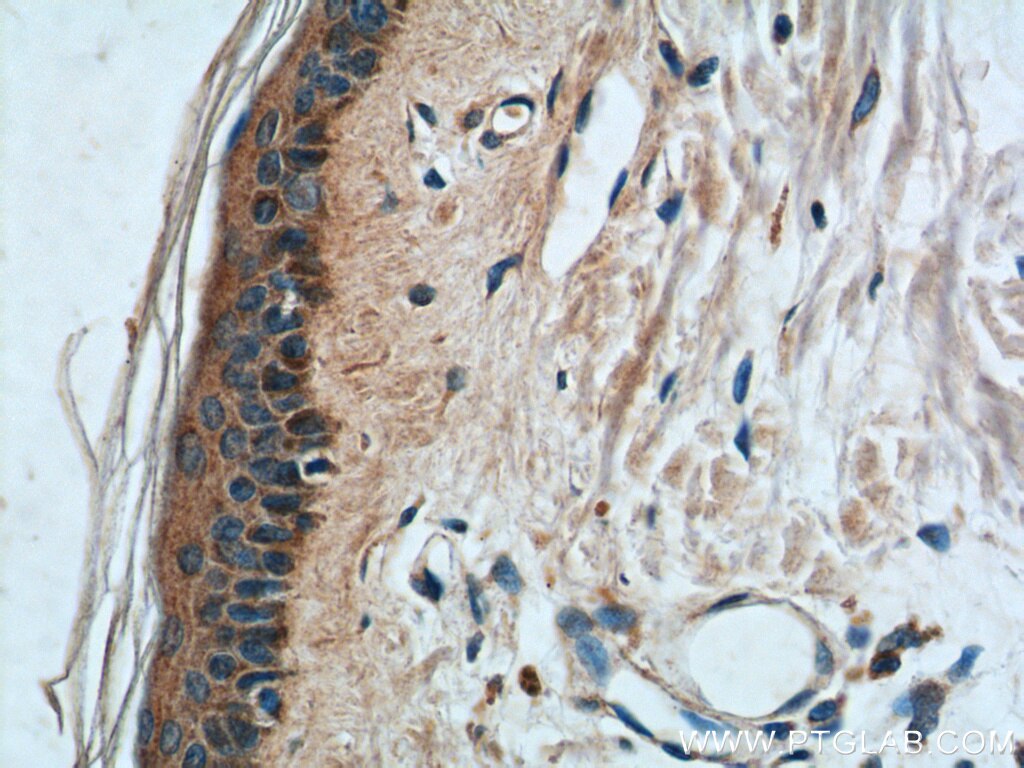
| Positive IHC detected in | human heart tissue, human skin tissue Note: suggested antigen retrieval with TE buffer pH 9.0; (*) Alternatively, antigen retrieval may be performed with citrate buffer pH 6.0 |
Recommended dilution
| Application | Dilution |
|---|---|
| Western Blot (WB) | WB : 1:200-1:1000 |
| Immunohistochemistry (IHC) | IHC : 1:20-1:200 |
| It is recommended that this reagent should be titrated in each testing system to obtain optimal results. | |
| Sample-dependent, Check data in validation data gallery. | |
Product Information
19736-1-AP targets ST8SIA2-Specific in WB, IHC, IF, ELISA applications and shows reactivity with human, mouse, rat samples.
| Tested Reactivity | human, mouse, rat |
| Cited Reactivity | human, mouse, rat |
| Host / Isotype | Rabbit / IgG |
| Class | Polyclonal |
| Type | Antibody |
| Immunogen |
Peptide Predict reactive species |
| Full Name | ST8 alpha-N-acetyl-neuraminide alpha-2,8-sialyltransferase 2 |
| Calculated Molecular Weight | 42 kDa |
| Observed Molecular Weight | 42 kDa |
| GenBank Accession Number | NM_006011 |
| Gene Symbol | ST8SIA2 |
| Gene ID (NCBI) | 8128 |
| RRID | AB_10638471 |
| Conjugate | Unconjugated |
| Form | Liquid |
| Purification Method | Antigen affinity purification |
| UNIPROT ID | Q92186 |
| Storage Buffer | PBS with 0.02% sodium azide and 50% glycerol, pH 7.3. |
| Storage Conditions | Store at -20°C. Stable for one year after shipment. Aliquoting is unnecessary for -20oC storage. 20ul sizes contain 0.1% BSA. |
Background Information
ST8SIA2, also named as SIAT8B and STX, belongs to the glycosyltransferase 29 family. ST8SIA2 may transfer sialic acid through alpha-2,8-linkages to the alpha-2,3-linked and alpha-2,6-linked sialic acid of N-linked oligosaccharides of glycoproteins and may be involved in PSA (polysialic acid) expression. The antibody is specific to ST8SIA2.
Protocols
| Product Specific Protocols | |
|---|---|
| IHC protocol for ST8SIA2-Specific antibody 19736-1-AP | Download protocol |
| WB protocol for ST8SIA2-Specific antibody 19736-1-AP | Download protocol |
| Standard Protocols | |
|---|---|
| Click here to view our Standard Protocols |
Publications
What published studies show
The ST8SIA2-Specific Polyclonal antibody (Cat# 19736-1-AP) has 6 total citations. These appear in Nature Neuroscience, Oxidative Medicine and Cellular Longevity, Frontiers in Immunology, Frontiers in Neuroscience, Journal of Cell Science, and Brain Research. Research fields span neuroscience (olfactory cortex, brain aging, Alzheimer's disease), neuroblastoma immunology, cerebral ischemia/reperfusion injury, and neural cell adhesion molecule biology.
| Species | Application | Title |
|---|---|---|
Nat Neurosci Single-cell genomics of the mouse olfactory cortex reveals contrasts with neocortex and ancestral signatures of cell type evolution | ||
Oxid Med Cell Longev Long Noncoding RNA TUG1 Aggravates Cerebral Ischemia/Reperfusion Injury by Acting as a ceRNA for miR-3072-3p to Target St8sia2. | ||
Front Immunol A novel ganglioside-related risk signature can reveal the distinct immune landscape of neuroblastoma and predict the immunotherapeutic response | ||
Front Neurosci Spatiotemporal differential regulation of extrasynaptic GluN2B receptor subunits and PSA-NCAM in brain aging and Alzheimer's disease | ||
J Cell Sci Prolyl endopeptidase is involved in the degradation of neural cell adhesion molecules in vitro. | ||
Brain Res PSA modification of NCAM supports the survival of injured retinal ganglion cells in adulthood. |







