
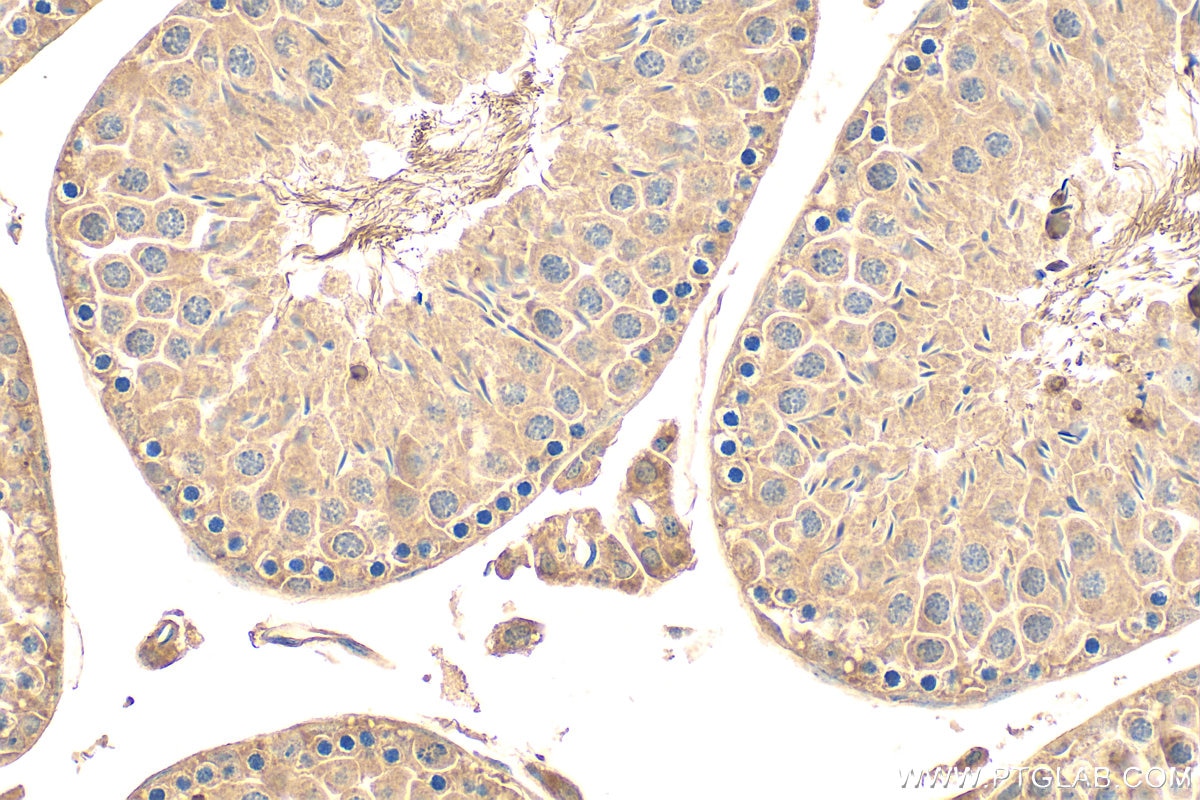

Tested Applications
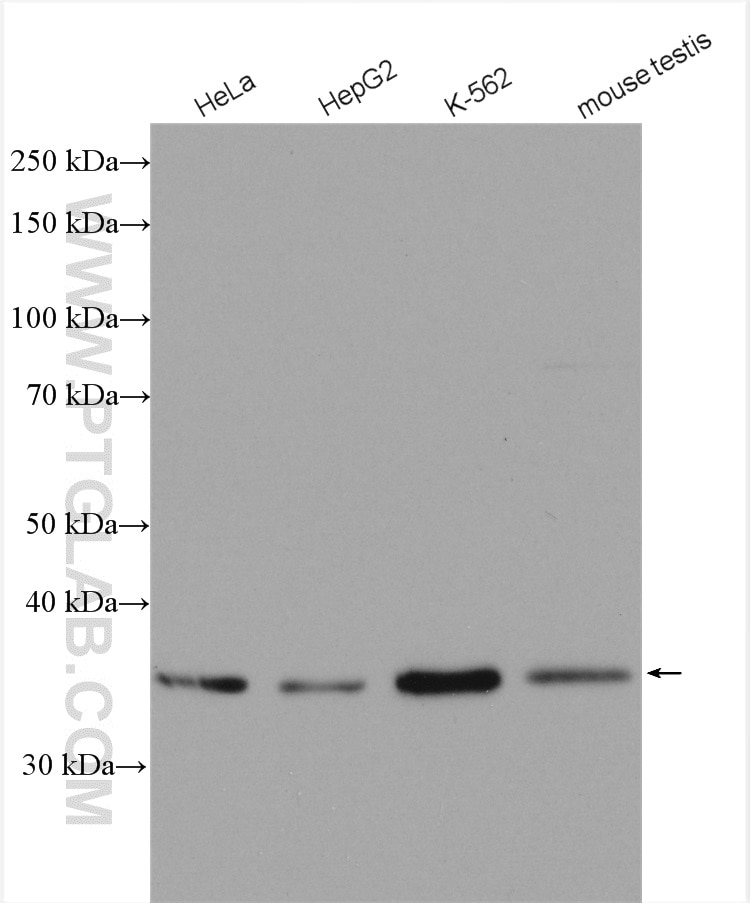
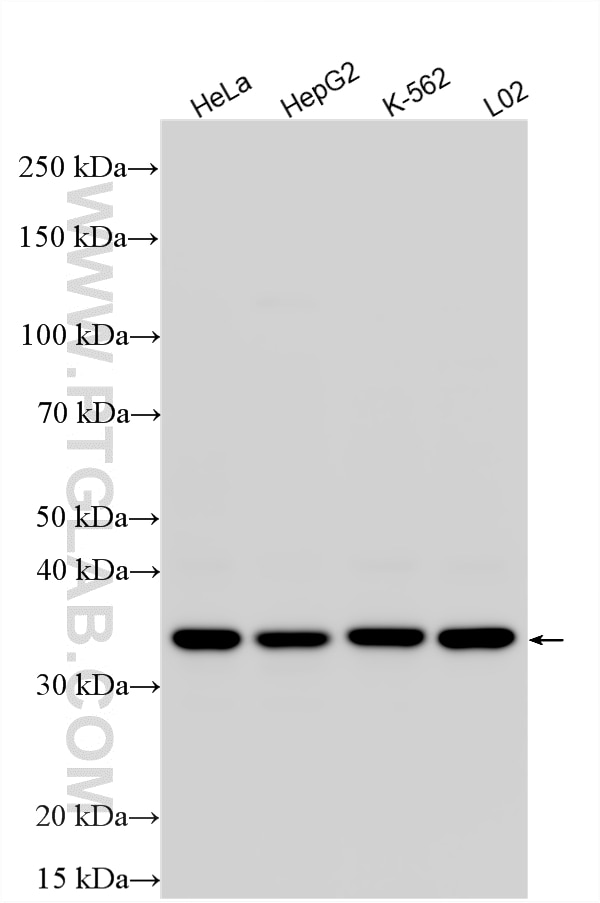
| Positive WB detected in | HeLa cells, HepG2 cells, K-562 cells, mouse testis tissue, L02 cells |
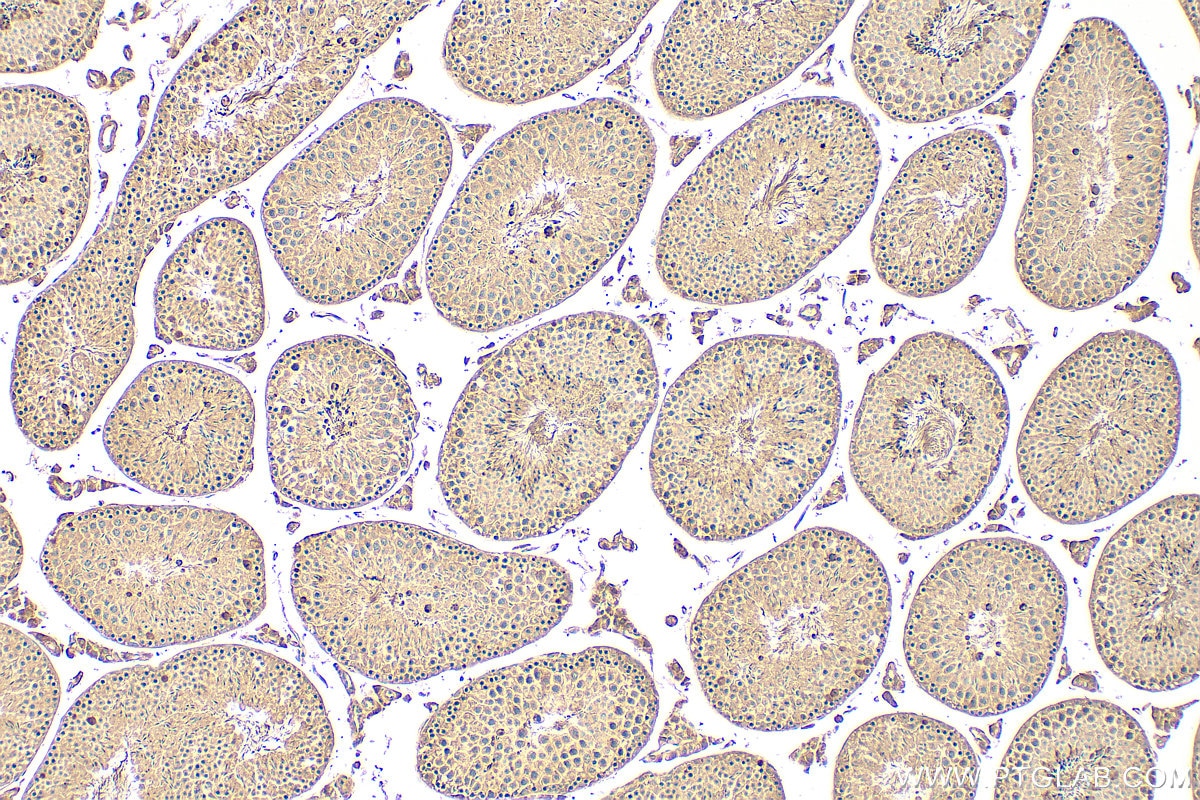
| Positive IHC detected in | mouse testis tissue Note: suggested antigen retrieval with TE buffer pH 9.0; (*) Alternatively, antigen retrieval may be performed with citrate buffer pH 6.0 |
Recommended dilution
| Application | Dilution |
|---|---|
| Western Blot (WB) | WB : 1:5000-1:50000 |
| Immunohistochemistry (IHC) | IHC : 1:50-1:500 |
| It is recommended that this reagent should be titrated in each testing system to obtain optimal results. | |
| Sample-dependent, Check data in validation data gallery. | |
Product Information
15689-1-AP targets STARD7 in WB, IHC, ELISA applications and shows reactivity with human, mouse, rat samples.
| Tested Reactivity | human, mouse, rat |
| Cited Reactivity | human, mouse, pig |
| Host / Isotype | Rabbit / IgG |
| Class | Polyclonal |
| Type | Antibody |
| Immunogen |
CatNo: Ag8224 Product name: Recombinant human STARD7 protein Source: e coli.-derived, PGEX-4T Tag: GST Domain: 1-295 aa of BC008894 Sequence: MAALAGVFVWDEERIQEEELQRSINEMKRLEEMSNMFQSSGVQHHPPEPKAQTEGNEDSEGKEQRWEMVMDKKHFKLWRRPITGTHLYQYRVFGTYTDVTPRQFFNVQLDTEYRKKWDALVIKLEVIERDVVSGSEVLHWVTHFPYPMYSRDYVYVRRYSVDQENNMMVLVSRAVEHPSVPESPEFVRVRSYESQMVIRPHKSFDENGFDYLLTYSDNPQTVFPRYCVSWMVSSGMPDFLEKLHMATLKAKNMEIKVKDYISAKPLEMSSEAKATSQSSERKNEGSCGPARIEYA Predict reactive species |
| Full Name | StAR-related lipid transfer (START) domain containing 7 |
| Calculated Molecular Weight | 295 aa, 35 kDa |
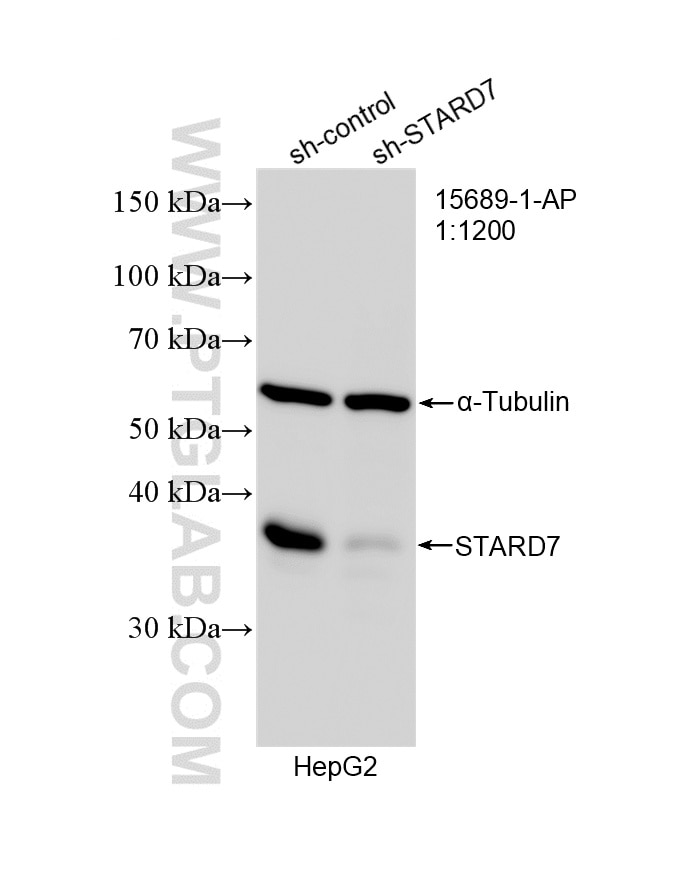
| Observed Molecular Weight | 34 kDa |
| GenBank Accession Number | BC008894 |
| Gene Symbol | STARD7 |
| Gene ID (NCBI) | 56910 |
| RRID | AB_2197820 |
| Conjugate | Unconjugated |
| Form | Liquid |
| Purification Method | Antigen affinity purification |
| UNIPROT ID | Q9NQZ5 |
| Storage Buffer | PBS with 0.02% sodium azide and 50% glycerol, pH 7.3. |
| Storage Conditions | Store at -20°C. Stable for one year after shipment. Aliquoting is unnecessary for -20oC storage. 20ul sizes contain 0.1% BSA. |
Background Information
STARD7, also known as gestational trophoblastic tumor gene-1 (GTT1), is a lipid transfer protein that specifically binds and transports phosphatidylcholine (PC) between cellular membranes. It is a member of the START (Steroidogenic Acute Regulatory protein-related lipid transfer) domain-containing protein family, which is involved in intracellular lipid transport and metabolism. (PMID: 23507753)
Protocols
| Product Specific Protocols | |
|---|---|
| IHC protocol for STARD7 antibody 15689-1-AP | Download protocol |
| WB protocol for STARD7 antibody 15689-1-AP | Download protocol |
| Standard Protocols | |
|---|---|
| Click here to view our Standard Protocols |
Publications
What published studies show
The anti-STARD7 antibody (Cat# 15689-1-AP) has 17 citations across 14 journals, including Nature Cell Biology, Nature Communications, Molecular Cell, Nature Chemical Biology, Science Advances, EMBO Journal, eLife, and FASEB Journal. Research fields span mitochondrial biology, lipid transport, ferroptosis, apoptosis, muscle physiology, neurology, and oncology. Most studies used WB, with some employing IHC. Species tested include human, mouse, and pig.
| Species | Application | Title |
|---|---|---|
Nat Cell Biol PARL mediates Smac proteolytic maturation in mitochondria to promote apoptosis. | ||
Nat Cell Biol Mitochondria regulate intracellular coenzyme Q transport and ferroptotic resistance via STARD7 | ||
Nat Commun Intronic ATTTC repeat expansions in STARD7 in familial adult myoclonic epilepsy linked to chromosome 2. | ||
Nat Commun Rewiring of 3D chromatin topology orchestrates transcriptional reprogramming in muscle fiber-type specification and transformation.
| ||
Mol Cell OPA1 promotes ferroptosis by augmenting mitochondrial ROS and suppressing an integrated stress response | ||
Nat Chem Biol Leaflet-specific phospholipid imaging using genetically encoded proximity sensors.
|
Reviews
What customers say
One reviewer (Elsa Sanchez-Lopez, 2019) rated this antibody 4 out of 5 stars. Used on a mouse microglia cell line at a 1:2500 dilution for Western Blot, she reported that the antibody performed well, producing a clear band at the expected molecular weight with no unspecific binding observed.
The reviews below have been submitted by verified Proteintech customers who received an incentive for providing their feedback.
Elsa (Verified Customer) (05-06-2019) | The antibody works well, a band at the expected molecular weight is shown. No unspecificity.
|






