

Tested Applications
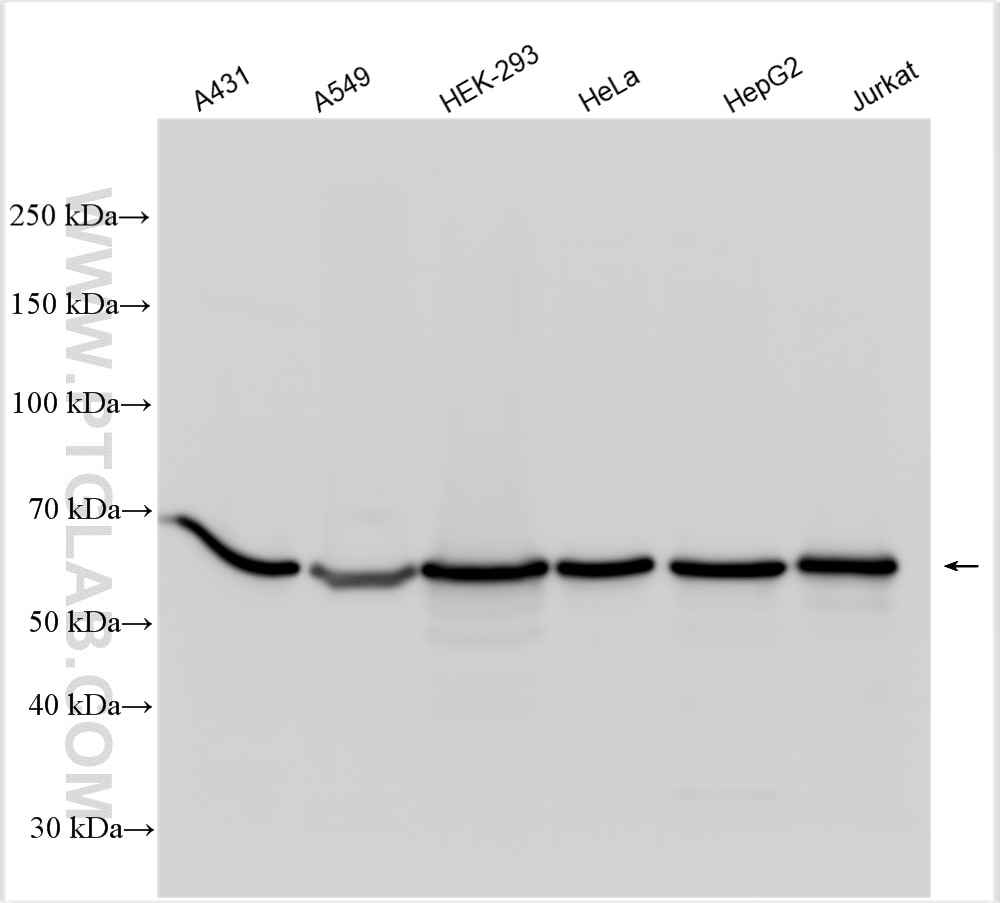
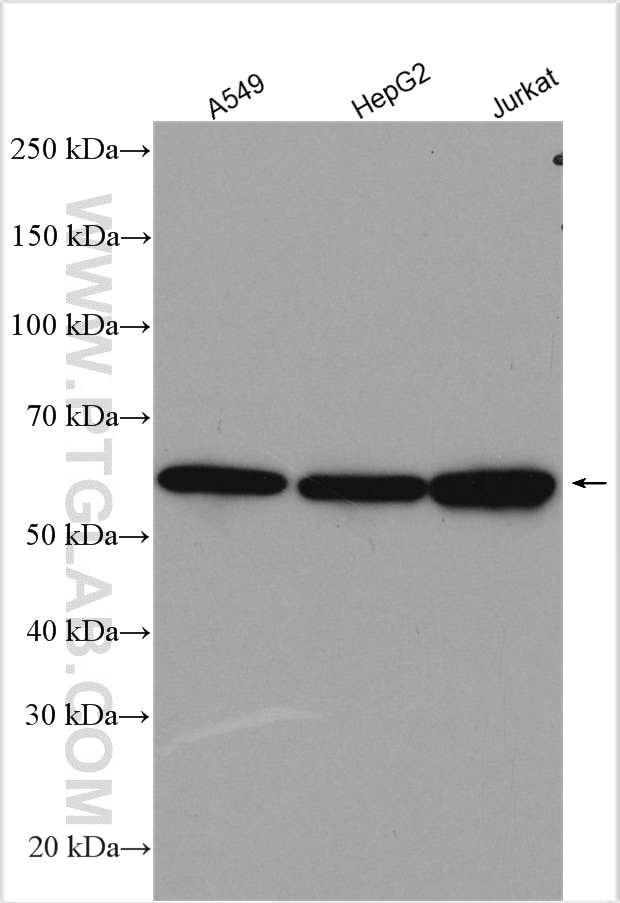
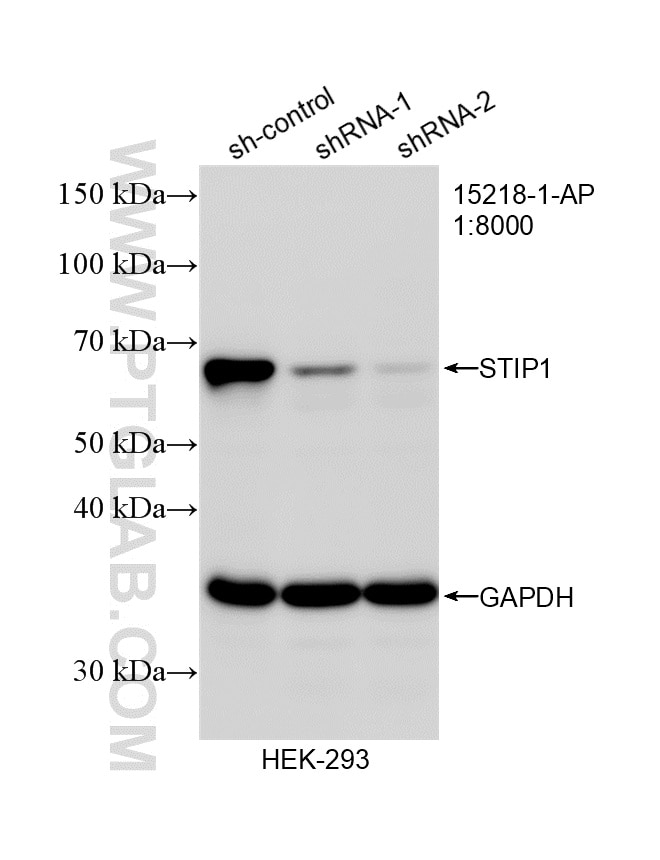
| Positive WB detected in | A431 cells, A549 cells, HEK-293 cells, HepG2 cells, Jurkat cells, HeLa cells |
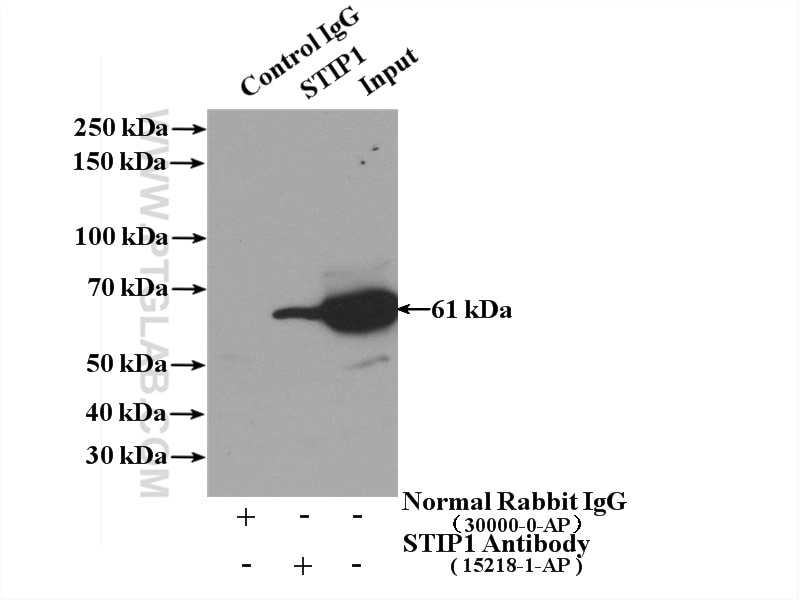
| Positive IP detected in | Jurkat cells |
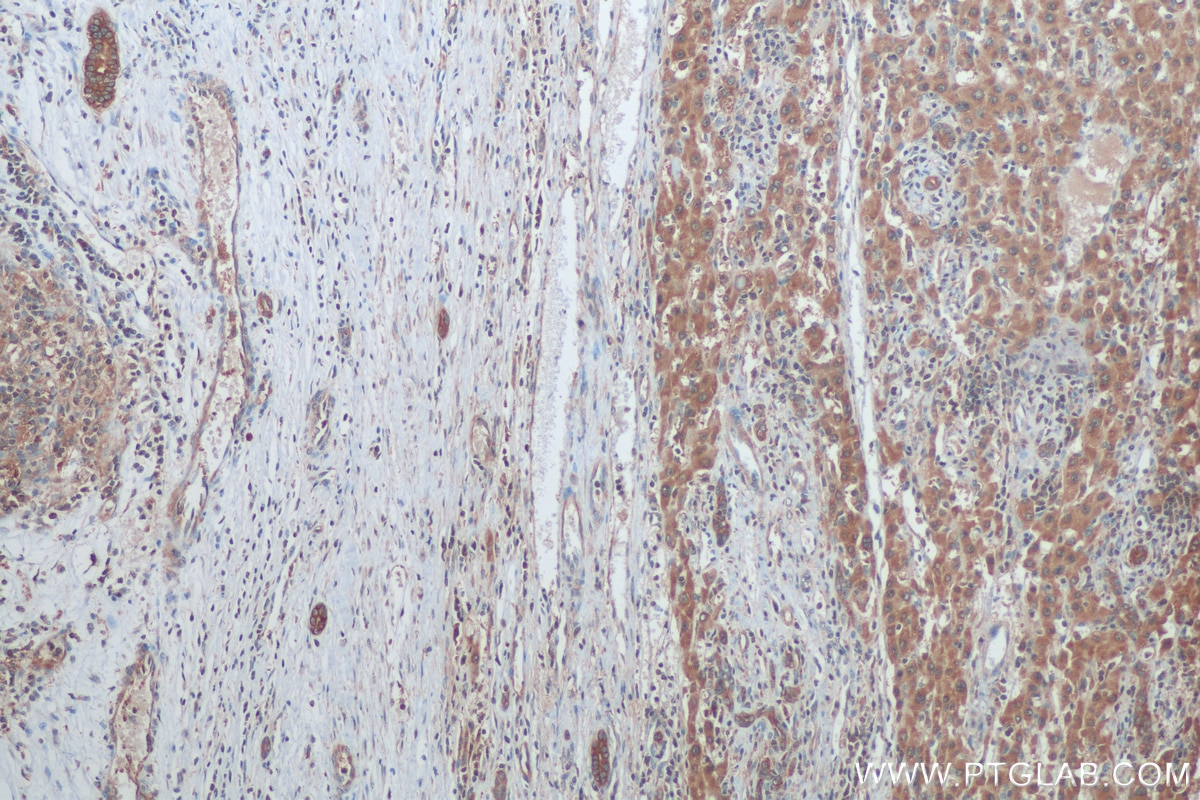
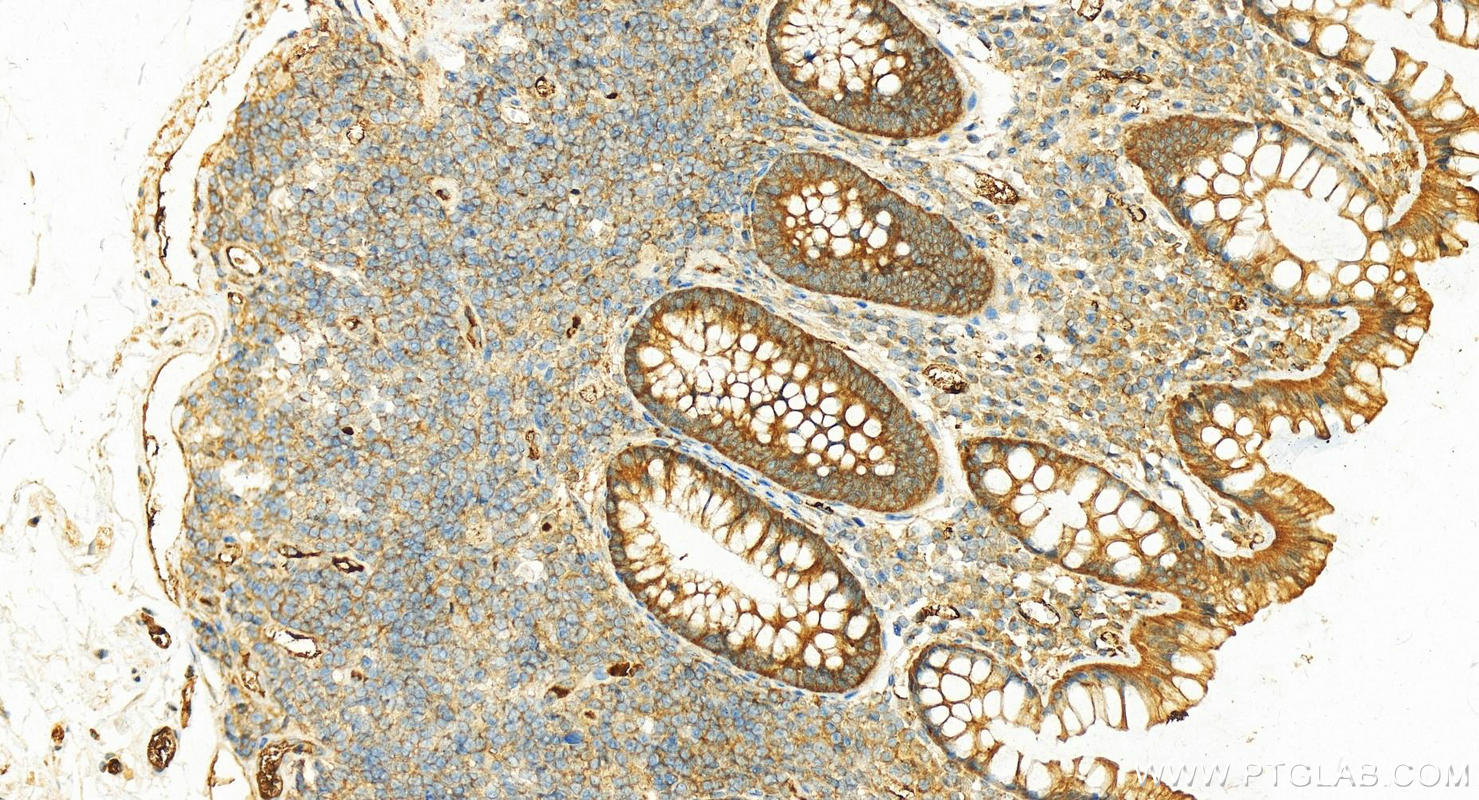
| Positive IHC detected in | human liver cancer tissue, human normal colon Note: suggested antigen retrieval with TE buffer pH 9.0; (*) Alternatively, antigen retrieval may be performed with citrate buffer pH 6.0 |
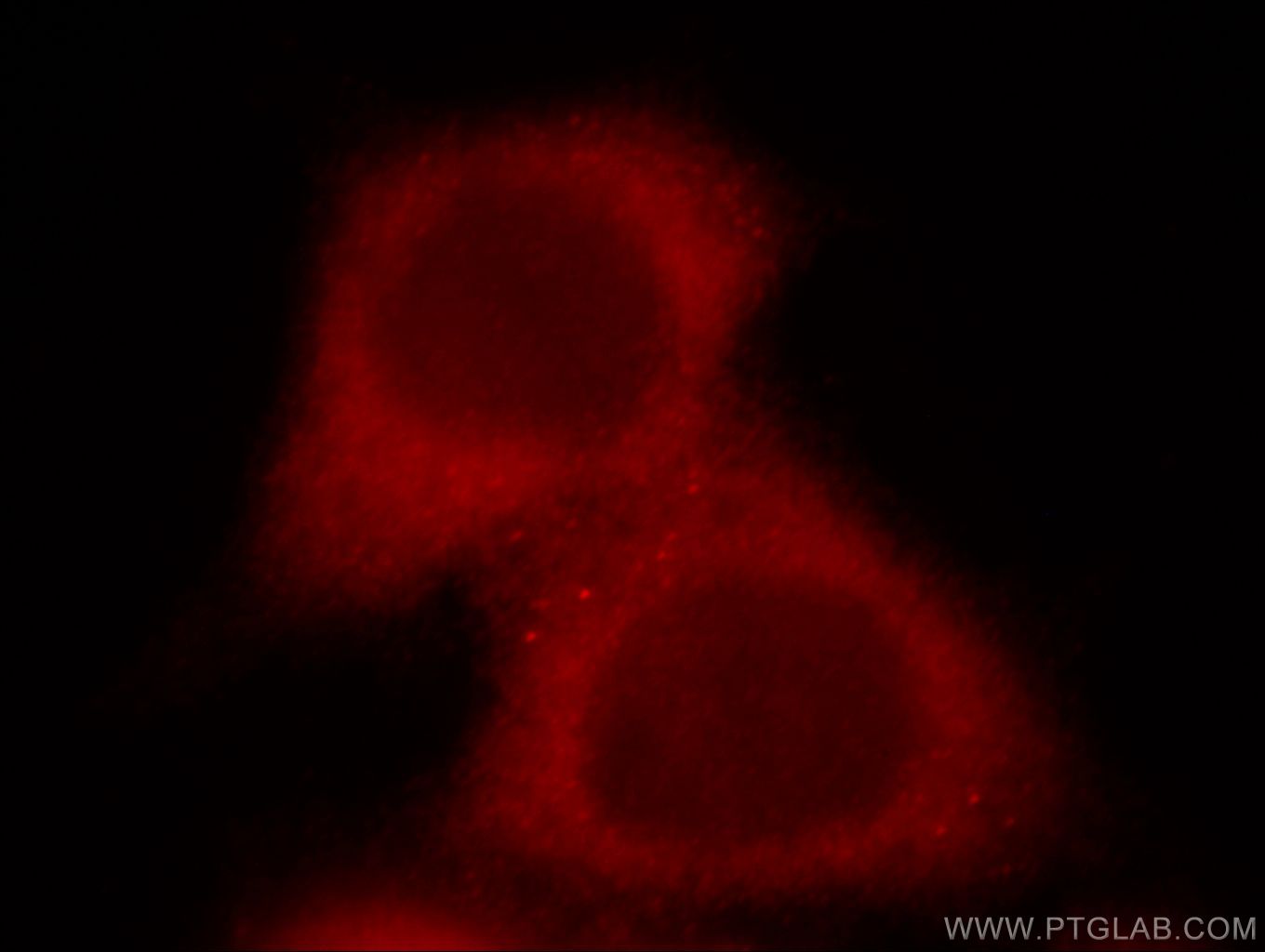
| Positive IF/ICC detected in | MCF-7 cells |
Recommended dilution
| Application | Dilution |
|---|---|
| Western Blot (WB) | WB : 1:2000-1:10000 |
| Immunoprecipitation (IP) | IP : 0.5-4.0 ug for 1.0-3.0 mg of total protein lysate |
| Immunohistochemistry (IHC) | IHC : 1:50-1:500 |
| Immunofluorescence (IF)/ICC | IF/ICC : 1:10-1:100 |
| It is recommended that this reagent should be titrated in each testing system to obtain optimal results. | |
| Sample-dependent, Check data in validation data gallery. | |
Product Information
15218-1-AP targets STIP1 in WB, IHC, IF/ICC, IP, ELISA applications and shows reactivity with human, mouse, rat samples.
| Tested Reactivity | human, mouse, rat |
| Cited Reactivity | human, mouse |
| Host / Isotype | Rabbit / IgG |
| Class | Polyclonal |
| Type | Antibody |
| Immunogen |
CatNo: Ag7388 Product name: Recombinant human STIP1 protein Source: e coli.-derived, PGEX-4T Tag: GST Domain: 195-543 aa of BC002987 Sequence: EIATPPPPPPPKKETKPEPMEEDLPENKKQALKEKELGNDAYKKKDFDTALKHYDKAKELDPTNMTYITNQAAVYFEKGDYNKCRELCEKAIEVGRENREDYRQIAKAYARIGNSYFKEEKYKDAIHFYNKSLAEHRTPDVLKKCQQAEKILKEQERLAYINPDLALEEKNKGNECFQKGDYPQAMKHYTEAIKRNPKDAKLYSNRAACYTKLLEFQLALKDCEECIQLEPTFIKGYTRKAAALEAMKDYTKAMDVYQKALDLDSSCKEAADGYQRCMMAQYNRHDSPEDVKRRAMADPEVQQIMSDPAMRLILEQMQKDPQALSEHLKNPVIAQKIQKLMDVGLIAIR Predict reactive species |
| Full Name | stress-induced-phosphoprotein 1 |
| Calculated Molecular Weight | 63 kDa |
| Observed Molecular Weight | 61 kDa |
| GenBank Accession Number | BC002987 |
| Gene Symbol | STIP1 |
| Gene ID (NCBI) | 10963 |
| RRID | AB_2255518 |
| Conjugate | Unconjugated |
| Form | Liquid |
| Purification Method | Antigen affinity purification |
| UNIPROT ID | P31948 |
| Storage Buffer | PBS with 0.02% sodium azide and 50% glycerol, pH 7.3. |
| Storage Conditions | Store at -20°C. Stable for one year after shipment. Aliquoting is unnecessary for -20oC storage. 20ul sizes contain 0.1% BSA. |
Background Information
STIP1, also named as Hop and NY-REN-11. Its expression is low in the hypothalamus. STIP1 has some isoforms with MW 62 kDa, 68 kDa and 59 kDa. Acts as a co-chaperone for HSP90AA1.Mediates the association of the molecular chaperones HSPA8/HSC70 and HSP90, Probably forms a complex composed of chaperones HSP90 and HSP70, co-chaperones STIP1/HOP, CDC37, PPP5C, PTGES3/p23, TSC1 and client protein TSC2. STIP1 interacts with PACRG, EEF1AKMT3, FLCN, FNIP1 and FNIP2 (PMID:24880080).
Protocols
| Product Specific Protocols | |
|---|---|
| IF protocol for STIP1 antibody 15218-1-AP | Download protocol |
| IHC protocol for STIP1 antibody 15218-1-AP | Download protocol |
| IP protocol for STIP1 antibody 15218-1-AP | Download protocol |
| WB protocol for STIP1 antibody 15218-1-AP | Download protocol |
| Standard Protocols | |
|---|---|
| Click here to view our Standard Protocols |
Publications
What published studies show
The anti-STIP1 antibody (Cat# 15218-1-AP) has 9 citations published in journals including Nature, Int J Biol Sci, EMBO Rep, Exp Cell Res, Mol Biol Cell, Hum Cell, Gene, and Cancer Manag Res. Research fields span Hsp90 chaperone-client loading mechanisms, hepatocellular carcinoma, diabetic cardiomyopathy, ER protein folding, gastric cancer, mitochondrial biogenesis, breast cancer progression, male reproductive stress response, and lung adenocarcinoma signaling.
| Species | Application | Title |
|---|---|---|
Int J Biol Sci O-GlcNAcylated RALY Contributes to Hepatocellular Carcinoma Cells Proliferation by Regulating USP22 mRNA Nuclear Export | ||
Int J Biol Sci Macrophage-derived S100A9 promotes diabetic cardiomyopathy by disturbing mitochondrial quality control via STAT3 activation | ||
EMBO Rep Kinesin-1 mediates proper ER folding of the CaV1.2 channel and maintains mouse glucose homeostasis | ||
Exp Cell Res Tumor-promoting action of ubiquitin protease 43 in gastric cancer progression through deubiquitination and stabilization of stress-inducible phosphoprotein 1 | ||
Mol Biol Cell Mechanism of chaperone recruitment and retention on mitochondrial precursors |








