

Tested Applications
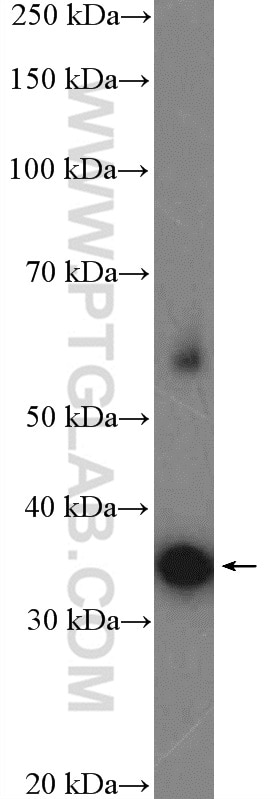
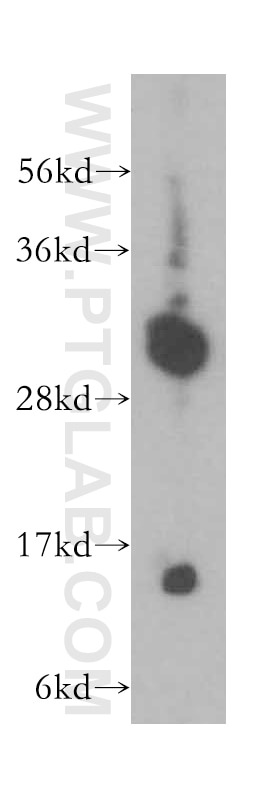
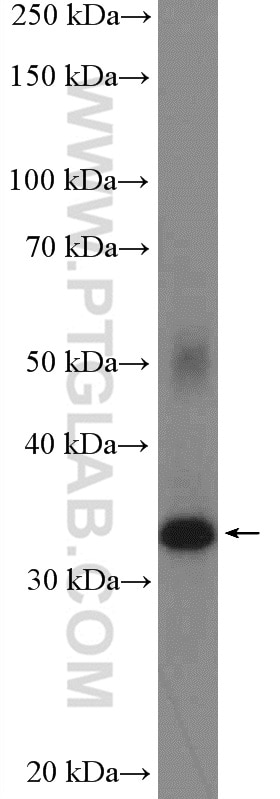
| Positive WB detected in | SH-SY5Y cells, human plasma tissue, Neuro-2a cells |
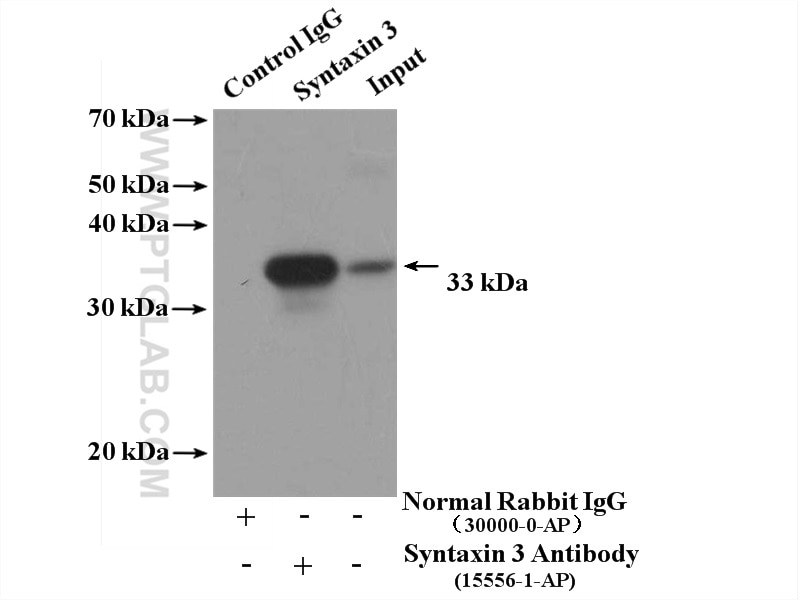
| Positive IP detected in | SH-SY5Y cells |
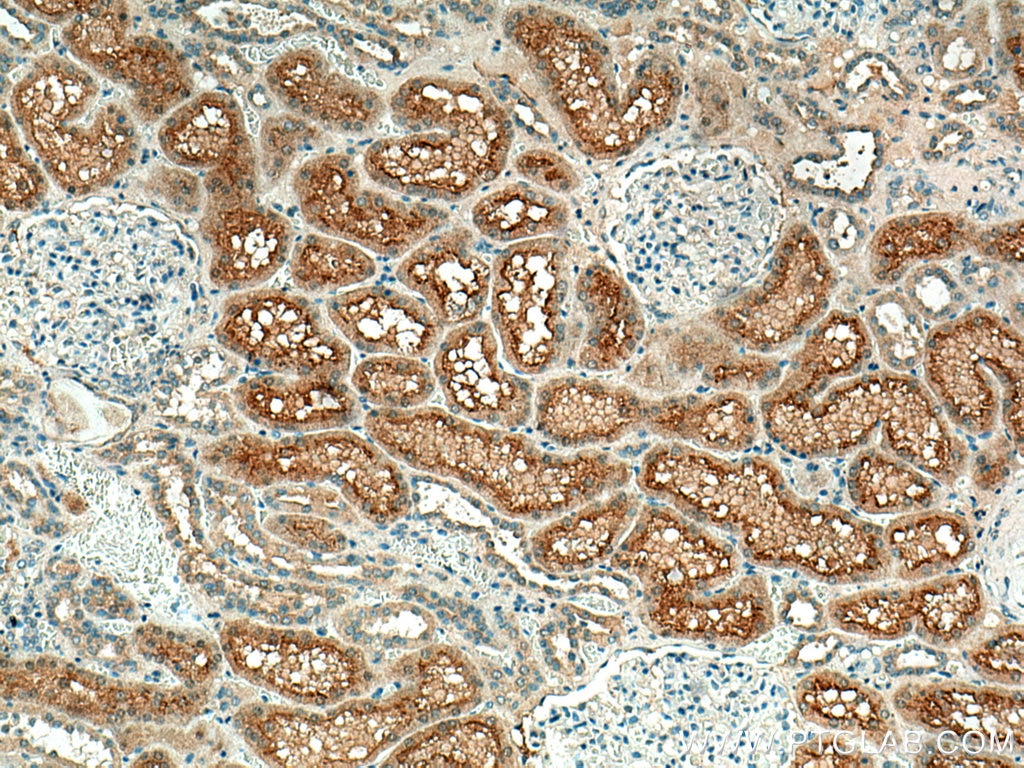
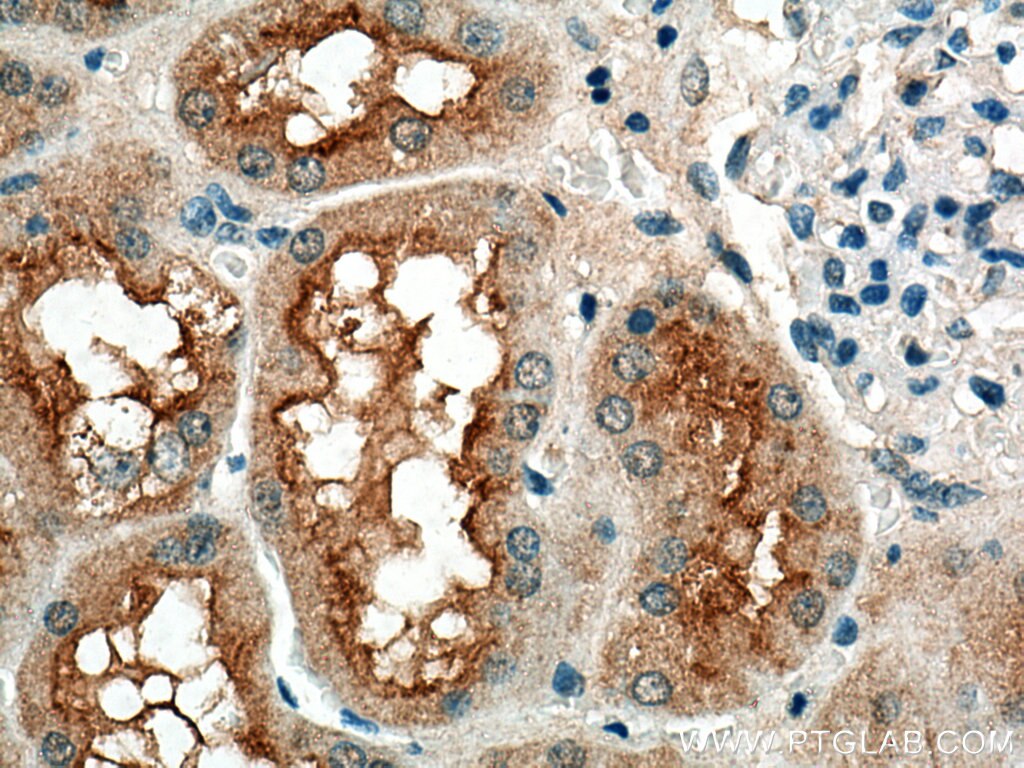
| Positive IHC detected in | human kidney tissue Note: suggested antigen retrieval with TE buffer pH 9.0; (*) Alternatively, antigen retrieval may be performed with citrate buffer pH 6.0 |
Recommended dilution
| Application | Dilution |
|---|---|
| Western Blot (WB) | WB : 1:500-1:2000 |
| Immunoprecipitation (IP) | IP : 0.5-4.0 ug for 1.0-3.0 mg of total protein lysate |
| Immunohistochemistry (IHC) | IHC : 1:50-1:500 |
| It is recommended that this reagent should be titrated in each testing system to obtain optimal results. | |
| Sample-dependent, Check data in validation data gallery. | |
Product Information
15556-1-AP targets Syntaxin 3 in WB, IHC, IF, IP, ELISA applications and shows reactivity with human, mouse, rat samples.
| Tested Reactivity | human, mouse, rat |
| Cited Reactivity | human, mouse, rat |
| Host / Isotype | Rabbit / IgG |
| Class | Polyclonal |
| Type | Antibody |
| Immunogen |
CatNo: Ag7925 Product name: Recombinant human STX3 protein Source: e coli.-derived, PGEX-4T Tag: GST Domain: 1-264 aa of BC007405 Sequence: MKDRLEQLKAKQLTQDDDTDAVEIAIDNTAFMDEFFSEIEETRLNIDKISEHVEEAKKLYSIILSAPIPEPKTKDDLEQLTTEIKKRANNVRNKLKSMEKHIEEDEVRSSADLRIRKSQHSVLSRKFVEVMTKYNEAQVDFRERSKGRIQRQLEITGKKTTDEELEEMLESGNPAIFTSGIIDSQISKQALSEIEGRHKDIVRLESSIKELHDMFMDIAMLVENQGEMLDNIELNVMHTVDHVEKARDETKKAVKYQSQARKKL Predict reactive species |
| Full Name | syntaxin 3 |
| Calculated Molecular Weight | 33 kDa |
| Observed Molecular Weight | 33 kDa |
| GenBank Accession Number | BC007405 |
| Gene Symbol | STX3 |
| Gene ID (NCBI) | 6809 |
| RRID | AB_2198667 |
| Conjugate | Unconjugated |
| Form | Liquid |
| Purification Method | Antigen affinity purification |
| UNIPROT ID | Q13277 |
| Storage Buffer | PBS with 0.02% sodium azide and 50% glycerol, pH 7.3. |
| Storage Conditions | Store at -20°C. Stable for one year after shipment. Aliquoting is unnecessary for -20oC storage. 20ul sizes contain 0.1% BSA. |
Background Information
Syntaxin-3 (also known as STX3) is a member of the syntaxin. Syntaxin-3 is a significant apical targeting protein in the epithelial membrane and in exocytosis process; it also acts as a vesicle transporter by cellular receptor in neutrophils, which is crucial for protein trafficking event (PMID: 25630102). It has been reported that syntaxin-3 has an important role in the growth of neurites, and serves as a direct target for omega-6 arachidonic acid (PMID: 1659826).
Protocols
| Product Specific Protocols | |
|---|---|
| IHC protocol for Syntaxin 3 antibody 15556-1-AP | Download protocol |
| IP protocol for Syntaxin 3 antibody 15556-1-AP | Download protocol |
| WB protocol for Syntaxin 3 antibody 15556-1-AP | Download protocol |
| Standard Protocols | |
|---|---|
| Click here to view our Standard Protocols |
Publications
What published studies show
The Syntaxin 3 Polyclonal antibody (Cat# 15556-1-AP) has 24 total citations. Citations appear in journals including Nature Communications, Science Advances, PNAS, Cell Reports, PLoS Biology, Molecular Therapy, Journal of Biological Chemistry, Journal of Immunology, and Scientific Reports. Research fields span photoreceptor cilia biology, SNARE complex assembly and neurotransmitter release, protein trafficking, Bardet-Biedl syndrome, exocytosis, immune cell degranulation, and inflammatory pain signaling.
| Species | Application | Title |
|---|---|---|
Nat Commun The tectonic complex regulates membrane protein composition in the photoreceptor cilium | ||
Sci Adv Phosphorylation of Doc2 by EphB2 modulates Munc13-mediated SNARE complex assembly and neurotransmitter release | ||
Mol Ther circMRPS35 promotes malignant progression and cisplatin resistance in hepatocellular carcinoma | ||
Proc Natl Acad Sci U S A Accumulation of non-outer segment proteins in the outer segment underlies photoreceptor degeneration in Bardet-Biedl syndrome. | ||
Cell Rep Structural and Functional Analysis of the CAPS SNARE-Binding Domain Required for SNARE Complex Formation and Exocytosis. |







