
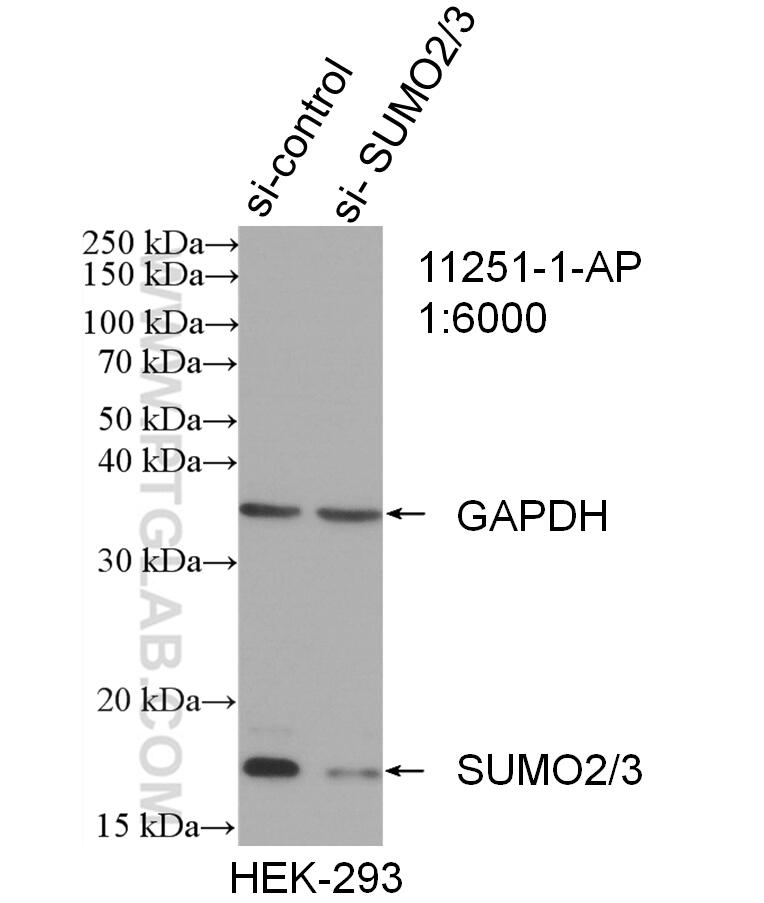
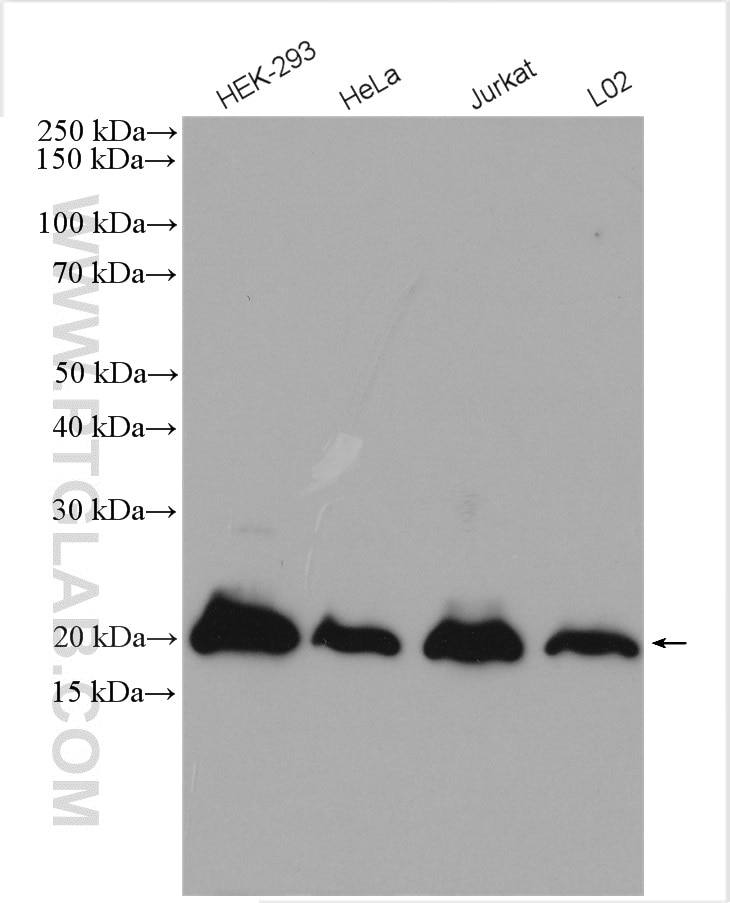
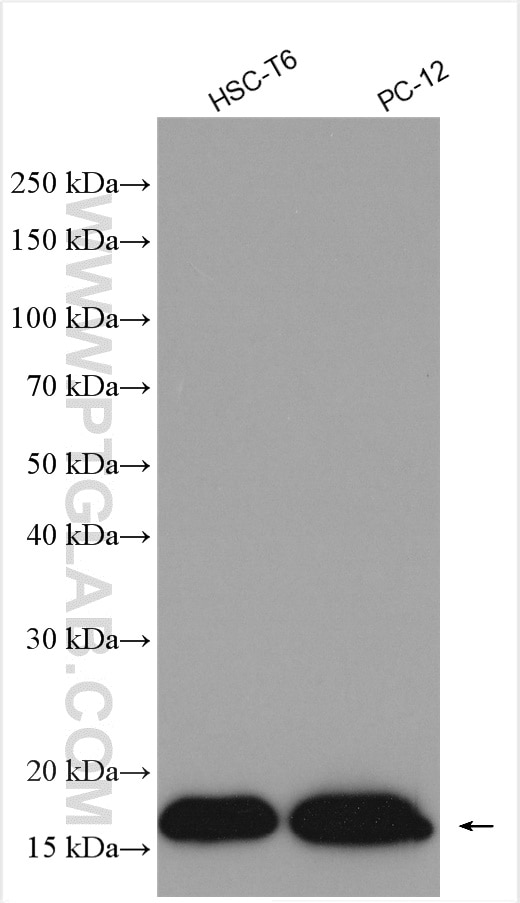
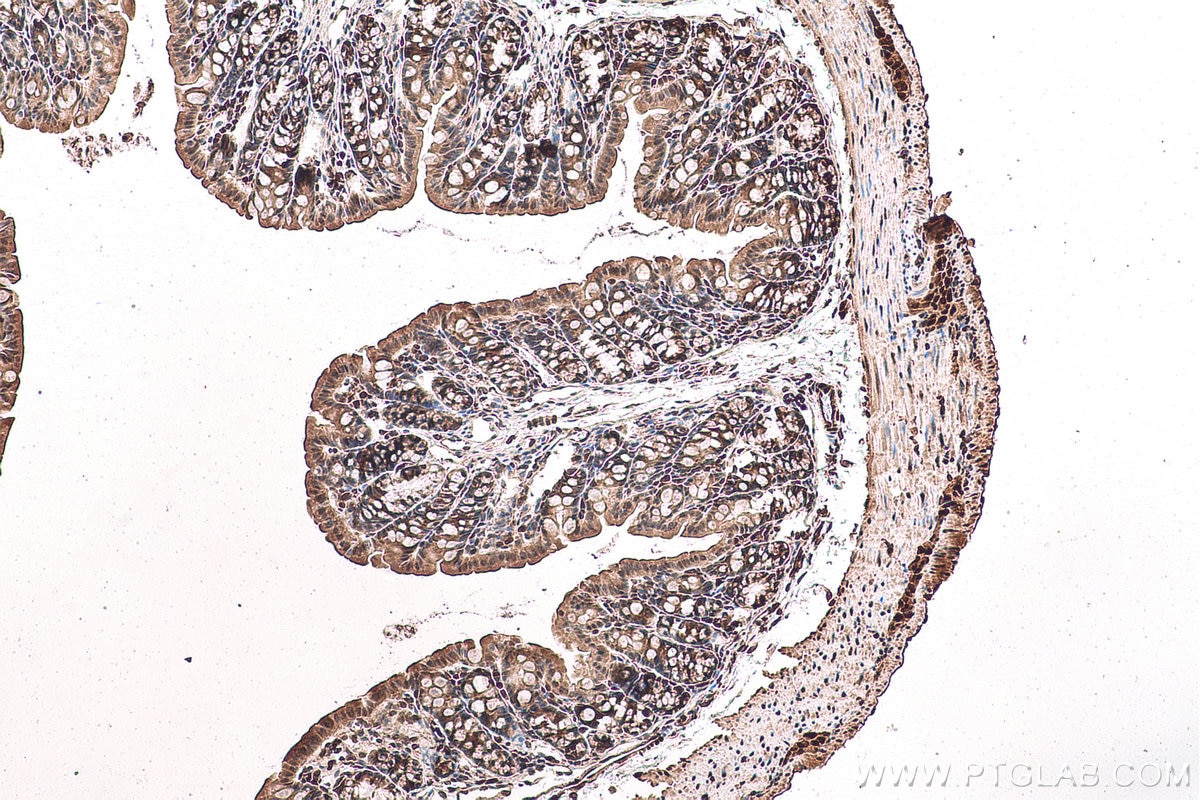

Tested Applications
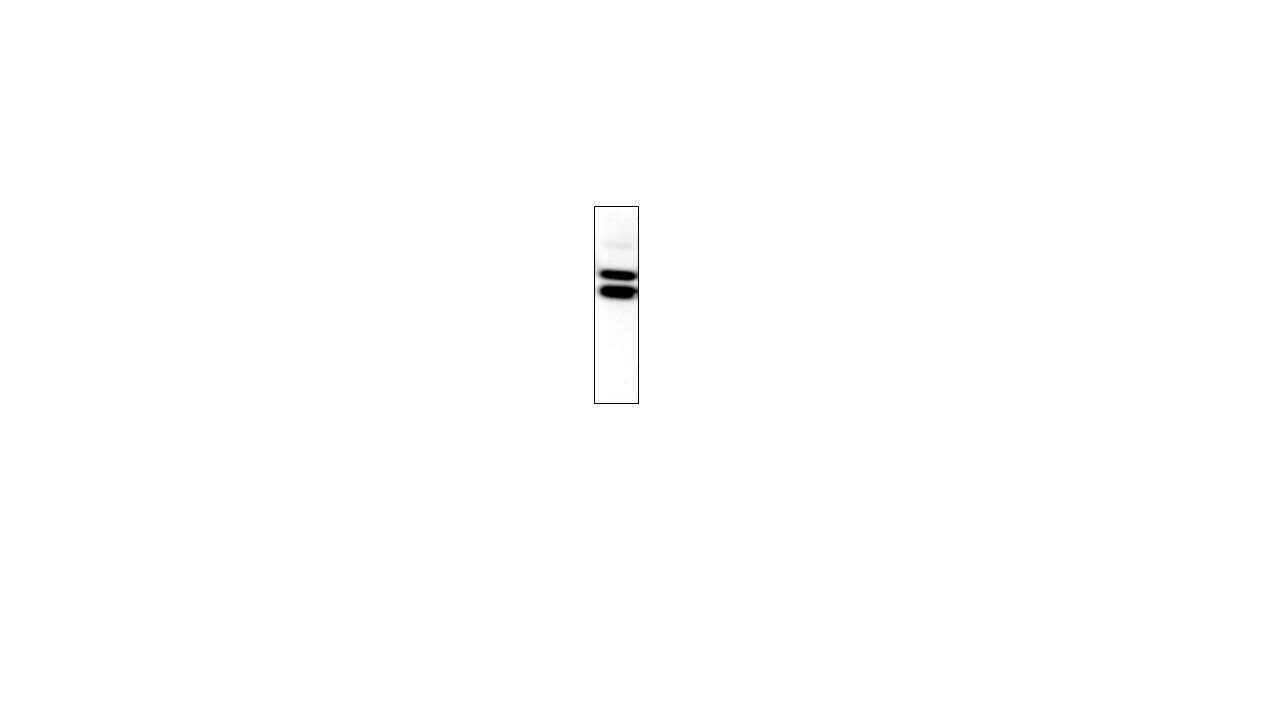
| Positive WB detected in | HEK-293 cells, HSC-T6 cells, HeLa cells, Jurkat cells, L02 cells, PC-12 cells |
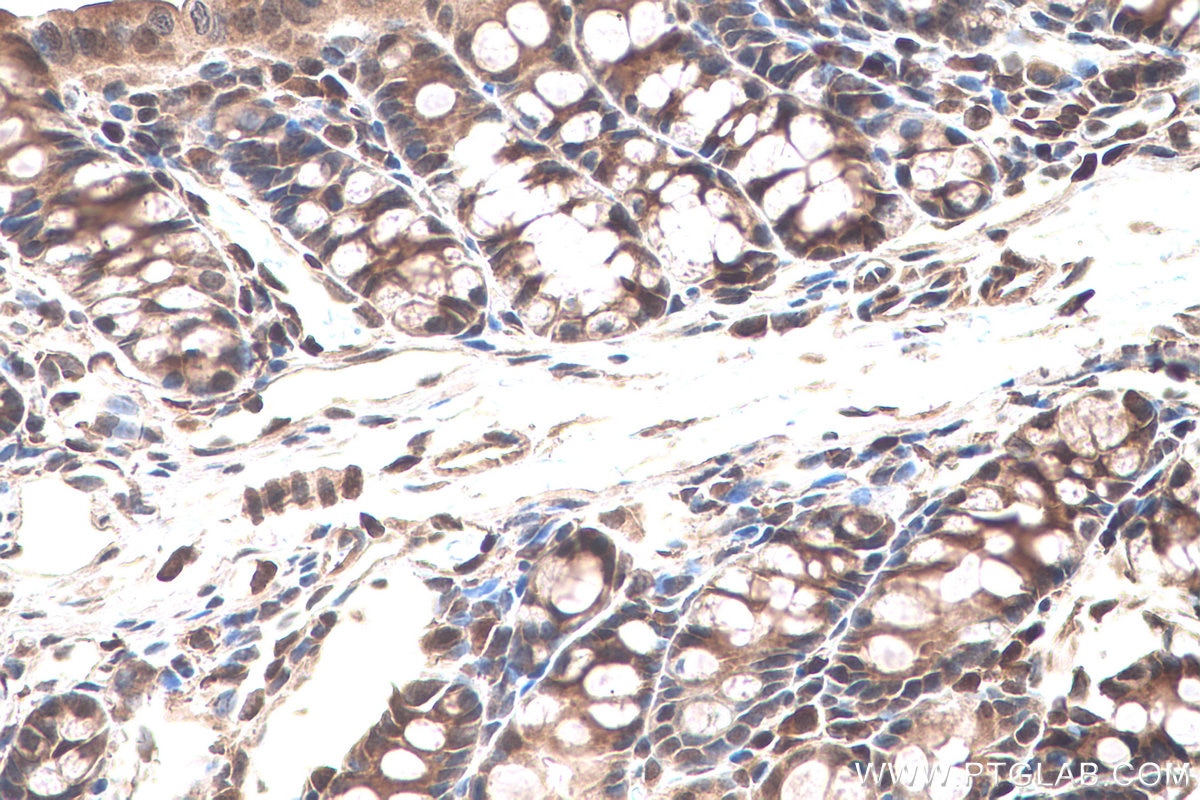
| Positive IHC detected in | mouse colon tissue Note: suggested antigen retrieval with TE buffer pH 9.0; (*) Alternatively, antigen retrieval may be performed with citrate buffer pH 6.0 |
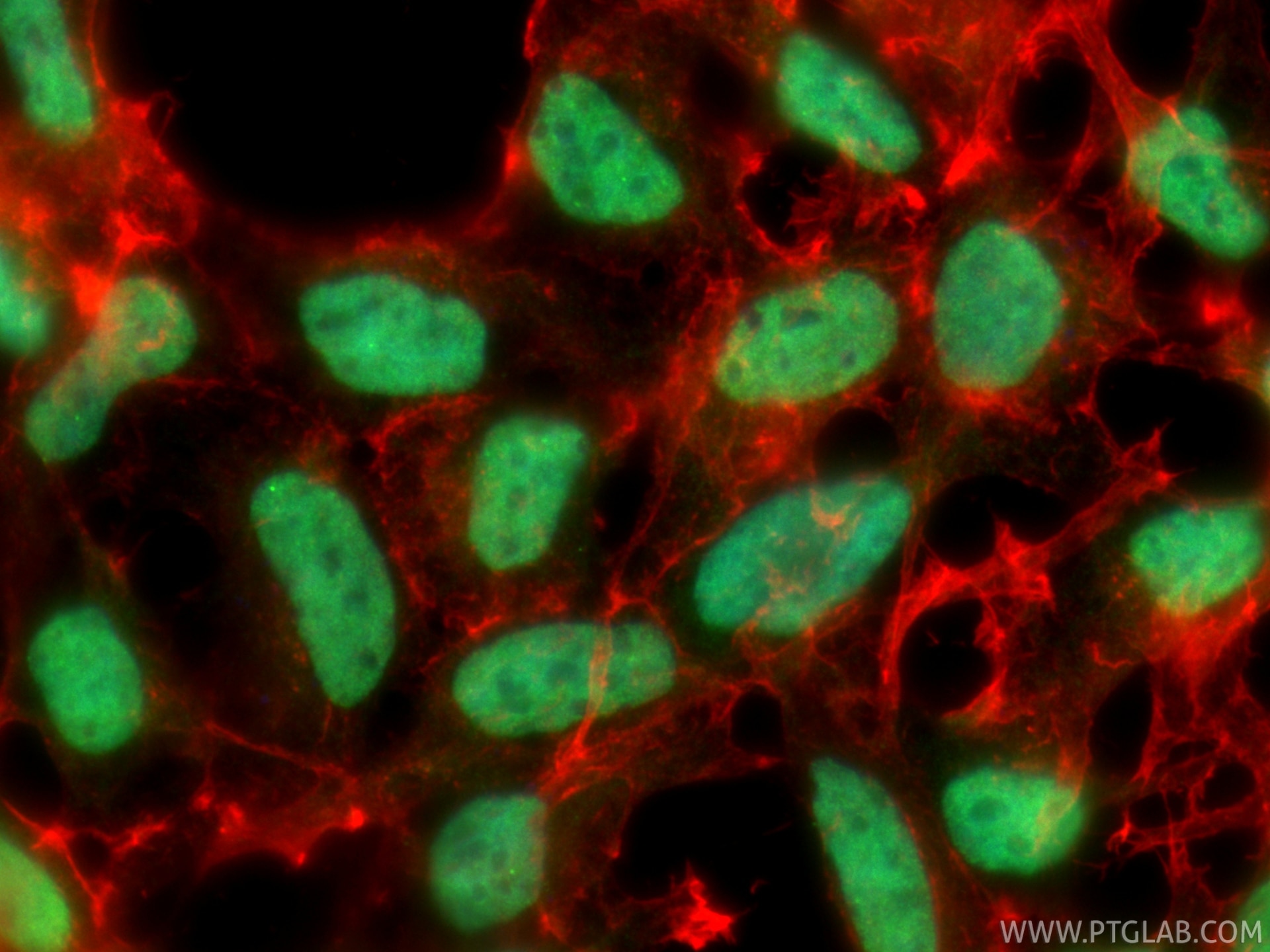
| Positive IF/ICC detected in | HEK-293 cells |
Recommended dilution
| Application | Dilution |
|---|---|
| Western Blot (WB) | WB : 1:500-1:3000 |
| Immunohistochemistry (IHC) | IHC : 1:1000-1:4000 |
| Immunofluorescence (IF)/ICC | IF/ICC : 1:200-1:800 |
| It is recommended that this reagent should be titrated in each testing system to obtain optimal results. | |
| Sample-dependent, Check data in validation data gallery. | |
Product Information
11251-1-AP targets SUMO2/3 in WB, IHC, IF/ICC, IP, CoIP, ELISA applications and shows reactivity with human, mouse, rat samples.
| Tested Reactivity | human, mouse, rat |
| Cited Reactivity | human, mouse, rat |
| Host / Isotype | Rabbit / IgG |
| Class | Polyclonal |
| Type | Antibody |
| Immunogen |
CatNo: Ag1778 Product name: Recombinant human SUMO2/3 protein Source: e coli.-derived, PGEX-4T Tag: GST Domain: 1-95 aa of BC016775 Sequence: MADEKPKEGVKTENNDHINLKVAGQDGSVVQFKIKRHTPLSKLMKAYCERQGLSMRQIRFRFDGQPINETDTPAQLEMEDEDTIDVFQQQTGGVY Predict reactive species |
| Full Name | SMT3 suppressor of mif two 3 homolog 2 (S. cerevisiae) |
| Calculated Molecular Weight | 11 kDa |
| Observed Molecular Weight | 11-20 kDa |
| GenBank Accession Number | BC016775 |
| Gene Symbol | SUMO2 |
| Gene ID (NCBI) | 6613 |
| RRID | AB_2198405 |
| Conjugate | Unconjugated |
| Form | Liquid |
| Purification Method | Antigen affinity purification |
| UNIPROT ID | P61956 |
| Storage Buffer | PBS with 0.02% sodium azide and 50% glycerol, pH 7.3. |
| Storage Conditions | Store at -20°C. Stable for one year after shipment. Aliquoting is unnecessary for -20oC storage. 20ul sizes contain 0.1% BSA. |
Background Information
Ubiquitin is most famous for its function in targeting proteins for degradation by the 26S proteasome, ubiquitin needs to be attached to a substrate in chains (polyubiquitylation) before being recognized by proteasome. Similarly, SUMO (small ubiquitin-related modifier) can be linked to substrates in chains (polysumoylation), SUMO modification has been implicated in many important cellular processes including the control of genome stability, signal transduction, targeting to and formation of nuclear compartments, cell cycle and meiosis. There are 4 confirmed SUMO isoforms in human, SUMO-1, SUMO-2, SUMO-3 and SUMO-4. SUMO-2 and SUMO-3 are nearly identical but are distinct from SUMO-1. SUMO2/3 conjugation was recently widely involved in neuroprotective activities. A substitution (M55V) of SUMO4 was strongly associated with the pathogenesis of type 1 diabetes (T1D) involving NF kappa B related mechanisms.
Protocols
| Product Specific Protocols | |
|---|---|
| IF protocol for SUMO2/3 antibody 11251-1-AP | Download protocol |
| IHC protocol for SUMO2/3 antibody 11251-1-AP | Download protocol |
| WB protocol for SUMO2/3 antibody 11251-1-AP | Download protocol |
| Standard Protocols | |
|---|---|
| Click here to view our Standard Protocols |
Publications
What published studies show
The Anti-SUMO antibody (Cat# 11251-1-AP) has accumulated 39 citations across journals including Nature Communications, Cancer Research, Theranostics, Cell Death & Differentiation, Science Advances, Molecular Psychiatry, and eLife. Research fields span oncology (glioblastoma, colon, prostate, bladder, gastric, lung cancers), SUMOylation/post-translational modifications, ferroptosis, neurodegeneration, viral infections (SARS-CoV-2, EBV), inflammation, reproductive biology, and cardiovascular disease. Primary applications include WB, IF, IHC, IP, and CoIP.
| Species | Application | Title |
|---|---|---|
Signal Transduct Target Ther NUSAP1 potentiates chemoresistance in glioblastoma through its SAP domain to stabilize ATR.
| ||
Cancer Res SENP1 decreases RNF168 phase separation to promote DNA damage repair and drug resistance in colon cancer | ||
Nat Commun YY1 enhances HIF-1α stability in tumor-associated macrophages to suppress anti-tumor immunity of prostate cancer in mice | ||
Theranostics Chlorogenic acid effectively treats cancers through induction of cancer cell differentiation. | ||
Theranostics SUMOylation of SARS-CoV-2 spike protein is a key target for broad-spectrum antiviral therapy
| ||
Adv Sci (Weinh) METTL10-Mediated PIAS3 Methylation Links Purine Metabolism to Gastric Cancer Progression |
Reviews
What customers say
Both reviewers used this antibody for Western Blot (lot 00011665) and reported positive results. One user (4/5) tested it on a lymphoblastic cell line at 1:1000 dilution, noting good bands with minor aspecificity attributed to the challenging cell type. The other (5/5) tested it on AC16 cells and simply rated it "Good." Overall, users find it a reliable antibody for WB with clean signal in their applications.
The reviews below have been submitted by verified Proteintech customers who received an incentive for providing their feedback.
Verdiana (Verified Customer) (03-02-2023) | Good bands. Little aspecific I think but the gels we use have a high resolution and also those were lympoblastoid cells and we know they can me strange. Anyway, it is a good antibody.
 |
Shubham (Verified Customer) (03-13-2019) | Good
 |







