

Tested Applications
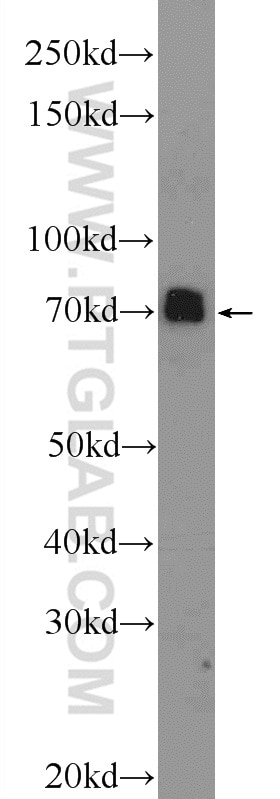
| Positive WB detected in | mouse brain tissue |
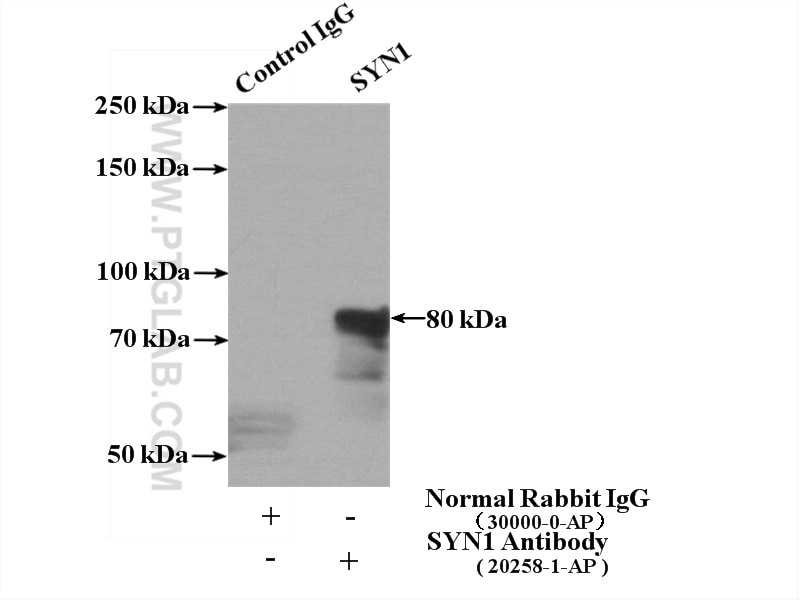
| Positive IP detected in | rat brain tissue |
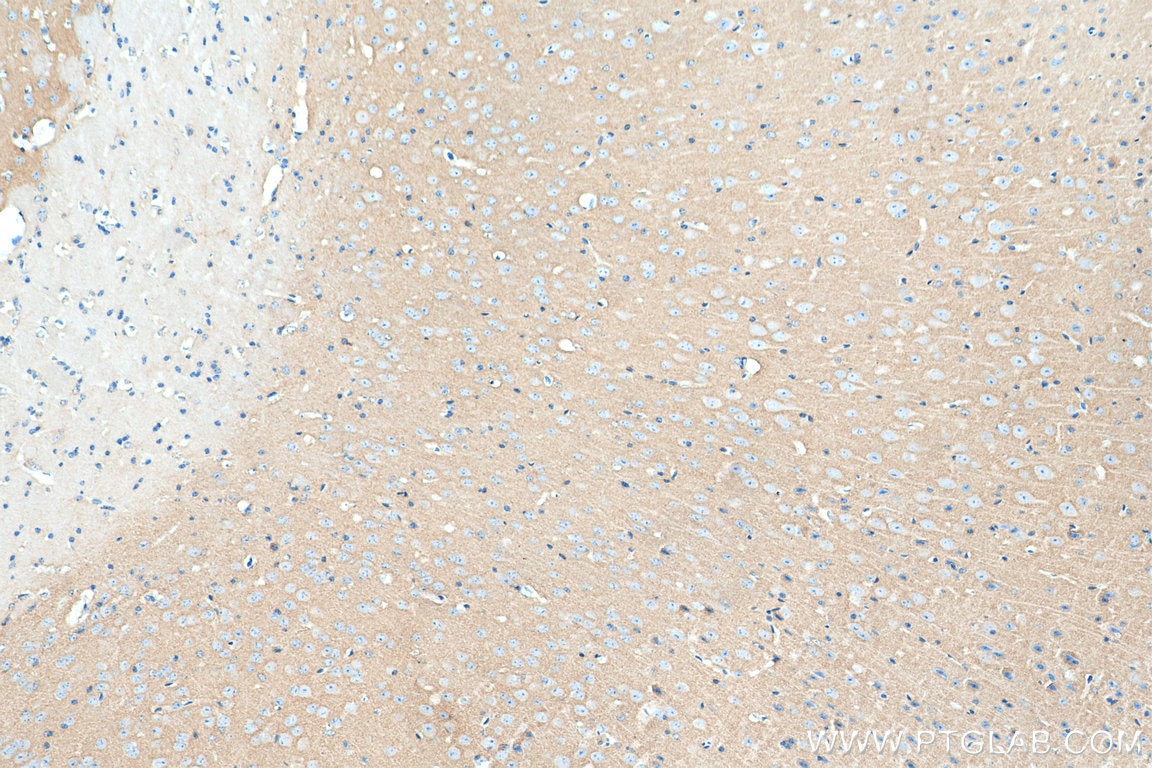
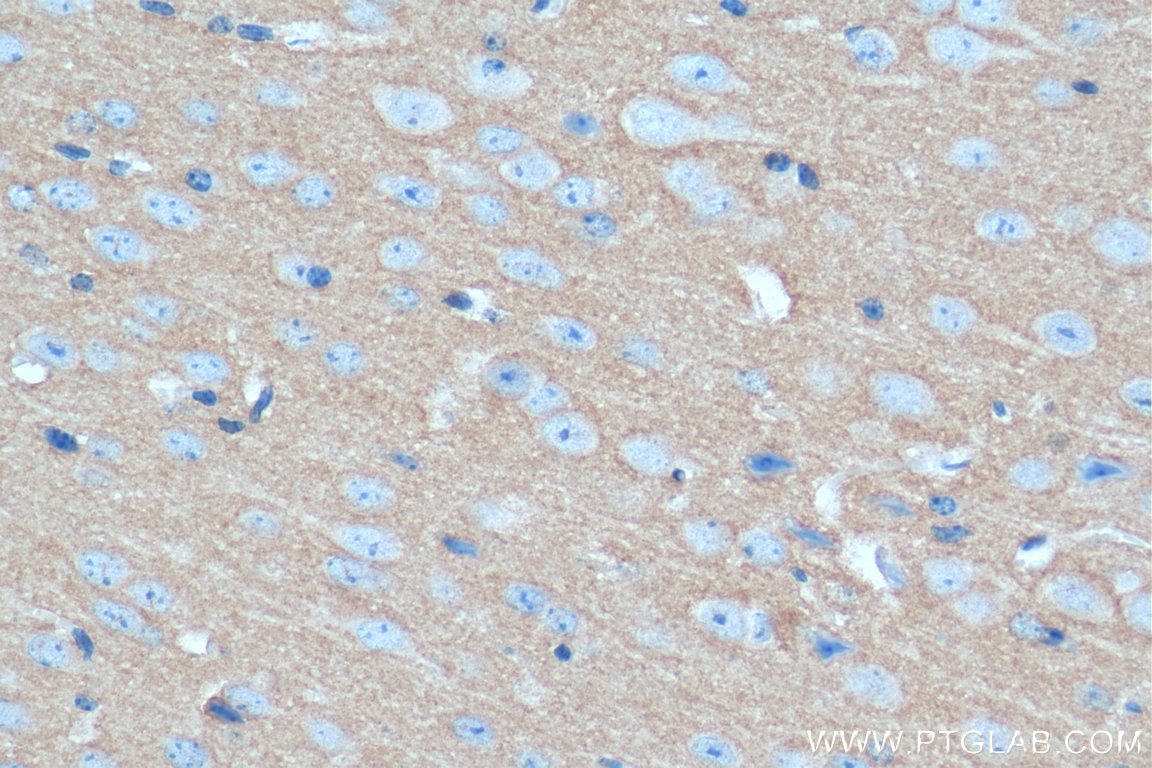
| Positive IHC detected in | mouse brain tissue Note: suggested antigen retrieval with TE buffer pH 9.0; (*) Alternatively, antigen retrieval may be performed with citrate buffer pH 6.0 |
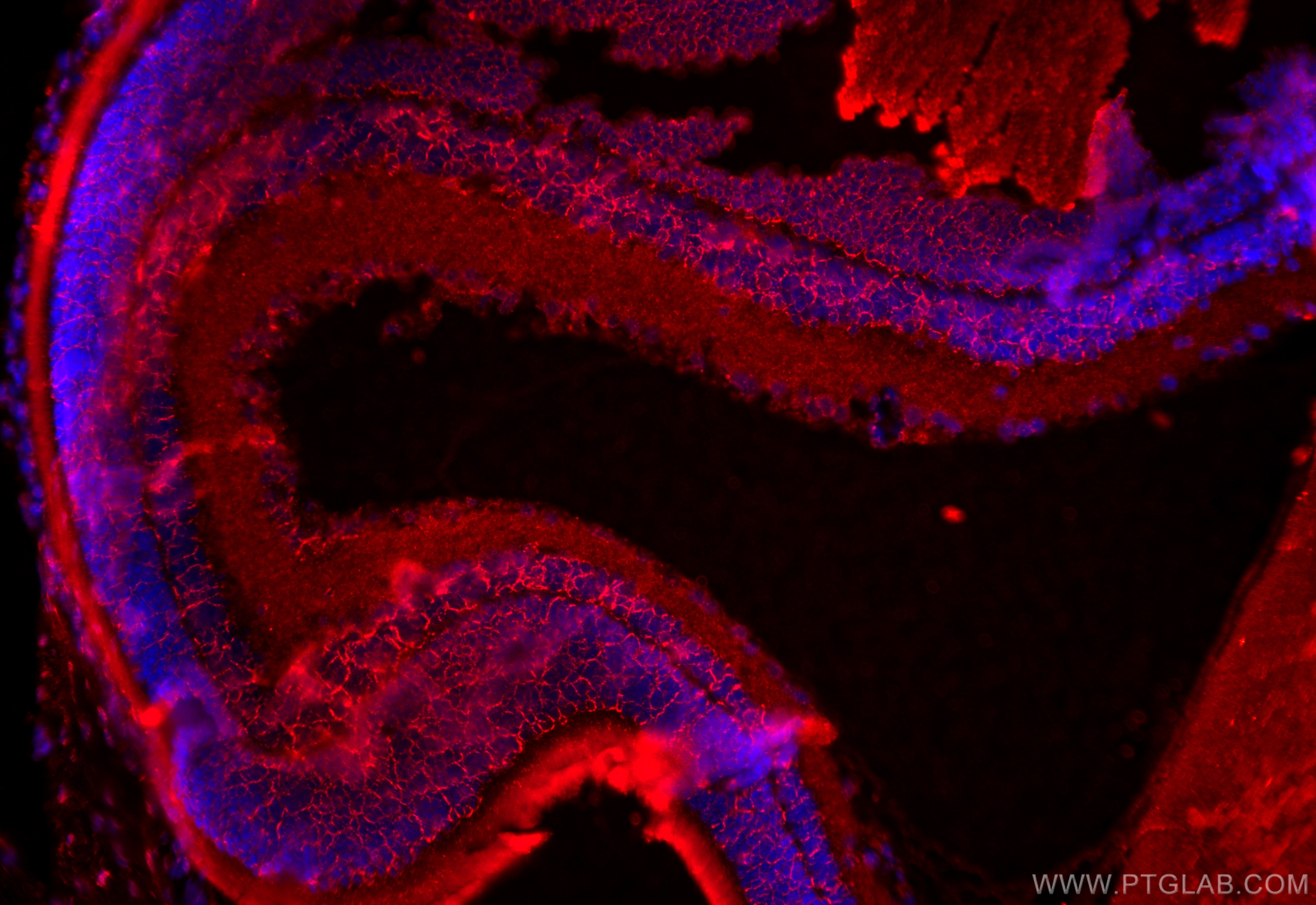
| Positive IF-P detected in | rat eye tissue |
Recommended dilution
| Application | Dilution |
|---|---|
| Western Blot (WB) | WB : 1:2000-1:20000 |
| Immunoprecipitation (IP) | IP : 0.5-4.0 ug for 1.0-3.0 mg of total protein lysate |
| Immunohistochemistry (IHC) | IHC : 1:50-1:500 |
| Immunofluorescence (IF)-P | IF-P : 1:50-1:500 |
| It is recommended that this reagent should be titrated in each testing system to obtain optimal results. | |
| Sample-dependent, Check data in validation data gallery. | |
Product Information
20258-1-AP targets SYN1-Specific in WB, IHC, IF-P, IP, ELISA applications and shows reactivity with human, mouse, rat samples.
| Tested Reactivity | human, mouse, rat |
| Cited Reactivity | human, mouse, rat |
| Host / Isotype | Rabbit / IgG |
| Class | Polyclonal |
| Type | Antibody |
| Immunogen |
Peptide Predict reactive species |
| Full Name | synapsin I |
| Calculated Molecular Weight | 74 kDa |
| Observed Molecular Weight | 70-80 kDa |
| GenBank Accession Number | NM_006950 |
| Gene Symbol | SYN1 |
| Gene ID (NCBI) | 6853 |
| RRID | AB_2800493 |
| Conjugate | Unconjugated |
| Form | Liquid |
| Purification Method | Antigen affinity purification |
| UNIPROT ID | P17600 |
| Storage Buffer | PBS with 0.02% sodium azide and 50% glycerol, pH 7.3. |
| Storage Conditions | Store at -20°C. Stable for one year after shipment. Aliquoting is unnecessary for -20oC storage. 20ul sizes contain 0.1% BSA. |
Background Information
SYN1, also named Brain protein 4.1, belongs to the synapsin family. SYN1 is a neuronal phosphoprotein that coats synaptic vesicles, binds to the cytoskeleton, and is believed to function in the regulation of neurotransmitter release. The complex formed with NOS1 and CAPON proteins is necessary for specific nitric-oxid functions at a presynaptic level. Defects in SYN1 are a cause of epilepsy X-linked with variable learning disabilities and behavior disorders (XELBD).
Protocols
| Product Specific Protocols | |
|---|---|
| IF protocol for SYN1-Specific antibody 20258-1-AP | Download protocol |
| IHC protocol for SYN1-Specific antibody 20258-1-AP | Download protocol |
| IP protocol for SYN1-Specific antibody 20258-1-AP | Download protocol |
| WB protocol for SYN1-Specific antibody 20258-1-AP | Download protocol |
| Standard Protocols | |
|---|---|
| Click here to view our Standard Protocols |
Publications
What published studies show
The SYN1-Specific Polyclonal antibody (Cat# 20258-1-AP) has 103 citations spanning high-impact journals including Nature, Science, Cell Metabolism, Nature Neuroscience, Nature Communications, Neuron, and Theranostics. Research fields encompass neurodegeneration (Alzheimer's, Parkinson's), synaptic biology, neuroinflammation, depression, cognitive impairment, autism, stroke, spinal cord injury, gut-brain axis, and environmental toxicology. Applications are predominantly WB and IF in mouse, rat, and human samples.
| Species | Application | Title |
|---|---|---|
Science Targeting formyl peptide receptor 1 reduces brain inflammation and neurodegeneration | ||
Science Stereo-cell: Spatial enhanced-resolution single-cell sequencing with high-density DNA nanoball-patterned arrays | ||
Cell Metab Gut bacteria-driven homovanillic acid alleviates depression by modulating synaptic integrity | ||
Reviews
What customers say
Able is busy answering your previous question. Please try again later.
The reviews below have been submitted by verified Proteintech customers who received an incentive for providing their feedback.
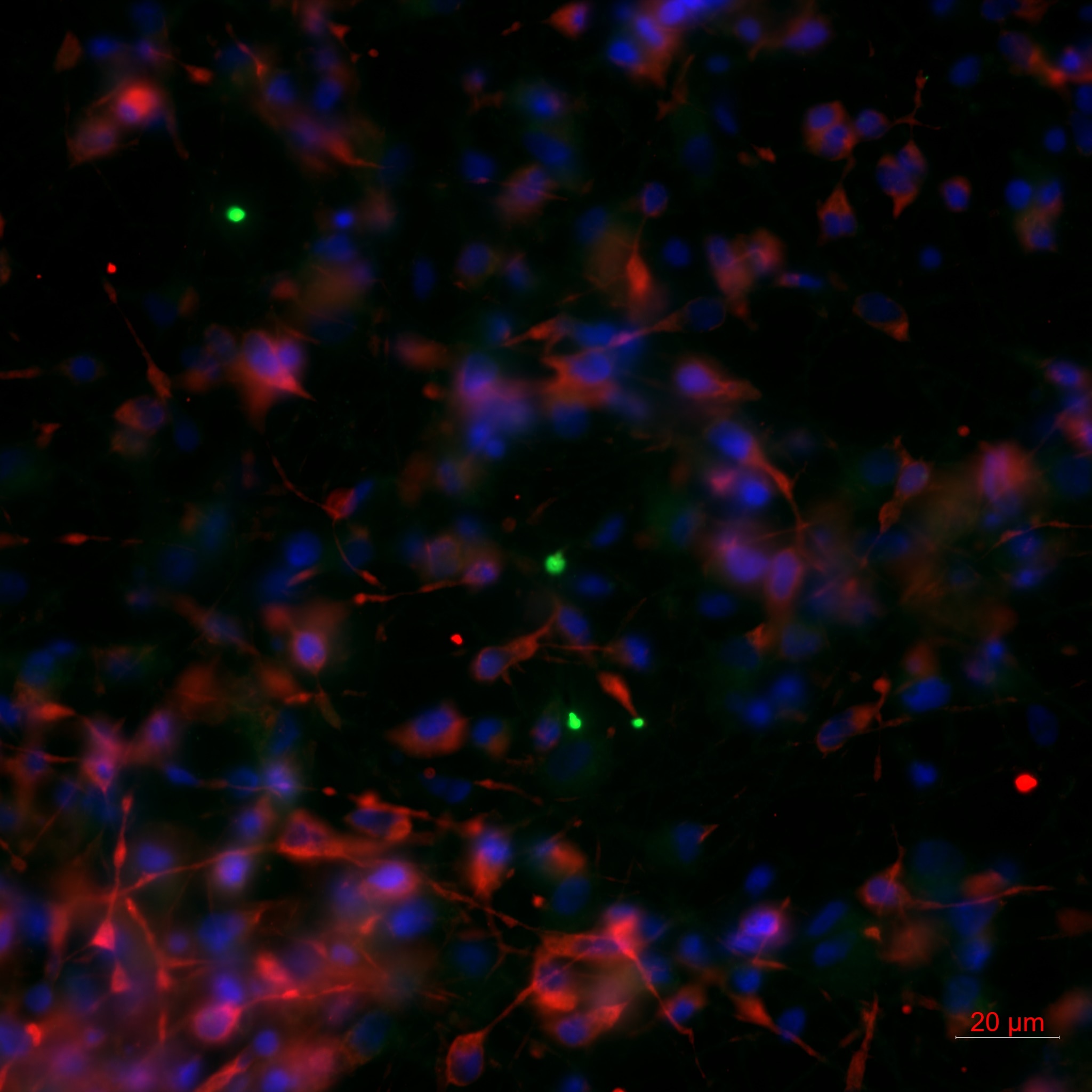
Azita (Verified Customer) (05-31-2021) | Human primary cortical cells went trough ICC and the SYN1 antibody at the 1/50 dilution and MAP2 antibody at the 1/1000 dilution were used overnight at 4°C.
 |
Tanusree (Verified Customer) (12-03-2019) | This antibody works good in western blotting analysis using mouse tissues.
|






