
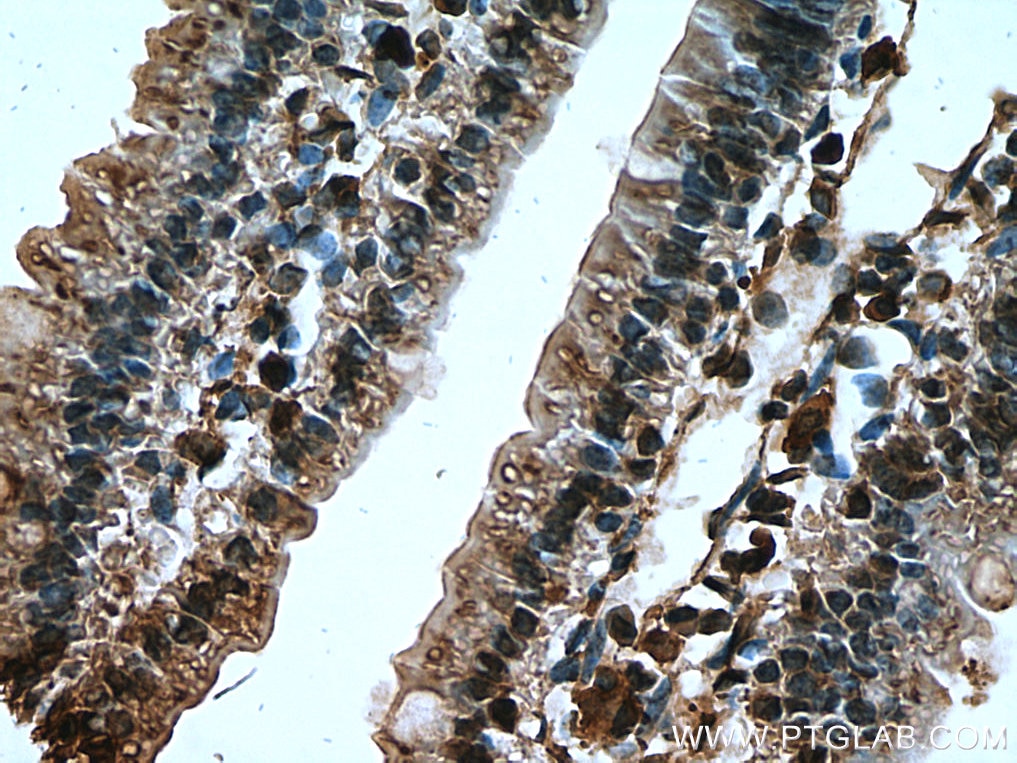

Tested Applications
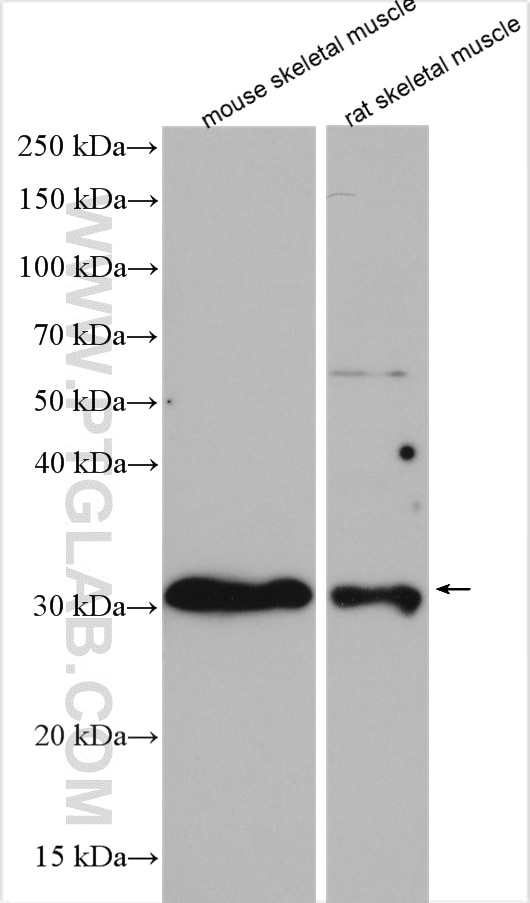
| Positive WB detected in | mouse skeletal muscle tissue, rat skeletal muscle tissue |
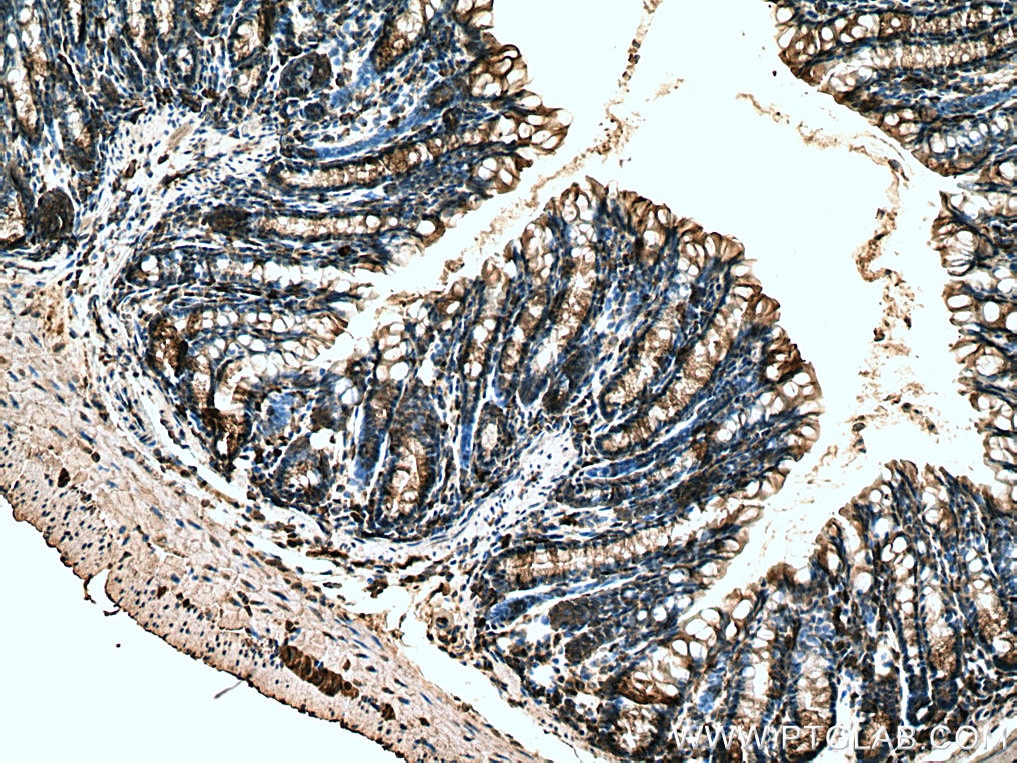
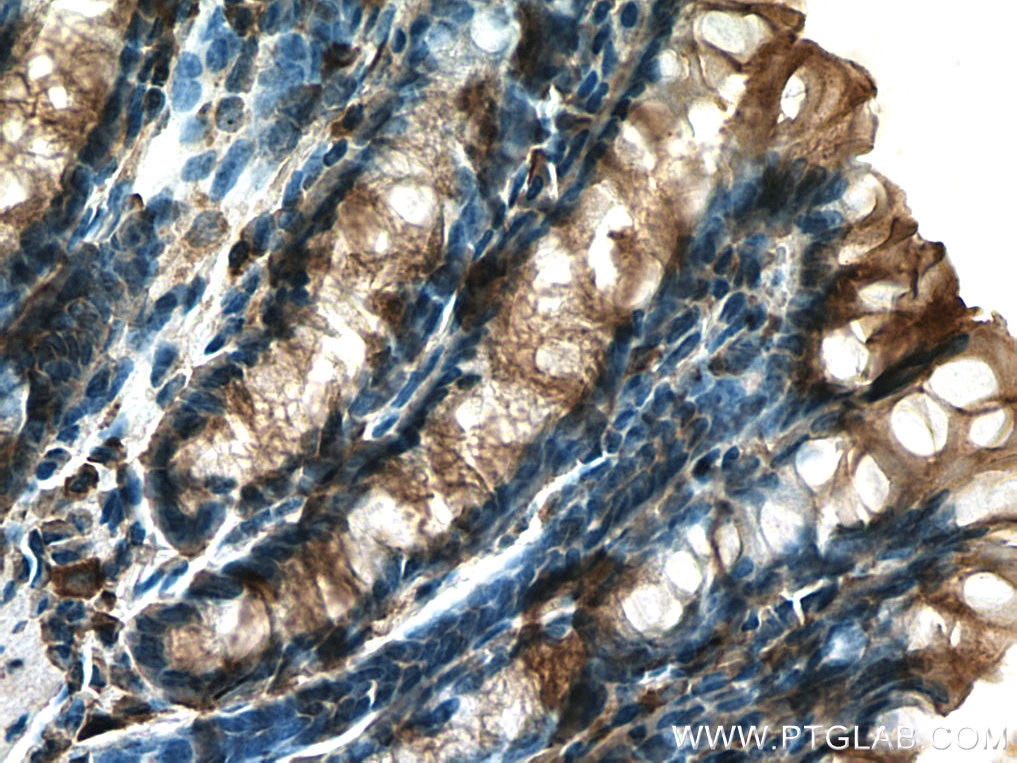
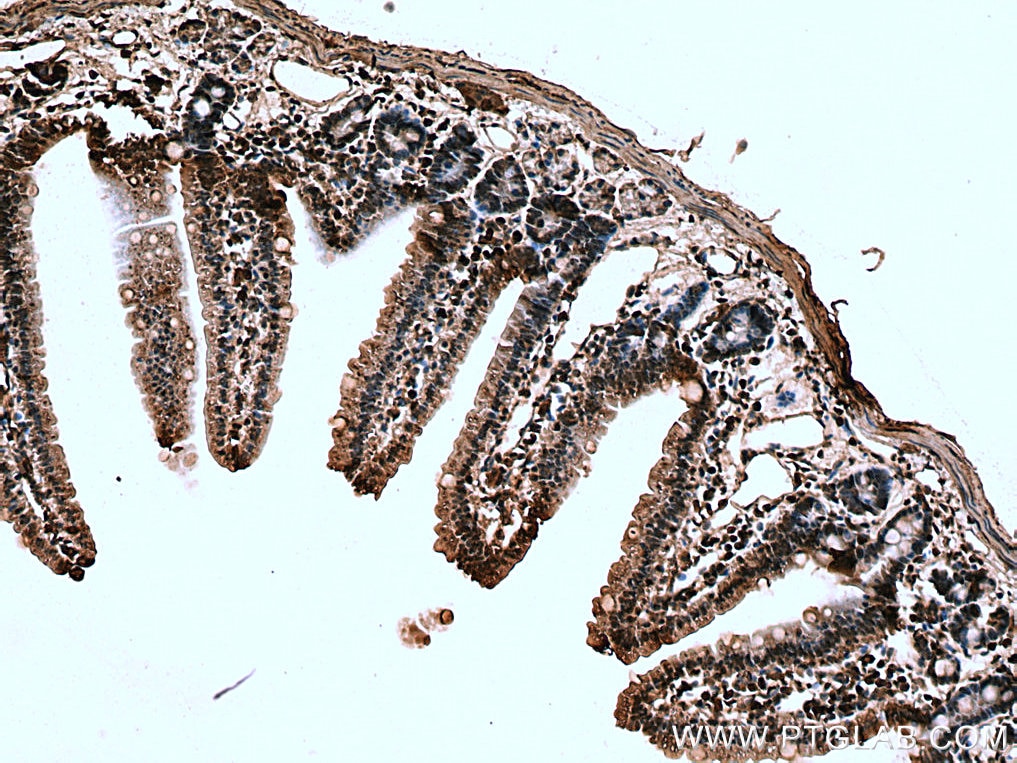
| Positive IHC detected in | mouse colon tissue, mouse small intestine tissue Note: suggested antigen retrieval with TE buffer pH 9.0; (*) Alternatively, antigen retrieval may be performed with citrate buffer pH 6.0 |
Recommended dilution
| Application | Dilution |
|---|---|
| Western Blot (WB) | WB : 1:500-1:2000 |
| Immunohistochemistry (IHC) | IHC : 1:50-1:500 |
| It is recommended that this reagent should be titrated in each testing system to obtain optimal results. | |
| Sample-dependent, Check data in validation data gallery. | |
Product Information
22136-1-AP targets TIGAR in WB, IHC, ELISA applications and shows reactivity with human, mouse, rat samples.
| Tested Reactivity | human, mouse, rat |
| Cited Reactivity | human, mouse |
| Host / Isotype | Rabbit / IgG |
| Class | Polyclonal |
| Type | Antibody |
| Immunogen |
CatNo: Ag17532 Product name: Recombinant human TIGAR protein Source: e coli.-derived, PGEX-4T Tag: GST Domain: 1-270 aa of BC012340 Sequence: MARFALTVVRHGETRFNKEKIIQGQGVDEPLSETGFKQAAAAGIFLNNVKFTHAFSSDLMRTKQTMHGILERSKFCKDMTVKYDSRLRERKYGVVEGKALSELRAMAKAAREECPVFTPPGGETLDQVKMRGIDFFEFLCQLILKEADQKEQFSQGSPSNCLETSLAEIFPLGKNHSSKVNSDSGIPGLAASVLVVSHGAYMRSLFDYFLTDLKCSLPATLSRSELMSVTPNTGMSLFIINFEEGREVKPTVQCICMNLQDHLNGLTETR Predict reactive species |
| Full Name | chromosome 12 open reading frame 5 |
| Calculated Molecular Weight | 270 aa, 30 kDa |
| Observed Molecular Weight | 30 kDa |
| GenBank Accession Number | BC012340 |
| Gene Symbol | TIGAR |
| Gene ID (NCBI) | 57103 |
| RRID | AB_2879003 |
| Conjugate | Unconjugated |
| Form | Liquid |
| Purification Method | Antigen affinity purification |
| UNIPROT ID | Q9NQ88 |
| Storage Buffer | PBS with 0.02% sodium azide and 50% glycerol, pH 7.3. |
| Storage Conditions | Store at -20°C. Stable for one year after shipment. Aliquoting is unnecessary for -20oC storage. 20ul sizes contain 0.1% BSA. |
Background Information
The TP53-induced glycolysis and apoptosis regulator (TIGAR), first reported in 2006, is a downstream target gene of p53 and an important factor involved in glycolysis and apoptosis . It is indispensable in metabolism and is involved in metabolic syndrome, including hyperglycemia, insulin resistance, alcoholic fatty liver and tissue ischemia. TIGAR is highly expressed in many cancer cells to promote cell survival.
Protocols
| Product Specific Protocols | |
|---|---|
| IHC protocol for TIGAR antibody 22136-1-AP | Download protocol |
| WB protocol for TIGAR antibody 22136-1-AP | Download protocol |
| Standard Protocols | |
|---|---|
| Click here to view our Standard Protocols |
Publications
What published studies show
TIGAR Polyclonal antibody (22136-1-AP) has a total of 15 citations. Publications appear in journals including Autophagy, Cell Death & Disease, JHEP Reports, Phytotherapy Research, Free Radical Biology and Medicine, Cell Reports, CNS Neuroscience & Therapeutics, Biochemical Pharmacology, Neurobiology of Disease, Scientific Reports, Cancer Science, Biochemical and Biophysical Research Communications, and Journal of Cachexia, Sarcopenia and Muscle. Research fields associated with these citations include metabolism (glycolysis, ketogenic diet, redox control), oncology (leukemia, cervical cancer, cholangiocarcinoma, colorectal cancer), neurodegeneration (Parkinson's), retinal degeneration, obesity/steatohepatitis, atherosclerosis, and skeletal muscle atrophy.
| Species | Application | Title |
|---|---|---|
Autophagy TIGAR exacerbates obesity by triggering LRRK2-mediated defects in macroautophagy and chaperone-mediated autophagy in adipocytes | ||
Cell Death Dis TIGAR maintains intestinal epithelial regeneration by stabilizing HMGCL and promoting β-catenin β-hydroxybutyrylation in burn-induced sepsis.
| ||
Cell Death Dis MiR-652-5p elevated glycolysis level by targeting TIGAR in T-cell acute lymphoblastic leukemia. | ||
JHEP Rep p53 and TIGAR promote redox control to protect against metabolic dysfunction-associated steatohepatitis | ||
Phytother Res Dual targeting of wild-type p53 and gut microbiota by Magnolol represses key metabolic process and kills CRC cells | ||
Free Radic Biol Med Oxidative stress-induced alterations in retinal glucose metabolism in Retinitis Pigmentosa. |






