

Tested Applications
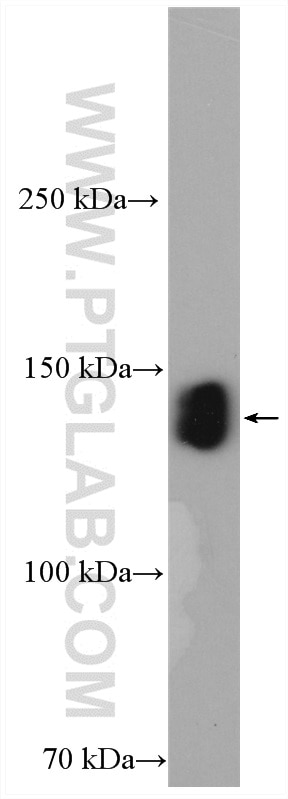
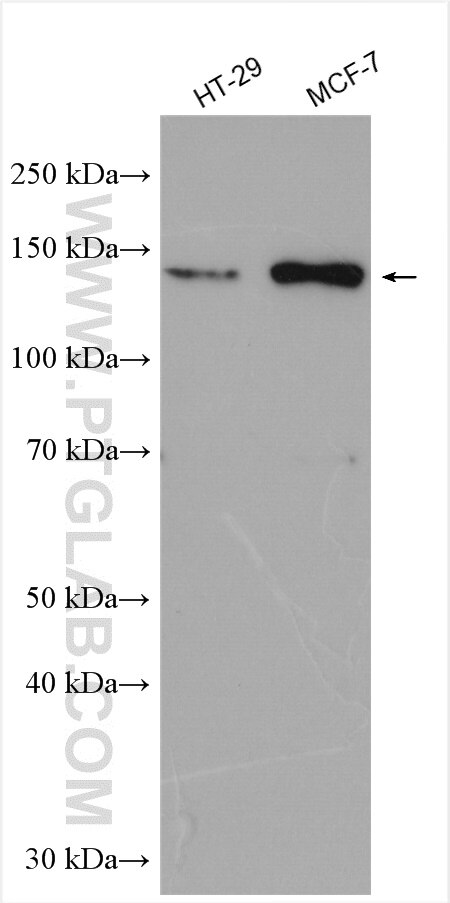
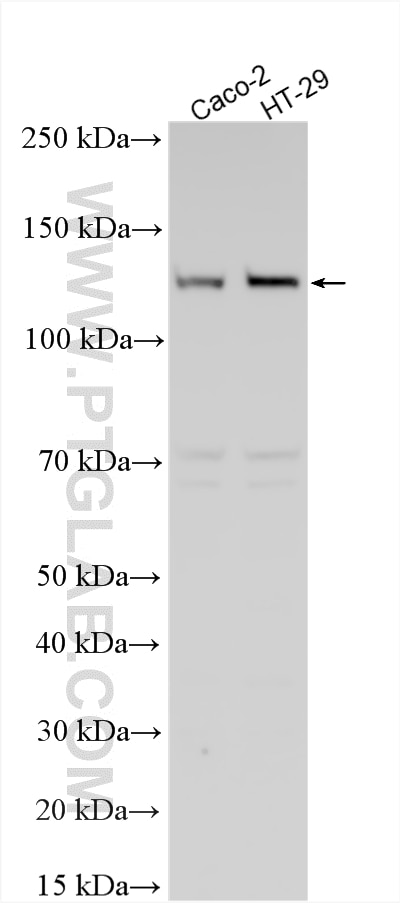
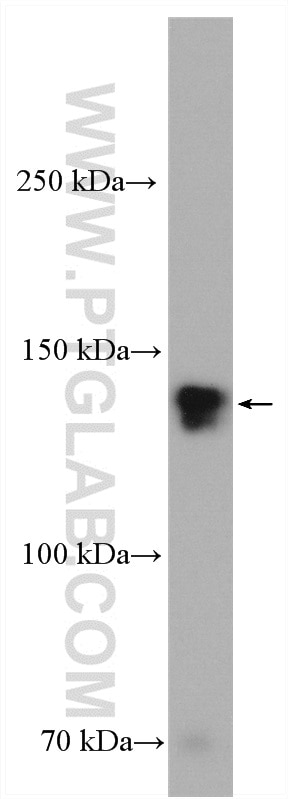
| Positive WB detected in | HT-29 cells, Caco-2 cells, MCF-7 cells, T-47D cells |
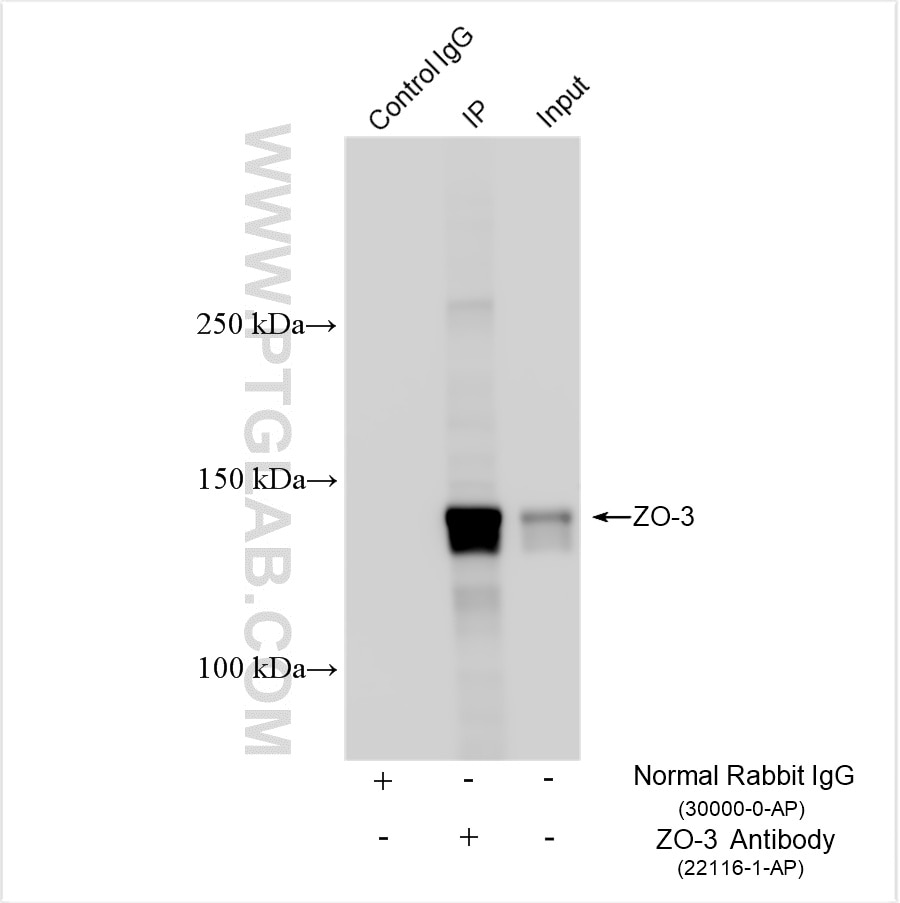
| Positive IP detected in | HT-29 cells |
Recommended dilution
| Application | Dilution |
|---|---|
| Western Blot (WB) | WB : 1:1000-1:4000 |
| Immunoprecipitation (IP) | IP : 0.5-4.0 ug for 1.0-3.0 mg of total protein lysate |
| It is recommended that this reagent should be titrated in each testing system to obtain optimal results. | |
| Sample-dependent, Check data in validation data gallery. | |
Product Information
22116-1-AP targets ZO-3 in WB, IP, ELISA applications and shows reactivity with human samples.
| Tested Reactivity | human |
| Cited Reactivity | human, mouse, pig |
| Host / Isotype | Rabbit / IgG |
| Class | Polyclonal |
| Type | Antibody |
| Immunogen |
CatNo: Ag17495 Product name: Recombinant human TJP3 protein Source: e coli.-derived, PET28a Tag: 6*His Domain: 84-330 aa of BC108906 Sequence: SMENATSAFAIQILKTCTKMANITVKRPRRIHLPATKASPSSPGRQDSDEDDGPQRVEEVDQGRGYDGDSSSGSGRSWDERSRRPRPGRRGRAGSHGRRSPGGGSEANGLALVSGFKRLPRQDVQMKPVKSVLVKRRDSEEFGVKLGSQIFIKHITDSGLAARHRGLQEGDLILQINGVSSQNLSLNDTRRLIEKSEGKLSLLVLRDRGQFLVNIPPAVSDSDSSPLEDISDLASELSQAPPSHIPP Predict reactive species |
| Full Name | tight junction protein 3 (zona occludens 3) |
| Calculated Molecular Weight | 952 aa, 105 kDa |
| Observed Molecular Weight | 140 kDa |
| GenBank Accession Number | BC108906 |
| Gene Symbol | ZO-3 |
| Gene ID (NCBI) | 27134 |
| RRID | AB_2878998 |
| Conjugate | Unconjugated |
| Form | Liquid |
| Purification Method | Antigen affinity purification |
| UNIPROT ID | O95049 |
| Storage Buffer | PBS with 0.02% sodium azide and 50% glycerol, pH 7.3. |
| Storage Conditions | Store at -20°C. Stable for one year after shipment. Aliquoting is unnecessary for -20oC storage. 20ul sizes contain 0.1% BSA. |
Background Information
Tight junction (or zonula occludens) forms the continuous intercellular barrier between epithelial and endothelial cells, which is required to separate tissue spaces and regulate selective movement of solutes across the epithelium and endothelium (PMID: 20066090). ZO-3 (also known as TJP3)is a key scaffold protein of tight junctions. ZO-3 belongs to a family of multidomain proteins known as the membrane-associated guanylate kinase homologs (MAGUKs).ZO-3 regulates the stability of Cyclin D1, thereby influencing the proliferation of epithelial cells (PMID: 21411630).
Protocols
| Product Specific Protocols | |
|---|---|
| IP protocol for ZO-3 antibody 22116-1-AP | Download protocol |
| WB protocol for ZO-3 antibody 22116-1-AP | Download protocol |
| Standard Protocols | |
|---|---|
| Click here to view our Standard Protocols |
Publications
What published studies show
The ZO-3 Polyclonal antibody (Cat# 22116-1-AP) has 3 total citations. These appear in Food Research International, Free Radical Biology and Medicine, and Chemical Biology and Interaction. The associated research fields include hepatointestinal inflammation and bile acid homeostasis, intestinal barrier integrity and AhR/Nrf2 signaling, and tight junction disruption with autophagy and apoptosis in intestinal epithelial cells. All three studies used the antibody for Western blot applications across mouse, human, and pig species.
| Species | Application | Title |
|---|---|---|
Food Res Int Fermented grape pomace alleviates Salmonella typhimurium-induced Hepatointestinal inflammation: FXR mediates protection by orchestrating bile acid homeostasis and suppressing the colonic NLRP3 Inflammasome. | ||
Free Radic Biol Med Prenylated xanthones from mangosteen (Garcinia mangostana) activate the AhR and Nrf2 pathways and protect intestinal barrier integrity in HT-29 cells. | ||
Chem Biol Interact Benzo[a]pyrene induces epithelial tight junction disruption and apoptosis via inhibiting the initiation of autophagy in intestinal porcine epithelial cells |






