
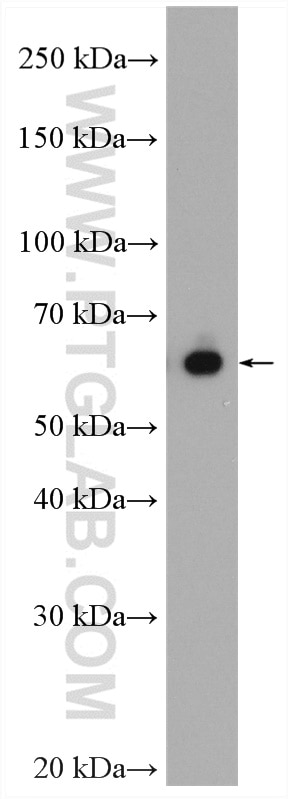
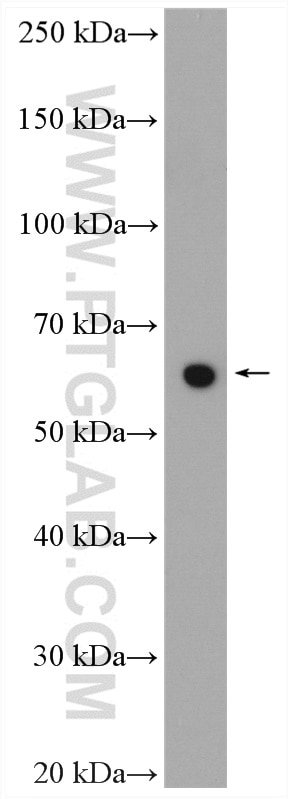
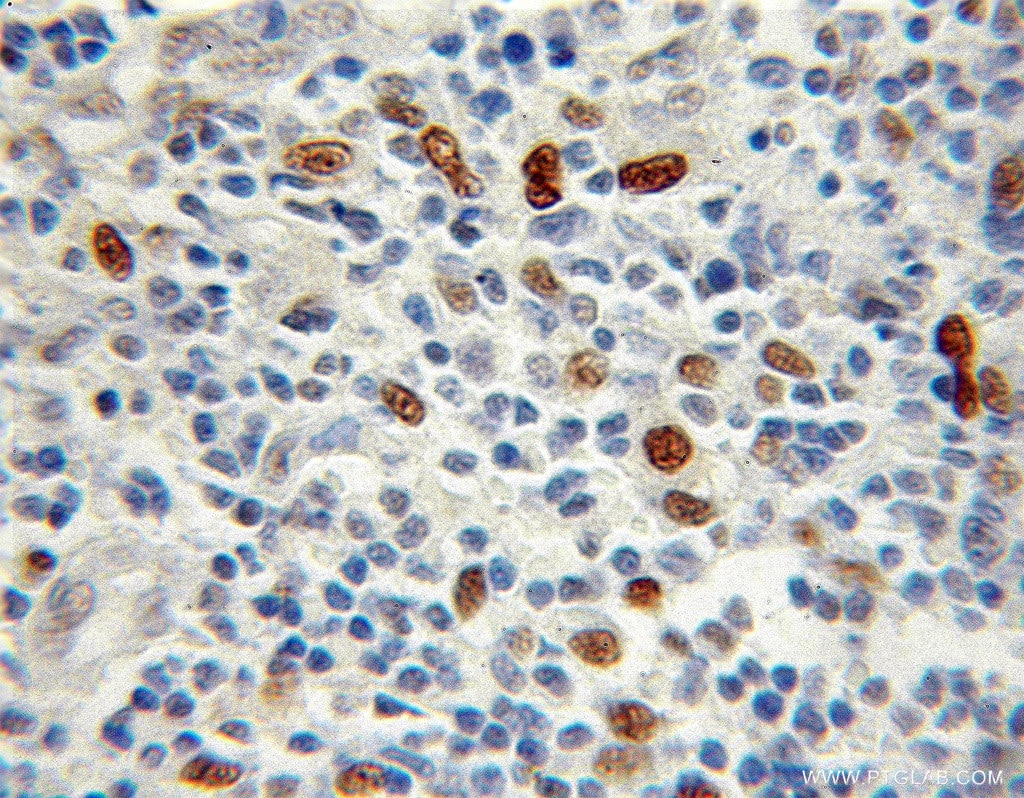
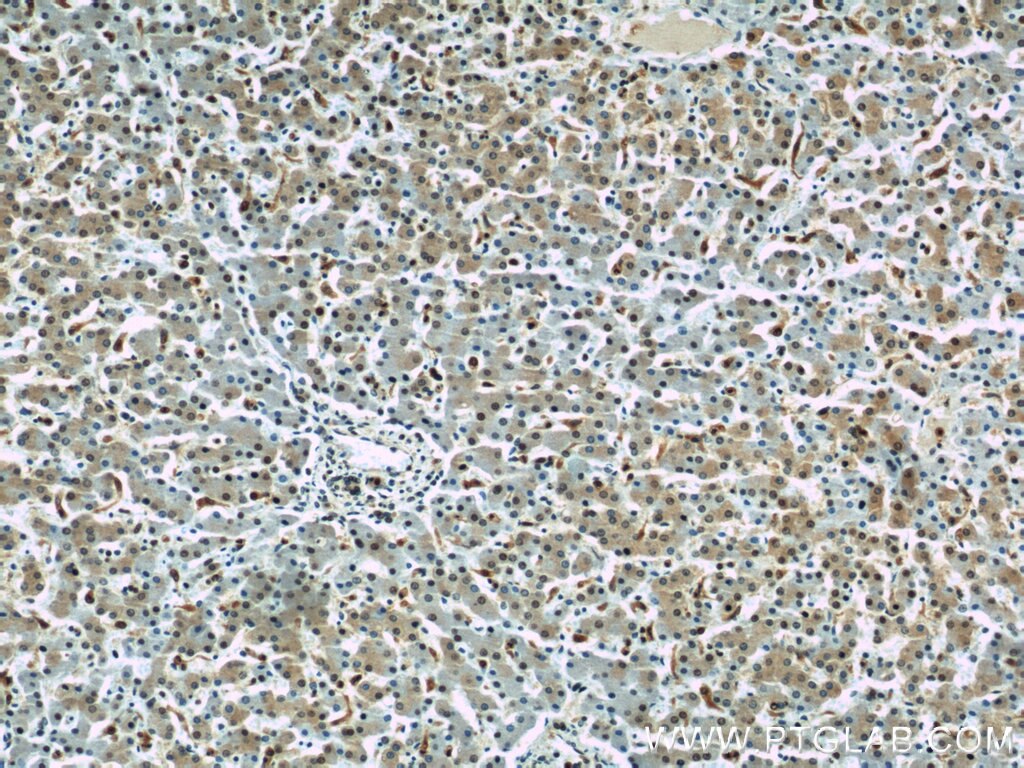

Tested Applications
| Positive WB detected in | Jurkat cells, rat liver tissue |
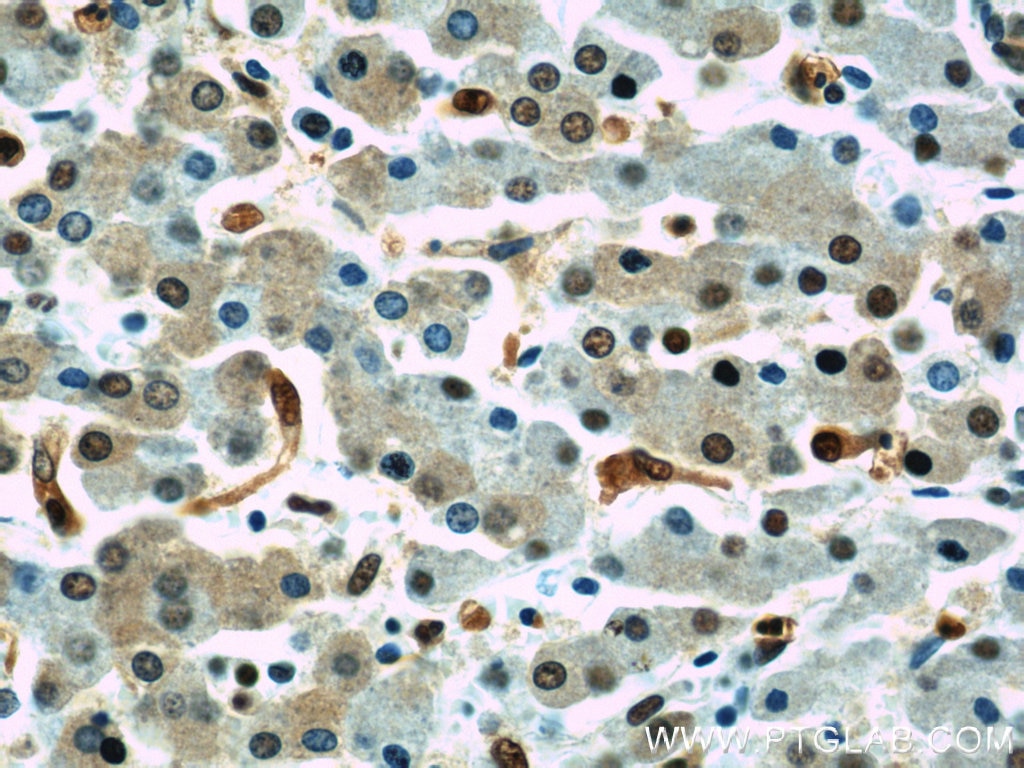
| Positive IHC detected in | human lymphoma tissue, human liver tissue Note: suggested antigen retrieval with TE buffer pH 9.0; (*) Alternatively, antigen retrieval may be performed with citrate buffer pH 6.0 |
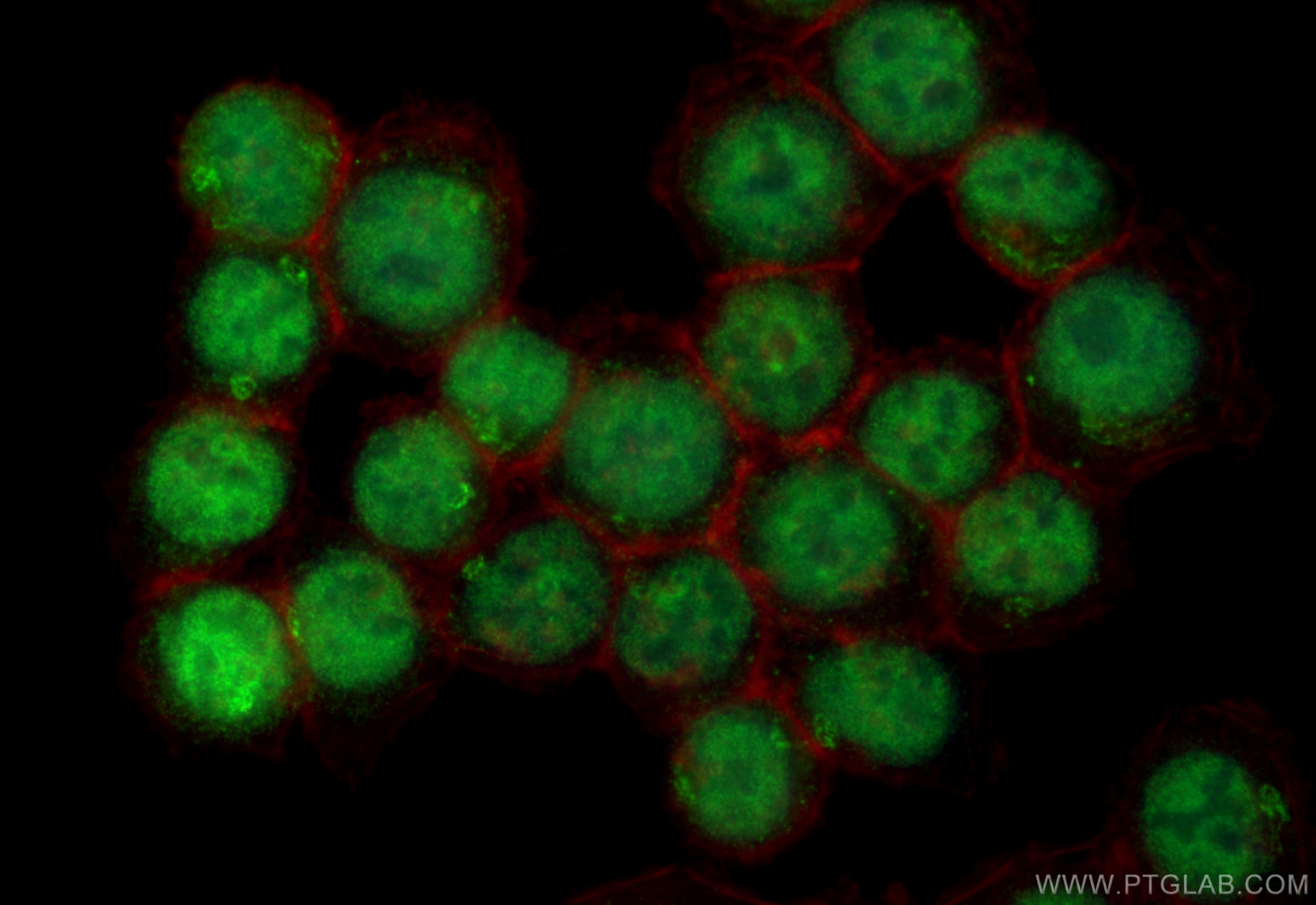
| Positive IF/ICC detected in | BxPC-3 cells |
Recommended dilution
| Application | Dilution |
|---|---|
| Western Blot (WB) | WB : 1:2000-1:10000 |
| Immunohistochemistry (IHC) | IHC : 1:100-1:2000 |
| Immunofluorescence (IF)/ICC | IF/ICC : 1:200-1:800 |
| It is recommended that this reagent should be titrated in each testing system to obtain optimal results. | |
| Sample-dependent, Check data in validation data gallery. | |
Product Information
11039-1-AP targets Transketolase in WB, IHC, IF/ICC, IP, ELISA applications and shows reactivity with human, mouse, rat samples.
| Tested Reactivity | human, mouse, rat |
| Cited Reactivity | human, mouse, rat |
| Host / Isotype | Rabbit / IgG |
| Class | Polyclonal |
| Type | Antibody |
| Immunogen |
CatNo: Ag1519 Product name: Recombinant human TKT protein Source: e coli.-derived, PGEX-4T Tag: GST Domain: 274-623 aa of BC009970 Sequence: IYSQIQSKKKILATPPQEDAPSVDIANIRMPSLPSYKVGDKIATRKAYGQALAKLGHASDRIIALDGDTKNSTFSEIFKKEHPDRFIECYIAEQNMVSIAVGCATRNRTVPFCSTFAAFFTRAFDQIRMAAISESNINLCGSHCGVSIGEDGPSQMALEDLAMFRSVPTSTVFYPSDGVATEKAVELAANTKGICFIRTSRPENAIIYNNNEDFQVGQAKVVLKSKDDQVTVIGAGVTLHEALAAAELLKKEKINIRVLDPFTIKPLDRKLILDSARATKGRILTVEDHYYEGGIGEAVSSAVVGEPGITVTHLAVNRVPRSGKPAELLKMFGIDRDAIAQAVRGLITKA Predict reactive species |
| Full Name | transketolase |
| Calculated Molecular Weight | 68 kDa |
| Observed Molecular Weight | 68 kDa |
| GenBank Accession Number | BC009970 |
| Gene Symbol | Transketolase |
| Gene ID (NCBI) | 7086 |
| RRID | AB_2245927 |
| Conjugate | Unconjugated |
| Form | Liquid |
| Purification Method | Antigen affinity purification |
| UNIPROT ID | P29401 |
| Storage Buffer | PBS with 0.02% sodium azide and 50% glycerol, pH 7.3. |
| Storage Conditions | Store at -20°C. Stable for one year after shipment. Aliquoting is unnecessary for -20oC storage. 20ul sizes contain 0.1% BSA. |
Background Information
Transketolase is a key pentose phosphate shunt enzyme that plays an important role in the production of reducing equivalents and pentose sugars. Decreased activity of transketolase has been found in patients with Alzheimer's disease and thiamine deficiency. In addition, as an important biocatalyst in stereo-specific carbon-carbon bond synthesis, transketolase has been widely used in industry to produce aromatic products.
Protocols
| Product Specific Protocols | |
|---|---|
| IF protocol for Transketolase antibody 11039-1-AP | Download protocol |
| IHC protocol for Transketolase antibody 11039-1-AP | Download protocol |
| WB protocol for Transketolase antibody 11039-1-AP | Download protocol |
| Standard Protocols | |
|---|---|
| Click here to view our Standard Protocols |
Publications
What published studies show
The Transketolase Polyclonal antibody (Cat# 11039-1-AP) has 41 citations. They appear in journals including Nature Metabolism, Nature Communications, European Respiratory Journal, Journal of Experimental & Clinical Cancer Research, Cell Death & Disease, Cancer Letters, Cell Reports, PNAS, Journal of Biological Chemistry, and Molecular Psychiatry. Research fields span cancer metabolism (hepatocellular, colorectal, renal, ovarian, glioma, and medulloblastoma), the pentose phosphate pathway, cardiac fibrosis, Alzheimer's disease, lupus nephritis, and metabolic reprogramming.
| Species | Application | Title |
|---|---|---|
Eur Respir J Malignant pleural effusion cells show aberrant glucose metabolism gene expression.
| ||
Transl Neurodegener Transaldolase 1 contributes to pentose phosphate pathway disruption and synaptic dysfunction in Alzheimer's disease. | ||
Nat Commun Identification of purine biosynthesis as an NADH-sensing pathway to mediate energy stress
| ||
Nat Commun Low chorionic villous succinate accumulation associates with recurrent spontaneous abortion risk. | ||
J Adv Res A novel effect of sulforaphane on promoting mouse granulosa cells proliferation via the NRF2-TKT pathway |







