
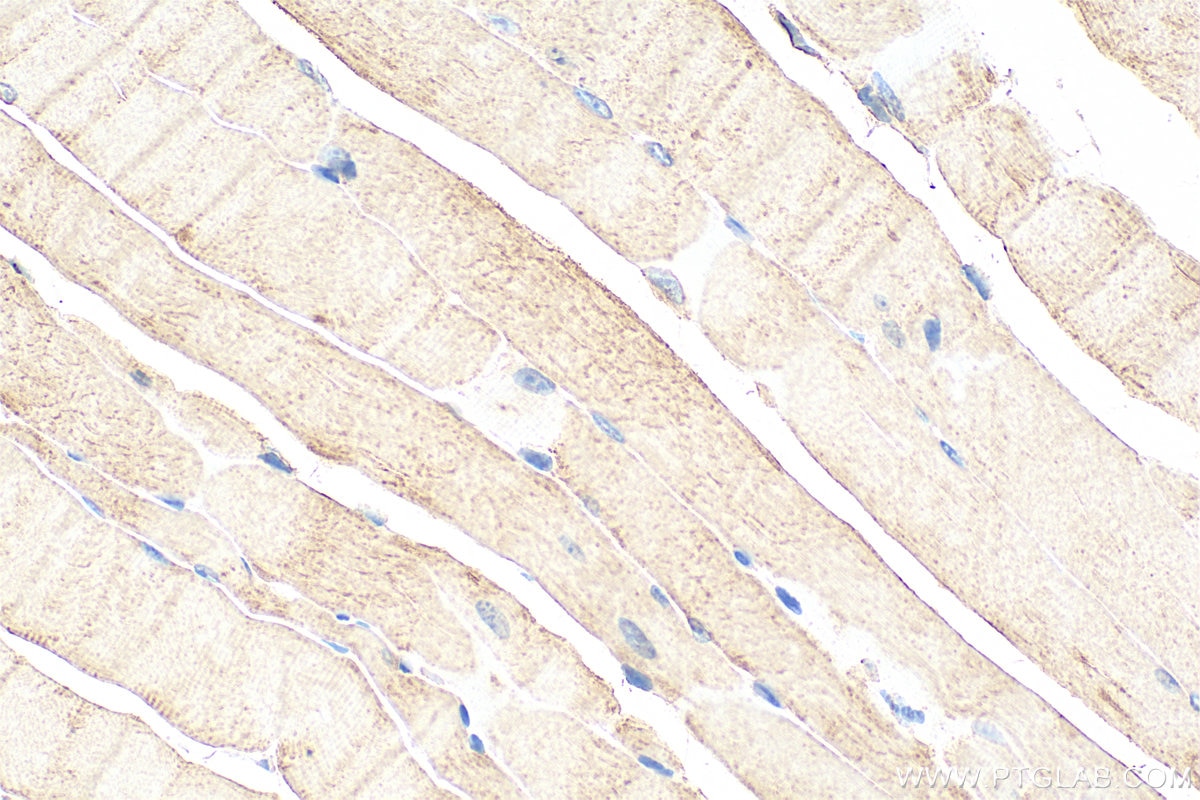
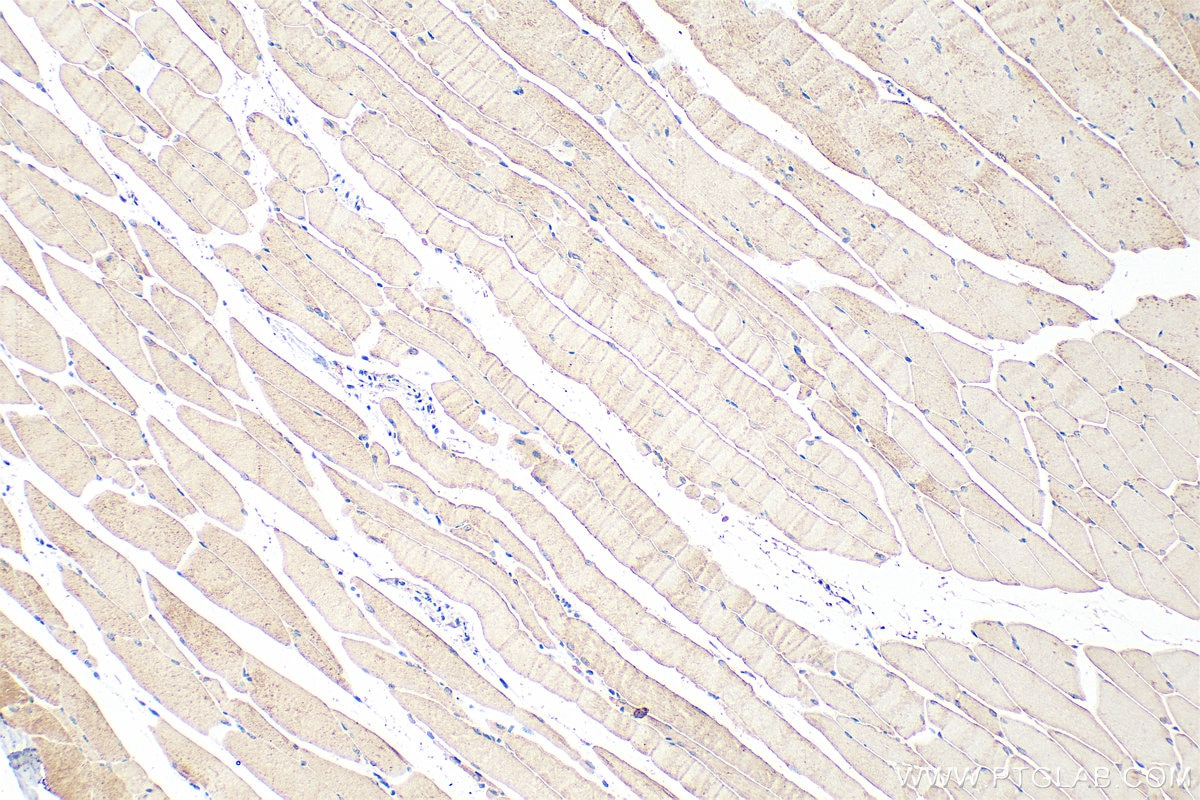
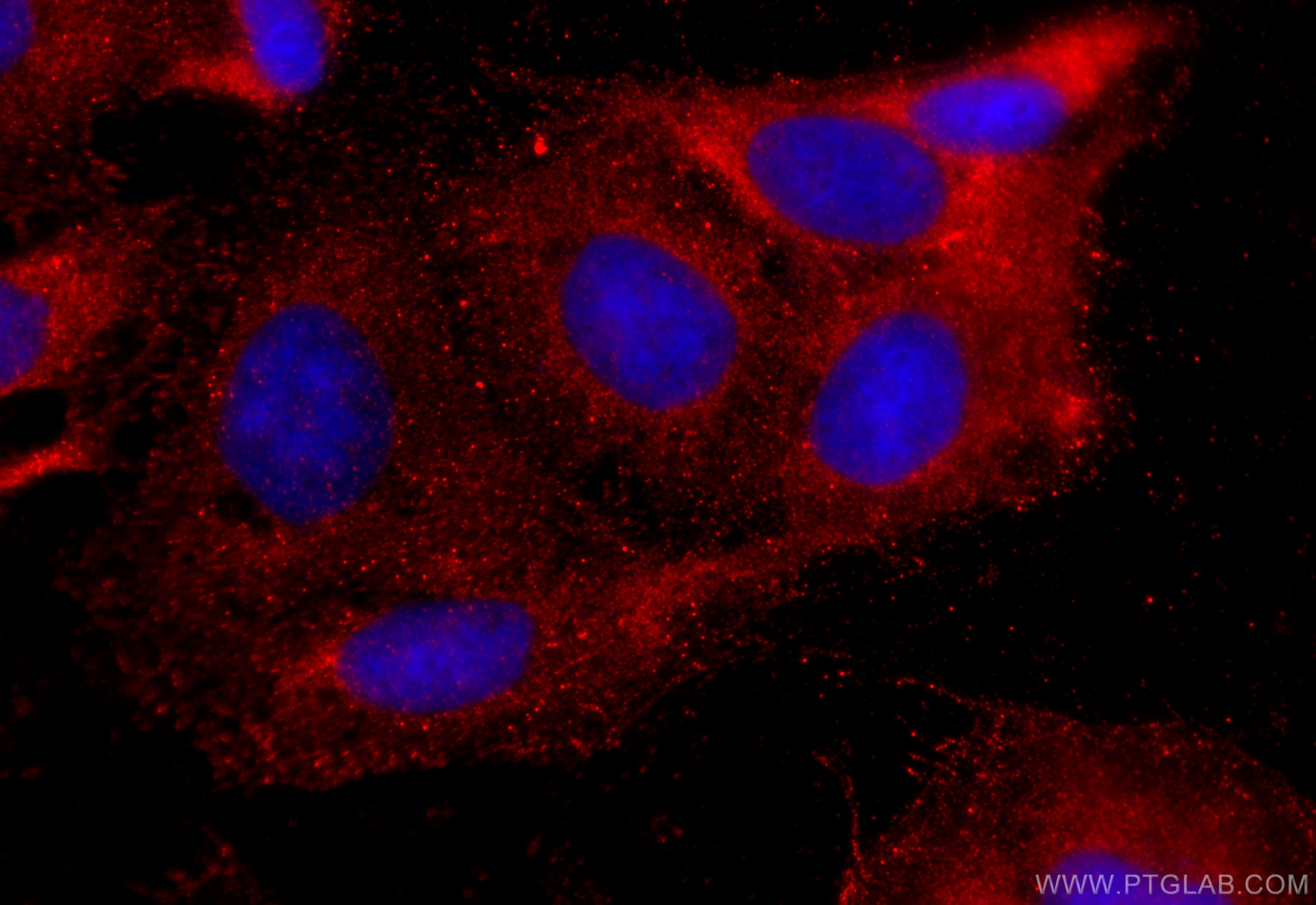
Tested Applications
| Positive IHC detected in | mouse skeletal muscle tissue Note: suggested antigen retrieval with TE buffer pH 9.0; (*) Alternatively, antigen retrieval may be performed with citrate buffer pH 6.0 |
| Positive IF/ICC detected in | U2OS cells |
Recommended dilution
| Application | Dilution |
|---|---|
| Immunohistochemistry (IHC) | IHC : 1:50-1:500 |
| Immunofluorescence (IF)/ICC | IF/ICC : 1:200-1:800 |
| It is recommended that this reagent should be titrated in each testing system to obtain optimal results. | |
| Sample-dependent, Check data in validation data gallery. | |
Product Information
31625-1-AP targets TMEM164 in IHC, IF/ICC, ELISA applications and shows reactivity with human, mouse samples.
| Tested Reactivity | human, mouse |
| Host / Isotype | Rabbit / IgG |
| Class | Polyclonal |
| Type | Antibody |
| Immunogen |
CatNo: Ag34317 Product name: Recombinant human TMEM164 protein Source: e coli.-derived, PGEX-4T Tag: GST Domain: 1-38 aa of BC085605 Sequence: MSRYSYQSLLDWLYGGVDPSFAGNGGPDCAAFLSWQQR Predict reactive species |
| Full Name | transmembrane protein 164 |
| GenBank Accession Number | BC085605 |
| Gene Symbol | TMEM164 |
| Gene ID (NCBI) | 84187 |
| RRID | AB_3742456 |
| Conjugate | Unconjugated |
| Form | Liquid |
| Purification Method | Antigen affinity Purification |
| UNIPROT ID | Q5U3C3 |
| Storage Buffer | PBS with 0.02% sodium azide and 50% glycerol, pH 7.3. |
| Storage Conditions | Store at -20°C. Stable for one year after shipment. Aliquoting is unnecessary for -20oC storage. 20ul sizes contain 0.1% BSA. |
Background Information
TMEM164 (Transmembrane Protein 164) is a membrane protein with significant roles in various biological processes, including lipid metabolism, neuroprotection, and cancer regulation. In non-small cell lung cancer (NSCLC), TMEM164 promotes ferroptosis by mediating autophagy, leading to the degradation of ferritin, GPX4, and lipid droplets, which facilitates iron accumulation and lipid peroxidation (PMID: 39798196). In neurodegenerative diseases, TMEM164 overexpression via gene therapy shows promise in reducing neurotoxic reactive astrocyte activation and alleviating disease symptoms (PMID: 37679556).
Protocols
| Product Specific Protocols | |
|---|---|
| IF protocol for TMEM164 antibody 31625-1-AP | Download protocol |
| IHC protocol for TMEM164 antibody 31625-1-AP | Download protocol |
| Standard Protocols | |
|---|---|
| Click here to view our Standard Protocols |




