
Product Information
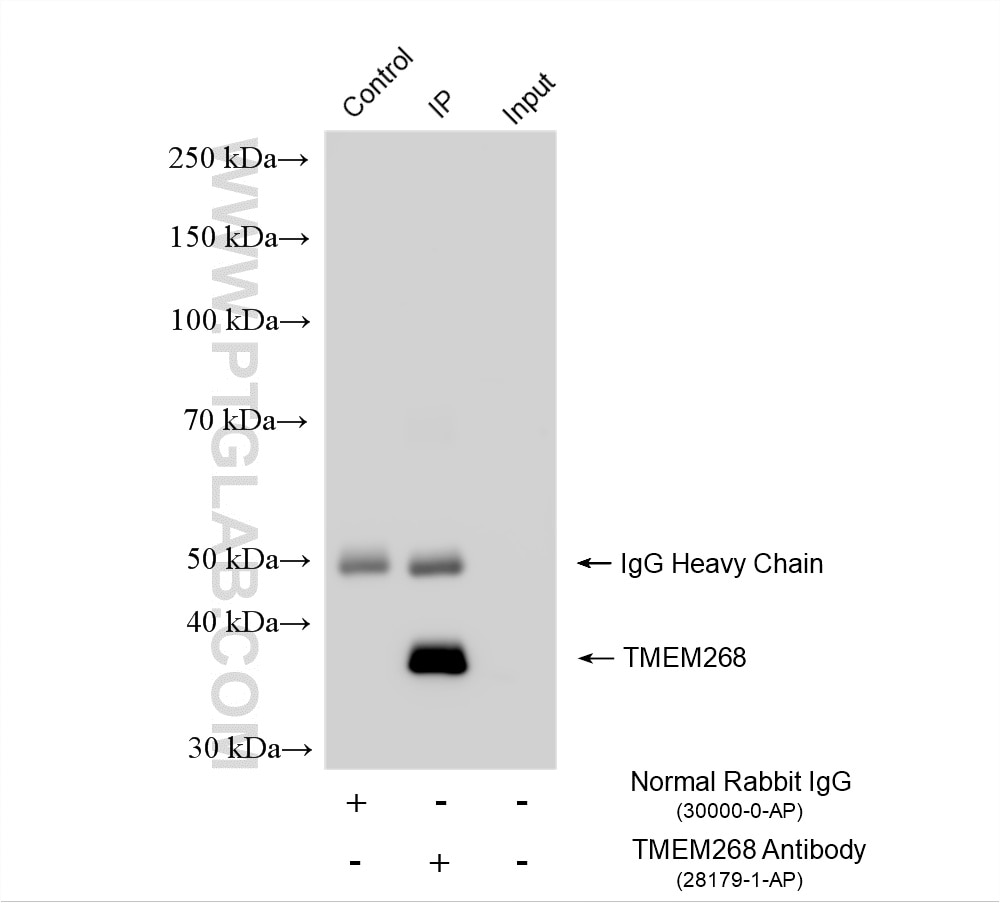
28179-1-PBS targets TMEM268 in IP, Indirect ELISA applications and shows reactivity with human samples.
| Tested Reactivity | human |
| Host / Isotype | Rabbit / IgG |
| Class | Polyclonal |
| Type | Antibody |
| Immunogen |
CatNo: Ag26867 Product name: Recombinant human C9orf91 protein Source: e coli.-derived, PET28a Tag: 6*His Domain: 1-299 aa of BC107134 Sequence: MVITQPDEASGLLPELHNGQVLTVLRIDNTCAPISFDLGAAEEQLQTWGIQVPADQYRSLAESALLEPQVRRYIIYNSRPMRLAFAVVFYVVVWANIYSTSQMFALGNHWAGMLLVTLAAVSLTLTLVLVFERHQKKANTNTDLRLAAANGALLRHRVLLGVTDTVEGCQSVIQLWFVYFDLENCVQFLSDHVQEMKTSQESLLRSRLSQLCVVMETGVSPATAEGPENLEDAPLLPGNSCPNERPLMQTELHQLVPEAEPEEMARQLLAVFGGYYIRLLVTSQLPQAMGTRHTNSPRI Predict reactive species |
| Full Name | chromosome 9 open reading frame 91 |
| Observed Molecular Weight | 38 kDa |
| GenBank Accession Number | BC107134 |
| Gene Symbol | C9orf91 |
| Gene ID (NCBI) | 203197 |
| RRID | AB_3742282 |
| Conjugate | Unconjugated |
| Form | Liquid |
| Purification Method | Antigen affinity purification |
| UNIPROT ID | Q5VZI3 |
| Storage Buffer | PBS only, pH 7.3. |
| Storage Conditions | Store at -80°C. |
Background Information
TMEM268 (Transmembrane Protein 268) is a membrane protein containing two transmembrane domains. It is primarily localized to the plasma membrane and is widely expressed in various tissues and cell types. This protein influences cell adhesion, cytoskeletal remodeling, and cell migration by regulating the stability of ITGB4 (integrin β4). In cancer research, TMEM268 is significantly overexpressed in gastric cancer, where it promotes tumor cell proliferation, adhesion, and metastasis. It serves as an independent prognostic marker for thyroid cancer, and its high expression is closely associated with poor patient survival. In the immune system, TMEM268 interacts with CD11b, regulates the β2 integrin signaling pathway, and participates in innate immune responses and pathogen clearance; its deficiency leads to increased susceptibility to sepsis. Furthermore, this protein has been identified as a component of the microglial membrane proteome, suggesting a potential role in neuroimmunology, and represents a potential therapeutic target for cancer and immune-related diseases.


