

Tested Applications
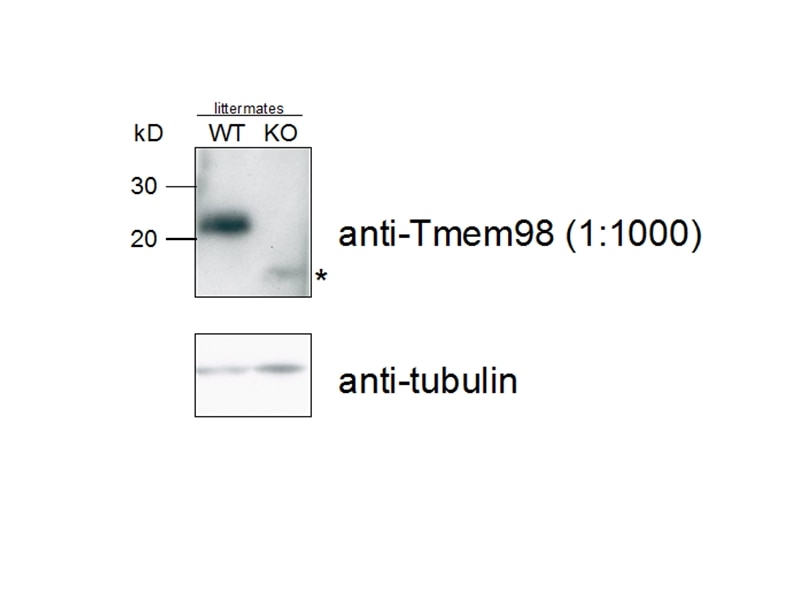
| Positive WB detected in | mouse E12.5 embryos |
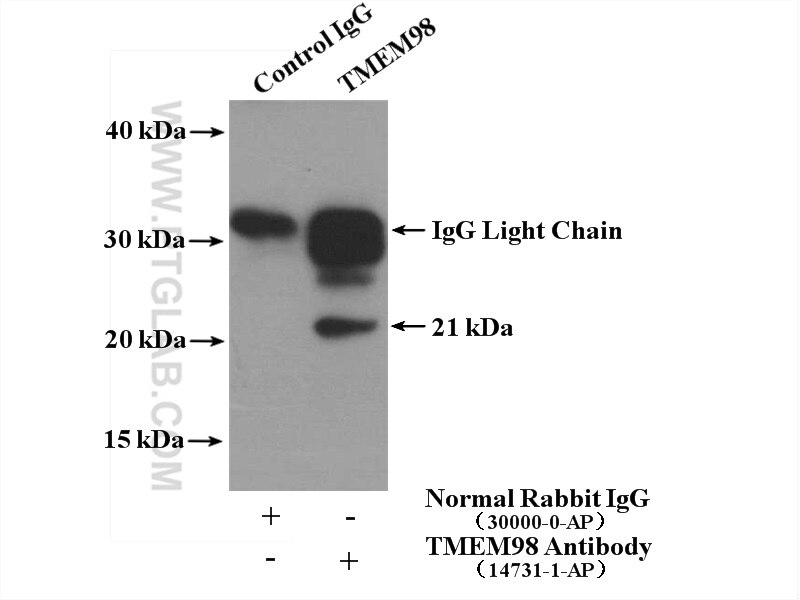
| Positive IP detected in | Y79 cells |
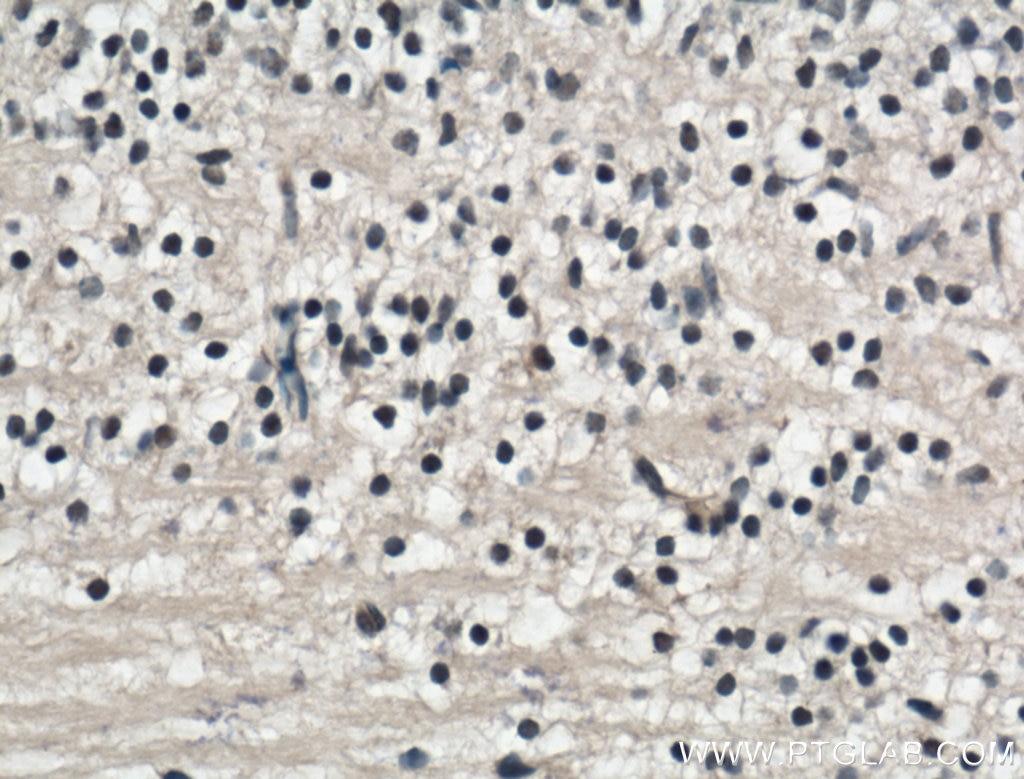
| Positive IHC detected in | mouse embryo tissue Note: suggested antigen retrieval with TE buffer pH 9.0; (*) Alternatively, antigen retrieval may be performed with citrate buffer pH 6.0 |
Recommended dilution
| Application | Dilution |
|---|---|
| Western Blot (WB) | WB : 1:500-1:2000 |
| Immunoprecipitation (IP) | IP : 0.5-4.0 ug for 1.0-3.0 mg of total protein lysate |
| Immunohistochemistry (IHC) | IHC : 1:50-1:500 |
| It is recommended that this reagent should be titrated in each testing system to obtain optimal results. | |
| Sample-dependent, Check data in validation data gallery. | |
Product Information
14731-1-AP targets TMEM98 in WB, IHC, IF, IP, CoIP, ELISA applications and shows reactivity with human, mouse samples.
| Tested Reactivity | human, mouse |
| Cited Reactivity | human, mouse |
| Host / Isotype | Rabbit / IgG |
| Class | Polyclonal |
| Type | Antibody |
| Immunogen |
CatNo: Ag6492 Product name: Recombinant human TMEM98 protein Source: e coli.-derived, PGEX-4T Tag: GST Domain: 27-226 aa of BC000526 Sequence: CRQRYCRPRDLLQRYDSKPIVDLIGAMETQSEPSELELDDVVITNPHIEAILENEDWIEDASGLMSHCIAILKICHTLTEKLVAMTMGSGAKMKTSASVSDIIVVAKRISPRVDDVVKSMYPPLDPKLLDARTTALLLSVSHLVLVTRNACHLTGGLDWIDQSLSAAEEHLEVLREAALASEPDKGLPGPEGFLQEQSAI Predict reactive species |
| Full Name | transmembrane protein 98 |
| Calculated Molecular Weight | 25 kDa |
| Observed Molecular Weight | 21-25 kDa |
| GenBank Accession Number | BC000526 |
| Gene Symbol | TMEM98 |
| Gene ID (NCBI) | 26022 |
| RRID | AB_11182589 |
| Conjugate | Unconjugated |
| Form | Liquid |
| Purification Method | Antigen affinity purification |
| UNIPROT ID | Q9Y2Y6 |
| Storage Buffer | PBS with 0.02% sodium azide and 50% glycerol, pH 7.3. |
| Storage Conditions | Store at -20°C. Stable for one year after shipment. Aliquoting is unnecessary for -20oC storage. 20ul sizes contain 0.1% BSA. |
Background Information
TMEM98, also named as TADA1, composed of 226 amino acid residues, is a potential single-pass transmembrane protein. It is expression in both nucleus and cytoplasm. TMEM98 was found to be over-expressed in most of the hepatocellular carcinoma tissue. MEM98 is not only a prognostic marker for patients with hepatocellular carcinoma but also a novel molecular target associated with intrinsic and acquired chemoresistance of hepatocellular carcinoma (PMID: 24608572).
Protocols
| Product Specific Protocols | |
|---|---|
| IHC protocol for TMEM98 antibody 14731-1-AP | Download protocol |
| IP protocol for TMEM98 antibody 14731-1-AP | Download protocol |
| Standard Protocols | |
|---|---|
| Click here to view our Standard Protocols |
Publications
What published studies show
The TMEM98 Polyclonal antibody (Cat# 14731-1-AP) has 11 citations across journals including Nature Communications, JCI Insight, PLoS Genetics, PLoS One, Aging, Investigative Ophthalmology & Visual Science, British Journal of Ophthalmology, Frontiers in Bioscience, and bioRxiv. Research fields span neuroscience (myelin regulation), ophthalmology (nanophthalmos, retinal development), oncology (head and neck carcinoma, ovarian cancer), and Wnt/β-catenin signaling.
| Species | Application | Title |
|---|---|---|
Nat Commun FBXW7 regulates MYRF levels to control myelin capacity and homeostasis in the adult central nervous system | ||
JCI Insight Splicing variants in MYRF cause partial loss of function in the retinal pigment epithelium leading to nanophthalmos. | ||
Aging (Albany NY) The microRNA miR-29c-5p inhibits cell proliferation and migration by targeting TMEM98 in head and neck carcinoma. | ||
Invest Ophthalmol Vis Sci Missense Mutations in the Human Nanophthalmos Gene TMEM98 Cause Retinal Defects in the Mouse.
| ||
Front Biosci (Landmark Ed) Tumor-Suppressor Gene Transmembrane Protein 98 Promotes Proliferation and Inhibits Apoptosis in Ovarian Cancer |




