


Tested Applications
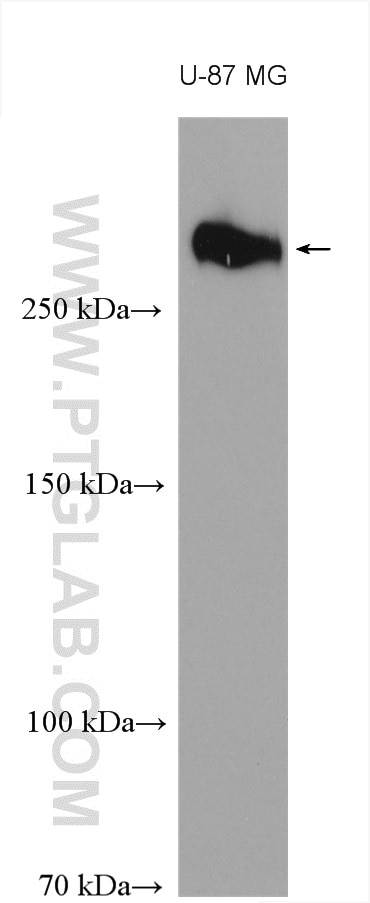
| Positive WB detected in | U-87 MG cells |
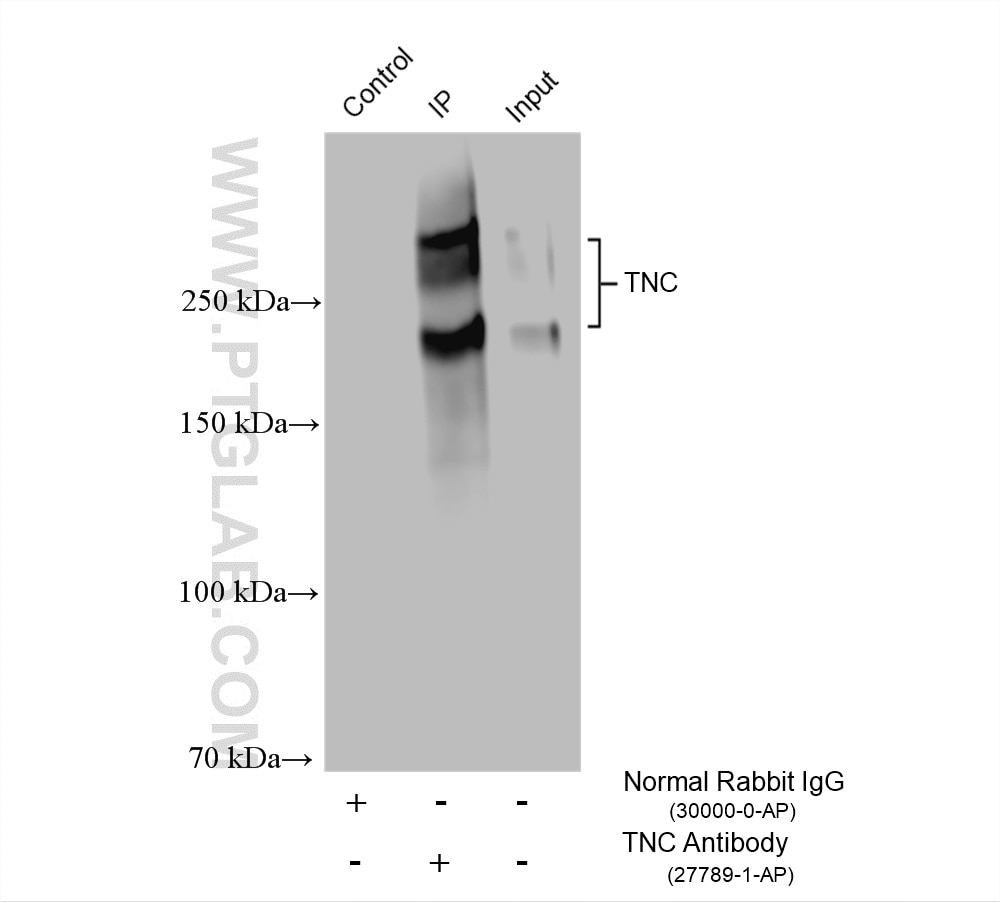
| Positive IP detected in | U-87 MG cells |
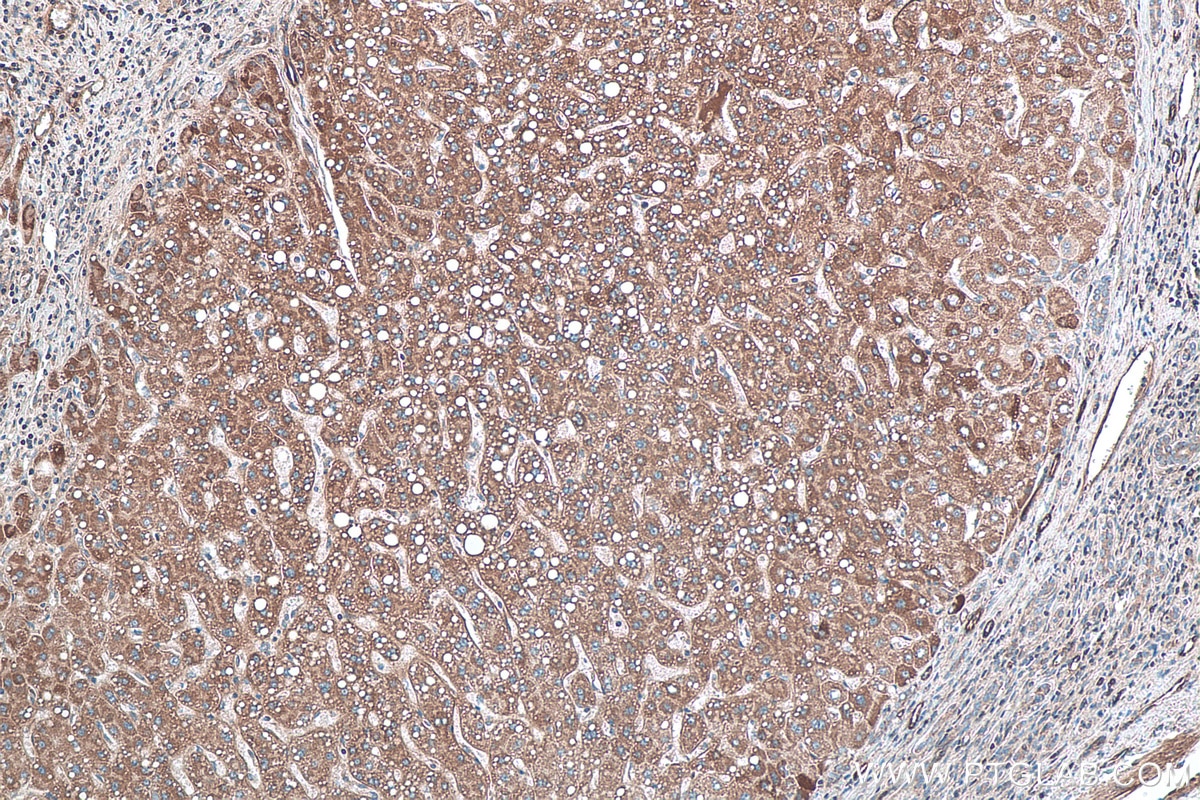
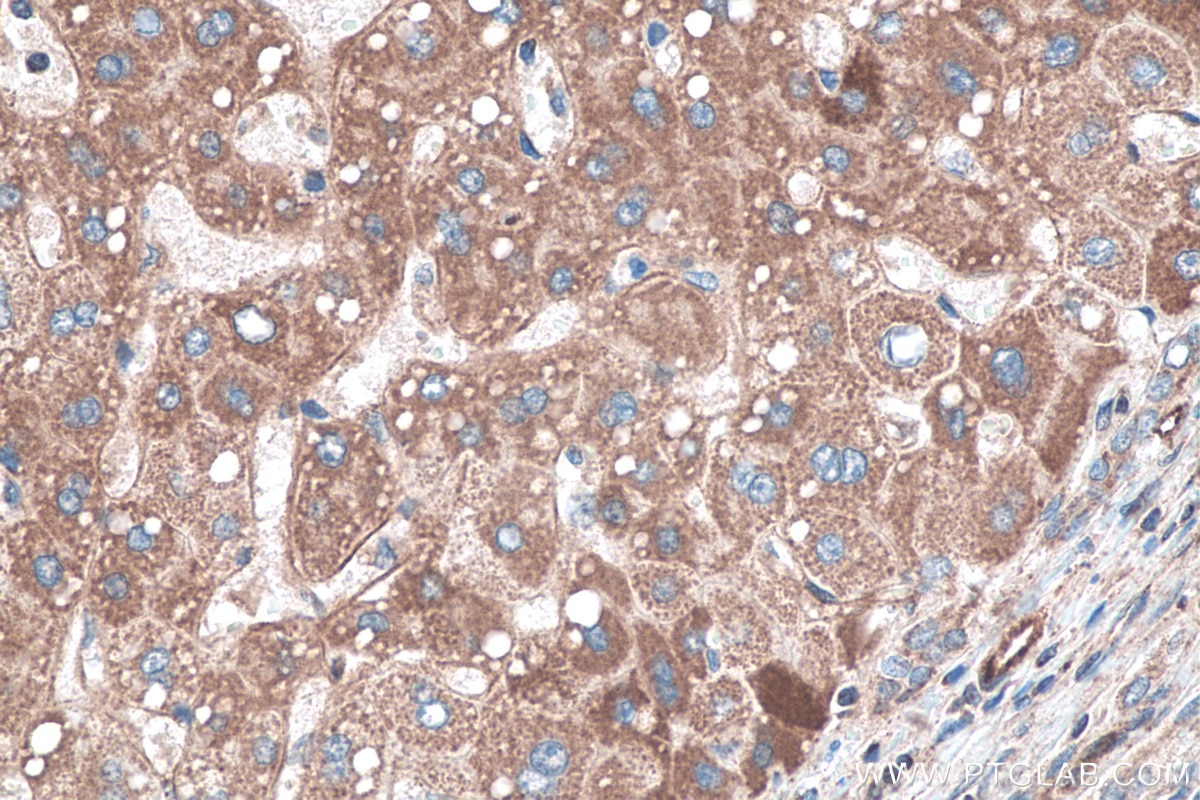
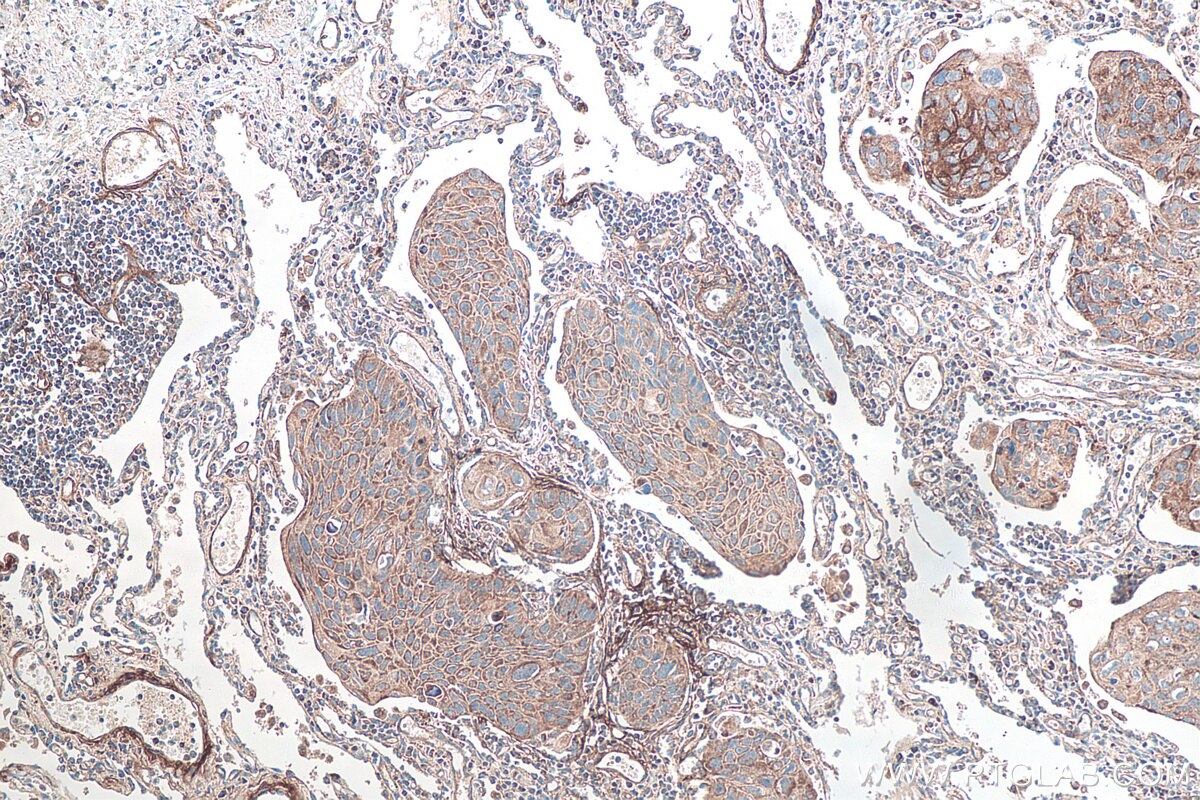
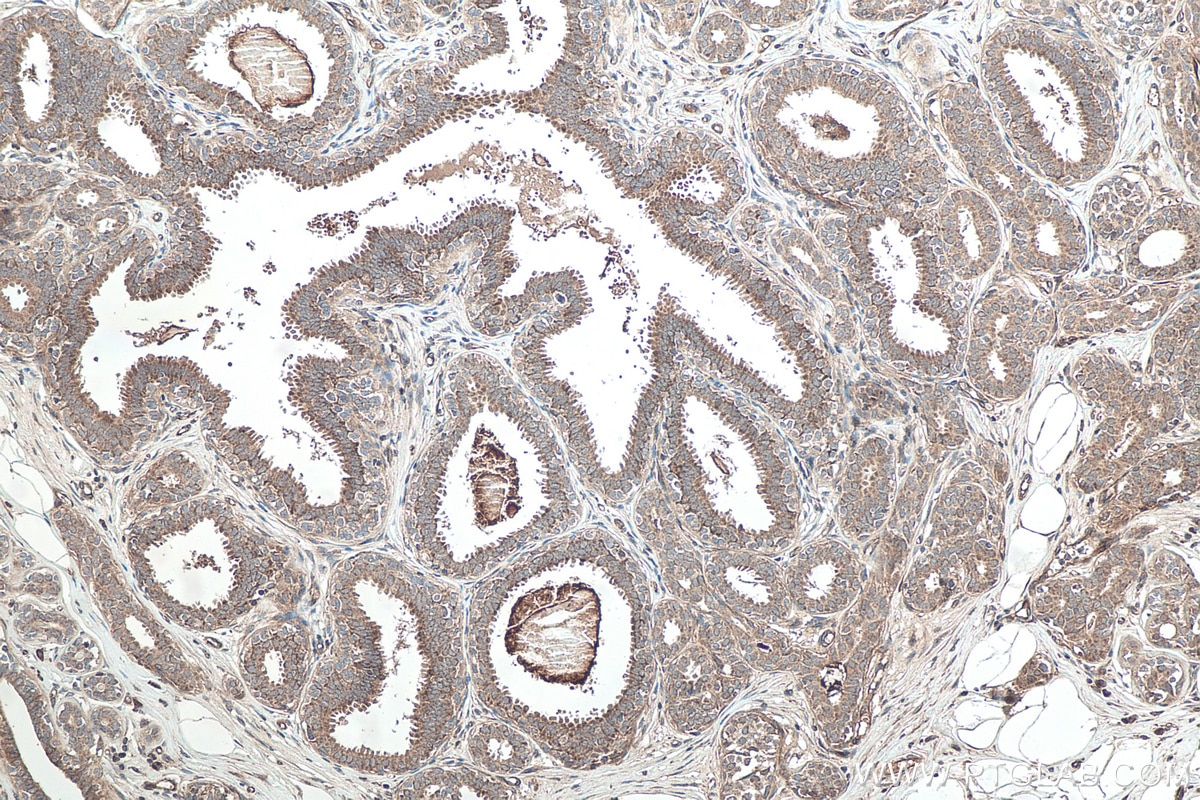
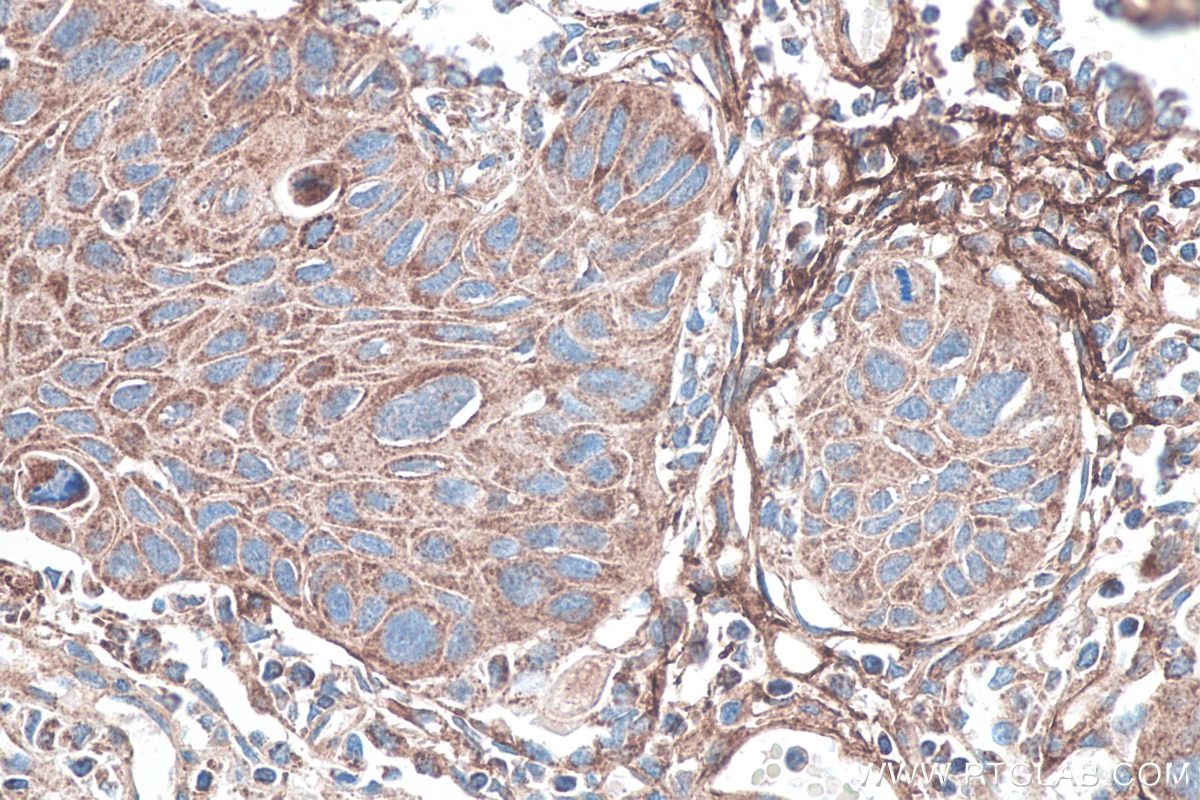
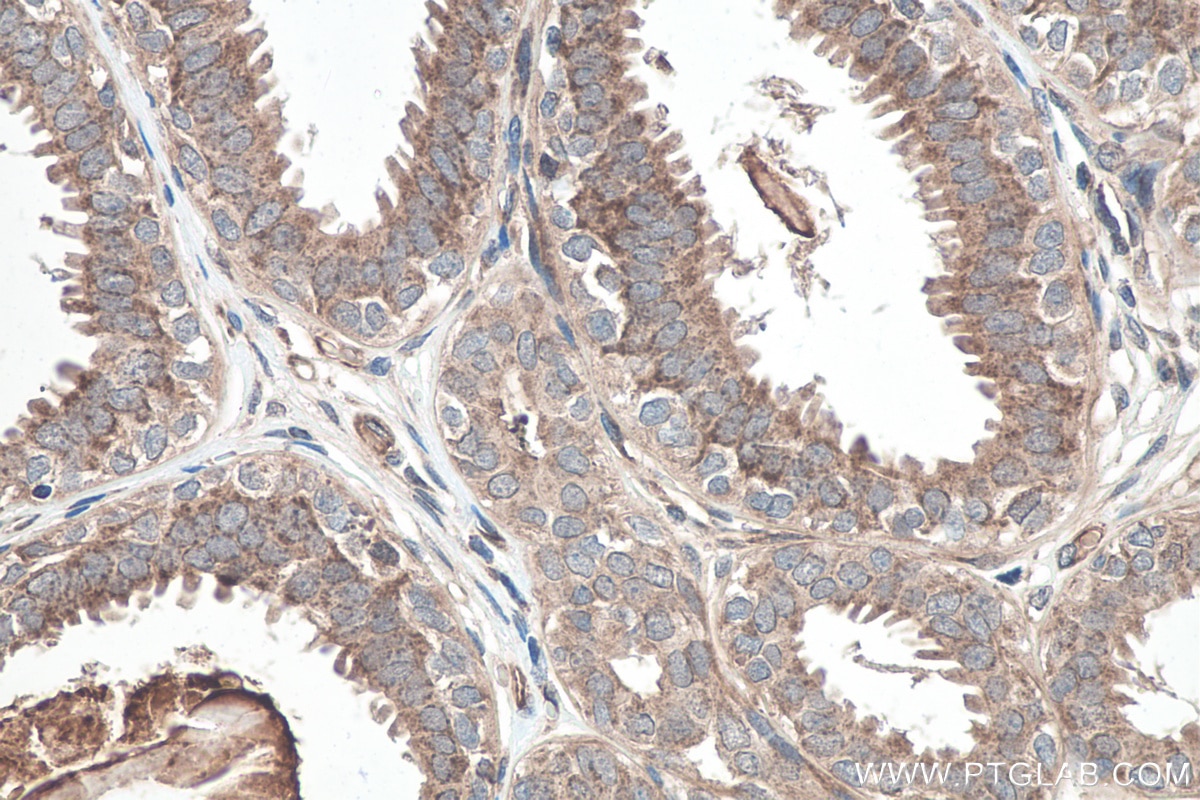
| Positive IHC detected in | human liver cancer tissue, human breast cancer tissue, human lung cancer tissue Note: suggested antigen retrieval with TE buffer pH 9.0; (*) Alternatively, antigen retrieval may be performed with citrate buffer pH 6.0 |
Recommended dilution
| Application | Dilution |
|---|---|
| Western Blot (WB) | WB : 1:500-1:1000 |
| Immunoprecipitation (IP) | IP : 0.5-4.0 ug for 1.0-3.0 mg of total protein lysate |
| Immunohistochemistry (IHC) | IHC : 1:500-1:2000 |
| It is recommended that this reagent should be titrated in each testing system to obtain optimal results. | |
| Sample-dependent, Check data in validation data gallery. | |
Product Information
27789-1-AP targets TNC/Tenascin-C in WB, IHC, IP, ELISA applications and shows reactivity with human samples.
| Tested Reactivity | human |
| Cited Reactivity | human |
| Host / Isotype | Rabbit / IgG |
| Class | Polyclonal |
| Type | Antibody |
| Immunogen |
CatNo: Ag27122 Product name: Recombinant human TNC protein Source: e coli.-derived, PGEX-4T Tag: GST Domain: 23-200 aa of BC151843 Sequence: GVLKKVIRHKRQSGVNATLPEENQPVVFNHVYNIKLPVGSQCSVDLESASGEKDLAPPSEPSESFQEHTVDGENQIVFTHRINIPRRACGCAAAPDVKELLSRLEELENLVSSLREQCTAGAGCCLQPATGRLDTRPFCSGRGNFSTEGCGCVCEPGWKGPNCSEPECPGNCHLRGRC Predict reactive species |
| Full Name | tenascin C |
| Calculated Molecular Weight | 2201 aa, 241 kDa |
| Observed Molecular Weight | 210-350 kDa |
| GenBank Accession Number | BC151843 |
| Gene Symbol | Tenascin C |
| Gene ID (NCBI) | 3371 |
| RRID | AB_2918131 |
| Conjugate | Unconjugated |
| Form | Liquid |
| Purification Method | Antigen affinity purification |
| UNIPROT ID | P24821 |
| Storage Buffer | PBS with 0.02% sodium azide and 50% glycerol, pH 7.3. |
| Storage Conditions | Store at -20°C. Stable for one year after shipment. Aliquoting is unnecessary for -20oC storage. 20ul sizes contain 0.1% BSA. |
Background Information
Tenascin-C (TNC) is a large hexameric extracellular matrix glycoprotein of the tenascin family (PMID: 21818551). It is a multimodular protein containing multiple epidermal growth factor (EGF)-like repeats and fibronectin type III (FN III) domains (PMID: 1719530). Tenascin-C is highly expressed during embryonic development, particularly in the developing central nervous system, around motile cells and at epithelial-mesenchymal interaction sites (PMID: 25738825). In adult tissues, the expression and the distribution of TNC are typically limited under normal physiological conditions. It is upregulated during injury, inflammation, regeneration, and cancer (PMID: 7694605; 25120494). Tenascin-C is a diverse protein that can produce different functions including regulating cell adhesion, migration and proliferation. In normal esophageal tissue, only one isoform of Tenascin-C (210 kDa) was identified, whereas at least three isoforms (210 kDa, 250 kDa, and 350 kDa) were found in esophageal cancer tissue(PMID: 26731558). It is also reported that tenascin-C exists as two isoforms of approximately 160 kDa and 280 kDa in both healthy and RA patient samples(PMID: 38077374).
Protocols
| Product Specific Protocols | |
|---|---|
| IHC protocol for TNC/Tenascin-C antibody 27789-1-AP | Download protocol |
| IP protocol for TNC/Tenascin-C antibody 27789-1-AP | Download protocol |
| WB protocol for TNC/Tenascin-C antibody 27789-1-AP | Download protocol |
| Standard Protocols | |
|---|---|
| Click here to view our Standard Protocols |
Publications
What published studies show
The TNC/Tenascin-C Polyclonal antibody (Cat# 27789-1-AP) has 1 total citation. The cited publication appeared in Chin Med (Impact Factor 7.4), published in January 2025. The research field is oncology, specifically investigating how Aidi injection inhibits migration and invasion of gefitinib-resistant lung adenocarcinoma cells via the PLAT/FAK/AKT pathway. The antibody was used in Western Blot (WB) with human samples.
| Species | Application | Title |
|---|---|---|
Chin Med Aidi injection inhibits the migration and invasion of gefitinib-resistant lung adenocarcinoma cells by regulating the PLAT/FAK/AKT pathway |










