
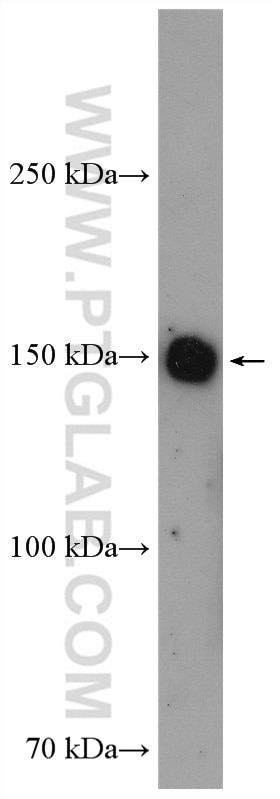
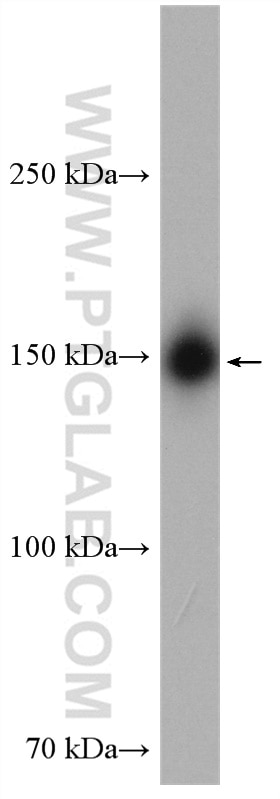
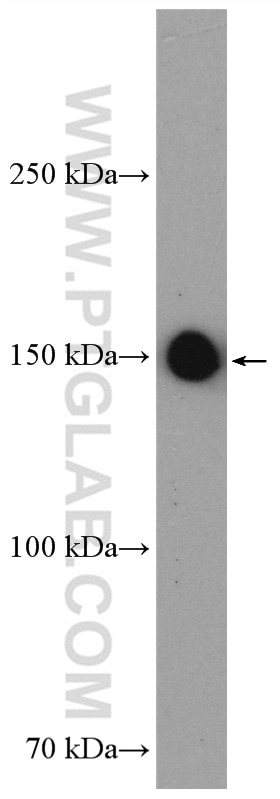
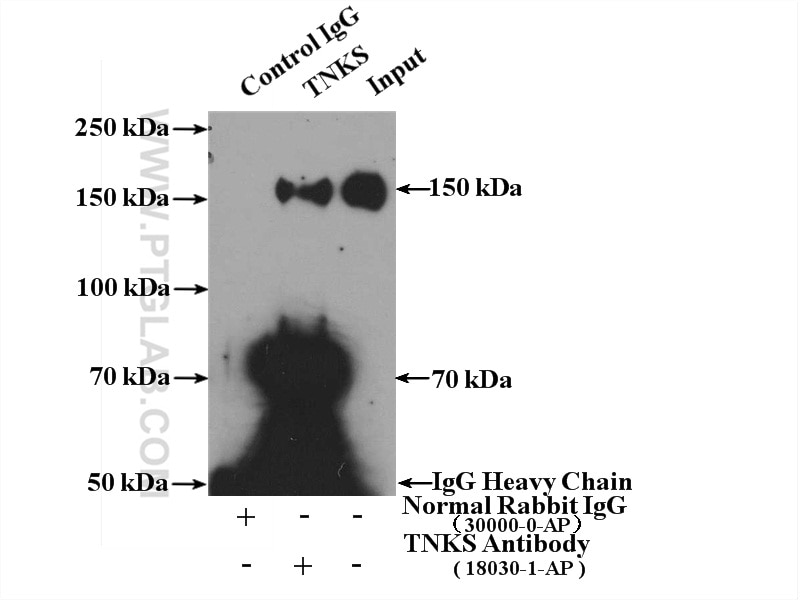

Tested Applications
| Positive WB detected in | HeLa cells, Jurkat cells, MCF-7 cells |
| Positive IP detected in | Jurkat cells |
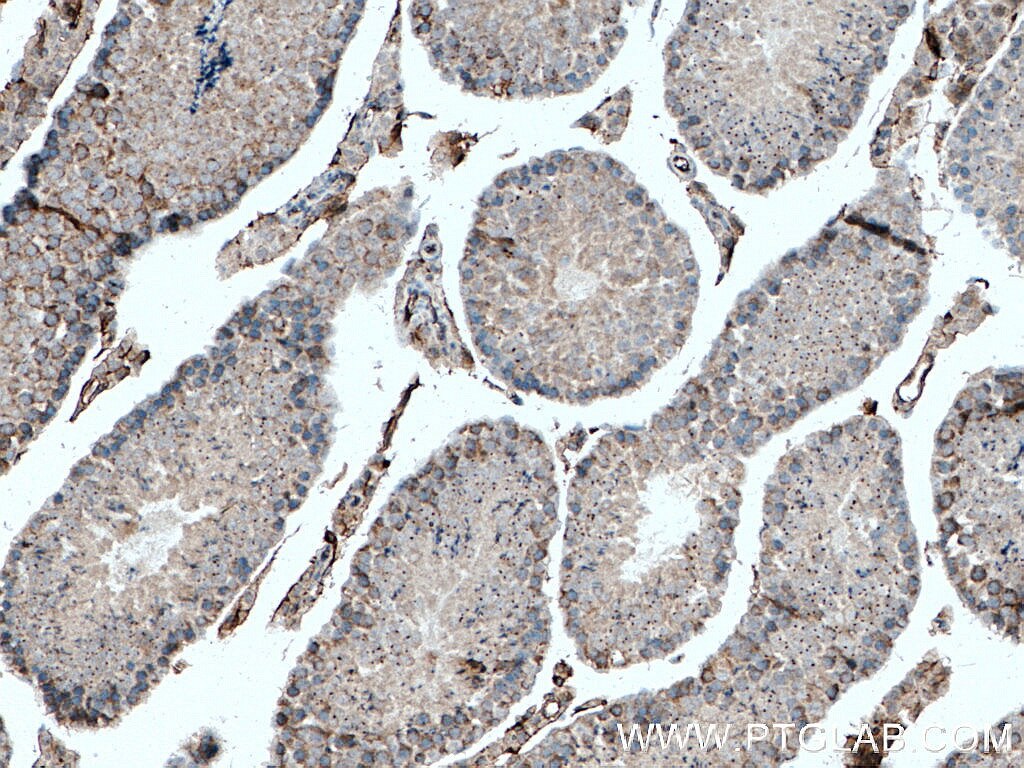
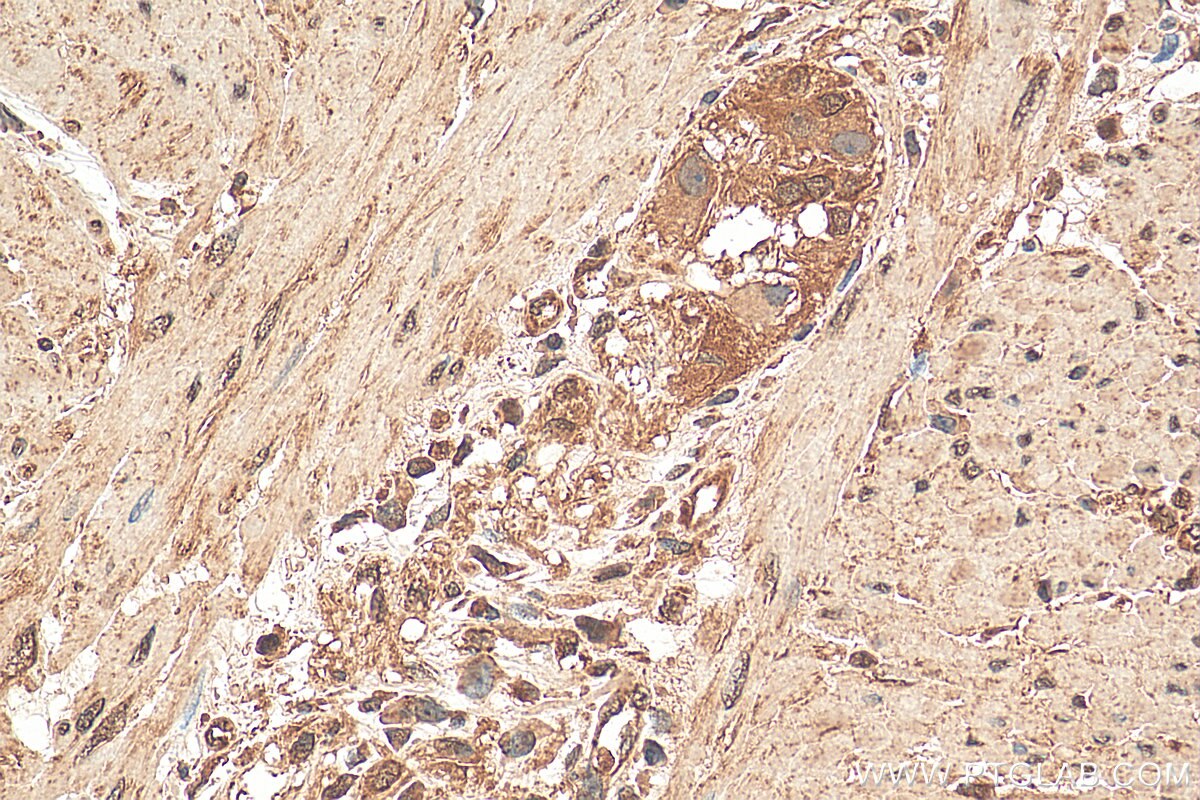
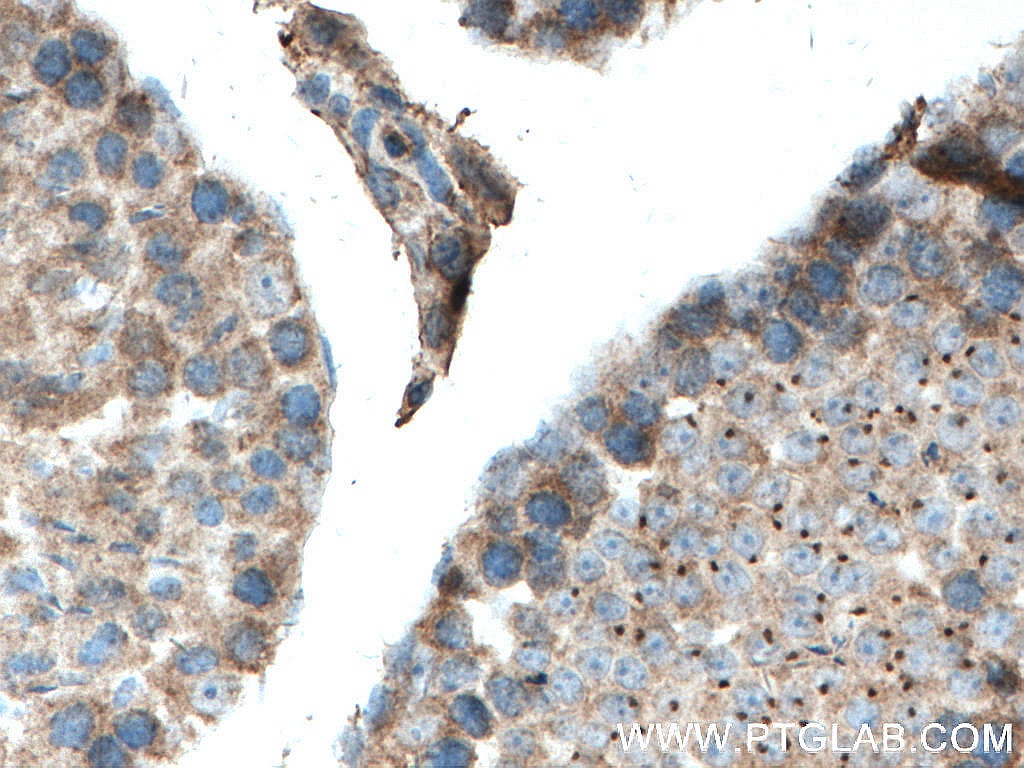
| Positive IHC detected in | mouse testis tissue, human colon cancer tissue Note: suggested antigen retrieval with TE buffer pH 9.0; (*) Alternatively, antigen retrieval may be performed with citrate buffer pH 6.0 |
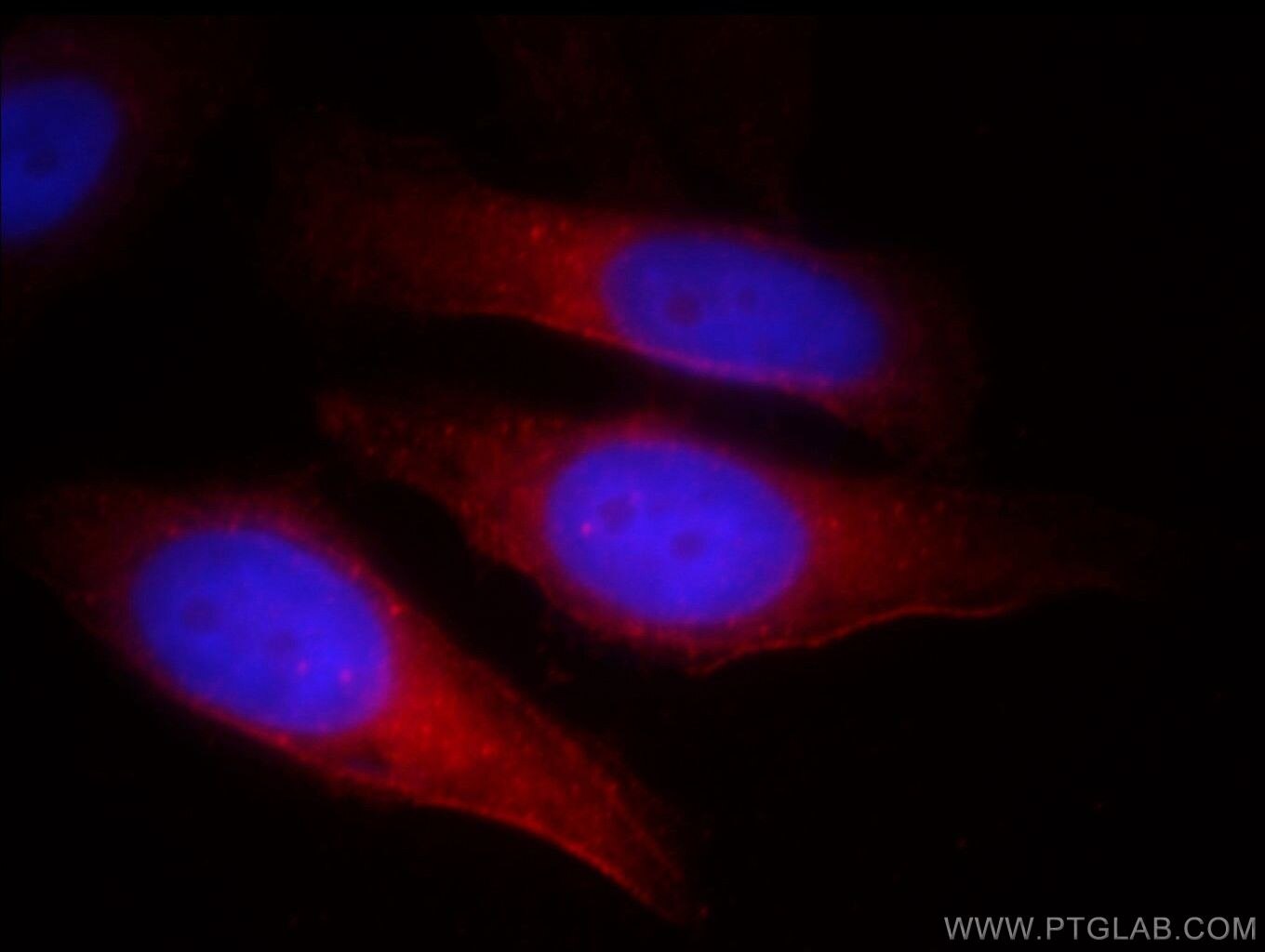
| Positive IF/ICC detected in | HepG2 cells |
Recommended dilution
| Application | Dilution |
|---|---|
| Western Blot (WB) | WB : 1:500-1:2000 |
| Immunoprecipitation (IP) | IP : 0.5-4.0 ug for 1.0-3.0 mg of total protein lysate |
| Immunohistochemistry (IHC) | IHC : 1:50-1:500 |
| Immunofluorescence (IF)/ICC | IF/ICC : 1:10-1:100 |
| It is recommended that this reagent should be titrated in each testing system to obtain optimal results. | |
| Sample-dependent, Check data in validation data gallery. | |
Product Information
18030-1-AP targets TNKS in WB, IHC, IF/ICC, IP, ELISA applications and shows reactivity with human, mouse, rat samples.
| Tested Reactivity | human, mouse, rat |
| Cited Reactivity | human, mouse |
| Host / Isotype | Rabbit / IgG |
| Class | Polyclonal |
| Type | Antibody |
| Immunogen |
CatNo: Ag12597 Product name: Recombinant human TNKS protein Source: e coli.-derived, PGEX-4T Tag: GST Domain: 1-329 aa of BC098394 Sequence: MAASRRSQHHHHHHQQQLQPAPGASAPPPPPPPPLSPGLAPGTTPASPTASGLAPFASPRHGLALPEGDGSRDPPDRPRSPDQVDGTSCCSTTSTICTVAAAPVVPAVSTSSAAGVAPNPAGSGSNNSPSSSSSPTSSSSSSPSSPGSSLAESPEAAGVSSTAPLGPGAAGPGTGVPAVSGALRELLEACRNGDVSRVKRLVDAANVNAKDMAGRKSSPLHFAAGFGRKDVVEHLLQMGANVHARDDGGLIPLHNACSFGHAEVVSLLLCQGADPNARDNWNYTPLHEAAIKGKIDVCIVLLQHGADPNIRNTDGKSALDLADPSAKAV Predict reactive species |
| Full Name | tankyrase, TRF1-interacting ankyrin-related ADP-ribose polymerase |
| Calculated Molecular Weight | 1327 aa, 142 kDa |
| Observed Molecular Weight | 150 kDa |
| GenBank Accession Number | BC098394 |
| Gene Symbol | TNKS |
| Gene ID (NCBI) | 8658 |
| RRID | AB_2303564 |
| Conjugate | Unconjugated |
| Form | Liquid |
| Purification Method | Antigen affinity purification |
| UNIPROT ID | O95271 |
| Storage Buffer | PBS with 0.02% sodium azide and 50% glycerol, pH 7.3. |
| Storage Conditions | Store at -20°C. Stable for one year after shipment. Aliquoting is unnecessary for -20oC storage. 20ul sizes contain 0.1% BSA. |
Protocols
| Product Specific Protocols | |
|---|---|
| IF protocol for TNKS antibody 18030-1-AP | Download protocol |
| IHC protocol for TNKS antibody 18030-1-AP | Download protocol |
| IP protocol for TNKS antibody 18030-1-AP | Download protocol |
| WB protocol for TNKS antibody 18030-1-AP | Download protocol |
| Standard Protocols | |
|---|---|
| Click here to view our Standard Protocols |
Publications
What published studies show
The TNKS Polyclonal Antibody (Cat# 18030-1-AP) has 14 citations across 13 journals, including Molecular Cell, Cell Death & Disease, Developmental Cell, Advanced Science, FASEB Journal, and Journal of Biological Chemistry. Research fields encompass oocyte meiosis, necroptosis, colorectal and gastric cancer, breast cancer, lung adenocarcinoma, glioma, ALS, iron metabolism, peroxisome dynamics, and PARP1 inhibition. Cited applications include WB, IP, IF, and IHC in human and mouse models.
| Species | Application | Title |
|---|---|---|
J Adv Res Tankyrase activity is essential for asymmetric division and chromosome segregation in oocyte meiosis | ||
Cell Death Dis circ5615 functions as a ceRNA to promote colorectal cancer progression by upregulating TNKS.
| ||
Cell Death Dis Minimizing DNA trapping while maintaining activity inhibition via selective PARP1 degrader | ||
Dev Cell Very long-chain fatty acids control peroxisome dynamics via a feedback loop in intestinal stem cells during gut regeneration |
Reviews
What customers say
One reviewer rated this antibody 3 out of 5 stars for Western Blot at a 1:1000 dilution. Working with a HEK cell lysate, they reported no visible banding in the predicted protein size range specified by Proteintech. They noted they had cut the blot to isolate only that region, so they could not determine whether the issue was due to running the gel too long or too short. Overall, the single review reflects a negative experience with the product failing to produce the expected signal under the tested conditions.
The reviews below have been submitted by verified Proteintech customers who received an incentive for providing their feedback.
Aditya (Verified Customer) (06-16-2025) | working with a hek lysate western blot, did not get any banding in the predicted protein range specified by proteintech - cut the blot to only have this region, may have run over or under and i wouldnt be able to tell
|









