
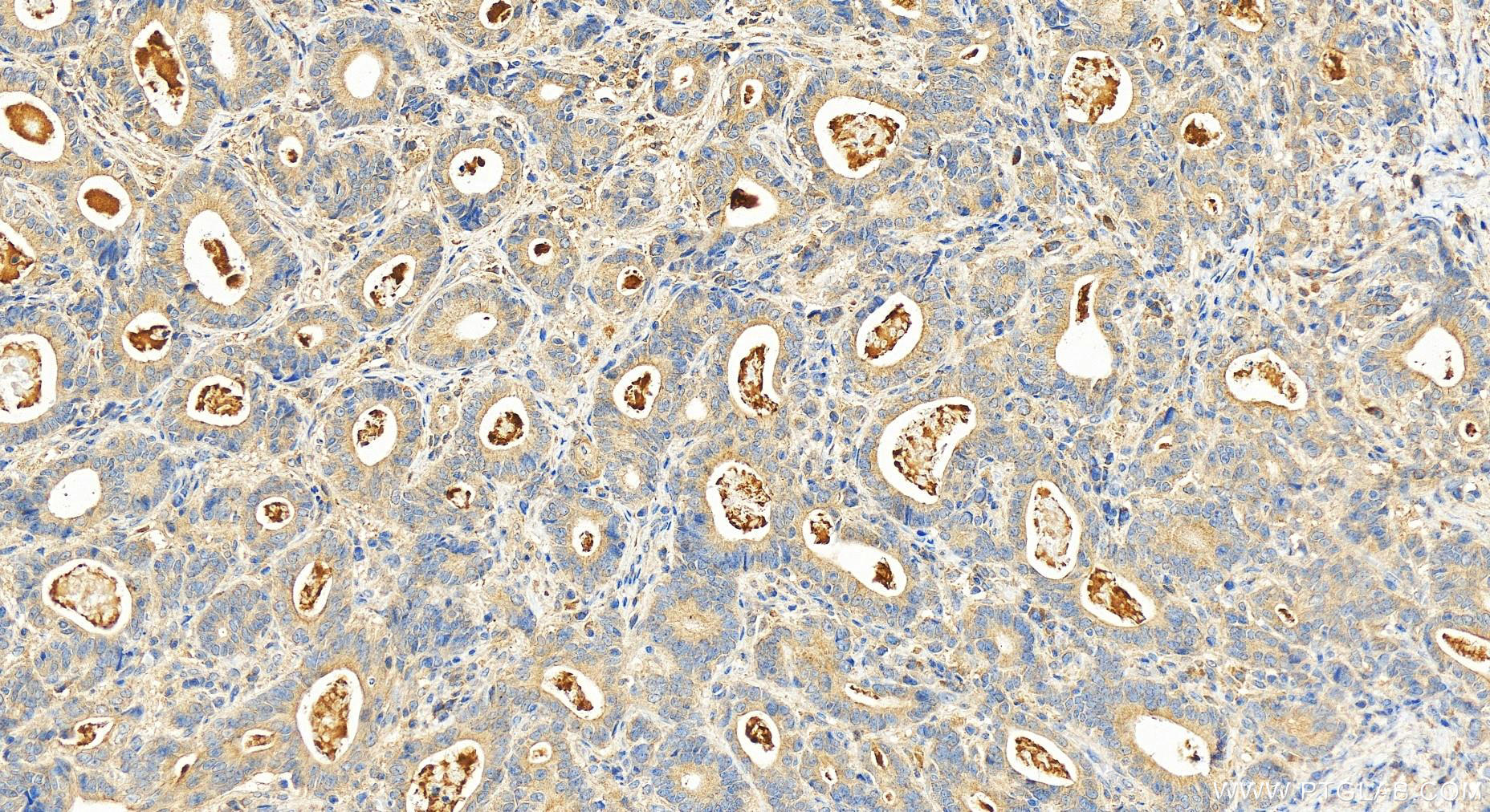

Tested Applications
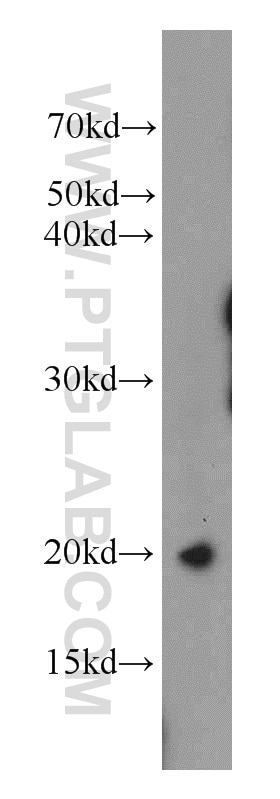
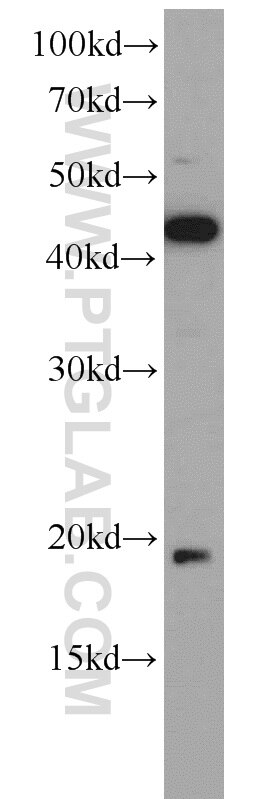
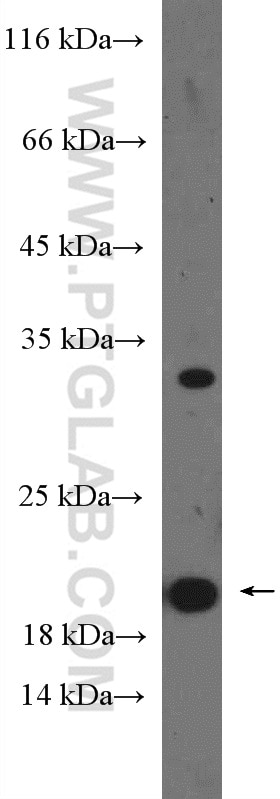
| Positive WB detected in | PC-3 cells, HEK-293 cells |
| Positive IHC detected in | human stomach cancer tissue Note: suggested antigen retrieval with TE buffer pH 9.0; (*) Alternatively, antigen retrieval may be performed with citrate buffer pH 6.0 |
Recommended dilution
| Application | Dilution |
|---|---|
| Western Blot (WB) | WB : 1:200-1:1000 |
| Immunohistochemistry (IHC) | IHC : 1:50-1:500 |
| It is recommended that this reagent should be titrated in each testing system to obtain optimal results. | |
| Sample-dependent, Check data in validation data gallery. | |
Product Information
15057-1-AP targets TPPP3 in WB, IHC, IF, ELISA applications and shows reactivity with human, mouse, rat samples.
| Tested Reactivity | human, mouse, rat |
| Cited Reactivity | human, mouse |
| Host / Isotype | Rabbit / IgG |
| Class | Polyclonal |
| Type | Antibody |
| Immunogen |
CatNo: Ag7040 Product name: Recombinant human TPPP3 protein Source: e coli.-derived, PGEX-4T Tag: GST Domain: 1-176 aa of BC000691 Sequence: MAASTDMAGLEESFRKFAIHGDPKASGQEMNGKNWAKLCKDCKVADGKSVTGTDVDIVFSKVKGKSARVINYEEFKKALEELATKRFKGKSKEEAFDAICQLVAGKEPANVGVTKAKTGGAVDRLTDTSRYTGSHKERFDESGKGKGIAGRQDILDDSGYVSAYKNAGTYDAKVKK Predict reactive species |
| Full Name | tubulin polymerization-promoting protein family member 3 |
| Calculated Molecular Weight | 19 kDa |
| Observed Molecular Weight | 19-20 kDa |
| GenBank Accession Number | BC000691 |
| Gene Symbol | TPPP3 |
| Gene ID (NCBI) | 51673 |
| RRID | AB_2878105 |
| Conjugate | Unconjugated |
| Form | Liquid |
| Purification Method | Antigen affinity purification |
| UNIPROT ID | Q9BW30 |
| Storage Buffer | PBS with 0.02% sodium azide and 50% glycerol, pH 7.3. |
| Storage Conditions | Store at -20°C. Stable for one year after shipment. Aliquoting is unnecessary for -20oC storage. 20ul sizes contain 0.1% BSA. |
Background Information
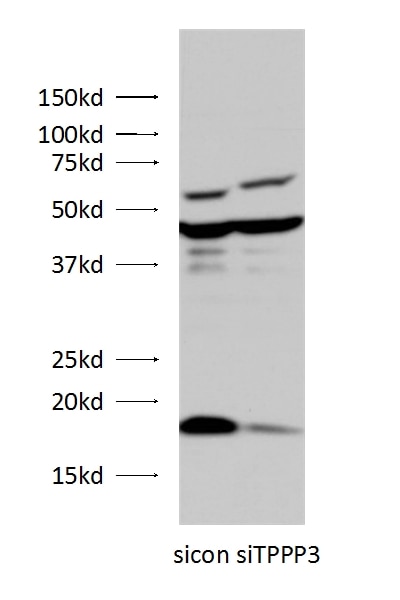
TPPP3 (tubulin polymerization promoting protein 3), also named as TPPP/p20, is a new member of the TPPP family which binds tubulin and induces tubulin polymerization and microtubule bundling.TPPP3 has been shown to play an important role in cell proliferation and may be implicated in tumorigenesis and metastasis (19633818). TPPP3 was also identified as specific marker for the connective tissues that envelope tendons due to its distinct expression in the developing tendon sheath (19235716). This antibody detects the 19-20 kDa TPPP3 in HeLa and PC-3 cells. The non-specific bands between 40 and 60 kDa were also occasionally observed.
Protocols
| Product Specific Protocols | |
|---|---|
| IHC protocol for TPPP3 antibody 15057-1-AP | Download protocol |
| WB protocol for TPPP3 antibody 15057-1-AP | Download protocol |
| Standard Protocols | |
|---|---|
| Click here to view our Standard Protocols |
Publications
What published studies show
TPPP3 Polyclonal antibody (Cat# 15057-1-AP) has 9 total citations published in Immunity, EMBO J, Stem Cell Res Ther, Cell Rep, Front Immunol, Acta Biochim Biophys Sin (Shanghai), iScience, Front Dement, and bioRxiv. Research fields span intestinal antimicrobial immunity, osteochondral differentiation, melanoma stem cell tumorigenesis, ovarian cancer drug resistance, breast cancer metastasis, NASH fibrosis, tendon injury, Lewy body dementia, and myocardial recovery.
| Species | Application | Title |
|---|---|---|
Immunity Intestinal Tuft-2 cells exert antimicrobial immunity via sensing bacterial metabolite N-undecanoylglycine. | ||
EMBO J GNAS/PKA signaling promotes aberrant osteochondral differentiation of Gli1+ tendon sheath progenitors | ||
Stem Cell Res Ther Requirement of splicing factor hnRNP A2B1 for tumorigenesis of melanoma stem cells.
| ||
Cell Rep Cisplatin resistance in an ovarian cancer model is mediated by microtubule dynamics regulator TPPP3 in synergy with tubulin code rewiring.
| ||
Front Immunol Integrated analyses of single-cell transcriptomics identify metastasis-associated myeloid subpopulations in breast cancer lung metastasis | ||
iScience Dynamic changes of molecular pattern and cellular subpopulation in puncture-induced tendon injury model |






