

Tested Applications
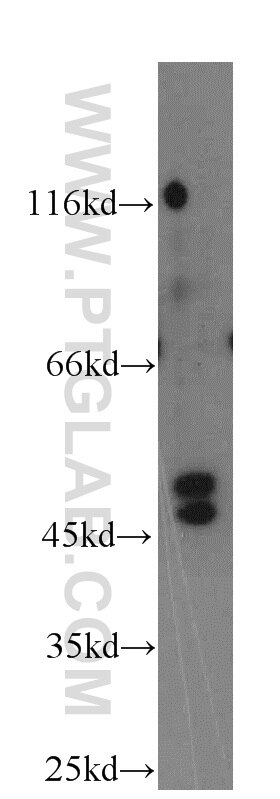
| Positive WB detected in | COLO 320 cells |
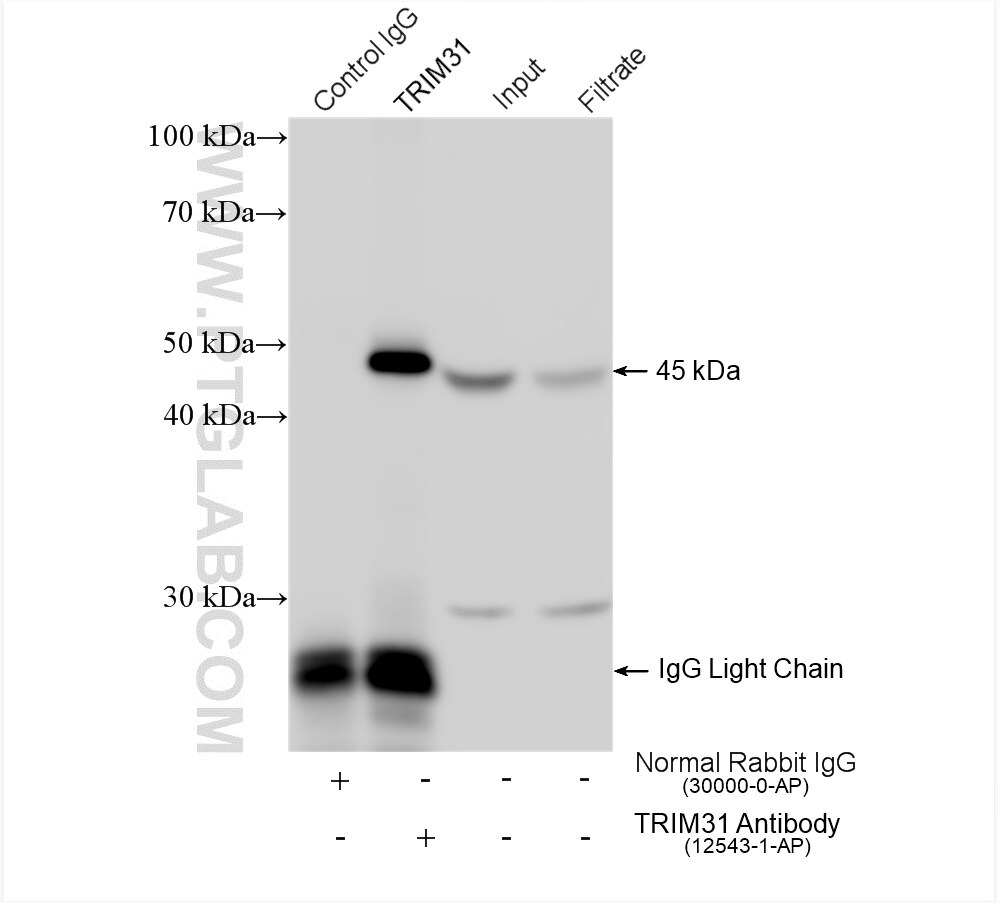
| Positive IP detected in | HT-29 cells |
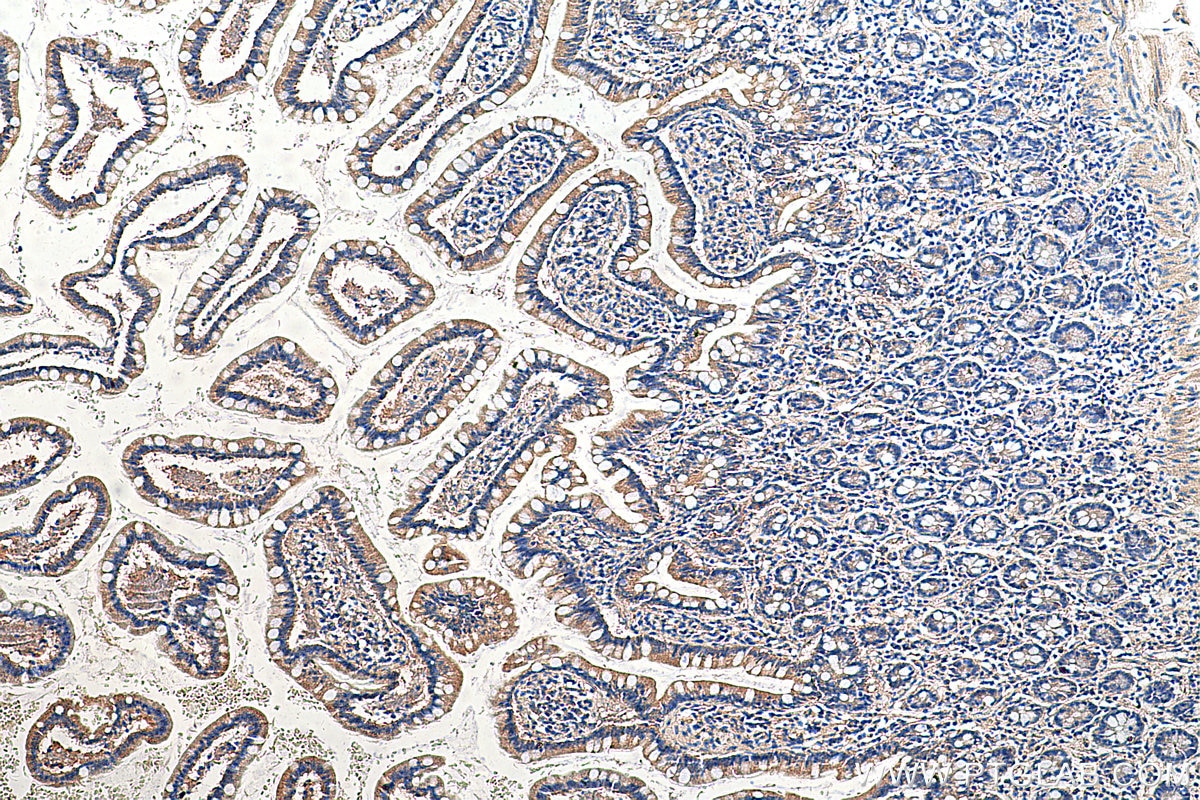
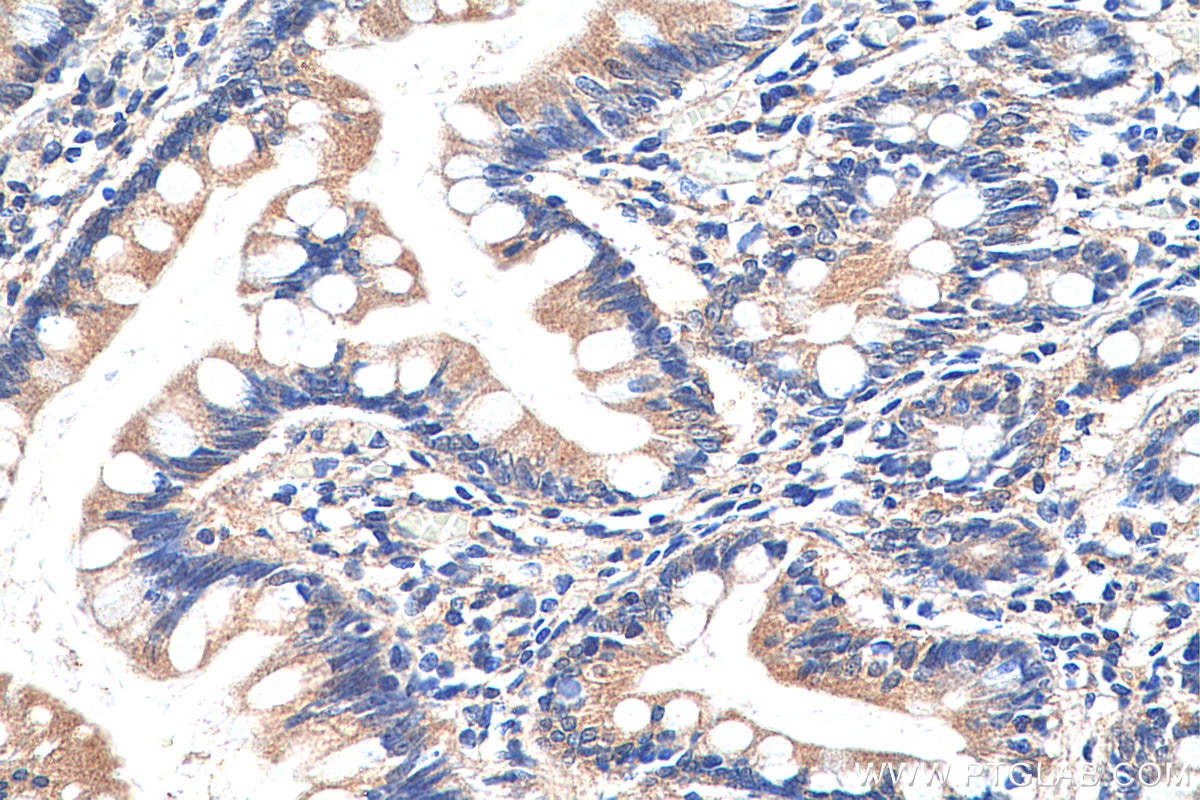
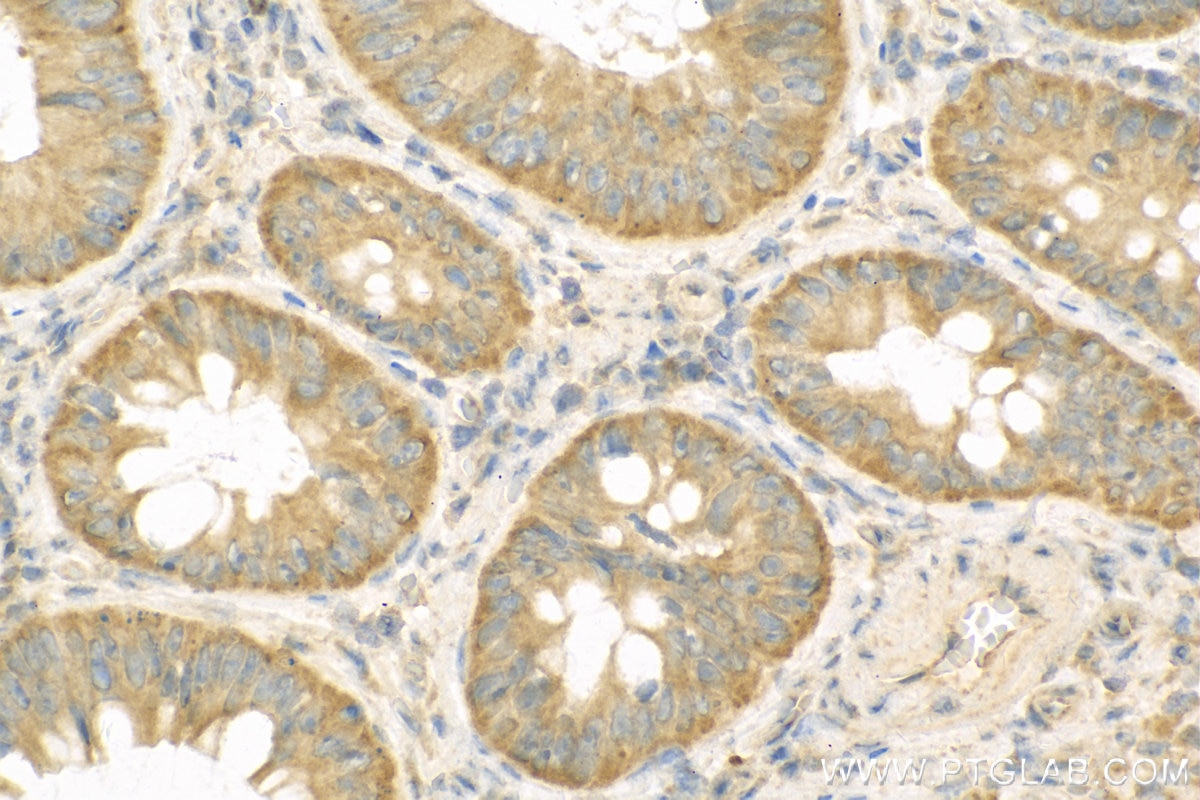
| Positive IHC detected in | human small intestine tissue, Human Colon cancer tissue Note: suggested antigen retrieval with TE buffer pH 9.0; (*) Alternatively, antigen retrieval may be performed with citrate buffer pH 6.0 |
Recommended dilution
| Application | Dilution |
|---|---|
| Western Blot (WB) | WB : 1:500-1:1000 |
| Immunoprecipitation (IP) | IP : 0.5-4.0 ug for 1.0-3.0 mg of total protein lysate |
| Immunohistochemistry (IHC) | IHC : 1:200-1:1000 |
| It is recommended that this reagent should be titrated in each testing system to obtain optimal results. | |
| Sample-dependent, Check data in validation data gallery. | |
Product Information
12543-1-AP targets TRIM31 in WB, IHC, IF, IP, CoIP, ELISA applications and shows reactivity with human samples.
| Tested Reactivity | human |
| Cited Reactivity | human, mouse, rat |
| Host / Isotype | Rabbit / IgG |
| Class | Polyclonal |
| Type | Antibody |
| Immunogen |
CatNo: Ag3264 Product name: Recombinant human TRIM31 protein Source: e coli.-derived, T-HIS Tag: 6*His Domain: 126-425 aa of BC017017 Sequence: HNVSLIEEAAQNYQGQIQEQIQVLQQKEKETVQVKAQGVHRVDVFTDQVEHEKQRILTEFELLHQVLEEEKNFLLSRIYWLGHEGTEAGKHYVASTEPQLNDLKKLVDSLKTKQNMPPRQLLEDIKVVLCRSEEFQFLNPTPVPLELEKKLSEAKSRHDSITGSLKKFKDQLQADRKKDENRFFKSMNKNDMKSWGLLQKNNHKMNKTSEPGSSSAGGRTTSGPPNHHSSAPSHSLFRASSAGKVTFPVCLLASYDEISGQGASSQDTKTFDVALSEELHAALSEWLTAIRAWFCKVPSS Predict reactive species |
| Full Name | tripartite motif-containing 31 |
| Calculated Molecular Weight | 425 aa, 48 kDa |
| Observed Molecular Weight | 48 kDa |
| GenBank Accession Number | BC017017 |
| Gene Symbol | TRIM31 |
| Gene ID (NCBI) | 11074 |
| RRID | AB_10640897 |
| Conjugate | Unconjugated |
| Form | Liquid |
| Purification Method | Antigen affinity purification |
| UNIPROT ID | Q9BZY9 |
| Storage Buffer | PBS with 0.02% sodium azide and 50% glycerol, pH 7.3. |
| Storage Conditions | Store at -20°C. Stable for one year after shipment. Aliquoting is unnecessary for -20oC storage. 20ul sizes contain 0.1% BSA. |
Background Information
TRIM31(Tripartite motif-containing protein 31) is also named as C6orf13, RNF and belongs to the TRIM/RBCC family. The deduced protein contains an N-terminal RING domain, a B-box-2 domain, and a coiled-coil region. TRIM31 forms homodimers(PMID:11331580). This protein has 2 isoforms produced by alternative splicing.
Protocols
| Product Specific Protocols | |
|---|---|
| IHC protocol for TRIM31 antibody 12543-1-AP | Download protocol |
| IP protocol for TRIM31 antibody 12543-1-AP | Download protocol |
| WB protocol for TRIM31 antibody 12543-1-AP | Download protocol |
| Standard Protocols | |
|---|---|
| Click here to view our Standard Protocols |
Publications
What published studies show
The TRIM31 Polyclonal antibody (Cat# 12543-1-AP) has accumulated 31 citations published in journals including Nature Communications, Molecular Cell, Cell Death & Differentiation, Cell Death & Disease, Redox Biology, Advanced Science, Journal of Virology, International Immunopharmacology, Experimental Cell Research, and Scientific Reports. Associated research fields span autophagy, antiviral innate immunity, neurodegeneration (Parkinson's disease), multiple cancers (breast, colorectal, esophageal, gastric, glioblastoma, neuroblastoma), inflammasome-mediated inflammation, neuroinflammation, cardiac remodeling, pulmonary fibrosis, asthma, depression, and metabolic disorders.
| Species | Application | Title |
|---|---|---|
Nat Commun USP18 positively regulates innate antiviral immunity by promoting K63-linked polyubiquitination of MAVS. | ||
Redox Biol The E3 ubiquitin ligase TRIM31 is involved in cerebral ischemic injury by promoting degradation of TIGAR.
| ||
Mol Cell Arginine monomethylation by PRMT7 controls MAVS-mediated antiviral innate immunity.
| ||
Adv Sci (Weinh) WDR72 Promotes Neuroblastoma Stemness and Progression by Sequestering TRIM31-Mediated Degradation of CBX8. | ||
Cell Death Differ E3 ubiquitin ligase TRIM31 alleviates dopaminergic neurodegeneration by promoting proteasomal degradation of VDAC1 in Parkinson's Disease model
|






