



Tested Applications
| Positive WB detected in | mouse testis tissue, human liver tissue |
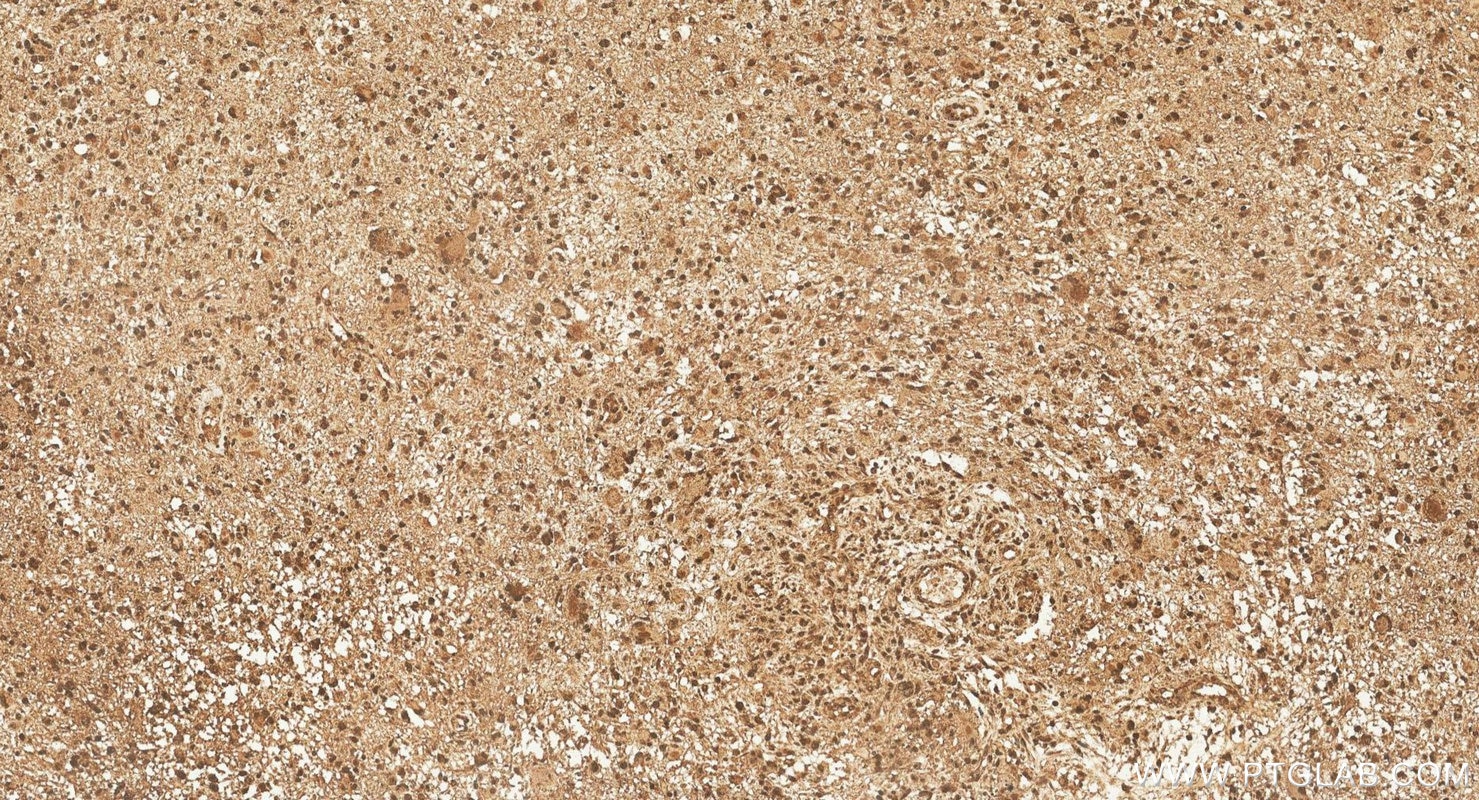
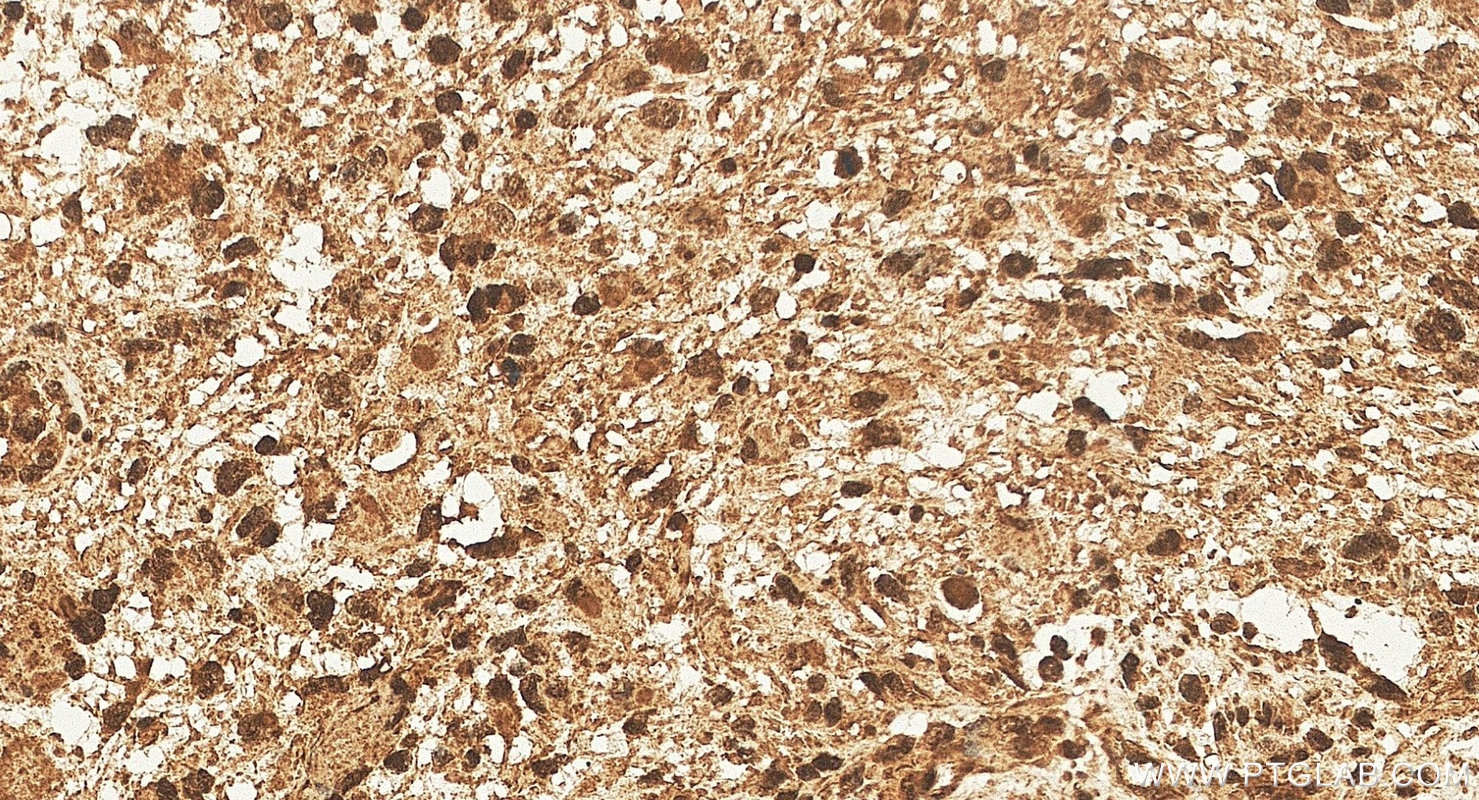
| Positive IHC detected in | human gliomas tissue Note: suggested antigen retrieval with TE buffer pH 9.0; (*) Alternatively, antigen retrieval may be performed with citrate buffer pH 6.0 |
Recommended dilution
| Application | Dilution |
|---|---|
| Western Blot (WB) | WB : 1:500-1:1000 |
| Immunohistochemistry (IHC) | IHC : 1:50-1:500 |
| It is recommended that this reagent should be titrated in each testing system to obtain optimal results. | |
| Sample-dependent, Check data in validation data gallery. | |
Product Information
11511-1-AP targets TRIM44 in WB, IHC, IF, IP, ELISA applications and shows reactivity with human, mouse, rat samples.
| Tested Reactivity | human, mouse, rat |
| Cited Reactivity | human, mouse, rat |
| Host / Isotype | Rabbit / IgG |
| Class | Polyclonal |
| Type | Antibody |
| Immunogen |
CatNo: Ag2070 Product name: Recombinant human TRIM44 protein Source: e coli.-derived, PGEX-4T Tag: GST Domain: 1-334 aa of BC024031 Sequence: MASGVGAAFEELPHDGTCDECEPDEAPGAEEVCRECGFCYCRRHAEAHRQKFLSHHLAEYVHGSQAWTPPADGEGAGKEEAEVKVEQEREIESEAGEESESEEESESEEESETEEESEDESDEESEEDSEEEMEDEQESEAEEDNQEEGESEAEGETEAESEFDPEIEMEAERVAKRKCPDHGLDLSTYCQEDRQLICVLCPVIGAHQGHQLSTLDEAFEELRSKDSGGLKAAMIELVERLKFKSSDPKVTRDQMKMFIQQEFKKVQKVIADEEQKALHLVDIQEAMATAHVTEILADIQSHMDRLMTQMAQAKEQLDTSNESAEPKAEGDEEG Predict reactive species |
| Full Name | tripartite motif-containing 44 |
| Calculated Molecular Weight | 344 aa, 38 kDa |
| Observed Molecular Weight | 50-55 kDa |
| GenBank Accession Number | BC024031 |
| Gene Symbol | TRIM44 |
| Gene ID (NCBI) | 54765 |
| RRID | AB_2303802 |
| Conjugate | Unconjugated |
| Form | Liquid |
| Purification Method | Antigen affinity purification |
| UNIPROT ID | Q96DX7 |
| Storage Buffer | PBS with 0.02% sodium azide and 50% glycerol, pH 7.3. |
| Storage Conditions | Store at -20°C. Stable for one year after shipment. Aliquoting is unnecessary for -20oC storage. 20ul sizes contain 0.1% BSA. |
Background Information
TRIM44 is one of the family member of TRIM protein, which contains an N-terminal ubiquitin hydrolase-type zinc-finger domain, followed by a coiled-coil domain, a zinc-finger B-box homology domain, and a second coiled-coil domain near the C-terminus. Members of the TRIM protein family are involved in various cellular processes, such as cell proliferation, oncogenesis and antiviral defense. This is a rabbit polyantibody raised against full length of human TRIM44.
Protocols
| Product Specific Protocols | |
|---|---|
| IHC protocol for TRIM44 antibody 11511-1-AP | Download protocol |
| WB protocol for TRIM44 antibody 11511-1-AP | Download protocol |
| Standard Protocols | |
|---|---|
| Click here to view our Standard Protocols |
Publications
What published studies show
The TRIM44 antibody (Cat# 11511-1-AP) has 25 citations. Journals include Gastroenterology, Nature Communications, Autophagy, Oncogene, Journal of Translational Medicine, Cancer Science, Cell Signaling, Journal of Immunology, and others. Research fields span oncology (gastric, esophageal, lung, liver, colorectal, glioma, and hematologic cancers), autophagy, cardiac remodeling/fibrosis, viral replication, DNA damage repair, pyroptosis, and diabetic retinopathy. Applications include WB, IHC, IF, and IP.
| Species | Application | Title |
|---|---|---|
Gastroenterology A 4-gene signature predicts survival of patients with resected adenocarcinoma of the esophagus, junction, and gastric cardia. | ||
Autophagy TRIM44 links the UPS to SQSTM1/p62-dependent aggrephagy and removing misfolded proteins.
| ||
Nat Commun AMC-F1 regulates mitochondria-autophagy crosstalk independent of nutrient stress. | ||
J Transl Med Aberrant expression of TRIM44, transcriptionally regulated by KLF9, contributes to the process of diabetic retinopathy | ||
Oncogene TRIM44 mediated p62 deubiquitination enhances DNA damage repair by increasing nuclear FLNA and 53BP1 expression.
| ||
Cells TRIM44, a Novel Prognostic Marker, Supports the Survival of Proteasome-Resistant Multiple Myeloma Cells |





