
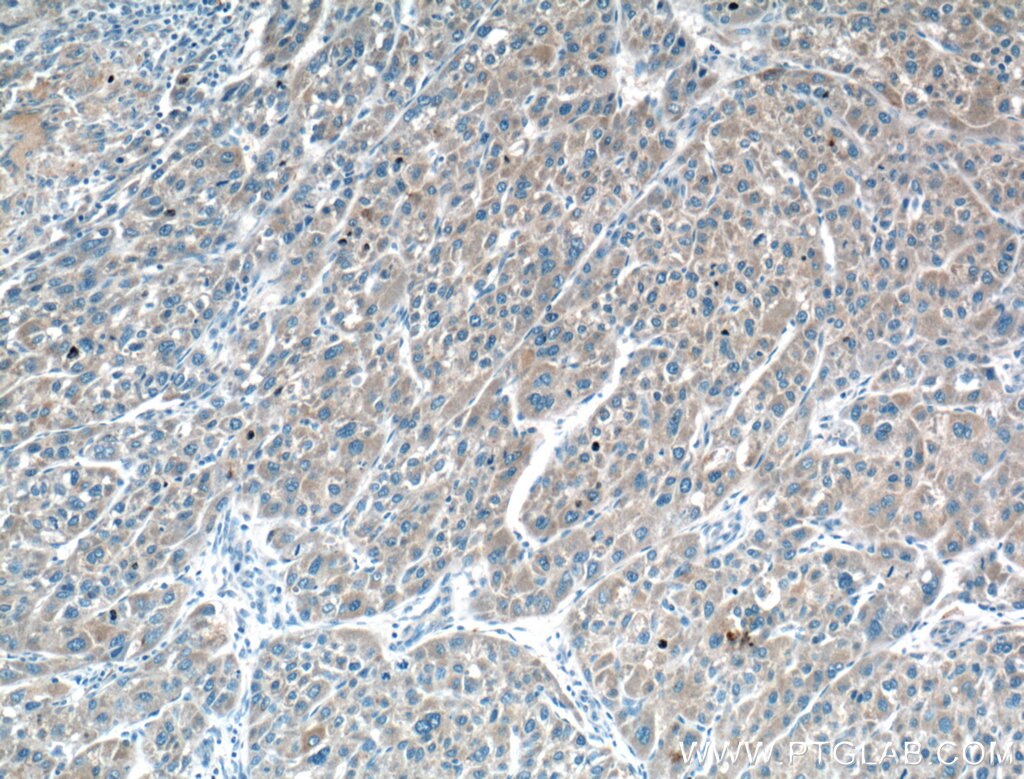
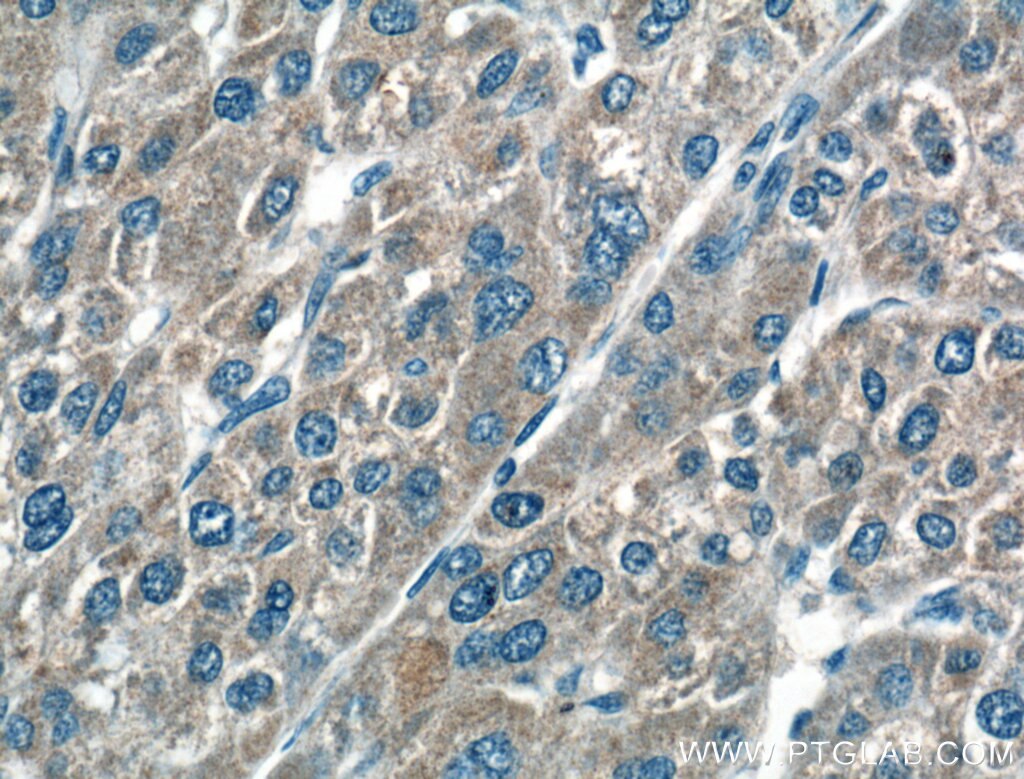

Tested Applications
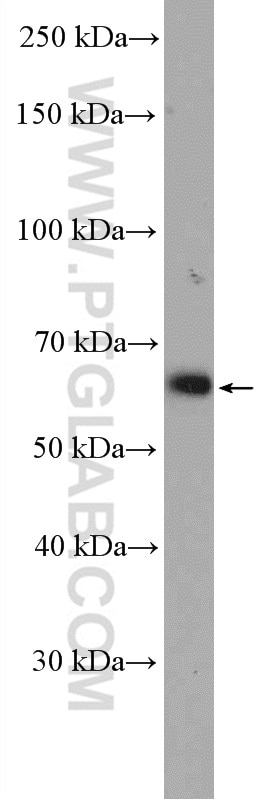
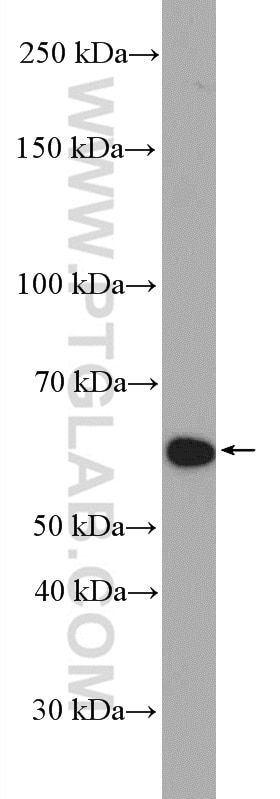
| Positive WB detected in | HepG2 cells, L02 cells |
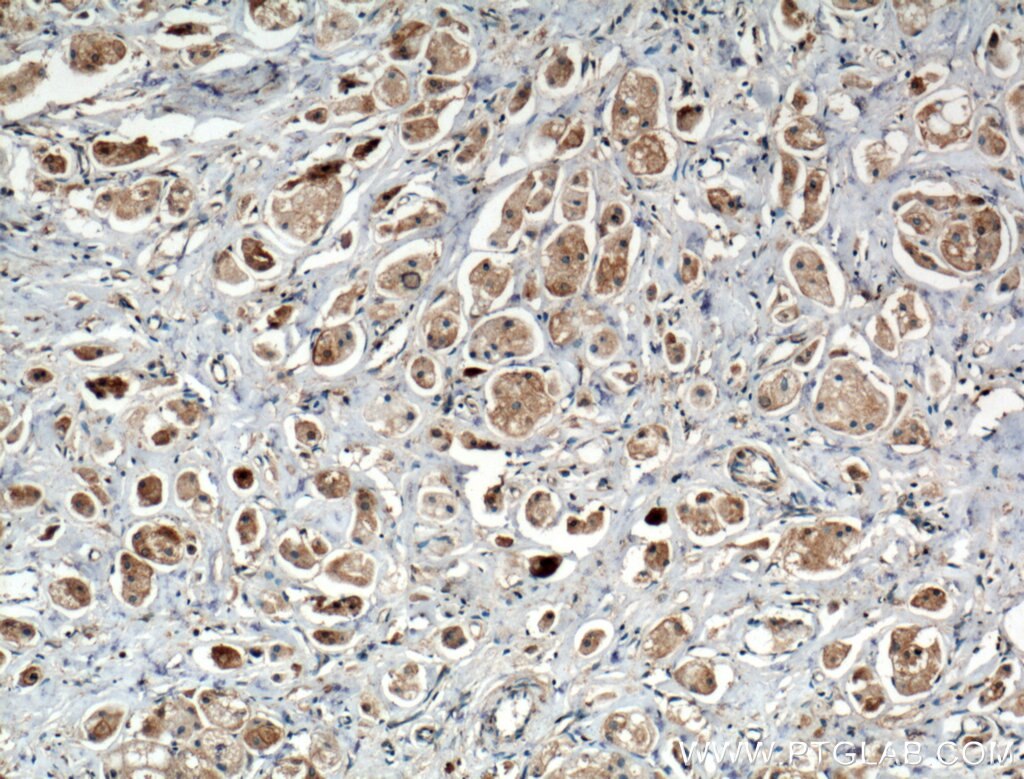
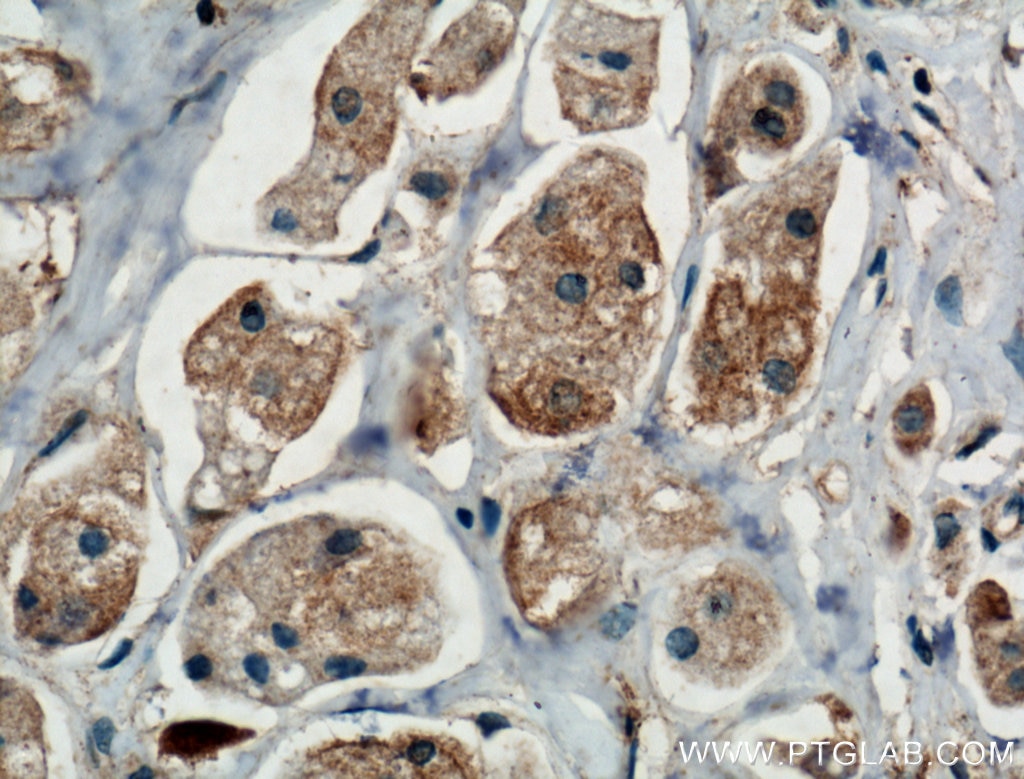
| Positive IHC detected in | human breast cancer tissue, human liver cancer tissue Note: suggested antigen retrieval with TE buffer pH 9.0; (*) Alternatively, antigen retrieval may be performed with citrate buffer pH 6.0 |
Recommended dilution
| Application | Dilution |
|---|---|
| Western Blot (WB) | WB : 1:500-1:1000 |
| Immunohistochemistry (IHC) | IHC : 1:50-1:500 |
| It is recommended that this reagent should be titrated in each testing system to obtain optimal results. | |
| Sample-dependent, Check data in validation data gallery. | |
Product Information
27463-1-AP targets TRIM8 in WB, IHC, IF, IP, ELISA applications and shows reactivity with human samples.
| Tested Reactivity | human |
| Cited Reactivity | human, mouse |
| Host / Isotype | Rabbit / IgG |
| Class | Polyclonal |
| Type | Antibody |
| Immunogen |
CatNo: Ag26517 Product name: Recombinant human TRIM8 protein Source: e coli.-derived, PGEX-4T Tag: GST Domain: 180-351 aa of BC021925 Sequence: CDVEIRRNEIRKMLMKQQDRLEEREQDIEDQLYKLESDKRLVEEKVNQLKEEVRLQYEKLHQLLDEDLRQTVEVLDKAQAKFCSENAAQALHLGERMQEAKKLLGSLQLLFDKTEDVSFMKNTKSVKILMDRTQTCTSSSLSPTKIGHLNSKLFLNEVAKKEKQLRKMLEGP Predict reactive species |
| Full Name | tripartite motif-containing 8 |
| Calculated Molecular Weight | 61 kDa |
| Observed Molecular Weight | 61 kDa |
| GenBank Accession Number | BC021925 |
| Gene Symbol | TRIM8 |
| Gene ID (NCBI) | 81603 |
| RRID | AB_2880877 |
| Conjugate | Unconjugated |
| Form | Liquid |
| Purification Method | Antigen affinity purification |
| UNIPROT ID | Q9BZR9 |
| Storage Buffer | PBS with 0.02% sodium azide and 50% glycerol, pH 7.3. |
| Storage Conditions | Store at -20°C. Stable for one year after shipment. Aliquoting is unnecessary for -20oC storage. 20ul sizes contain 0.1% BSA. |
Background Information
TRIM8 (Tripartite motif containing protein 8), also known as RNF27 (RING finger protein 27), a member of TRIM family proteins, is known to play a dual role as both tumor suppressor and oncogene, and to function at the crosstalk of cancer and innate immunity. TRIM8 can function at two subcellular sites-nucleus and cytoplasm-to regulate NF-κB, one of the central signaling pathways that plays a critical role in carcinogenesis and inflammatory diseases (PMID: 33230447, 22262183). TRIM8 is composed of 551 amino acids (aa) with a molecular weight of 61.5 kDa, contains a Nuclear Localization Signal (NLS), and forms specific nuclear structures similar to the TRIM19/PML Nuclear Bodies (NBs) (PMID: 33807506, 29182544).
Protocols
| Product Specific Protocols | |
|---|---|
| IHC protocol for TRIM8 antibody 27463-1-AP | Download protocol |
| WB protocol for TRIM8 antibody 27463-1-AP | Download protocol |
| Standard Protocols | |
|---|---|
| Click here to view our Standard Protocols |
Publications
What published studies show
The anti-TRIM8 antibody (Cat# 27463-1-AP) has 11 citations published in journals including Cell Death & Disease, International Journal of Biological Sciences, Aging and Disease, Oncogene, Cell Reports, Scientific Reports, Biomedicines, Experimental Molecular Pathology, Journal of Orthopaedic Surgery Research, Cancer Medicine, and Adipocyte. Research fields span gastric cancer, Crohn's disease, vascular pathology, ubiquitination biology, cuproptosis, osteosarcoma, epilepsy, sepsis, ovarian cancer, and insulin resistance.
| Species | Application | Title |
|---|---|---|
Cell Death Dis TRIM8-dependent K63-ubiquitinated PGK1 promotes glycolysis and angiogenesis in gastric cancer via interaction with ACAT1.
| ||
Int J Biol Sci ITLN1 exacerbates Crohn's colitis by driving ZBP1-dependent PANoptosis in intestinal epithelial cells through antagonizing TRIM8-mediated CAPN2 ubiquitination | ||
Aging Dis SCAP Interacts with Trim27 to Promote Vascular Neointimal Hyperplasia by Regulating the Stability and Ubiquitination of IκBα. | ||
Oncogene Mutual regulation between TRIM21 and TRIM8 via K48-linked ubiquitination
| ||
Cell Rep SIRT5-mediated FDX1 desuccinylation confers cuproptosis resistance in lung adenocarcinoma. | ||
Sci Rep Five hypoxia and immunity related genes as potential biomarkers for the prognosis of osteosarcoma. |







