

Tested Applications
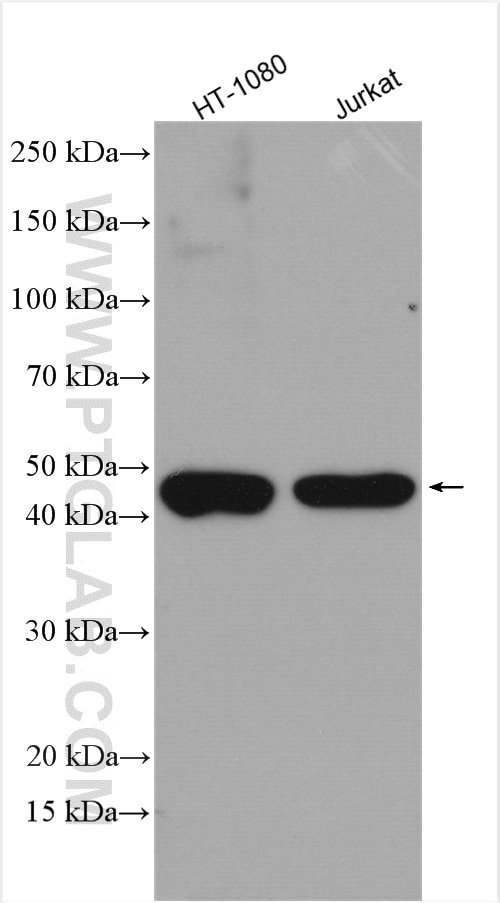
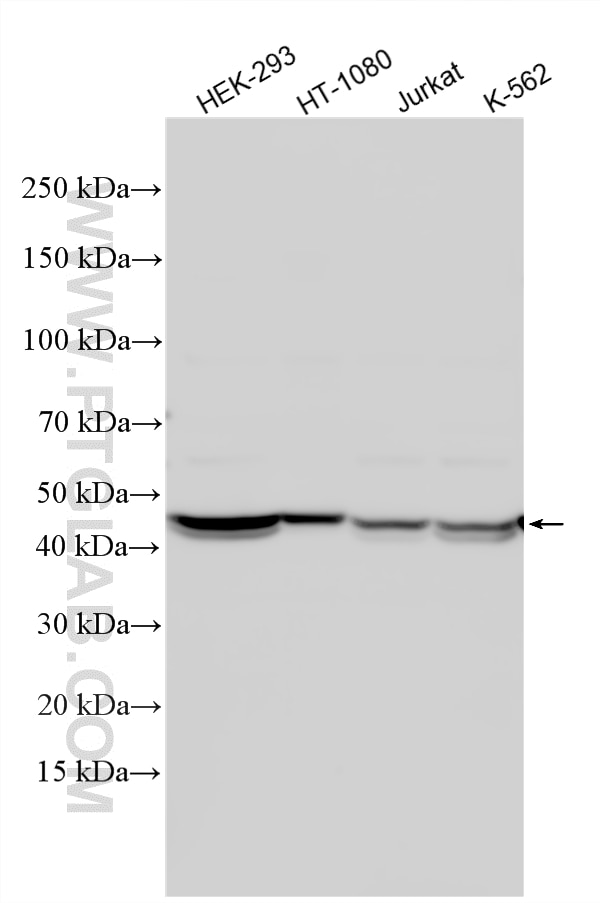
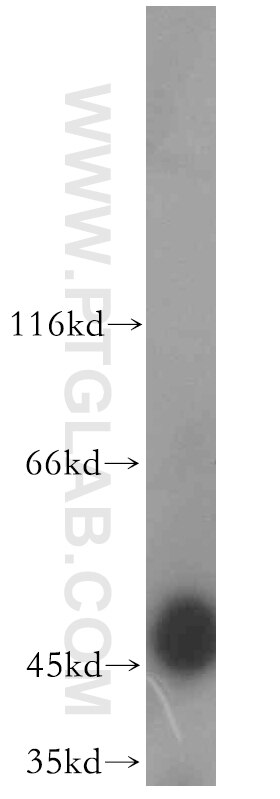
| Positive WB detected in | HEK-293 cells, HT-1080 cells, mouse testis tissue, Jurkat cells, K-562 cells |
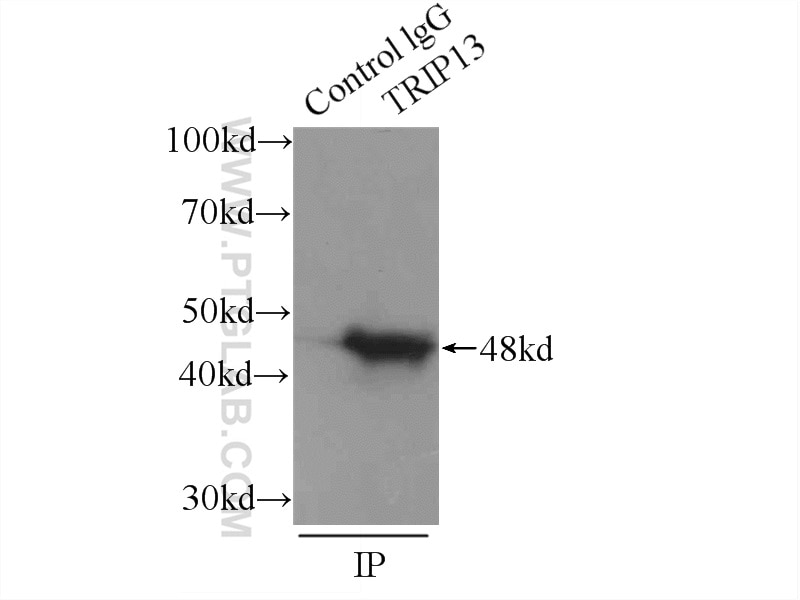
| Positive IP detected in | mouse testis tissue |
Recommended dilution
| Application | Dilution |
|---|---|
| Western Blot (WB) | WB : 1:1000-1:6000 |
| Immunoprecipitation (IP) | IP : 0.5-4.0 ug for 1.0-3.0 mg of total protein lysate |
| It is recommended that this reagent should be titrated in each testing system to obtain optimal results. | |
| Sample-dependent, Check data in validation data gallery. | |
Product Information
19602-1-AP targets TRIP13 in WB, IHC, IF, IP, CoIP, ELISA applications and shows reactivity with human, mouse, rat samples.
| Tested Reactivity | human, mouse, rat |
| Cited Reactivity | human, mouse |
| Host / Isotype | Rabbit / IgG |
| Class | Polyclonal |
| Type | Antibody |
| Immunogen |
CatNo: Ag6595 Product name: Recombinant human TRIP13 protein Source: e coli.-derived, PET28a Tag: 6*His Domain: 1-301 aa of BC000404 Sequence: MDEAVGDLKQALPCVAESPTVHVEVHQRGSSTAKKEDINLSVRKLLNRHNIVFGDYTWTEFDEPFLTRNVQSVSIIDTELKVKDSQPIDLSACTVALHIFQLNEDGPSSENLEEETENIIAANHWVLPAAEFHGLWDSLVYDVEVKSHLLDYVMTTLLFSDKNVNSNLITWNRVVLLHGPPGTGKTSLCKALAQKLTIRLSSRYRYGQLIEINSHSLFSKWFSESGKLVTKMFQKIQDLIDDKDALVFVLIDEVESLTAARNACRAGTEPSDAIRVVNAVLTQIDQIKRHSNVVILTTSNI Predict reactive species |
| Full Name | thyroid hormone receptor interactor 13 |
| Calculated Molecular Weight | 49 kDa |
| Observed Molecular Weight | 49 kDa |
| GenBank Accession Number | BC000404 |
| Gene Symbol | TRIP13 |
| Gene ID (NCBI) | 9319 |
| RRID | AB_10642702 |
| Conjugate | Unconjugated |
| Form | Liquid |
| Purification Method | Antigen affinity purification |
| UNIPROT ID | Q15645 |
| Storage Buffer | PBS with 0.02% sodium azide and 50% glycerol, pH 7.3. |
| Storage Conditions | Store at -20°C. Stable for one year after shipment. Aliquoting is unnecessary for -20oC storage. 20ul sizes contain 0.1% BSA. |
Background Information
TRIP13 gene encodes thyroid receptor-interacting protein 13, that interact with thyroid hormone receptors, also known as human papillomavirus type 16 E1 protein-binding protein (16E1BP). This protein belongs to the AAA ATPase family and the PCH2 subfamily. TRIP13 gene may be one of the several playing roles in early-stage non-small cell lung cancer. TRIP13 also functions in chromosome recombination and chromosome structure development during meiosis, and it is required for development of higher-order chromosome structures and is needed for synaptonemal-complex formation.
Protocols
| Product Specific Protocols | |
|---|---|
| IP protocol for TRIP13 antibody 19602-1-AP | Download protocol |
| WB protocol for TRIP13 antibody 19602-1-AP | Download protocol |
| Standard Protocols | |
|---|---|
| Click here to view our Standard Protocols |
Publications
What published studies show
The TRIP13 antibody (catalog 19602-1-AP) has 30 citations. It appears in journals including Nature Communications, Science Advances, Cell Death & Disease, Advanced Science, Journal of Advanced Research, Acta Pharmacologica Sinica, and eLife. Research fields span oncology (breast, colorectal, gastric, lung, prostate, glioblastoma, myeloma, and other cancers), meiosis and fertility, idiopathic pulmonary fibrosis, and autoimmunity. Applications are mainly WB, IHC, IF, and IP.
| Species | Application | Title |
|---|---|---|
Nat Commun TRIP13 promotes error-prone nonhomologous end joining and induces chemoresistance in head and neck cancer.
| ||
J Adv Res Tetrahydrocurcumin targets TRIP13 inhibiting the interaction of TRIP13/USP7/c-FLIP to mediate c-FLIP ubiquitination in triple-negative breast cancer | ||
Adv Sci (Weinh) Trip13 Depletion in Liver Cancer Induces a Lipogenic Response Contributing to Plin2-Dependent Mitotic Cell Death
| ||
Cell Death Dis TRIP13 regulates progression of gastric cancer through stabilising the expression of DDX21
| ||
Cell Death Dis TRIP13 promotes tumor growth and is associated with poor prognosis in colorectal cancer. |
Reviews
What customers say
Most reviewers rate this antibody highly for Western Blot, with two users describing it as producing clear and strong signals at dilutions of 1:1000 to 1:5000. One reviewer also confirmed its performance in immunoprecipitation. However, one user reported unsatisfactory results at a 1:3000 dilution. Overall, the majority of feedback is positive, suggesting reliable performance in WB and IP applications, though individual results may vary depending on dilution and experimental conditions.
The reviews below have been submitted by verified Proteintech customers who received an incentive for providing their feedback.
Iru (Verified Customer) (06-25-2020) | This antibody works pretty well.
|
Min (Verified Customer) (11-11-2019) | This is very clear and strong antibody
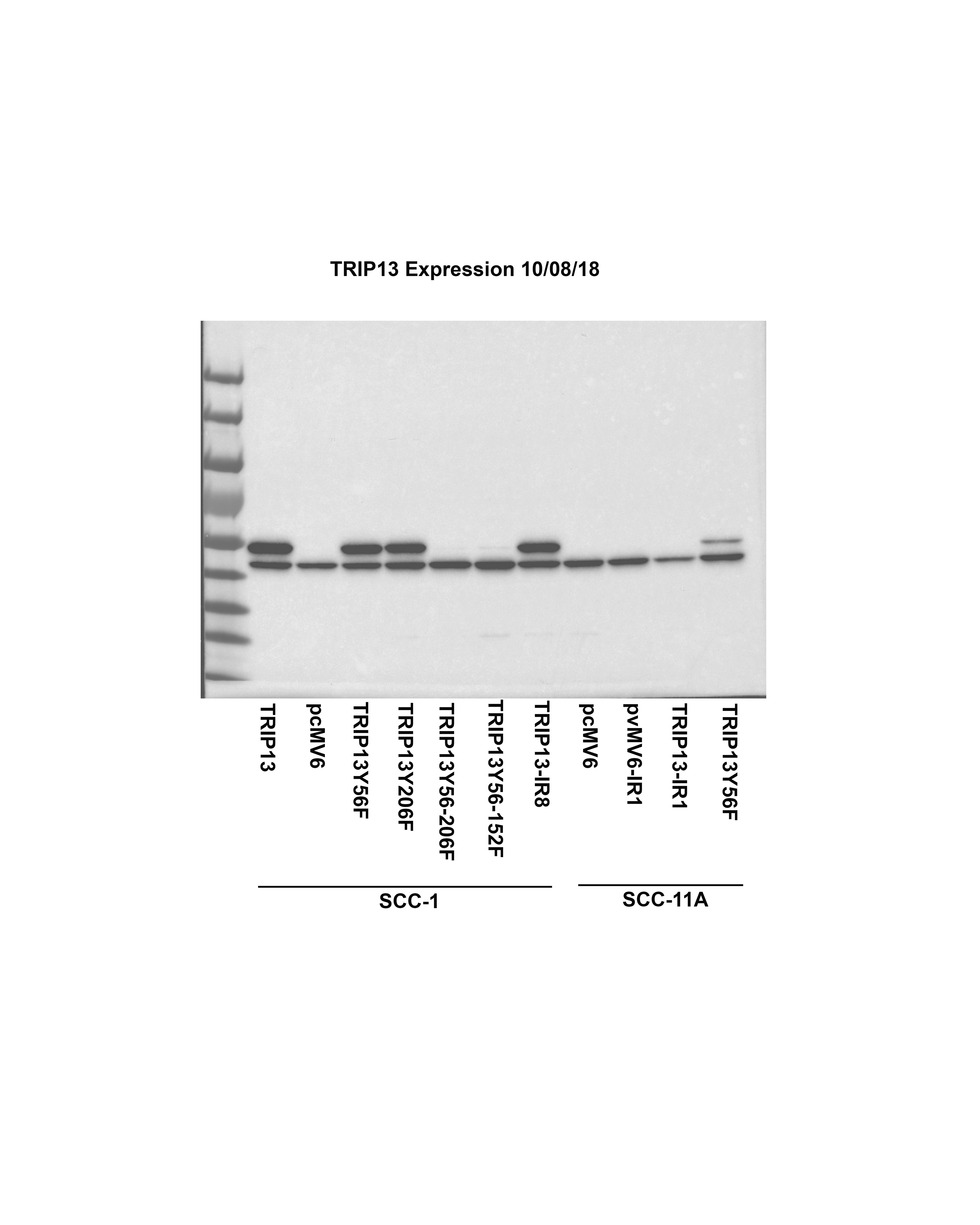 |
Iru (Verified Customer) (06-21-2019) | This antibody doesn't work well.
|
Priyanka (Verified Customer) (12-18-2018) |
|





