
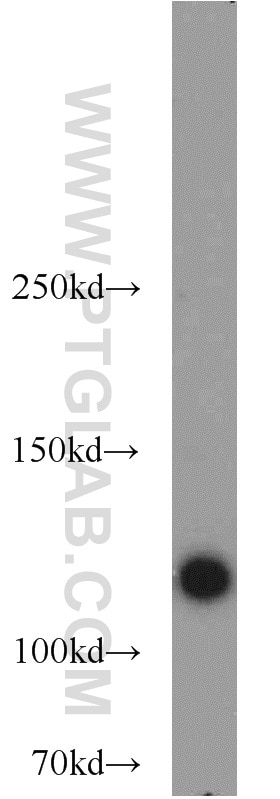
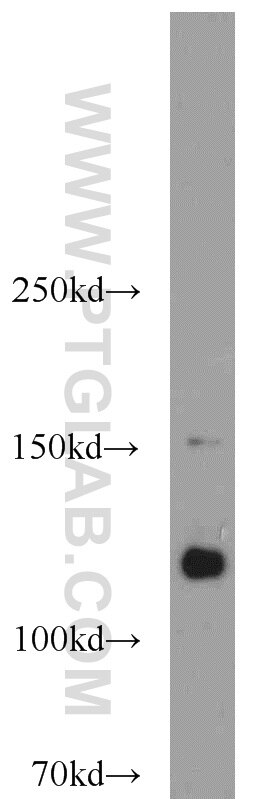
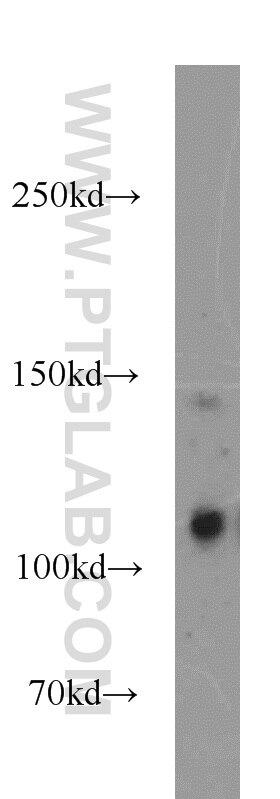
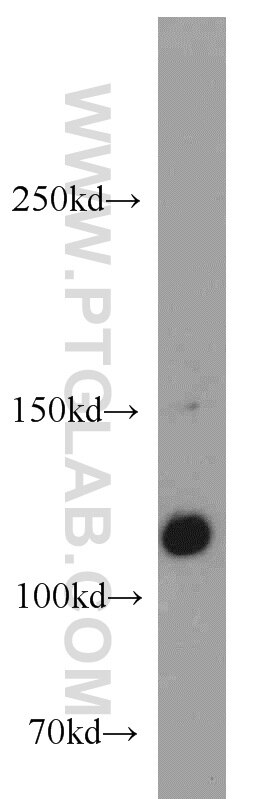



Tested Applications
| Positive WB detected in | HeLa cells, DU 145 cells, HEK-293 cells, MCF-7 cells |
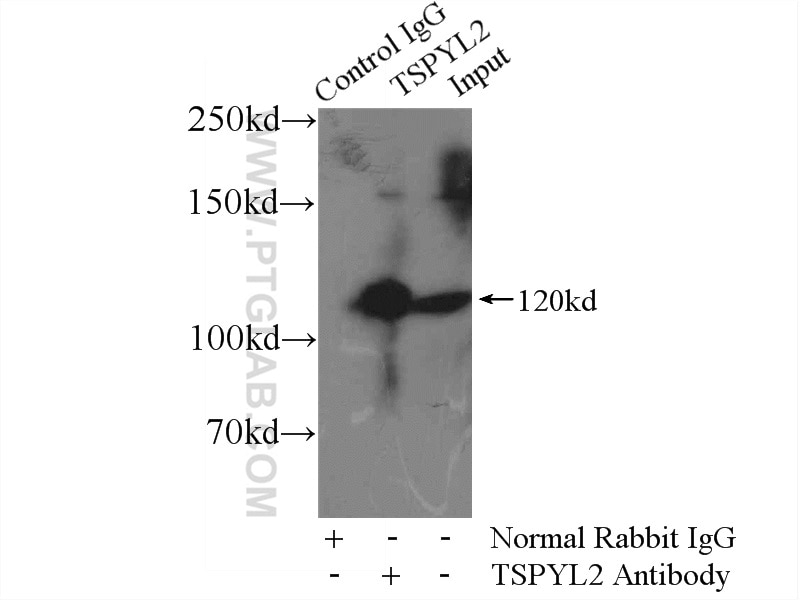
| Positive IP detected in | HEK-293 cells |
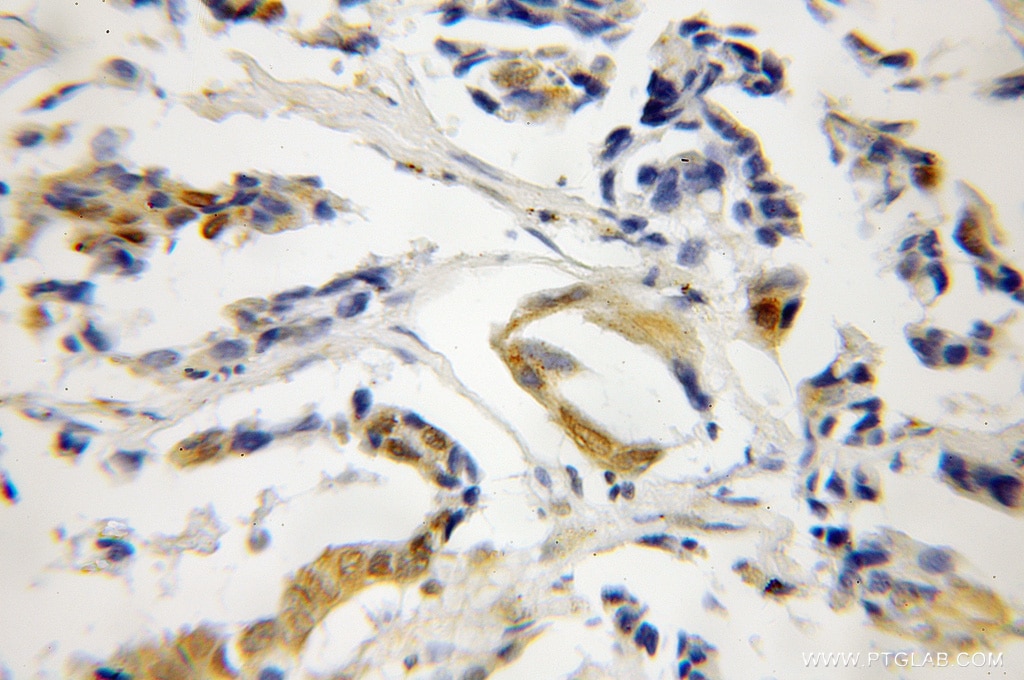
| Positive IHC detected in | human lung cancer tissue, human ovary cancer tissue, human stomach cancer tissue Note: suggested antigen retrieval with TE buffer pH 9.0; (*) Alternatively, antigen retrieval may be performed with citrate buffer pH 6.0 |
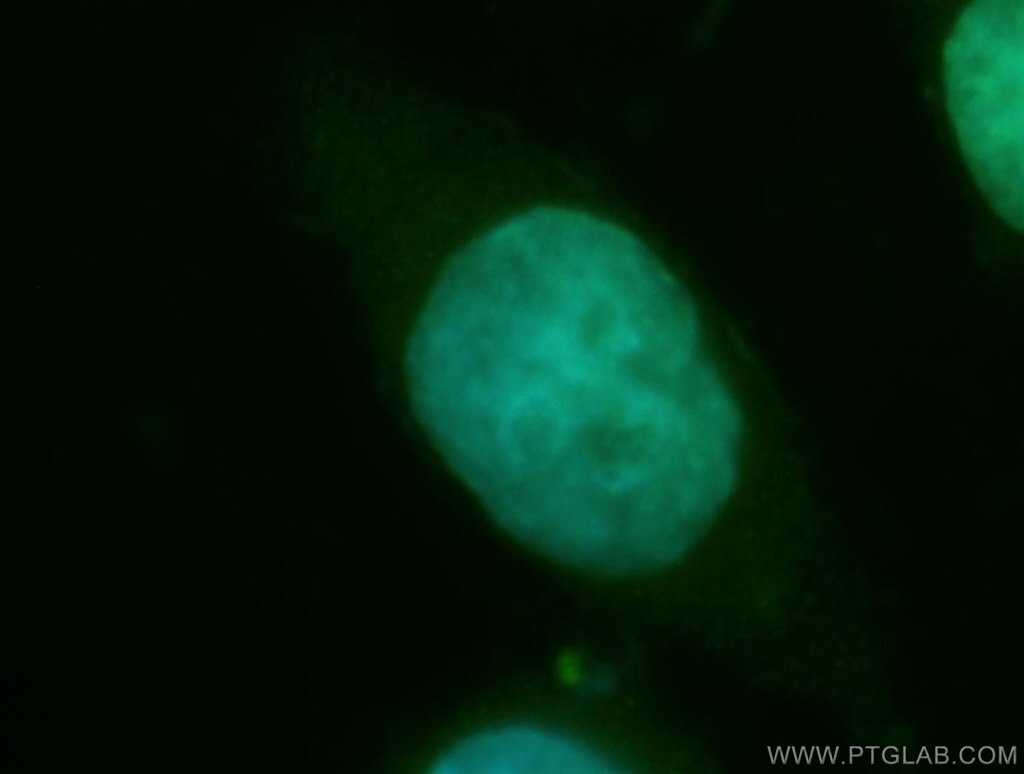
| Positive IF/ICC detected in | Hela cells |
Recommended dilution
| Application | Dilution |
|---|---|
| Western Blot (WB) | WB : 1:500-1:2000 |
| Immunoprecipitation (IP) | IP : 0.5-4.0 ug for 1.0-3.0 mg of total protein lysate |
| Immunohistochemistry (IHC) | IHC : 1:20-1:200 |
| Immunofluorescence (IF)/ICC | IF/ICC : 1:20-1:200 |
| It is recommended that this reagent should be titrated in each testing system to obtain optimal results. | |
| Sample-dependent, Check data in validation data gallery. | |
Product Information
12087-2-AP targets TSPYL2/CDA1 in WB, IHC, IF/ICC, IP, CoIP, ELISA applications and shows reactivity with human samples.
| Tested Reactivity | human |
| Cited Reactivity | human, mouse |
| Host / Isotype | Rabbit / IgG |
| Class | Polyclonal |
| Type | Antibody |
| Immunogen |
CatNo: Ag2722 Product name: Recombinant human TSPYL2,TSPX,NP79 protein Source: e coli.-derived, PGEX-4T Tag: GST Domain: 344-693 aa of BC024270 Sequence: WHRGQEPQARRHGNQDASHSFFSWFSNHSLPEADRIAEIIKNDLWVNPLRYYLRERGSRIKRKKQEMKKRKTRGRCEVVIMEDAPDYYAVEDIFSEISDIDETIHDIKISDFMETTDYFETTDNEITDINENICDSENPDHNEVPNNETTDNNESADDHETTDNNESADDNNENPEDNNKNTDDNEENPNNNENTYGNNFFKGGFWGSHGNNQDSSDSDNEADEASDDEDNDGNEGDNEGSDDDGNEGDNEGSDDDDRDIEYYEKVIEDFDKDQADYEDVIEIISDESVEEEGIEEGIQQDEDIYEEGNYEEEGSEDVWEEGEDSDDSDLEDVLQVPNGWANPGKRGKTG Predict reactive species |
| Full Name | TSPY-like 2 |
| Calculated Molecular Weight | 693 aa, 79 kDa |
| Observed Molecular Weight | 120 kDa |
| GenBank Accession Number | BC024270 |
| Gene Symbol | CDA1 |
| Gene ID (NCBI) | 64061 |
| RRID | AB_2256811 |
| Conjugate | Unconjugated |
| Form | Liquid |
| Purification Method | Antigen affinity purification |
| UNIPROT ID | Q9H2G4 |
| Storage Buffer | PBS with 0.02% sodium azide and 50% glycerol, pH 7.3. |
| Storage Conditions | Store at -20°C. Stable for one year after shipment. Aliquoting is unnecessary for -20oC storage. 20ul sizes contain 0.1% BSA. |
Background Information
TSPYL2 (also known as CINAP, CDA1, TSPX or DENTT) is a new member of the nucleosome assembly protein superfamily. TSPYL2 binds histones and facilitates nucleosome assembly. TSPYL2 is expressed in various tissues, highly in the pituitary gland and moderately in the adrenals, brain, testis, and ovary. Immunohistochemical staining analysis for TSPYL2 showed differential cytoplasmic and nuclear staining patterns in several cell types. Downregulated expression of TSPYL2 has been observed in several tumors, which suggests its role as a tumor suppressor. Although it is predicted that TSPYL2 has a molecular mass of 79.43 kDa, it is found that mammalian TSPYL2 appears at a size of 120 kDa by western blot analysis. The abundant acidic amino acid regions in TSPYL2 may cause its aberrant migration. In addition, the TSPYL2 protein is unstable and sensitive to proteasomal degradation.
Protocols
| Product Specific Protocols | |
|---|---|
| IF protocol for TSPYL2/CDA1 antibody 12087-2-AP | Download protocol |
| IHC protocol for TSPYL2/CDA1 antibody 12087-2-AP | Download protocol |
| IP protocol for TSPYL2/CDA1 antibody 12087-2-AP | Download protocol |
| WB protocol for TSPYL2/CDA1 antibody 12087-2-AP | Download protocol |
| Standard Protocols | |
|---|---|
| Click here to view our Standard Protocols |
Publications
What published studies show
TSPYL2/CDA1 Polyclonal antibody (Cat# 12087-2-AP) has 11 citations across journals including Cell, Cell Death & Differentiation, Cell Death & Disease, Journal of Translational Medicine, Science China Life Sciences, Journal of Ginseng Research, Cancer Innovation, Stem Cells International, Experimental Cell Research, PLoS One, and Oncotarget. Research fields span glioma biology, TGF-β signaling, pulmonary fibrosis, cervical and pancreatic cancer, stem cell senescence, thyroid cancer, hepatitis B, and prostate cancer.
| Species | Application | Title |
|---|---|---|
Cell Glioma stem cell proliferation and tumor growth are promoted by nitric oxide synthase-2. | ||
Cell Death Differ TSPYL2 is an essential component of the REST/NRSF transcriptional complex for TGFβ signaling activation.
| ||
Cell Death Dis AAV9-Tspyl2 gene therapy retards bleomycin-induced pulmonary fibrosis by modulating downstream TGF-β signaling in mice | ||
J Transl Med Integrated single-cell, spatial, and bulk transcriptomics reveal a chromatin regulator-TME prognostic framework guiding precision therapy in cervical cancer. | ||
Sci China Life Sci CRL2APPBP2-mediated TSPYL2 degradation counteracts human mesenchymal stem cell senescence | ||
J Ginseng Res Ginsenoside Rg3 increases gemcitabine sensitivity of pancreatic adenocarcinoma via reducing ZFP91 mediated TSPYL2 destabilization |
Reviews
What customers say
One reviewer (Anna S.) tested this antibody on HEK293T cells by Western Blot at a 1:1000 dilution and rated it 4 out of 5 stars. She noted that while several bands appeared, a clear band was visible at the expected molecular weight, which she found adequate for her purposes.
The reviews below have been submitted by verified Proteintech customers who received an incentive for providing their feedback.
Anna (Verified Customer) (02-05-2026) | Several bands but clear band at the expected MW as well - adequate.
|










