
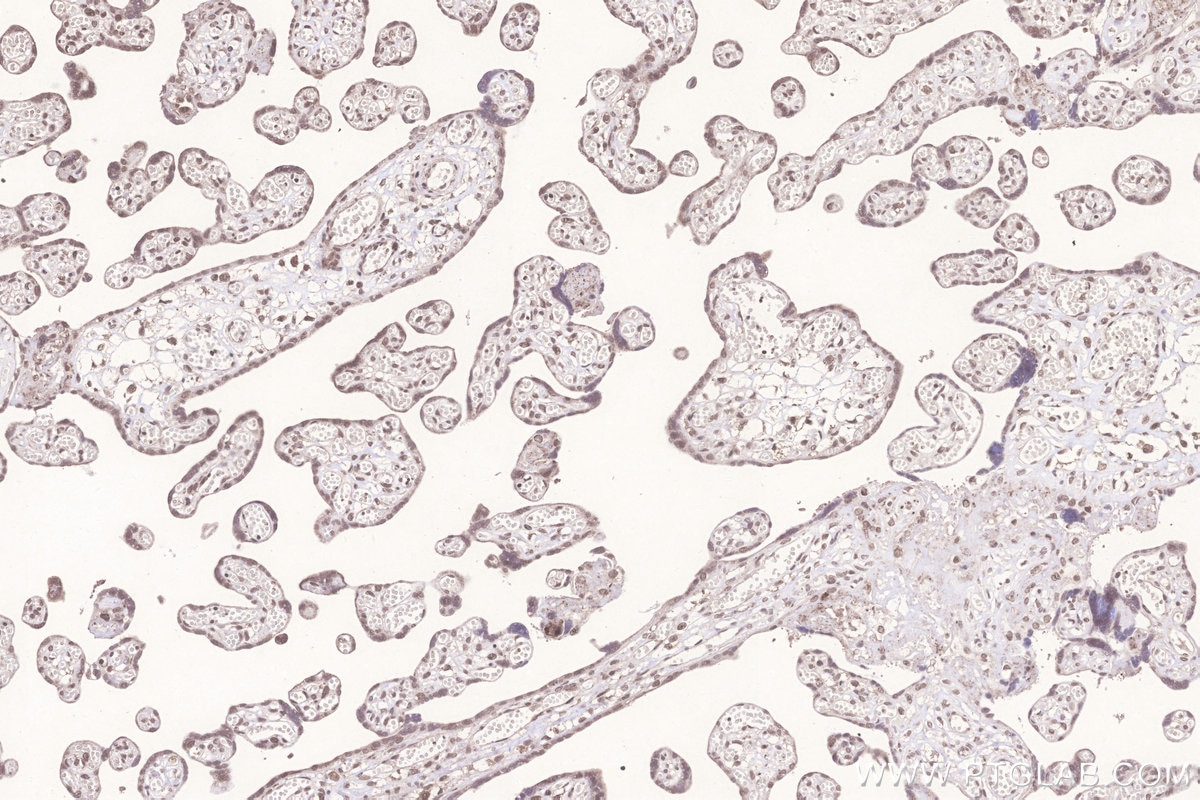

Tested Applications
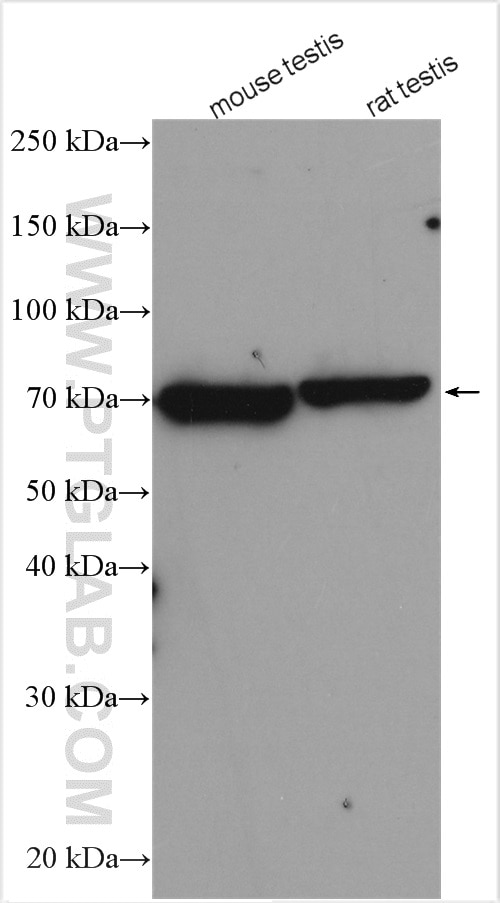
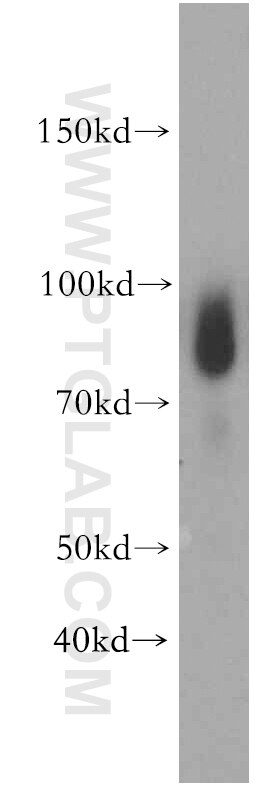
| Positive WB detected in | mouse testis tissue, human testis tissue, rat testis tissue |
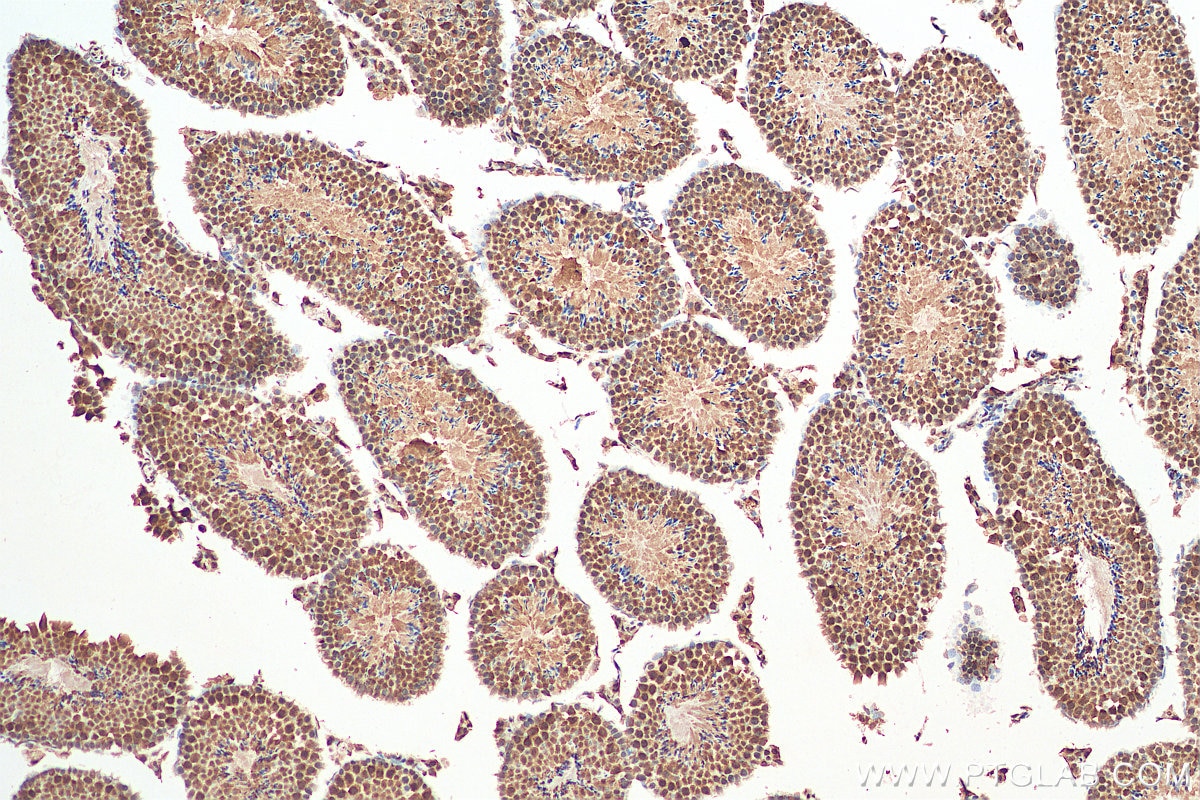
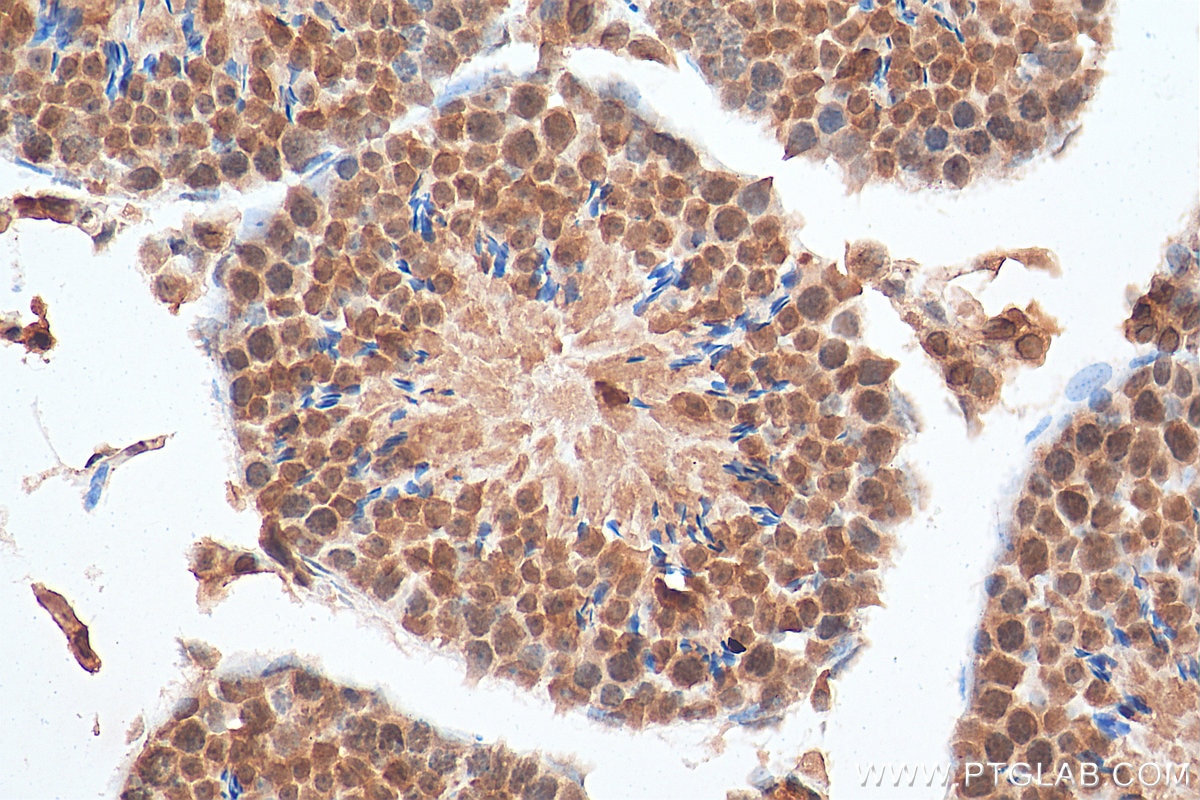
| Positive IHC detected in | mouse testis tissue, human placenta tissue Note: suggested antigen retrieval with TE buffer pH 9.0; (*) Alternatively, antigen retrieval may be performed with citrate buffer pH 6.0 |
Recommended dilution
| Application | Dilution |
|---|---|
| Western Blot (WB) | WB : 1:1000-1:4000 |
| Immunohistochemistry (IHC) | IHC : 1:50-1:500 |
| It is recommended that this reagent should be titrated in each testing system to obtain optimal results. | |
| Sample-dependent, Check data in validation data gallery. | |
Product Information
19517-1-AP targets TXNRD3 in WB, IHC, IF, ELISA applications and shows reactivity with human, mouse, rat samples.
| Tested Reactivity | human, mouse, rat |
| Cited Reactivity | human, mouse, rat, pig |
| Host / Isotype | Rabbit / IgG |
| Class | Polyclonal |
| Type | Antibody |
| Immunogen |
Peptide Predict reactive species |
| Full Name | thioredoxin reductase 3 |
| Calculated Molecular Weight | 75 kDa |
| Observed Molecular Weight | 82 kDa |
| GenBank Accession Number | XM_001130163 |
| Gene Symbol | TXNRD3 |
| Gene ID (NCBI) | 114112 |
| RRID | AB_10644343 |
| Conjugate | Unconjugated |
| Form | Liquid |
| Purification Method | Antigen affinity purification |
| UNIPROT ID | Q86VQ6 |
| Storage Buffer | PBS with 0.02% sodium azide and 50% glycerol, pH 7.3. |
| Storage Conditions | Store at -20°C. Stable for one year after shipment. Aliquoting is unnecessary for -20oC storage. 20ul sizes contain 0.1% BSA. |
Background Information
TXNRD3, also named as TGR and TRXR3, belongs to the class-I pyridine nucleotide-disulfide oxidoreductase family. TXNRD3 displays thioredoxin reductase, glutaredoxin and glutathione reductase activities. TXNRD3 catalyzes the reaction: Thioredoxin + NADP+ = thioredoxin disulfide + NADPH. TXNRD3 promotes disulfide bond formation between GPX4 and various sperm proteins and may play a role in sperm maturation by promoting formation of sperm structural components.
Protocols
| Product Specific Protocols | |
|---|---|
| IHC protocol for TXNRD3 antibody 19517-1-AP | Download protocol |
| WB protocol for TXNRD3 antibody 19517-1-AP | Download protocol |
| Standard Protocols | |
|---|---|
| Click here to view our Standard Protocols |
Publications
What published studies show
The TXNRD3 Polyclonal antibody (catalog no. 19517-1-AP) has 6 total citations. These appear in Molecular Cell, Nature Chemical Biology, Advanced Science, Cell & Molecular Life Sciences, Life Sciences, and Frontiers in Veterinary Science. The associated research fields include ferroptosis and hepatocellular carcinoma, selenoprotein translation, castration-resistant prostate cancer, hippocampal neurogenesis via 6mA DNA modification, liver cirrhosis progression, and redox status in porcine mammary epithelial cells. Applications cited include WB, IHC, and IF.
| Species | Application | Title |
|---|---|---|
Mol Cell Hypoxia-driven lncRNA SHIELD promotes GPX4 translation and protects against ferroptosis in hepatocellular carcinoma. | ||
Nat Chem Biol Ribosome stalling during selenoprotein translation exposes a ferroptosis vulnerability. | ||
Adv Sci (Weinh) Identification of PRDX5 as A Target for The Treatment of Castration-Resistant Prostate Cancer | ||
Cell Mol Life Sci The methyltransferase N6amt1 regulates hippocampal neurogenesis through 6 mA modification of Txnrd3 DNA.
| ||
Life Sci Supression Thioredoxin reductase 3 exacerbates the progression of liver cirrhosis via activation of ferroptosis pathway | ||
Front Vet Sci The Selenium Yeast vs Selenium Methionine on Cell Viability, Selenoprotein Profile and Redox Status via JNK/ P38 Pathway in Porcine Mammary Epithelial Cells. |






