

Tested Applications
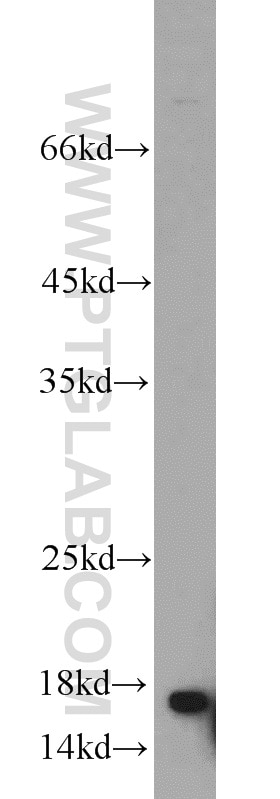
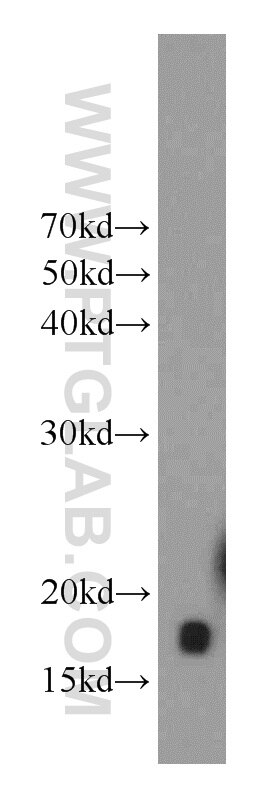
| Positive WB detected in | mouse thymus tissue, Jurkat cells |
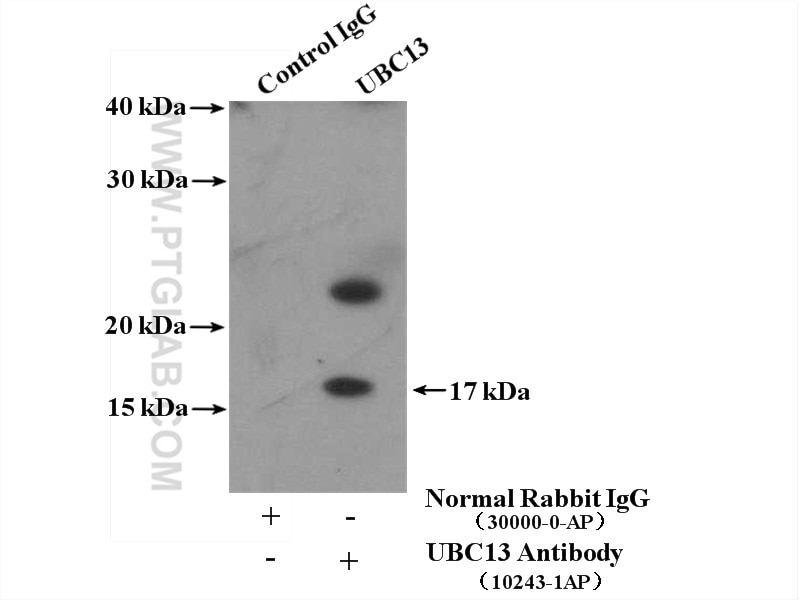
| Positive IP detected in | MCF-7 cells |
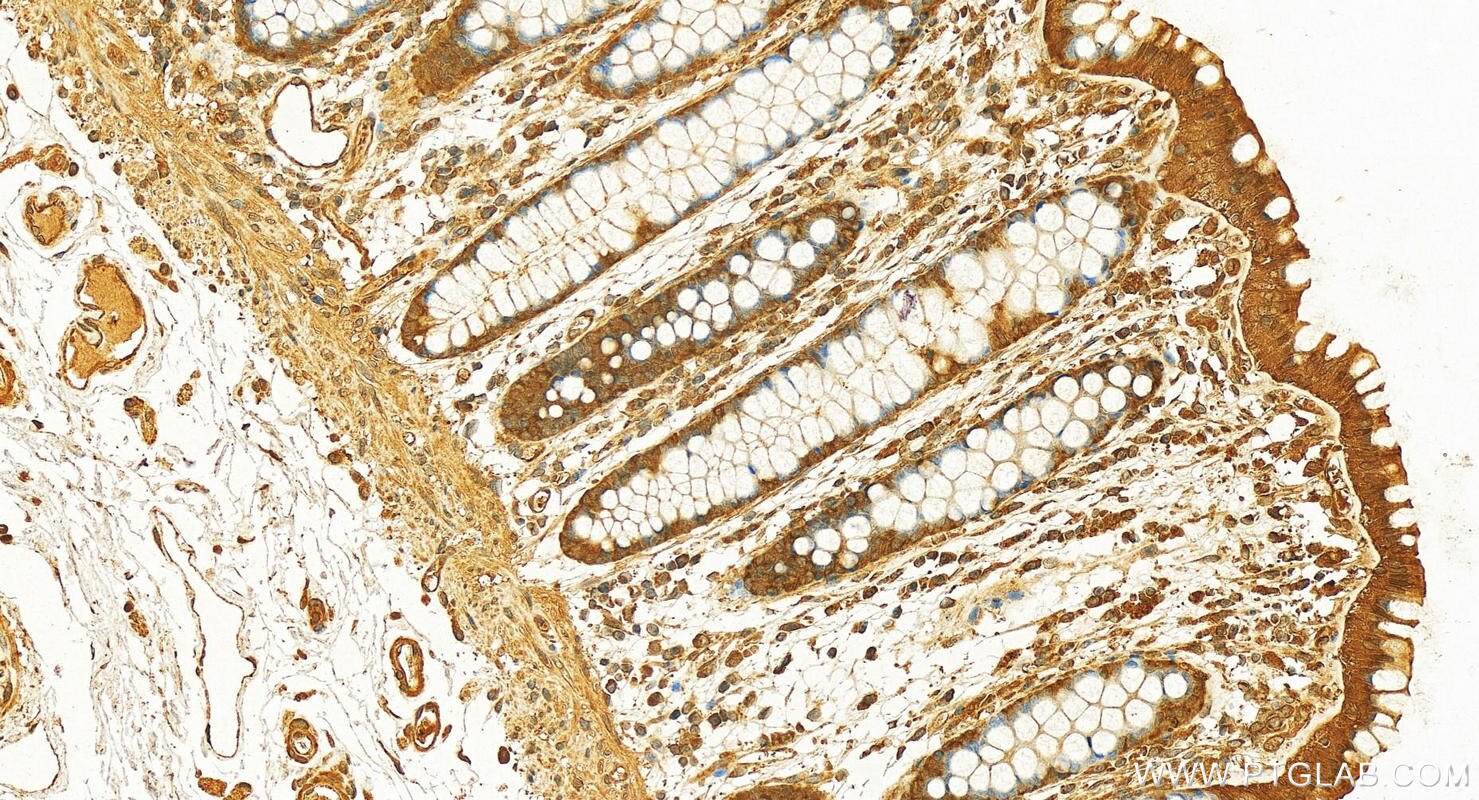
| Positive IHC detected in | human colon tissue Note: suggested antigen retrieval with TE buffer pH 9.0; (*) Alternatively, antigen retrieval may be performed with citrate buffer pH 6.0 |
Recommended dilution
| Application | Dilution |
|---|---|
| Western Blot (WB) | WB : 1:500-1:2000 |
| Immunoprecipitation (IP) | IP : 0.5-4.0 ug for 1.0-3.0 mg of total protein lysate |
| Immunohistochemistry (IHC) | IHC : 1:50-1:500 |
| It is recommended that this reagent should be titrated in each testing system to obtain optimal results. | |
| Sample-dependent, Check data in validation data gallery. | |
Product Information
10243-1-AP targets UBE2N/UBC13 in WB, IHC, IP, CoIP, ChIP, RIP, ELISA applications and shows reactivity with human, mouse samples.
| Tested Reactivity | human, mouse |
| Cited Reactivity | human, mouse, pig, monkey |
| Host / Isotype | Rabbit / IgG |
| Class | Polyclonal |
| Type | Antibody |
| Immunogen |
CatNo: Ag0292 Product name: Recombinant human UBE2N protein Source: e coli.-derived, PGEX-4T Tag: GST Domain: 1-148 aa of BC000396 Sequence: MAGLPRRIIKETQRLLAEPVPGIKAEPDESNARYFHVVIAGPQDSPFEGGTFKLELFLPEEYPMAAPKVRFMTKIYHPNVDKLGRICLDILKDKWSPALQIRTVLLSIQALLSAPNPDDPLANDVAEQWKTNEAQAIETARAWTRLYA Predict reactive species |
| Full Name | ubiquitin-conjugating enzyme E2N (UBC13 homolog, yeast) |
| Calculated Molecular Weight | 17 kDa |
| Observed Molecular Weight | 17 kDa |
| GenBank Accession Number | BC000396 |
| Gene Symbol | UBC13/UBE2N |
| Gene ID (NCBI) | 7334 |
| RRID | AB_2288109 |
| Conjugate | Unconjugated |
| Form | Liquid |
| Purification Method | Antigen affinity purification |
| UNIPROT ID | P61088 |
| Storage Buffer | PBS with 0.02% sodium azide and 50% glycerol, pH 7.3. |
| Storage Conditions | Store at -20°C. Stable for one year after shipment. Aliquoting is unnecessary for -20oC storage. 20ul sizes contain 0.1% BSA. |
Background Information
The modification of proteins with ubiquitin is an important cellular mechanism for targeting abnormal or short-lived proteins for degradation. Ubiquitination involves at least three classes of enzymes: ubiquitin-activating enzymes, or E1s, ubiquitin-conjugating enzymes, or E2s, and ubiquitin-protein ligases, or E3s. UBE2N is a member of the E2 ubiquitin-conjugating enzyme family. Studies in mouse suggest that this protein plays a role in DNA postreplication repair.
Protocols
| Product Specific Protocols | |
|---|---|
| IHC protocol for UBE2N/UBC13 antibody 10243-1-AP | Download protocol |
| IP protocol for UBE2N/UBC13 antibody 10243-1-AP | Download protocol |
| WB protocol for UBE2N/UBC13 antibody 10243-1-AP | Download protocol |
| Standard Protocols | |
|---|---|
| Click here to view our Standard Protocols |
Publications
What published studies show
The UBE2N/UBC13 Polyclonal antibody (Cat# 10243-1-AP) has 11 citations. These appear in journals including Cell Mol Immunol, Autophagy, Nat Commun, Mol Biomed, Alzheimers Dement, Cancer Lett, PNAS, Cancer Gene Ther, Mol Cell Proteomics, Cell Signal, and Hum Mutat. Research fields span immunology, neurodegeneration (Huntington's, Alzheimer's), cancer (lung, breast), vascular repair, ubiquitination/chromatin regulation, cartilage proteomics, and diabetic kidney disease.
| Species | Application | Title |
|---|---|---|
Cell Mol Immunol The deubiquitinase OTUB1 augments NF-κB-dependent immune responses in dendritic cells in infection and inflammation by stabilizing UBC13. | ||
Autophagy Inhibition of UBE2N promotes the clearance of mutant HTT (huntingtin) in HD knock-in mice | ||
Nat Commun FTO-dependent m6A modification of Plpp3 in circSCMH1-regulated vascular repair and functional recovery following stroke | ||
Mol Biomed SP1 transcriptionally regulates UBE2N expression to promote lung adenocarcinoma progression | ||
Alzheimers Dement Suppressing UBE2N ameliorates Alzheimer's disease pathology through the clearance of amyloid beta | ||
Cancer Lett Ixazomib triggers autophagic degradation of MUC5AC/integrin-β4 and inhibits non-small cell lung cancer progression.
|
Reviews
What customers say
The single review for this antibody reports a 5-star rating. The user found it works well for detecting endogenous Ubc13 protein in 293T cells by Western Blot, noting a strong signal with few non-specific bands. Overall, the feedback is positive, highlighting reliable performance and clean results in this application.
The reviews below have been submitted by verified Proteintech customers who received an incentive for providing their feedback.
Jessica (Verified Customer) (11-14-2019) | Antibody works well for detecting the endogenous Ubc13 protein in 293T cells. Strong signal and few non specific bands.
|





