


Tested Applications
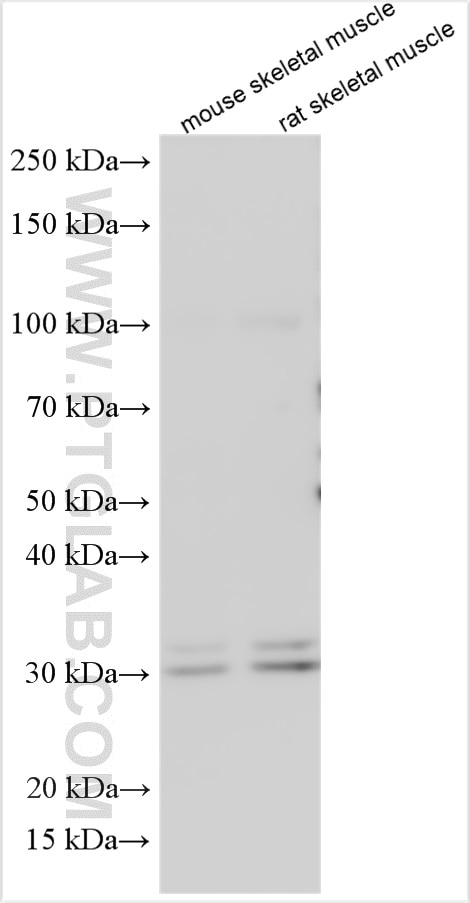
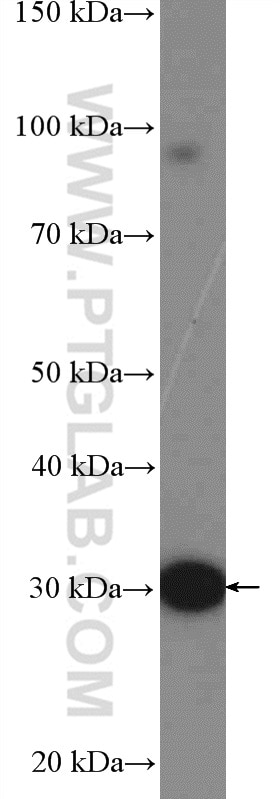
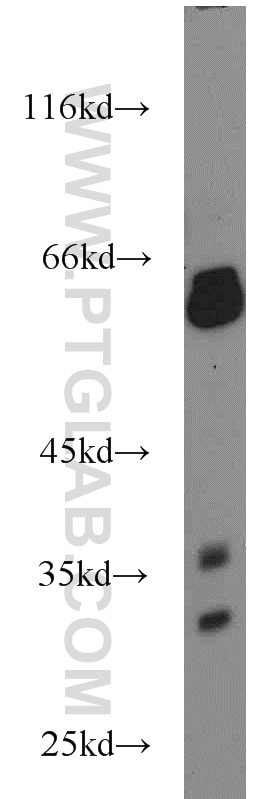
| Positive WB detected in | mouse skeletal muscle tissue, SGC-7901 cells, rat skeletal muscle tissue |
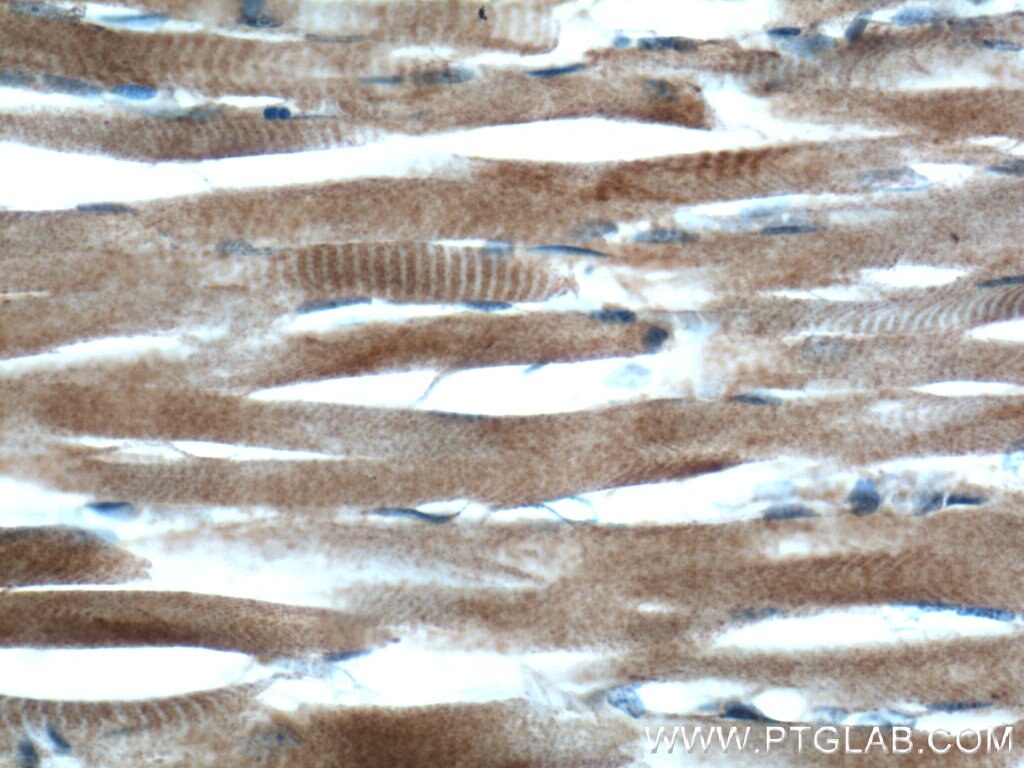
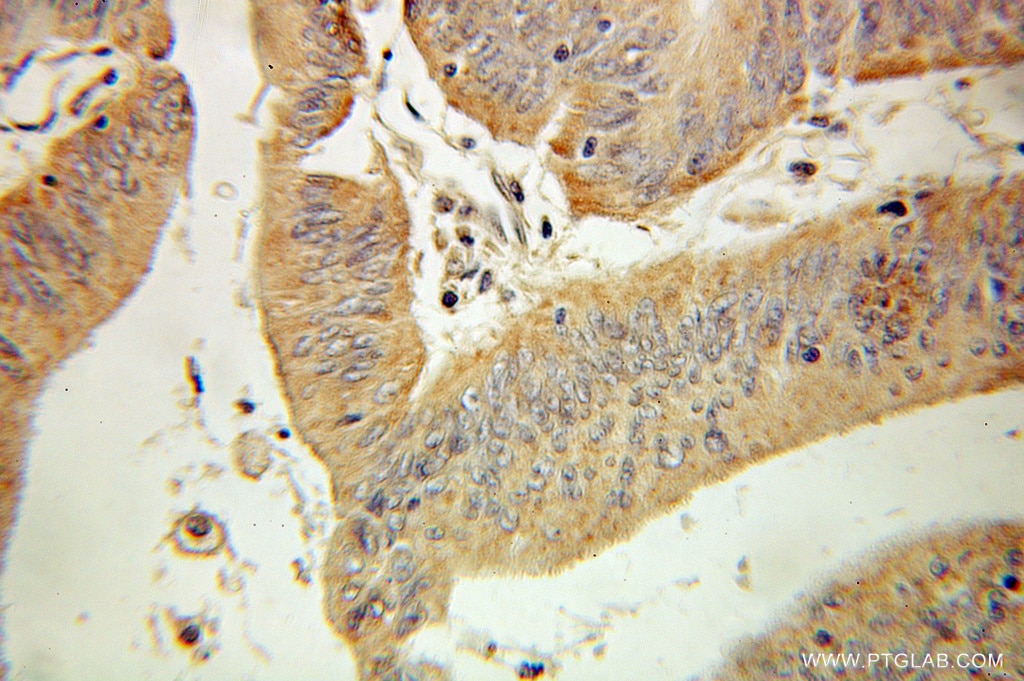
| Positive IHC detected in | human skeletal muscle tissue, human colon cancer tissue Note: suggested antigen retrieval with TE buffer pH 9.0; (*) Alternatively, antigen retrieval may be performed with citrate buffer pH 6.0 |
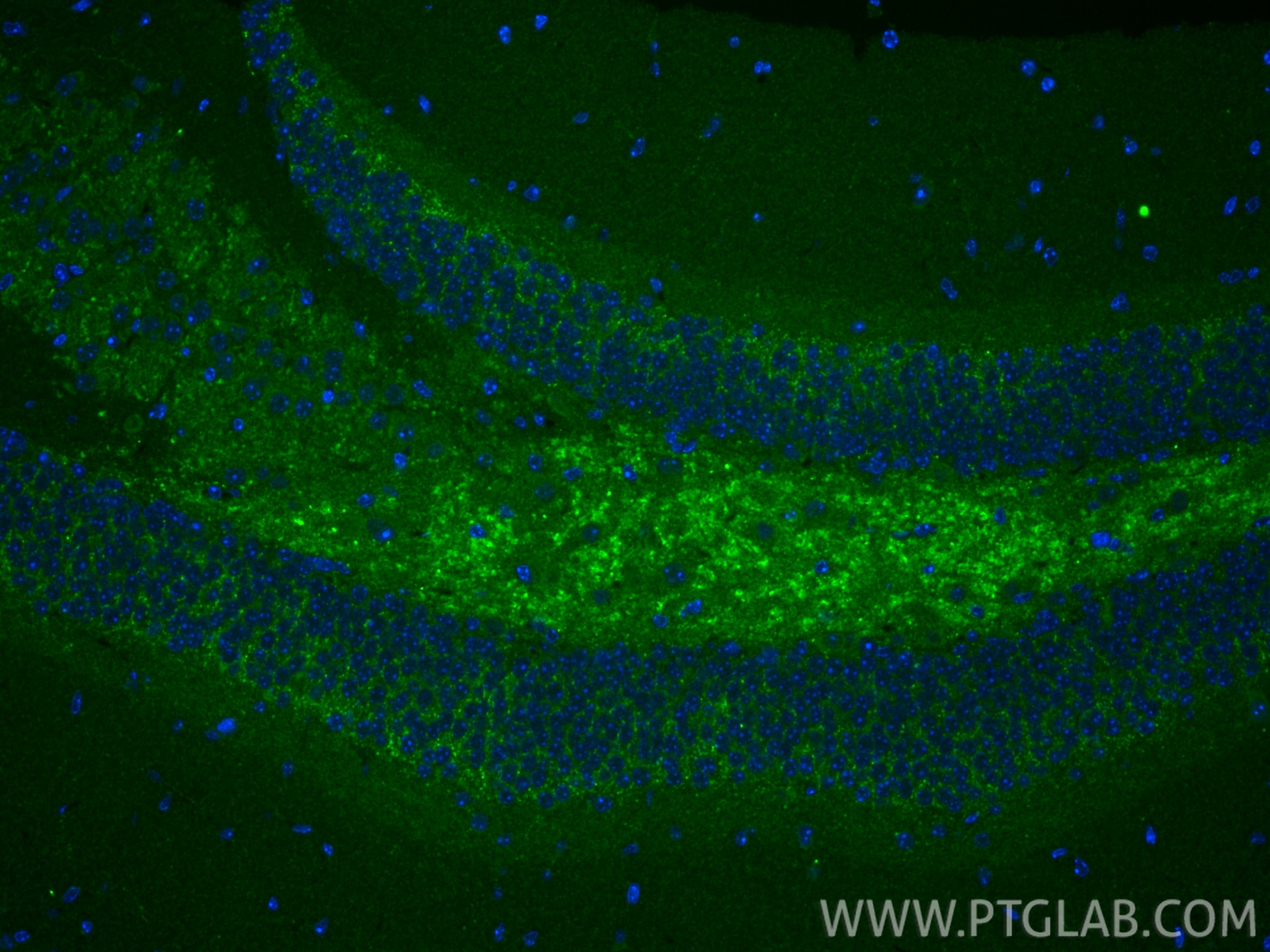
| Positive IF-P detected in | mouse brain tissue |
Recommended dilution
| Application | Dilution |
|---|---|
| Western Blot (WB) | WB : 1:500-1:2000 |
| Immunohistochemistry (IHC) | IHC : 1:50-1:500 |
| Immunofluorescence (IF)-P | IF-P : 1:50-1:500 |
| It is recommended that this reagent should be titrated in each testing system to obtain optimal results. | |
| Sample-dependent, Check data in validation data gallery. | |
Product Information
10750-1-AP targets UCP3 in WB, IHC, IF-P, ELISA applications and shows reactivity with human, mouse, rat samples.
| Tested Reactivity | human, mouse, rat |
| Cited Reactivity | human, mouse, rat |
| Host / Isotype | Rabbit / IgG |
| Class | Polyclonal |
| Type | Antibody |
| Immunogen |
CatNo: Ag1134 Product name: Recombinant human UCP3 protein Source: e coli.-derived, PGEX-4T Tag: GST Domain: 1-210 aa of BC008392 Sequence: MVGLKPSDVPPTMAVKFLGAGTAACFADLVTFPLDTAKVRLQIQGENQAVQTARLVQYRGVLGTILTMVRTEGPCSPYNGLVAGLQRQMSFASIRIGLYDSVKQVYTPKGADNFPCHFVSAFGAGFCATVVASPVDVVKTRYMNSPPGQYFSPLDCMIKMVAQEGPTAFYKGFTPSFLRLGSWNVVMFVTYEQLKRALMKVQMLRESPF Predict reactive species |
| Full Name | uncoupling protein 3 (mitochondrial, proton carrier) |
| Calculated Molecular Weight | 34 kDa |
| Observed Molecular Weight | 30-34 kDa |
| GenBank Accession Number | BC008392 |
| Gene Symbol | UCP3 |
| Gene ID (NCBI) | 7352 |
| RRID | AB_2272729 |
| Conjugate | Unconjugated |
| Form | Liquid |
| Purification Method | Antigen affinity purification |
| UNIPROT ID | P55916 |
| Storage Buffer | PBS with 0.02% sodium azide and 50% glycerol, pH 7.3. |
| Storage Conditions | Store at -20°C. Stable for one year after shipment. Aliquoting is unnecessary for -20oC storage. 20ul sizes contain 0.1% BSA. |
Protocols
| Product Specific Protocols | |
|---|---|
| IF protocol for UCP3 antibody 10750-1-AP | Download protocol |
| IHC protocol for UCP3 antibody 10750-1-AP | Download protocol |
| WB protocol for UCP3 antibody 10750-1-AP | Download protocol |
| Standard Protocols | |
|---|---|
| Click here to view our Standard Protocols |
Publications
What published studies show
Anti-UCP3 antibody (Cat# 10750-1-AP) has 19 citations spanning journals including Circ Res, Mol Cell, EBioMedicine, Free Radic Biol Med, Life Sci, J Mol Cell Cardiol, Sci Rep, Front Pharmacol, Am J Physiol Cell Physiol, Eur J Pharmacol, Nutrients, Mol Cell Biochem, Front Physiol, PLoS One, Physiol Behav, Cell Physiol Biochem, Anatol J Cardiol, Growth Horm IGF Res, and Biosci Biotechnol Biochem. Research fields encompass mitochondrial function, lipid/glucose metabolism, cardiovascular disease, skeletal muscle physiology, insulin resistance, and adipocyte biology.
| Species | Application | Title |
|---|---|---|
Circ Res Uncoupling protein 2 deficiency mimics the effects of hypoxia and endoplasmic reticulum stress on mitochondria and triggers pseudohypoxic pulmonary vascular remodeling and pulmonary hypertension. | ||
Mol Cell DNA Damage Promotes TMPRSS2-ERG Oncoprotein Destruction and Prostate Cancer Suppression via Signaling Converged by GSK3β and WEE1. | ||
EBioMedicine Maternal exercise intergenerationally drives muscle-based thermogenesis via activation of apelin-AMPK signaling. | ||
Free Radic Biol Med HDAC6 inhibition alleviates dexamethasone-induced skeletal muscle atrophy and enhances UCP3-associated redox homeostasis. | ||
Life Sci Adiponectin alleviates the symptoms of ischemic renal disease by inhibiting renal cell apoptosis. | ||
Nutrients β-Hydroxy-β-methyl Butyrate Regulates the Lipid Metabolism, Mitochondrial Function, and Fat Browning of Adipocytes |
Reviews
What customers say
The only review for 10750-1-AP is from a user who tested it on A549 cells by Western Blot at a 1:1000 dilution (Lot 00051968). They rated it 1 star and reported that the antibody was not specific for their target, producing many unspecific bands. Overall, the limited feedback suggests potential specificity concerns in this application.
The reviews below have been submitted by verified Proteintech customers who received an incentive for providing their feedback.
Edma (Verified Customer) (03-03-2025) | I think the antibody was not that specific for our target in A549 cells, and the western blot didn't work. we got a lot of unspecific bands
|








