

Tested Applications
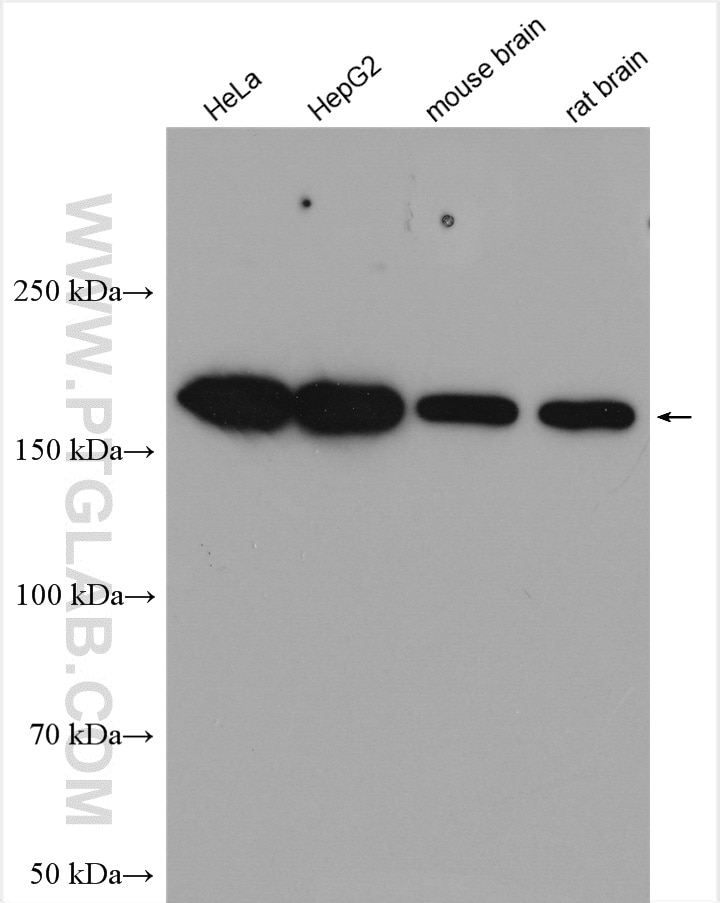
| Positive WB detected in | HeLa cells, HepG2 cells, mouse brain tissue, rat brain tissue |
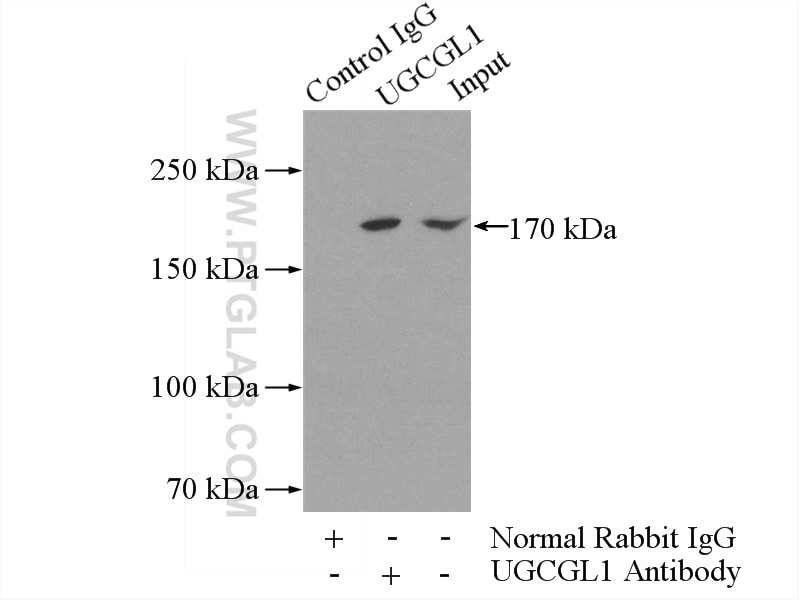
| Positive IP detected in | mouse brain tissue |
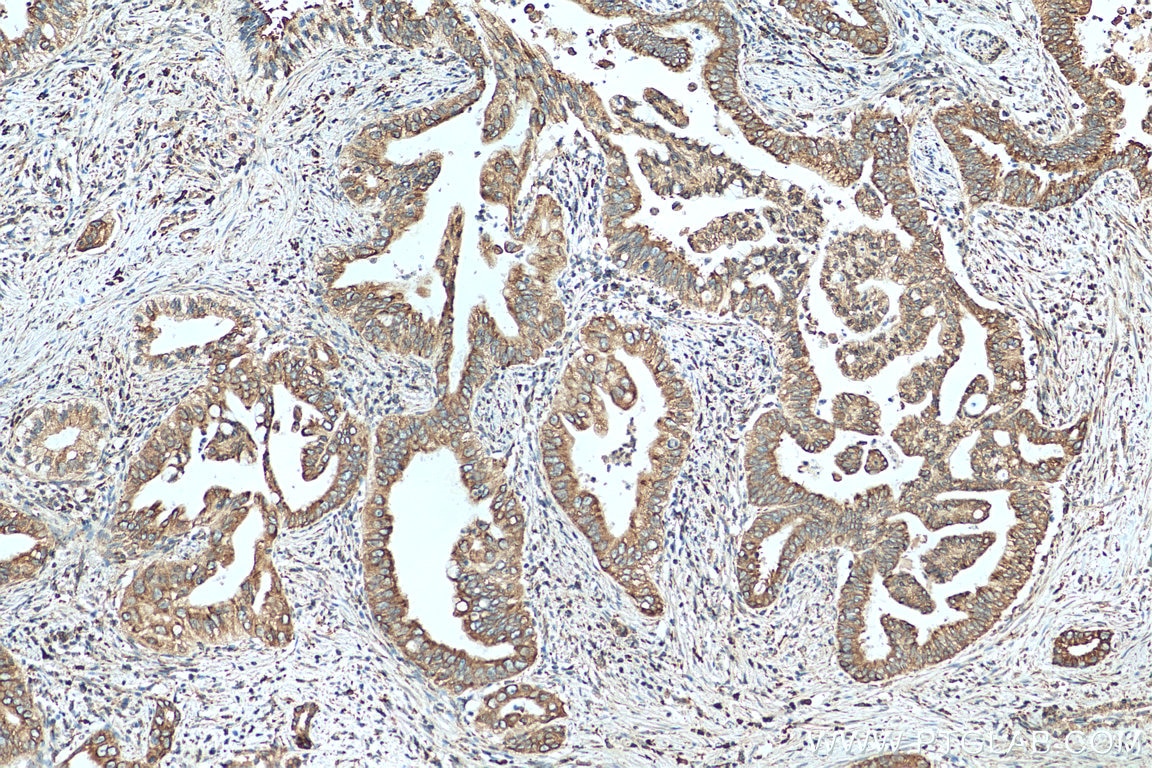
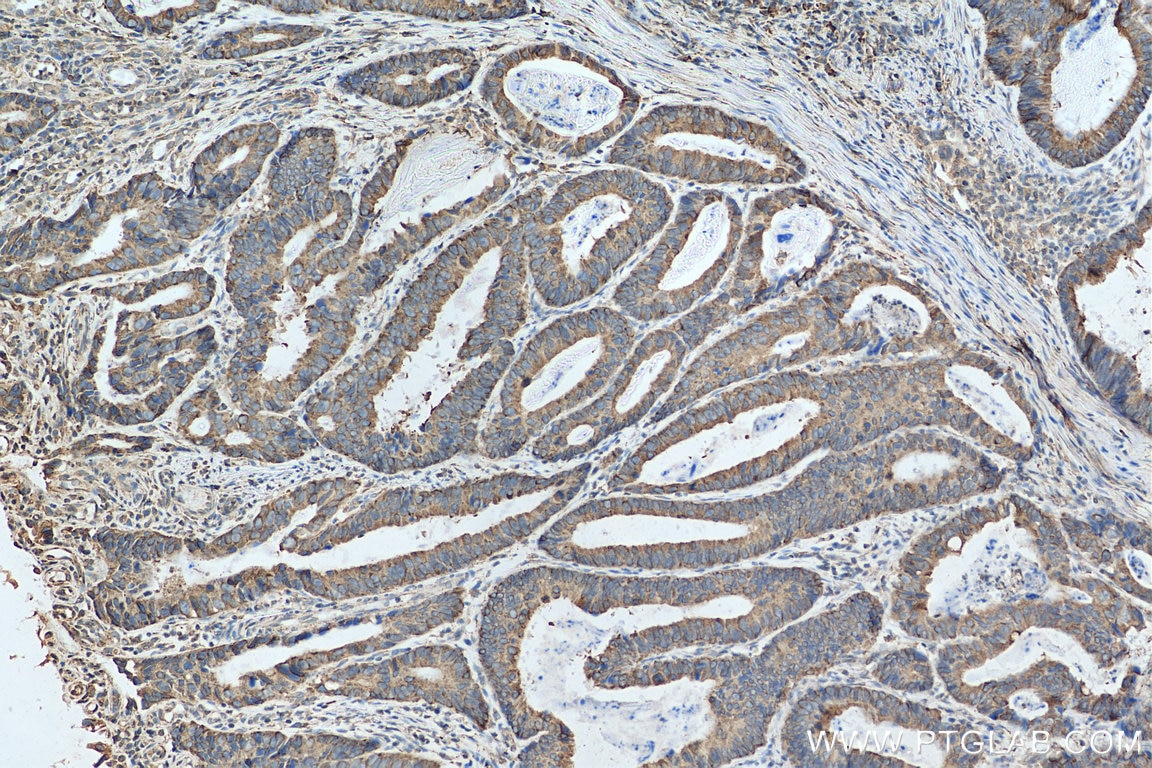
| Positive IHC detected in | human pancreas cancer tissue, human colon cancer tissue Note: suggested antigen retrieval with TE buffer pH 9.0; (*) Alternatively, antigen retrieval may be performed with citrate buffer pH 6.0 |
Recommended dilution
| Application | Dilution |
|---|---|
| Western Blot (WB) | WB : 1:500-1:2000 |
| Immunoprecipitation (IP) | IP : 0.5-4.0 ug for 1.0-3.0 mg of total protein lysate |
| Immunohistochemistry (IHC) | IHC : 1:50-1:500 |
| It is recommended that this reagent should be titrated in each testing system to obtain optimal results. | |
| Sample-dependent, Check data in validation data gallery. | |
Product Information
14170-1-AP targets UGCGL1 in WB, IHC, IF, IP, ELISA applications and shows reactivity with human, mouse, rat samples.
| Tested Reactivity | human, mouse, rat |
| Cited Reactivity | human, mouse, rat |
| Host / Isotype | Rabbit / IgG |
| Class | Polyclonal |
| Type | Antibody |
| Immunogen |
CatNo: Ag5369 Product name: Recombinant human UGCGL1 protein Source: e coli.-derived, PGEX-4T Tag: GST Domain: 1221-1531 aa of BC041098 Sequence: TEEVKQDKDDIINIFSVASGHLYERFLRIMMLSVLKNTKTPVKFWFLKNYLSPTFKEFIPYMANEYNFQYELVQYKWPRWLHQQTEKQRIIWGYKILFLDVLFPLVVDKFLFVDADQIVRTDLKELRDFNLDGAPYGYTPFCDSRREMDGYRFWKSGYWASHLAGRKYHISALYVVDLKKFRKIAAGDRLRGQYQGLSQDPNSLSNLDQDLPNNMIHQVPIKSLPQEWLWCETWCDDASKKRAKTIDLCNNPMTKEPKLEAAVRIVPEWQDYDQEIKQLQIRFQKEKETGALYKEKTKEPSREGPQKREEL Predict reactive species |
| Full Name | UDP-glucose ceramide glucosyltransferase-like 1 |
| Calculated Molecular Weight | 1531 aa, 175 kDa |
| Observed Molecular Weight | 170 kDa |
| GenBank Accession Number | BC041098 |
| Gene Symbol | UGCGL1 |
| Gene ID (NCBI) | 56886 |
| RRID | AB_1288973 |
| Conjugate | Unconjugated |
| Form | Liquid |
| Purification Method | Antigen affinity purification |
| UNIPROT ID | Q9NYU2 |
| Storage Buffer | PBS with 0.02% sodium azide and 50% glycerol, pH 7.3. |
| Storage Conditions | Store at -20°C. Stable for one year after shipment. Aliquoting is unnecessary for -20oC storage. 20ul sizes contain 0.1% BSA. |
Background Information
UDP-glucose:glycoprotein glucosyltransferase 1 (UGCGL1) is a central quality control gatekeeper in the mammalian endoplasmic reticulum (ER) and serves as a folding sensor in the calnexin/calreticulin glycoprotein quality control cycle (PMID: 28425917). UGCGL1 acts as a checkpoint in the quality control of the MHC class I antigen presentation pathway (PMID: 21383159). Western blot analysis detected UGCGL1 at an apparent molecular mass of 170 kDa.
Protocols
| Product Specific Protocols | |
|---|---|
| IHC protocol for UGCGL1 antibody 14170-1-AP | Download protocol |
| IP protocol for UGCGL1 antibody 14170-1-AP | Download protocol |
| WB protocol for UGCGL1 antibody 14170-1-AP | Download protocol |
| Standard Protocols | |
|---|---|
| Click here to view our Standard Protocols |
Publications
What published studies show
The UGCGL1 polyclonal antibody (Cat# 14170-1-AP) has 11 citations published in journals including Molecular & Cellular Proteomics, Metabolic Engineering, Journal of Cell Biology, Toxicology, Scientific Reports, Journal of Cellular and Molecular Medicine, Gastro Hep Advances, Glycobiology, and Biochemical and Biophysical Research Communications. Research fields span endoplasmic reticulum quality control, glycoprotein folding and secretion, thyroid dyshormonogenesis, cisplatin-induced ototoxicity, proinsulin degradation, breast cancer prognosis, and pancreatic acinar metaplasia.
| Species | Application | Title |
|---|---|---|
Mol Cell Proteomics Thyroglobulin Interactome Profiling Defines Altered Proteostasis Topology Associated With Thyroid Dyshormonogenesis | ||
Metab Eng Humanization of N-glycan-dependent protein quality-control system in Kluyveromyces marxianus promotes glycoprotein secretion. | ||
Mol Cell Proteomics Thyroglobulin Interactome Profiling Defines Altered Proteostasis Topology Associated With Thyroid Dyshormonogenesis. | ||
J Cell Biol Competition for calnexin binding regulates secretion and turnover of misfolded GPI-anchored proteins | ||
Toxicology Tauroursodeoxycholic acid attenuates cisplatin-induced ototoxicity by inhibiting the accumulation and aggregation of unfolded or misfolded proteins in the endoplasmic reticulum. | ||





