
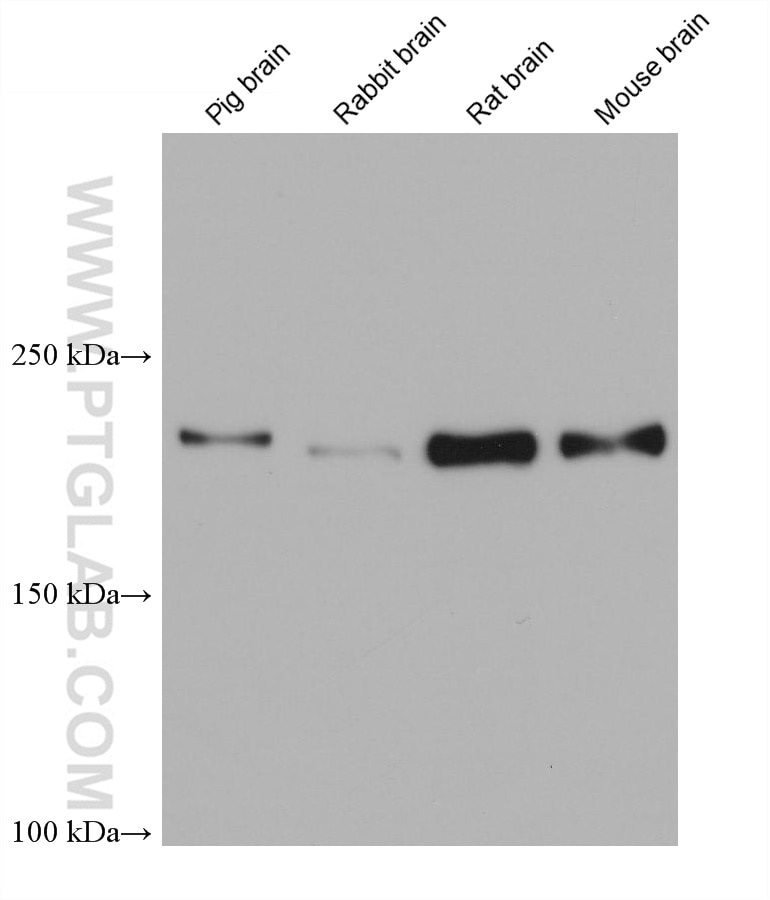
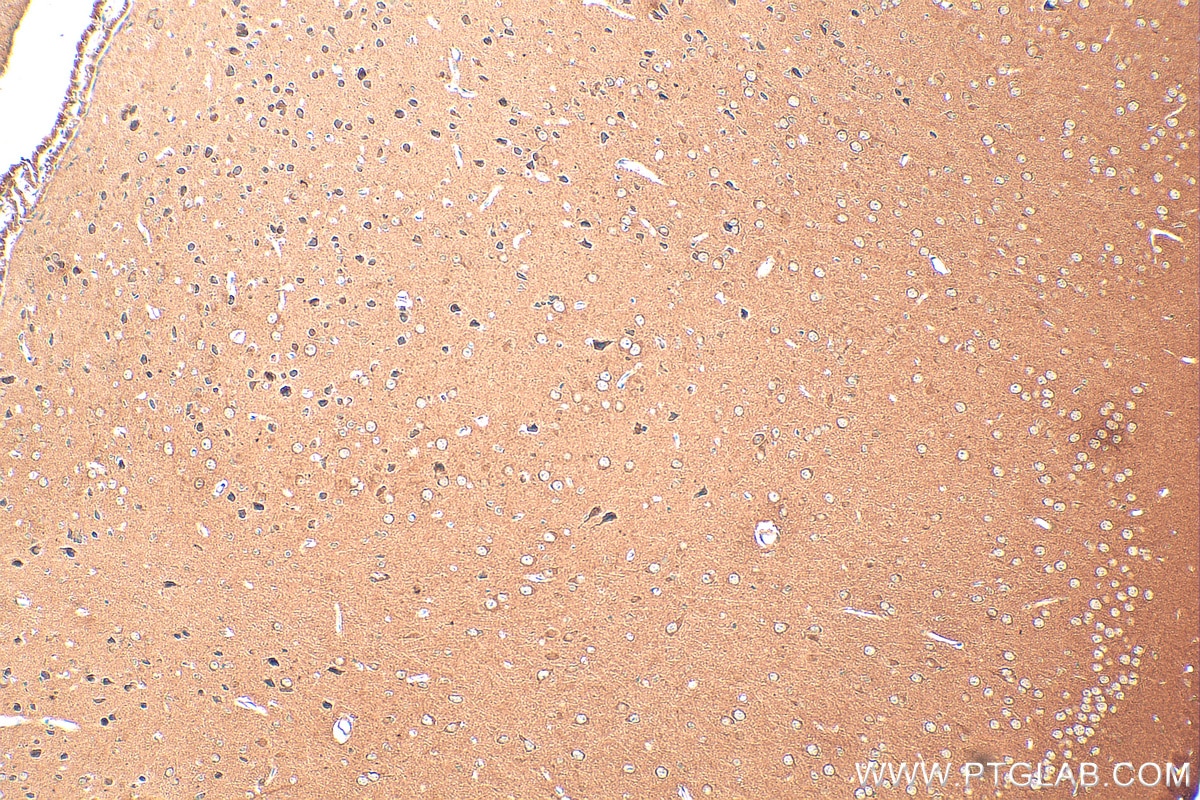
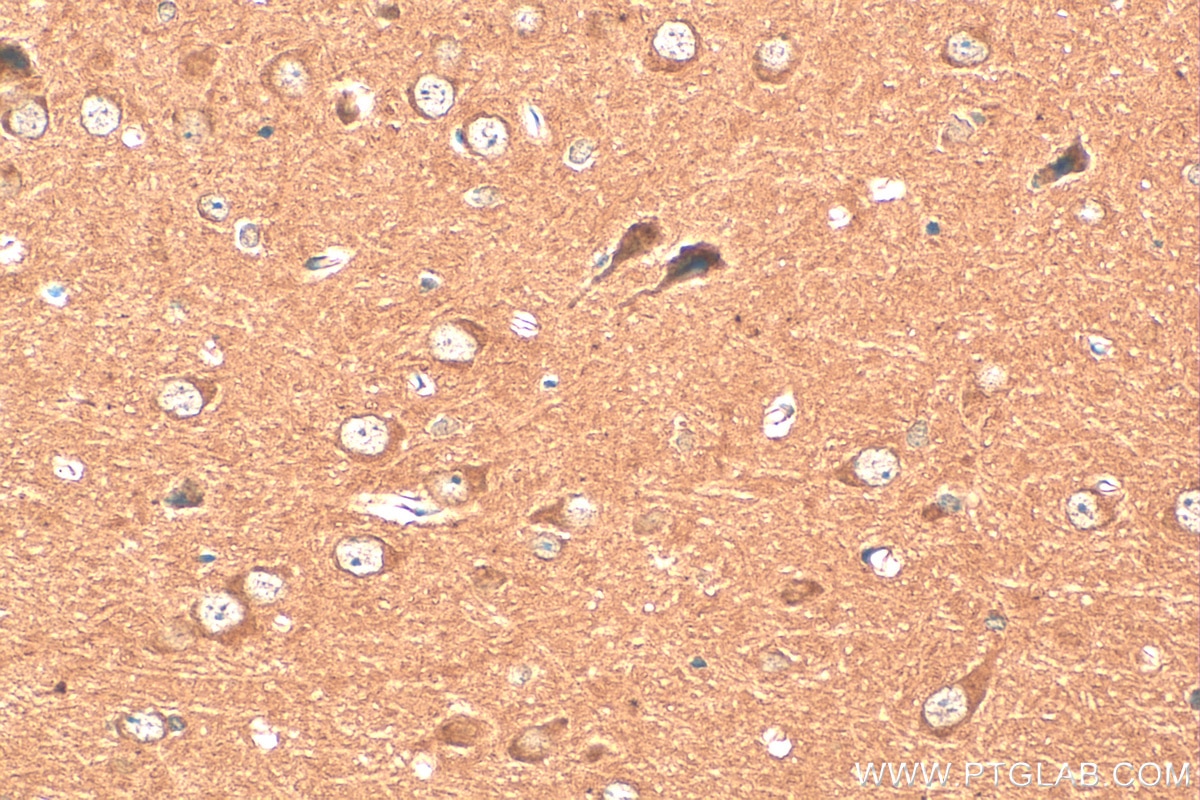
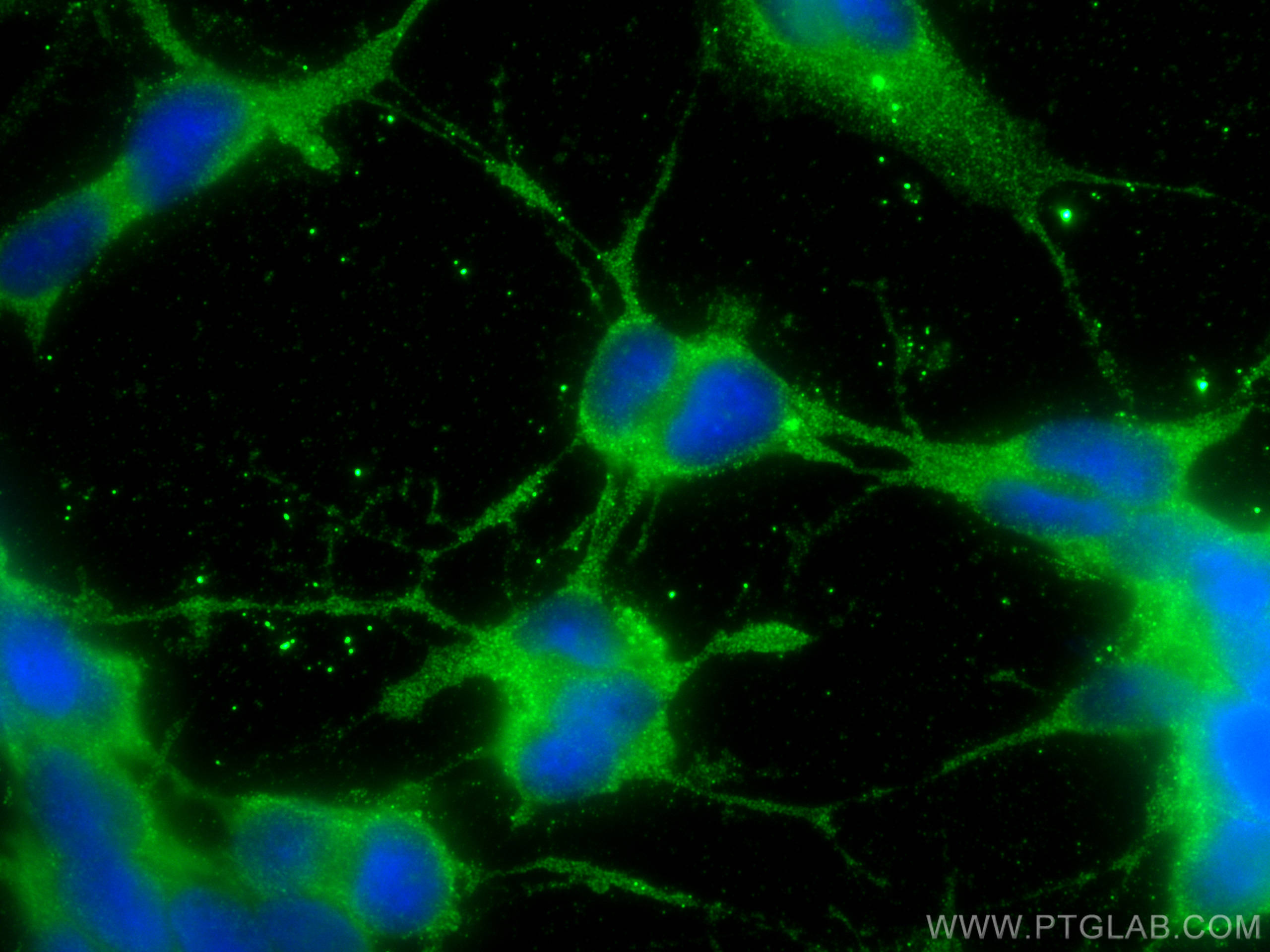

Tested Applications
| Positive WB detected in | pig brain tissue, rabbit brain tissue, rat brain tissue, mouse brain tissue |
| Positive IHC detected in | mouse brain tissue Note: suggested antigen retrieval with TE buffer pH 9.0; (*) Alternatively, antigen retrieval may be performed with citrate buffer pH 6.0 |
| Positive IF/ICC detected in | SH-SY5Y cells |
Recommended dilution
| Application | Dilution |
|---|---|
| Western Blot (WB) | WB : 1:2000-1:10000 |
| Immunohistochemistry (IHC) | IHC : 1:200-1:1000 |
| Immunofluorescence (IF)/ICC | IF/ICC : 1:400-1:1600 |
| It is recommended that this reagent should be titrated in each testing system to obtain optimal results. | |
| Sample-dependent, Check data in validation data gallery. | |
Product Information
68483-1-Ig targets UNC13A in WB, IHC, IF/ICC, ELISA applications and shows reactivity with human, mouse, rat, pig, rabbit samples.
| Tested Reactivity | human, mouse, rat, pig, rabbit |
| Cited Reactivity | human |
| Host / Isotype | Mouse / IgG2a |
| Class | Monoclonal |
| Type | Antibody |
| Immunogen |
Peptide Predict reactive species |
| Full Name | unc-13 homolog A (C. elegans) |
| Calculated Molecular Weight | 193 kDa |
| Observed Molecular Weight | 193-210 kDa |
| GenBank Accession Number | NM_001080421 |
| Gene Symbol | UNC13A |
| Gene ID (NCBI) | 23025 |
| RRID | AB_3085194 |
| Conjugate | Unconjugated |
| Form | Liquid |
| Purification Method | Protein A purification |
| UNIPROT ID | Q9UPW8 |
| Storage Buffer | PBS with 0.02% sodium azide and 50% glycerol, pH 7.3. |
| Storage Conditions | Store at -20°C. Stable for one year after shipment. Aliquoting is unnecessary for -20oC storage. 20ul sizes contain 0.1% BSA. |
Background Information
UNC13A, also named KIAA1032, belongs to the unc-13 family. It plays a role in vesicle maturation during exocytosis as a target of the diacylglycerol second messenger pathway. UNC13A is involved in neurotransmitter release by acting in synaptic vesicle priming prior to vesicle fusion and participates in the activity-dependent refilling of readily releasable vesicle pool (RRP). It is essential for synaptic vesicle maturation in most excitatory/glutamatergic but not inhibitory/GABA-mediated synapses. UNC13A is also involved in secretory granule priming in INS secretion. The antibody is specific to UNC13A.
Protocols
| Product Specific Protocols | |
|---|---|
| IF protocol for UNC13A antibody 68483-1-Ig | Download protocol |
| IHC protocol for UNC13A antibody 68483-1-Ig | Download protocol |
| WB protocol for UNC13A antibody 68483-1-Ig | Download protocol |
| Standard Protocols | |
|---|---|
| Click here to view our Standard Protocols |
Publications
What published studies show
The 68483-1-Ig UNC13A monoclonal antibody (Rabbit polyclonal antigen target, mAb) has 3 total citations. They appear in Science Translational Medicine (15.6 IF), Cell Reports Methods (5.8 IF), and bioRxiv. The associated research fields center on neurobiology: TDP-43 loss, cryptic splicing, and neuronal dysfunction (ALS-linked mechanisms), along with traumatic brain injury studies using brain organoids. Applications cited include Western blot (WB) and immunofluorescence (IF), with human samples.
| Species | Application | Title |
|---|---|---|
Sci Transl Med Cryptic splicing in synaptic and membrane excitability genes links TDP-43 loss to neuronal dysfunction | ||
Cell Rep Methods A tabletop blast device for the study of the long-term consequences of traumatic brain injury on brain organoids. | ||
bioRxiv Cryptic splicing in synaptic and membrane excitability genes links TDP-43 loss to neuronal dysfunction |





