

Tested Applications
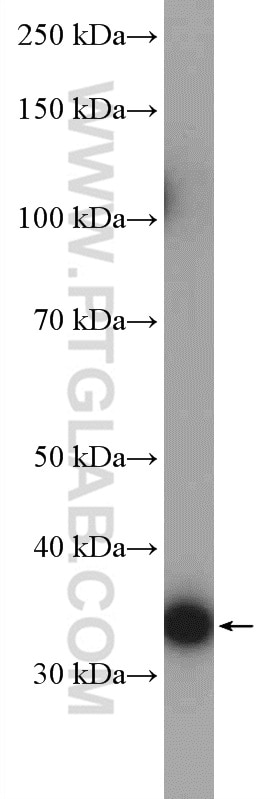
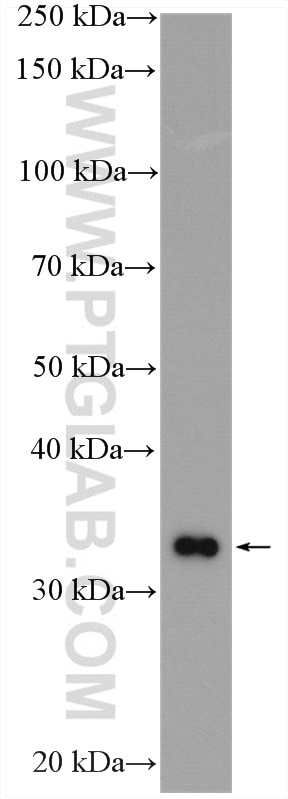
| Positive WB detected in | U2OS cells, SGC-7901 cells |
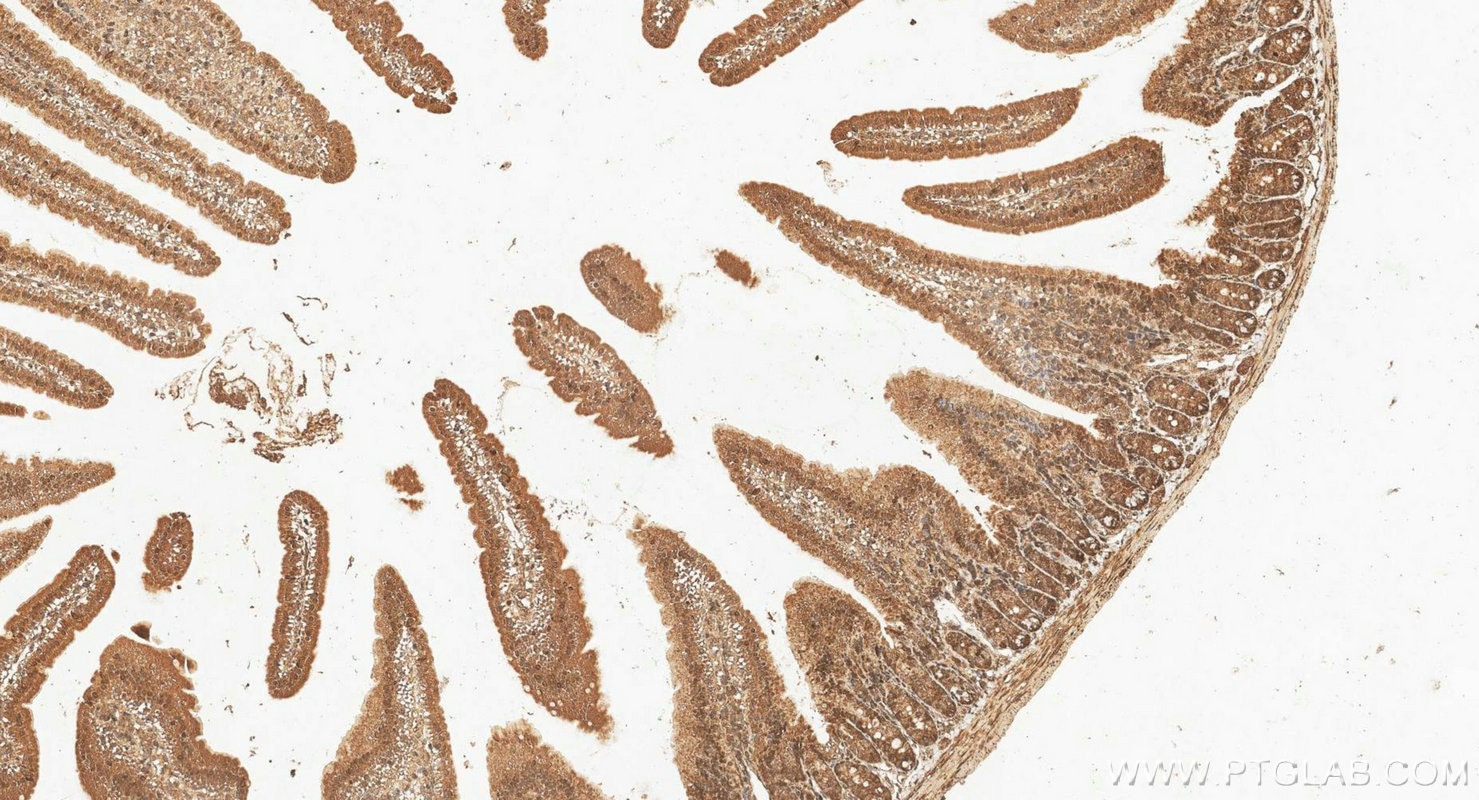
| Positive IHC detected in | mouse small intestine tissue Note: suggested antigen retrieval with TE buffer pH 9.0; (*) Alternatively, antigen retrieval may be performed with citrate buffer pH 6.0 |
Recommended dilution
| Application | Dilution |
|---|---|
| Western Blot (WB) | WB : 1:500-1:2000 |
| Immunohistochemistry (IHC) | IHC : 1:50-1:500 |
| It is recommended that this reagent should be titrated in each testing system to obtain optimal results. | |
| Sample-dependent, Check data in validation data gallery. | |
Product Information
14186-1-AP targets UPP1 in WB, IHC, IF, ELISA applications and shows reactivity with human, mouse samples.
| Tested Reactivity | human, mouse |
| Cited Reactivity | human, mouse |
| Host / Isotype | Rabbit / IgG |
| Class | Polyclonal |
| Type | Antibody |
| Immunogen |
CatNo: Ag5441 Product name: Recombinant human UPP1 protein Source: e coli.-derived, PGEX-4T Tag: GST Domain: 1-173 aa of BC047030 Sequence: MQRKLKVTSLEPGTVVITEQAVDTCFKAEFEQIVLGKRVIRKTDLNKKLVQELLLCSAELSEFTTVVGNTMCTLDFYEGQGRLDGALCSYTEKDKQAYLEAAYAAGVRNIEMESSVFAAMCSACGLQAAVVCVTLLNRLEGDQISSPRNVLSEYQQRPQRLVSYFIKKKLSKA Predict reactive species |
| Full Name | uridine phosphorylase 1 |
| Calculated Molecular Weight | 34 kDa |
| Observed Molecular Weight | 34 kDa |
| GenBank Accession Number | BC047030 |
| Gene Symbol | UPP1 |
| Gene ID (NCBI) | 7378 |
| RRID | AB_2878025 |
| Conjugate | Unconjugated |
| Form | Liquid |
| Purification Method | Antigen affinity purification |
| UNIPROT ID | Q16831 |
| Storage Buffer | PBS with 0.02% sodium azide and 50% glycerol, pH 7.3. |
| Storage Conditions | Store at -20°C. Stable for one year after shipment. Aliquoting is unnecessary for -20oC storage. 20ul sizes contain 0.1% BSA. |
Background Information
Uridine phosphorylase 1 (UPP1) belongs to the purine/pyrimidine phosphorylase family. It is an enzyme that catalyzes the reversible conversion of uridine to uracil and ribose-1-phosphate. UPP1 plays a crucial role in pyrimidine metabolism. UPP1 is highly expressed in various cancers, aiding in metabolic reprogramming, tumor growth, and immune evasion. The apparent molecular mass measured by SDS-PAGE is 34 kDa. The post-translational modification of UPP1 is primarily ubiquitination.
Protocols
| Product Specific Protocols | |
|---|---|
| IHC protocol for UPP1 antibody 14186-1-AP | Download protocol |
| WB protocol for UPP1 antibody 14186-1-AP | Download protocol |
| Standard Protocols | |
|---|---|
| Click here to view our Standard Protocols |
Publications
What published studies show
Anti-UPP1 antibody (Cat# 14186-1-AP) has accumulated 14 citations across journals including Nature Communications, Cell Metabolism, Journal of Clinical Investigation, Oncogene, Arthritis & Rheumatology, Cell Signaling, Laboratory Investigation, Science Reports, and PLoS One. Research fields encompass oncology (lung, pancreatic, esophageal, oral, and brain cancers), pyrimidine metabolism, immunology, epigenetics, and inflammatory conditions such as psoriasis and osteoarthritis.
| Species | Application | Title |
|---|---|---|
Cell Metab Uridine depletion impairs CD8⁺ T cell antitumor activity through N-glycosylation. | ||
Nat Commun UPP1 promotes lung adenocarcinoma progression through the induction of an immunosuppressive microenvironment | ||
J Clin Invest Targeting plasticity in the pyrimidine synthesis pathway potentiates macrophage-mediated phagocytosis in pancreatic cancer models.
| ||
Int J Biol Sci Comprehensive Metabolomic Profiling of Skin Lesions from Psoriasis Patients Reveals Disease Signatures. | ||
Cell Commun Signal U2AF2-regulated alternative splicing of UPP1 promotes NSCLC progression by enhancing glycolysis. | ||
Arthritis Rheumatol SHP2 inhibition attenuates osteoarthritis by maintaining homeostasis of cartilage metabolism via the DOK1/UPP1/uridine cascade. |




