

Tested Applications
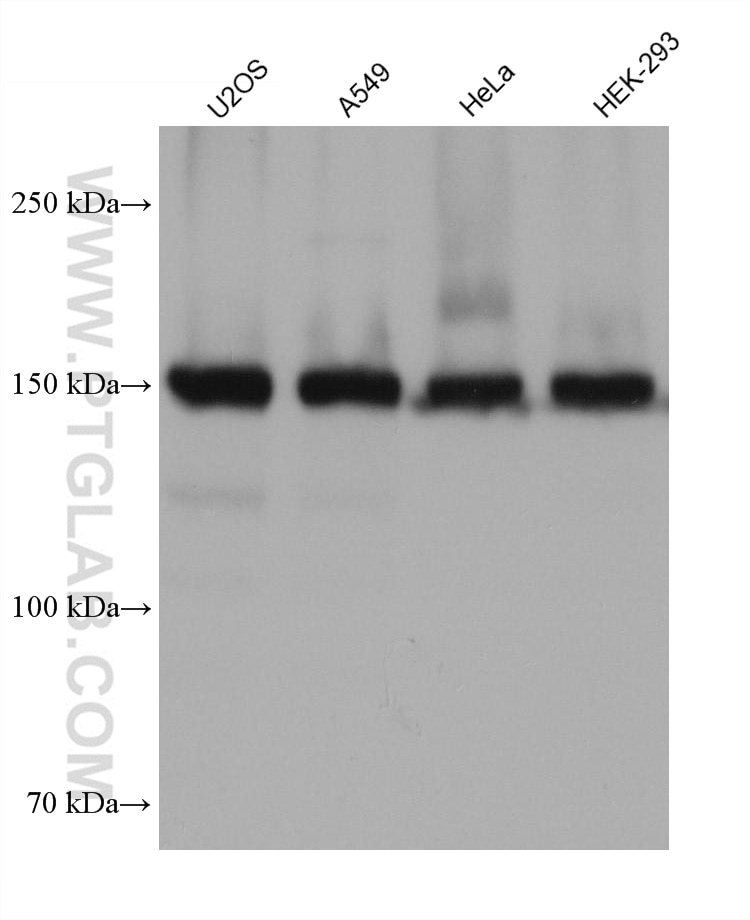
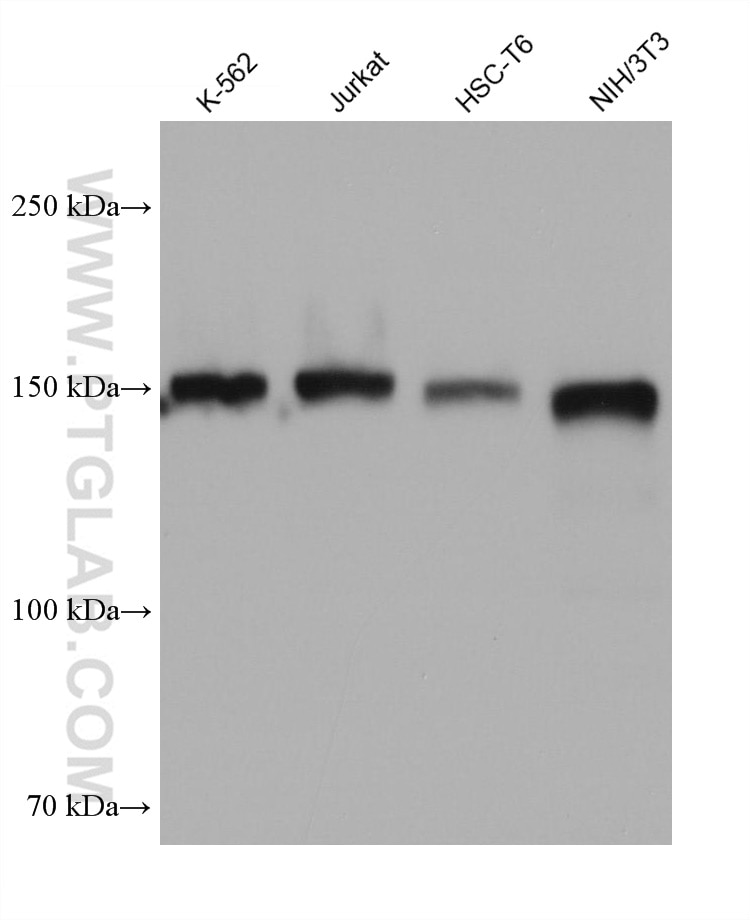
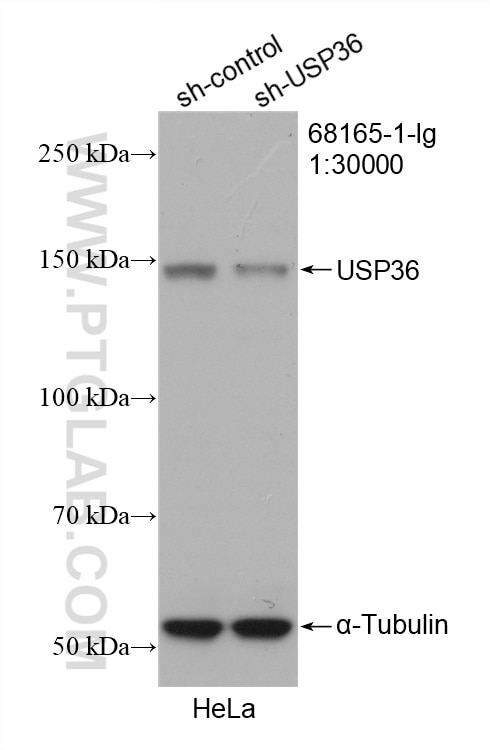
| Positive WB detected in | U2OS cells, K-562 cells, HeLa cells, A549 cells, HEK-293 cells, Jurkat cells, HSC-T6 cells, NIH/3T3 cells |
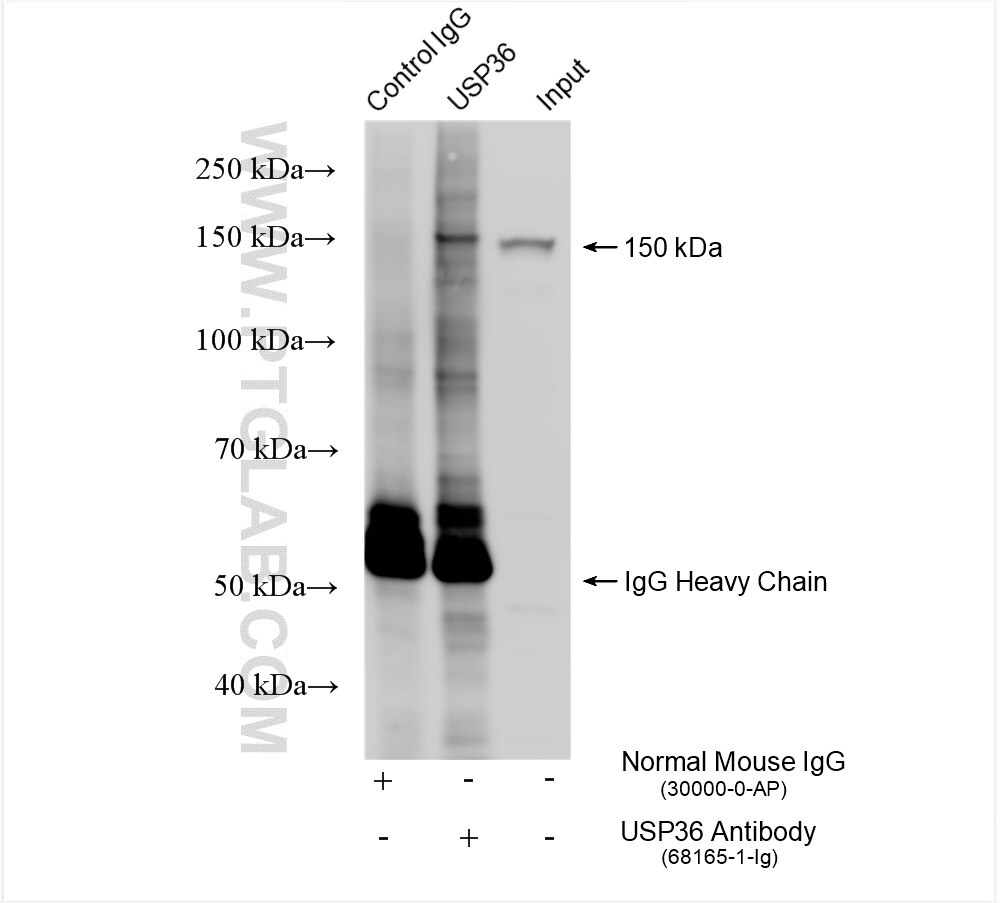
| Positive IP detected in | Jurkat cells |
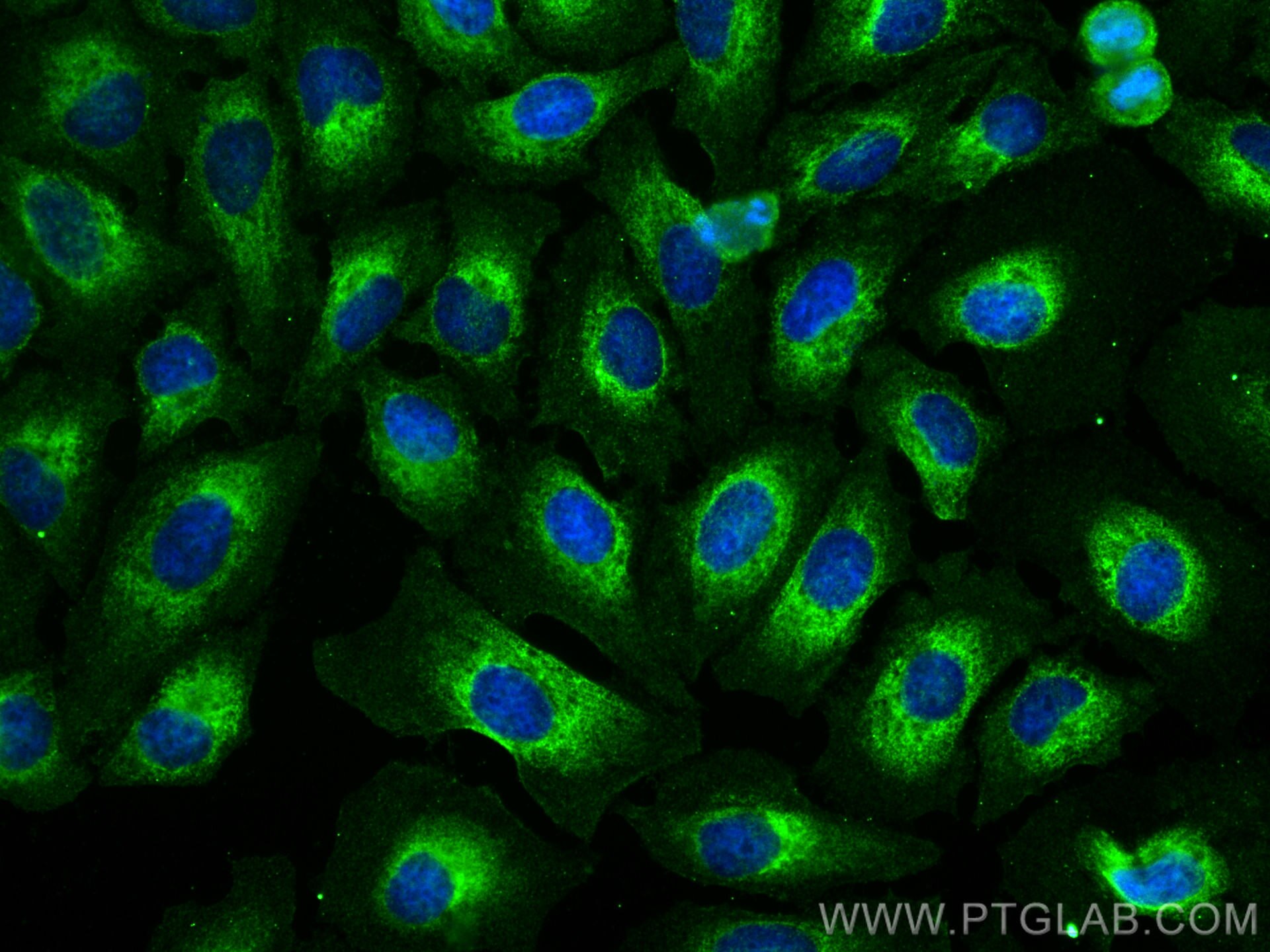
| Positive IF/ICC detected in | HeLa cells |
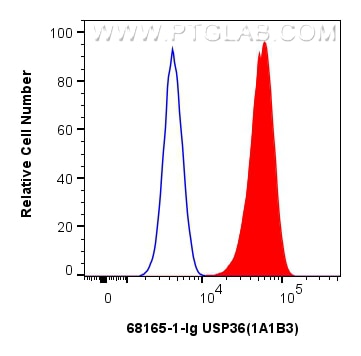
| Positive FC (Intra) detected in | U2OS cells |
Recommended dilution
| Application | Dilution |
|---|---|
| Western Blot (WB) | WB : 1:2000-1:10000 |
| Immunoprecipitation (IP) | IP : 0.5-4.0 ug for 1.0-3.0 mg of total protein lysate |
| Immunofluorescence (IF)/ICC | IF/ICC : 1:400-1:1600 |
| Flow Cytometry (FC) (INTRA) | FC (INTRA) : 0.25 ug per 10^6 cells in a 100 µl suspension |
| It is recommended that this reagent should be titrated in each testing system to obtain optimal results. | |
| Sample-dependent, Check data in validation data gallery. | |
Product Information
68165-1-Ig targets USP36 in WB, IF/ICC, FC (Intra), IP, ELISA applications and shows reactivity with human, mouse, rat samples.
| Tested Reactivity | human, mouse, rat |
| Cited Reactivity | human |
| Host / Isotype | Mouse / IgG1 |
| Class | Monoclonal |
| Type | Antibody |
| Immunogen |
CatNo: Ag6426 Product name: Recombinant human USP36 protein Source: e coli.-derived, PET28a Tag: 6*His Domain: 1-285 aa of BC038983 Sequence: MPIVDKLKEALKPGRKDSADDGELGKLLASSAKKVLLQKIEFEPASKSFSYQLEALKSKYVLLNPKTEGASRHKSGDDPPARRQGSEHTYESCGDGVPAPQKVLFPTERLSLRWERVFRVGAGLHNLGNTCFLNATIQCLTYTPPLANYLLSKEHARSCHQGSFCMLCVMQNHIVQAFANSGNAIKPVSFIRDLKKIARHFRFGNQEDAHEFLRYTIDAMQKACLNGCAKCVLPHPPSQGFGHLFYMVAAEHSYGNSQPGTFLPRLPLGRRGRICLWVLKLLEPK Predict reactive species |
| Full Name | ubiquitin specific peptidase 36 |
| Calculated Molecular Weight | 1123 aa, 123 kDa |
| Observed Molecular Weight | 150 kDa |
| GenBank Accession Number | BC038983 |
| Gene Symbol | USP36 |
| Gene ID (NCBI) | 57602 |
| RRID | AB_2923684 |
| Conjugate | Unconjugated |
| Form | Liquid |
| Purification Method | Protein G purification |
| UNIPROT ID | Q9P275 |
| Storage Buffer | PBS with 0.02% sodium azide and 50% glycerol, pH 7.3. |
| Storage Conditions | Store at -20°C. Stable for one year after shipment. Aliquoting is unnecessary for -20oC storage. 20ul sizes contain 0.1% BSA. |
Background Information
USP36 (Ubiquitin carboxyl-terminal hydrolase 36) is also named as KIAA1453, FLJ12851, DUB1 and belongs to the peptidase C19 family. It regulates the transcription and processing of rRNA by deubiquitylating various proteins involved in these processes, and the aberrant nucleolar structure in its absence is secondary to deficient ribosome biogenesis. USP36 plays a crucial role in regulating the structure and function of nucleoli (PMID:19208757). The ubiquitin-specific protease that is required in germline, epithelial, and intestinal stem cells (PMID:19039105). USP36 can be detected in 150 kDa (PMID:33852194)
Protocols
| Product Specific Protocols | |
|---|---|
| FC protocol for USP36 antibody 68165-1-Ig | Download protocol |
| IF protocol for USP36 antibody 68165-1-Ig | Download protocol |
| IP protocol for USP36 antibody 68165-1-Ig | Download protocol |
| WB protocol for USP36 antibody 68165-1-Ig | Download protocol |
| Standard Protocols | |
|---|---|
| Click here to view our Standard Protocols |
Publications
What published studies show
The USP36 Monoclonal antibody (1A1B3), catalog number 68165-1-Ig, has a total of 2 citations. These citations appear in International Journal of Molecular Sciences and International Journal of Medical Sciences. The research fields associated with these citations include gastric cancer progression (specifically MTA2 degradation regulation via UCHL3 interaction) and deubiquitination analysis in cisplatin-treated lung cancer cells. Both studies utilized the antibody for Western blot applications in human samples.
| Species | Application | Title |
|---|---|---|
Int J Mol Sci CircMTA2 Drives Gastric Cancer Progression through Suppressing MTA2 Degradation via Interacting with UCHL3 | ||
Int J Med Sci Deubiquitomic and bioinformatic analyses in cisplatin-treated lung cancer cells. |
Reviews
What customers say
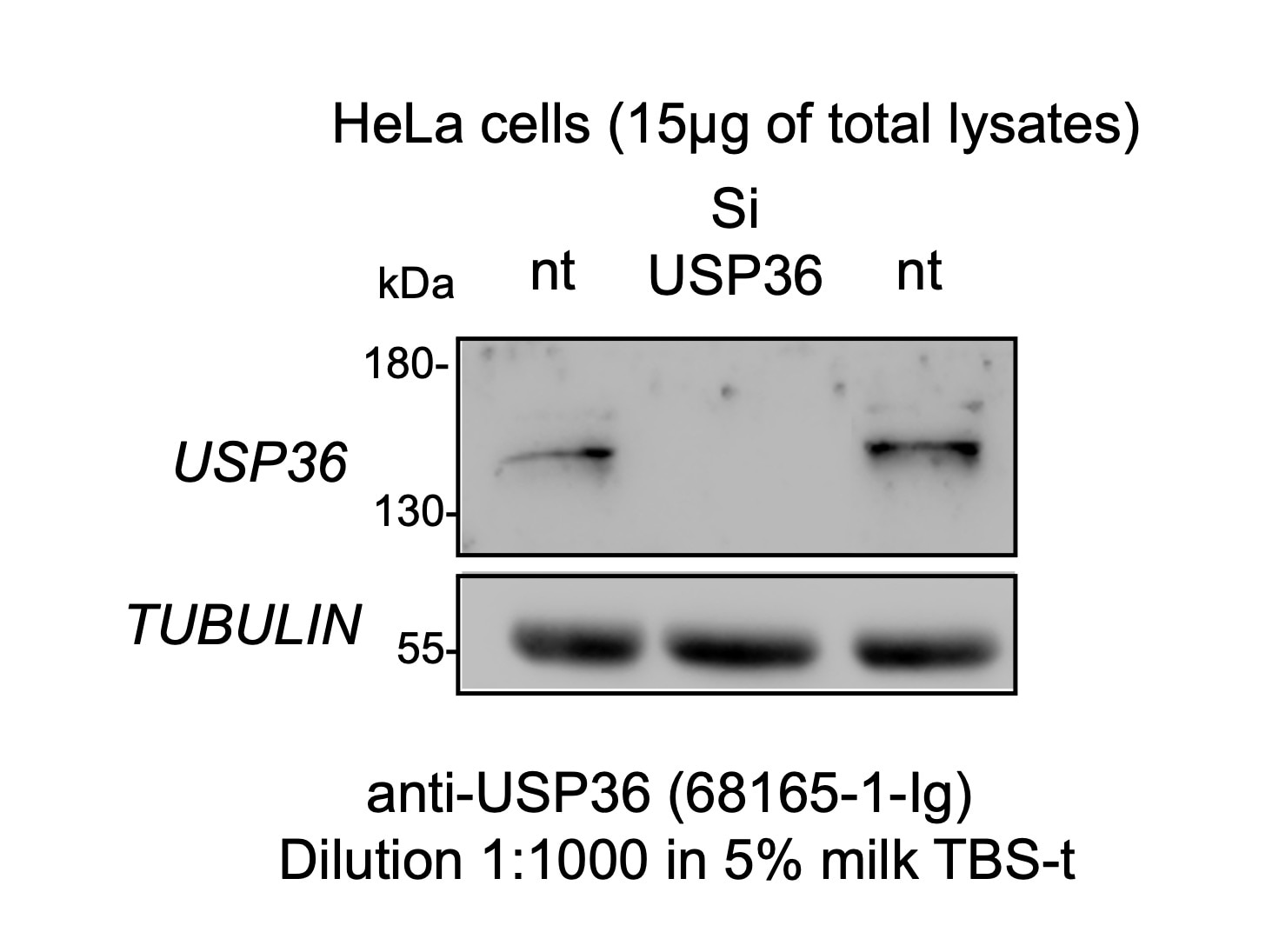
Reviews are mixed. One user reported successful Western Blot results in HeLa cells using siRNA knockdown of USP36 at 1:1000 dilution (5 stars). However, two other users experienced difficulties: one found no signal in WB and only background in IF across multiple cell lines (LUDLU1, H1299, A549), while another encountered failure after the sample was exposed to room temperature for two days during shipping, with non-specific bands observed at lower dilutions despite testing multiple conditions. Overall, 1 out of 3 reviewers gave a positive rating.
The reviews below have been submitted by verified Proteintech customers who received an incentive for providing their feedback.
Viktoria (Verified Customer) (02-02-2026) | This Antibody did not work for me at all. Did not see any signal in the WB and an unspecific localisation signal in the IF, which was most likely background. Can not recommend this Antibody at all.
|
Chrysa (Verified Customer) (02-01-2023) | Tested in HeLa cells in WB with control si and siRNA against USP36
 |
Chrysa (Verified Customer) (01-17-2023) | Unfortunately, due to couriers mistake the sample stayed 2 days at RT. I tried the antibody 3 times : 1/5000, 1:500 and 1/100 in 5%TBS-milk O/N at 4C in total lysates from HeLa cells (30μg) and didn't work (image uploaded, all the other antibodies worked in the same membrane e.g. anti-tubulin, anti-exosc10, anti-senp3). In 1/100 dilution I got non specific bands. Is it possible that the sample got degraded or is there anything I could do to optimize it to work?
|







