

Tested Applications
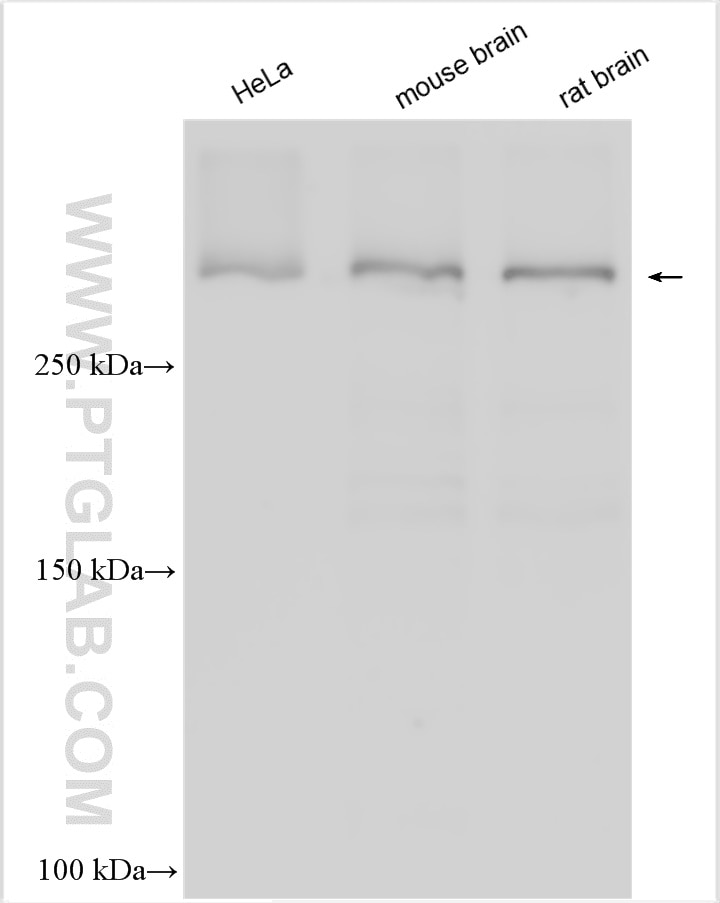
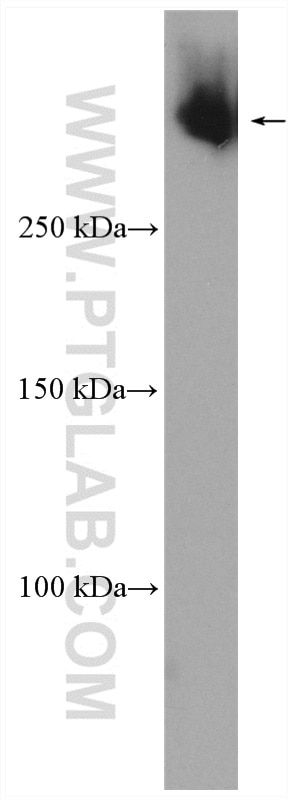
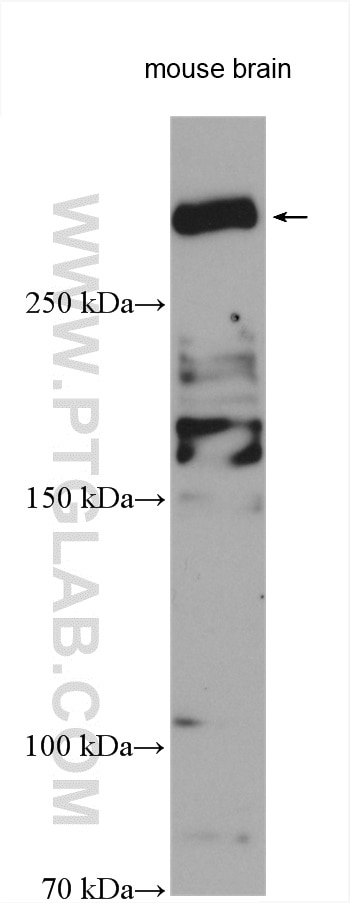
| Positive WB detected in | HeLa cells, mouse brain tissue, rat brain tissue |
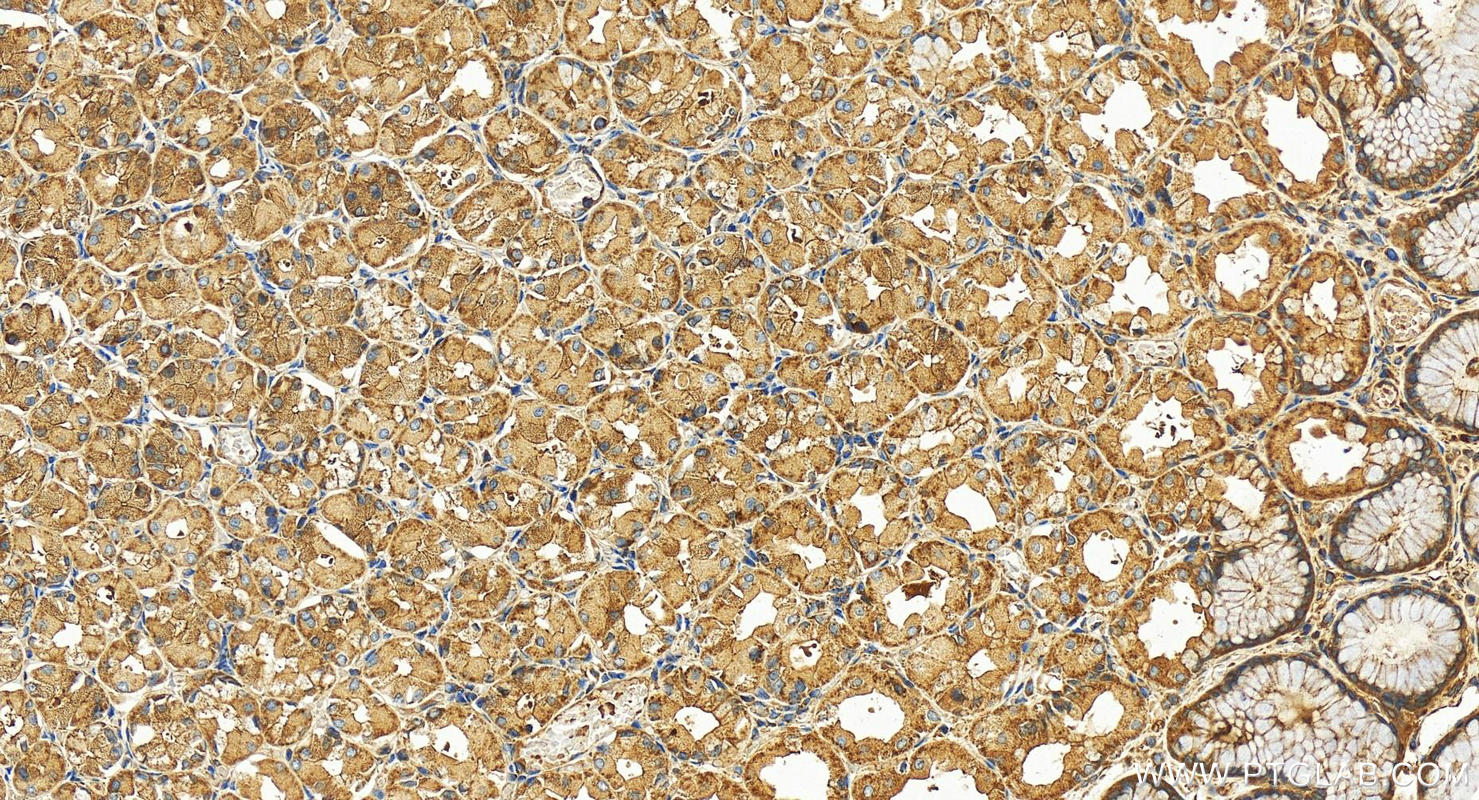
| Positive IHC detected in | human stomach tissue Note: suggested antigen retrieval with TE buffer pH 9.0; (*) Alternatively, antigen retrieval may be performed with citrate buffer pH 6.0 |
Recommended dilution
| Application | Dilution |
|---|---|
| Western Blot (WB) | WB : 1:2000-1:12000 |
| Immunohistochemistry (IHC) | IHC : 1:200-1:800 |
| It is recommended that this reagent should be titrated in each testing system to obtain optimal results. | |
| Sample-dependent, Check data in validation data gallery. | |
Product Information
28676-1-AP targets VPS13C in WB, IHC, IF, ELISA applications and shows reactivity with human, mouse, rat samples.
| Tested Reactivity | human, mouse, rat |
| Cited Reactivity | human, mouse |
| Host / Isotype | Rabbit / IgG |
| Class | Polyclonal |
| Type | Antibody |
| Immunogen |
CatNo: Ag29434 Product name: Recombinant mouse VPS13C protein Source: e coli.-derived, PGEX-4T Tag: GST Domain: 3575-3699 aa of NM_177184 Sequence: GIQRAAESTEEVSSLRPPRLIHEDGIIRPYDRQESEGSDLLENHIKKLEGEAYQFHCAVPGNKRAVLMITNRRALFIKEVEILGHMSVDWQCLFEDFVCPPEVSENLLKISVKEQGLFHKKDSAN Predict reactive species |
| Full Name | vacuolar protein sorting 13C (yeast) |
| Observed Molecular Weight | 422 kDa |
| GenBank Accession Number | NM_177184 |
| Gene Symbol | Vps13c |
| Gene ID (NCBI) | 320528 |
| RRID | AB_2881191 |
| Conjugate | Unconjugated |
| Form | Liquid |
| Purification Method | Antigen affinity purification |
| UNIPROT ID | Q8BX70 |
| Storage Buffer | PBS with 0.02% sodium azide and 50% glycerol, pH 7.3. |
| Storage Conditions | Store at -20°C. Stable for one year after shipment. Aliquoting is unnecessary for -20oC storage. 20ul sizes contain 0.1% BSA. |
Background Information
VPS13 (vacuolar protein sorting 13) acts at membrane contact sites between intracellular organelles to transport lipids. There are four VPS13 family members in human - VPS13A, VPS13B, VPS13C and VPS13D. Mutations in human VPS13 genes are linked to rare neurodegenerative disorders: chorea- acanthocytosis (VPS13A), Cohen syndrome (VPS13B), predispose to early onset into Parkinson's disease (VPS13C) and lead to ataxia/spastic paraplegia (VPS13D) (PMID: 30656912).
Protocols
| Product Specific Protocols | |
|---|---|
| IHC protocol for VPS13C antibody 28676-1-AP | Download protocol |
| WB protocol for VPS13C antibody 28676-1-AP | Download protocol |
| Standard Protocols | |
|---|---|
| Click here to view our Standard Protocols |
Publications
What published studies show
Anti-VPS13C (Cat# 28676-1-AP) has 10 total citations across journals including Science, Nature Communications, Journal of Cell Biology, PLoS Pathogens, iScience, Biomedicines, Contact, and bioRxiv. Research fields span lysosomal biology, lipid transfer and membrane remodeling, neurodegeneration (Parkinson's disease), cervical cancer, innate immune signaling (STING), intracellular pathogen infection, obesity-related insulin resistance, and hematopoiesis/embryonic development.
| Species | Application | Title |
|---|---|---|
Nat Commun VPS13C/PARK23 initiates lipid transfer and membrane remodeling for efficient lysosomal repair. | ||
J Cell Biol VPS13C regulates phospho-Rab10-mediated lysosomal function in human dopaminergic neurons | ||
J Cell Biol ER-lysosome lipid transfer protein VPS13C/PARK23 prevents aberrant mtDNA-dependent STING signaling. | ||
PLoS Pathog Proximity labelling reveals VPS13C as a regulator of Salmonella-containing vacuole fission.
| ||
Biomedicines A Pilot Study on the Proteomics Profile of Serum Exosome-Enriched Extracellular Vesicles from Normal versus Individuals with Obesity-Related Insulin Resistance |
Reviews
What customers say
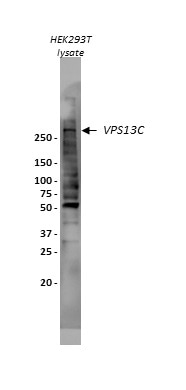
One user rated this antibody 4 out of 5 stars for Western Blot on HEK293T lysates at a 1:250 dilution. The reviewer used a 4–12% gradient gel with nitrocellulose transfer, overnight primary incubation at 4°C, and a goat anti-rabbit HRP secondary at 1:10,000 for 1 hour at room temperature. The protocol was straightforward and the antibody performed well under these conditions.
The reviews below have been submitted by verified Proteintech customers who received an incentive for providing their feedback.
Tom (Verified Customer) (01-25-2021) | HEK293T lysates (10ug) ran on 4-12% gradient gel prior to transfer to nitrocellulose membrane. Membrane incubated overnight at 4 degrees with antibody (1:250). Goat anti-rabbit HRP secondary antibody (1:10,000) incubated with membrane for 1 hour at RT.
 |





