

Tested Applications
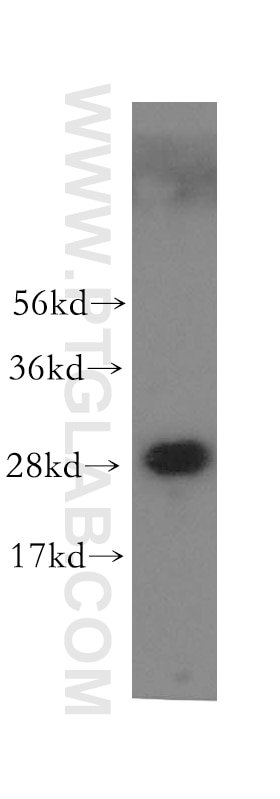
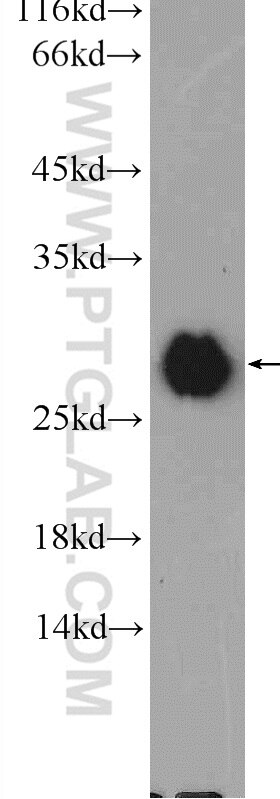
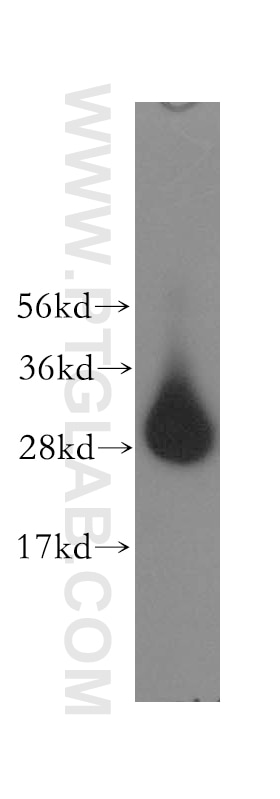
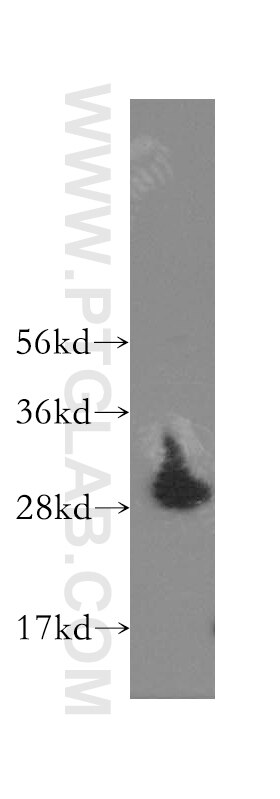
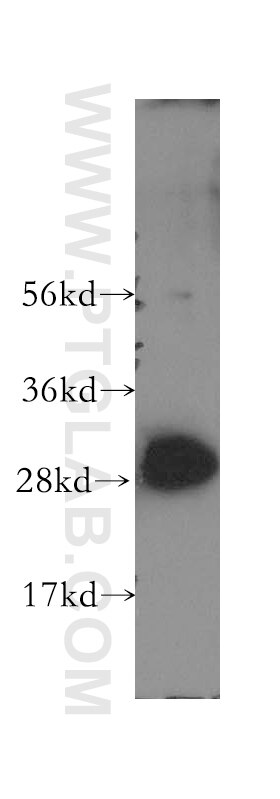
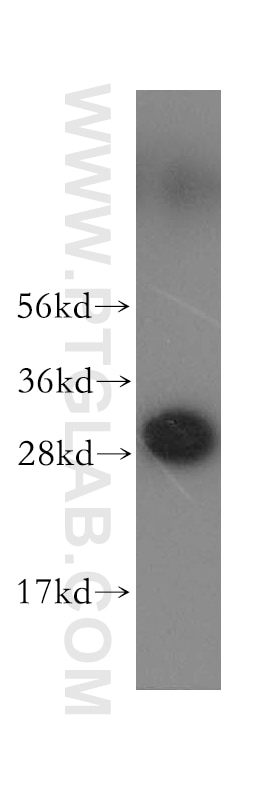
| Positive WB detected in | human brain tissue, human heart tissue, human kidney tissue, human lung tissue, MCF-7 cells, mouse brain tissue |
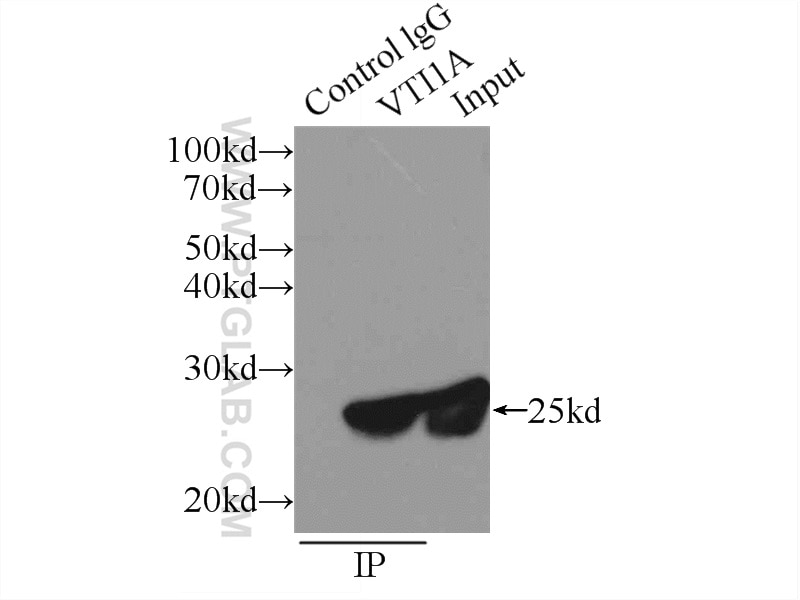
| Positive IP detected in | MCF-7 cells |
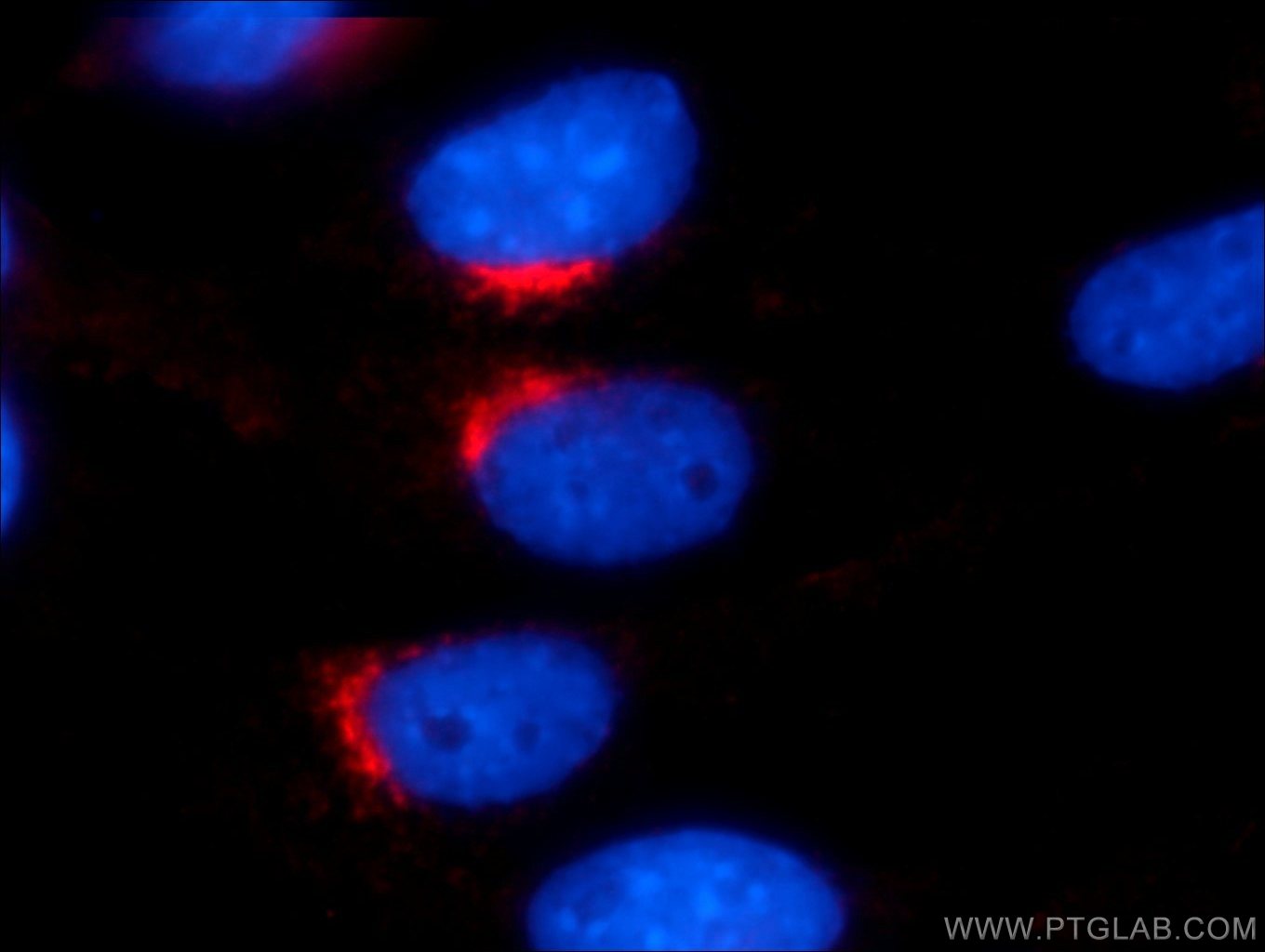
| Positive IF/ICC detected in | NIH/3T3 cells |
Recommended dilution
| Application | Dilution |
|---|---|
| Western Blot (WB) | WB : 1:1000-1:4000 |
| Immunoprecipitation (IP) | IP : 0.5-4.0 ug for 1.0-3.0 mg of total protein lysate |
| Immunofluorescence (IF)/ICC | IF/ICC : 1:10-1:100 |
| It is recommended that this reagent should be titrated in each testing system to obtain optimal results. | |
| Sample-dependent, Check data in validation data gallery. | |
Product Information
12354-1-AP targets VTI1A in WB, IF/ICC, IP, ELISA applications and shows reactivity with human, mouse, rat samples.
| Tested Reactivity | human, mouse, rat |
| Cited Reactivity | human, mouse |
| Host / Isotype | Rabbit / IgG |
| Class | Polyclonal |
| Type | Antibody |
| Immunogen |
CatNo: Ag3018 Product name: Recombinant human VTI1A protein Source: e coli.-derived, PGEX-4T Tag: GST Domain: 1-203 aa of BC017052 Sequence: MSSDFEGYEQDFAVLTAEITSKIARVPRLPPDEKKQMVANVEKQLEEAKELLEQMDLEVREIPPQSRGMYSNRMRSYKQEMGKLETDFKRSRIAYSDEVRNELLGDDGNSSENQRAHLLDNTERLERSSRRLEAGYQIAVETEQIGQEMLENLSHDREKIQRARERLRETDANLGKSSRILTGMLRRGCSVKKQCNLSLAPKA Predict reactive species |
| Full Name | vesicle transport through interaction with t-SNAREs homolog 1A (yeast) |
| Calculated Molecular Weight | 217 aa, 25 kDa |
| Observed Molecular Weight | 25-29 kDa |
| GenBank Accession Number | BC017052 |
| Gene Symbol | VTI1A |
| Gene ID (NCBI) | 143187 |
| RRID | AB_2216150 |
| Conjugate | Unconjugated |
| Form | Liquid |
| Purification Method | Antigen affinity purification |
| UNIPROT ID | Q96AJ9 |
| Storage Buffer | PBS with 0.02% sodium azide and 50% glycerol, pH 7.3. |
| Storage Conditions | Store at -20°C. Stable for one year after shipment. Aliquoting is unnecessary for -20oC storage. 20ul sizes contain 0.1% BSA. |
Background Information
Fusion between membranes is mediated by specific SNARE (soluble N-ethylmeleimide-sensitive factor attachment protein receptor) complexes. Two human SNARE proteins, VTI1A and VTI1B, are homologous to the yeast Q-SNARE Vtilp which is part of several SNARE complexes in different transport steps (PMID: 12067063). VTI1A is involved in transport between the endosome and the trans-Golgi network. The SNARE complex of STX10, STX16, VTI1A, and VAMP3 is required for MPR (mannose 6-phosphate receptors) transport from endosomes to the Golgi after delivering lysosomal enzymes to the endocytic pathway (PMID: 18195106). Transport from early/recycling endosomes to the TGN is mediated by the SNARE complex of STX6, STX16, VTI1A and VAMP4 (PMID: 11839770; 21807881).
Protocols
| Product Specific Protocols | |
|---|---|
| IF protocol for VTI1A antibody 12354-1-AP | Download protocol |
| IP protocol for VTI1A antibody 12354-1-AP | Download protocol |
| WB protocol for VTI1A antibody 12354-1-AP | Download protocol |
| Standard Protocols | |
|---|---|
| Click here to view our Standard Protocols |
Publications
What published studies show
The VTI1A Polyclonal antibody (Cat# 12354-1-AP) has 10 citations published in journals including Cell, Molecular Psychiatry, PNAS, Oncogene, Journal of Cell Biology, Cells, Oncotarget, Journal of Cell Science, Biochemical Journal, and Traffic. Research fields span vesicle trafficking, neuronal activity in autism, Alzheimer's disease, hepatocellular carcinoma, endosome-to-TGN transport, Fabry disease, ovarian cancer, Golgi SNARE complex assembly, and phosphoproteomics of endosomal proteins.
| Species | Application | Title |
|---|---|---|
Mol Psychiatry Cadherin 11 regulates presynaptic vesicle trafficking and neuronal activity in autism-related brain circuit. | ||
Proc Natl Acad Sci U S A Nanoelectrochemistry reveals how soluble Aβ42 oligomers alter vesicular storage and release of glutamate | ||
Oncogene Syntaxin-6 mediated autophagy confers lenvatinib resistance in hepatocellular carcinoma | ||
J Cell Biol The COG complex interacts directly with Syntaxin 6 and positively regulates endosome-to-TGN retrograde transport. | ||
Cells Generation of GLA-Knockout Human Embryonic Stem Cell Lines to Model Autophagic Dysfunction and Exosome Secretion in Fabry Disease-Associated Hypertrophic Cardiomyopathy. |









