

Tested Applications
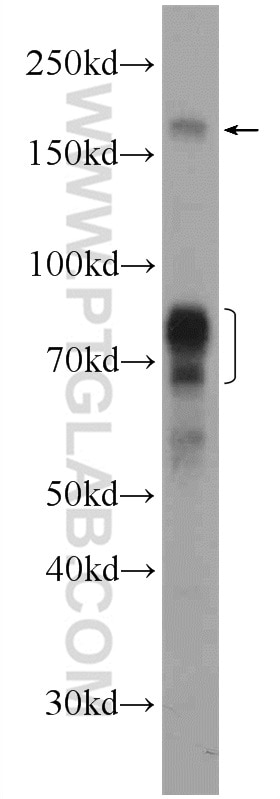
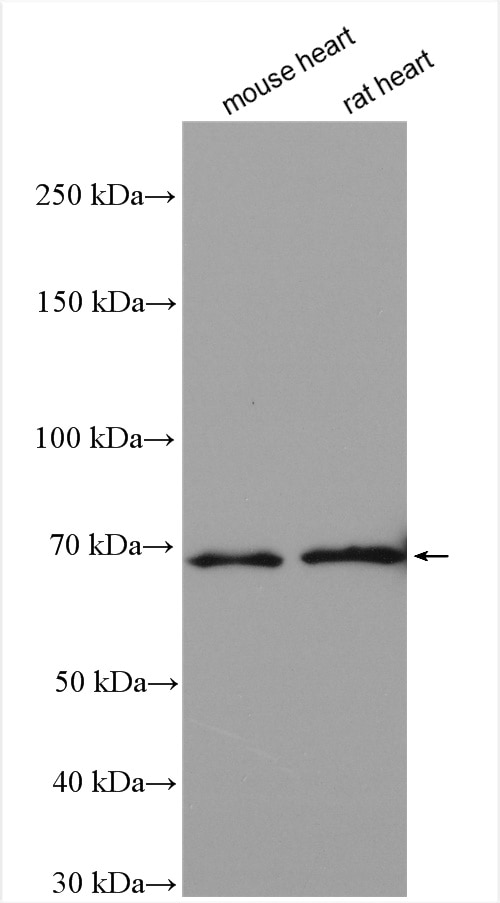
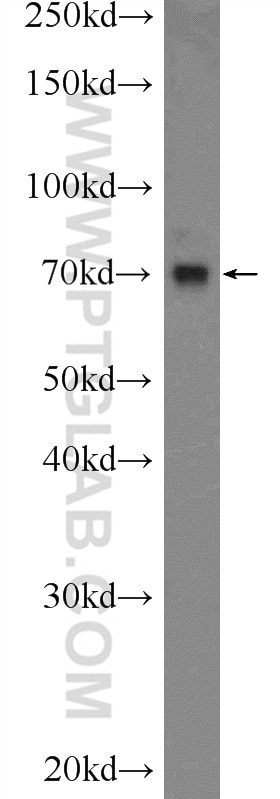
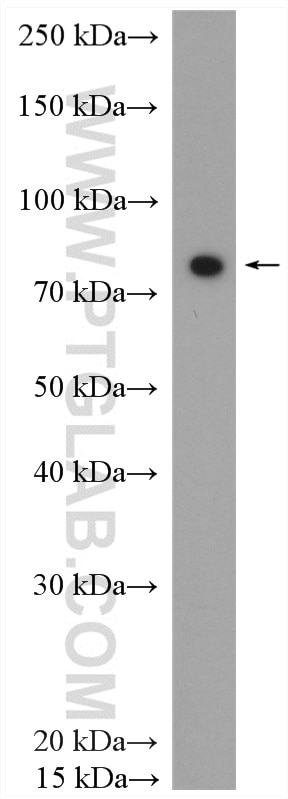
| Positive WB detected in | HeLa cells, HEK-293 cells, rat heart tissue, mouse heart tissue |
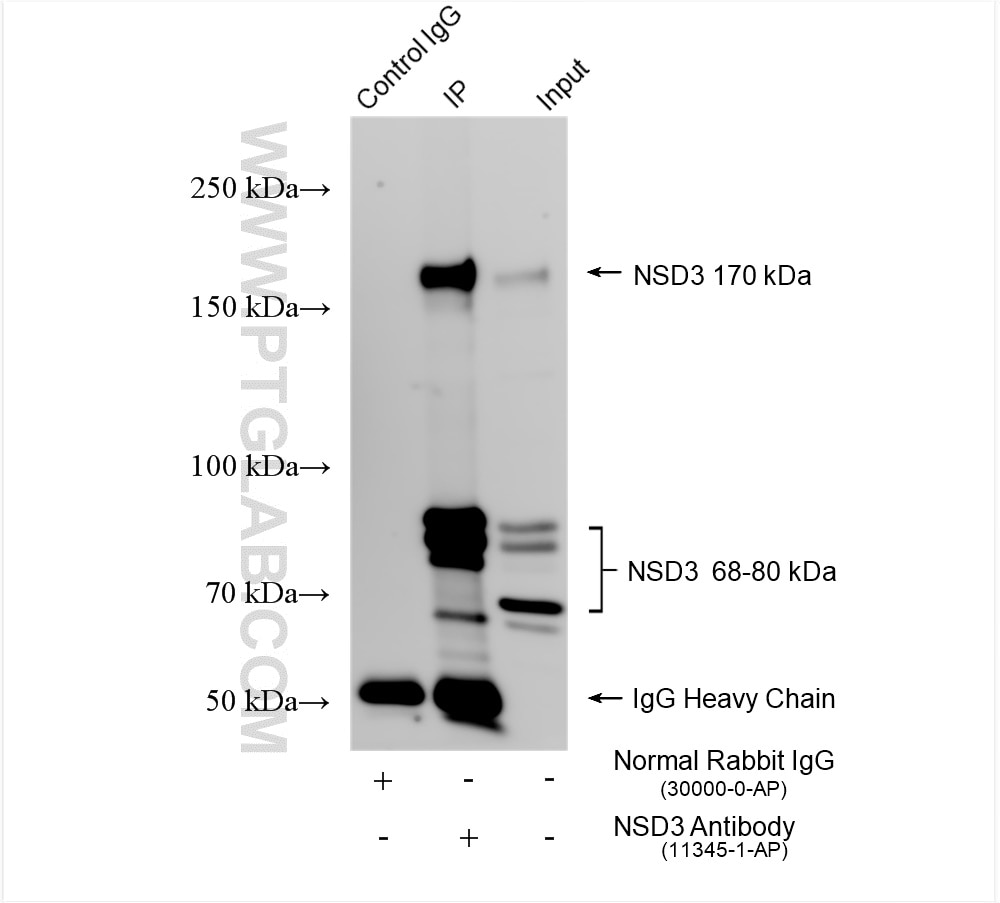
| Positive IP detected in | HeLa cells |
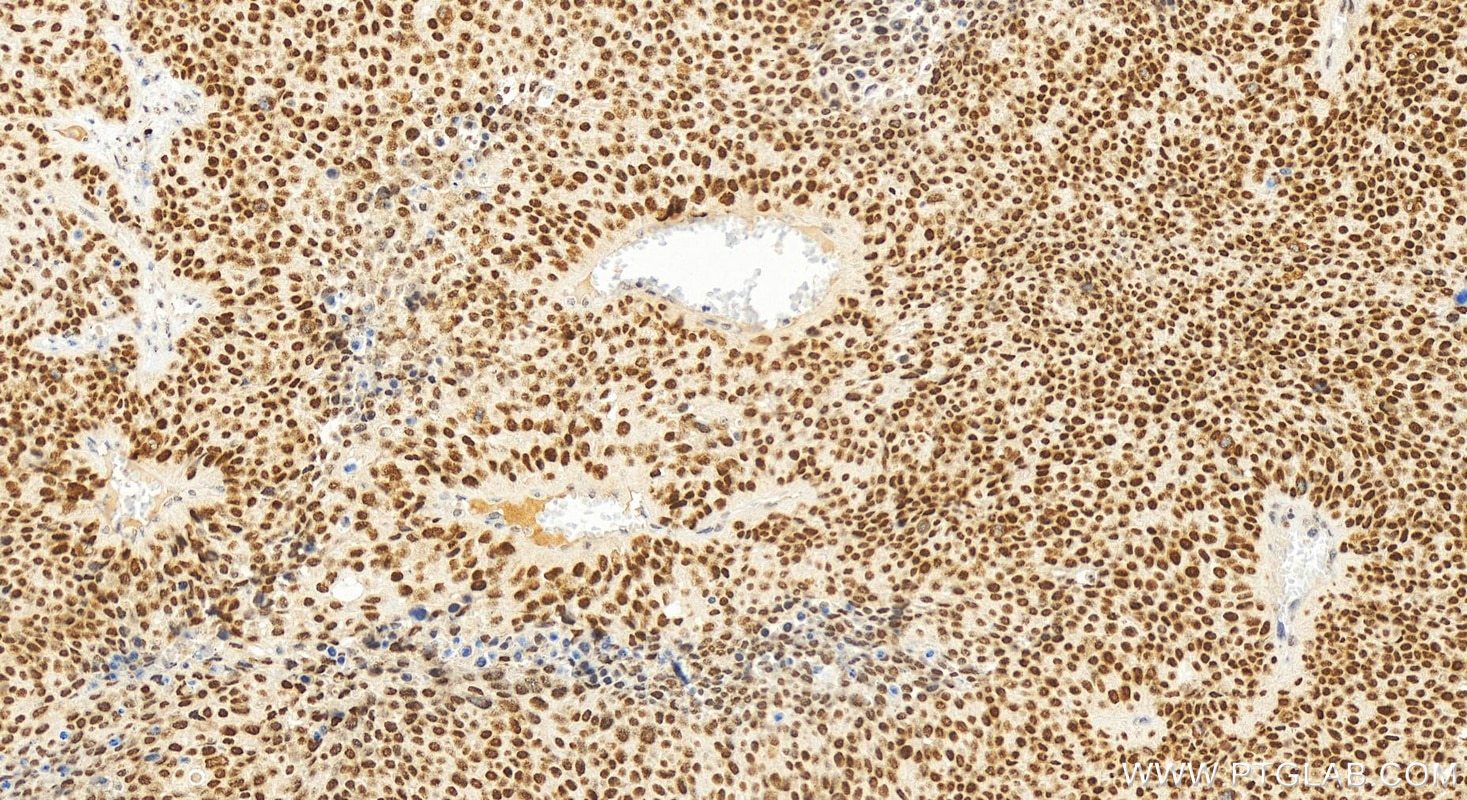
| Positive IHC detected in | human lung squamous cell carcinoma tissue Note: suggested antigen retrieval with TE buffer pH 9.0; (*) Alternatively, antigen retrieval may be performed with citrate buffer pH 6.0 |
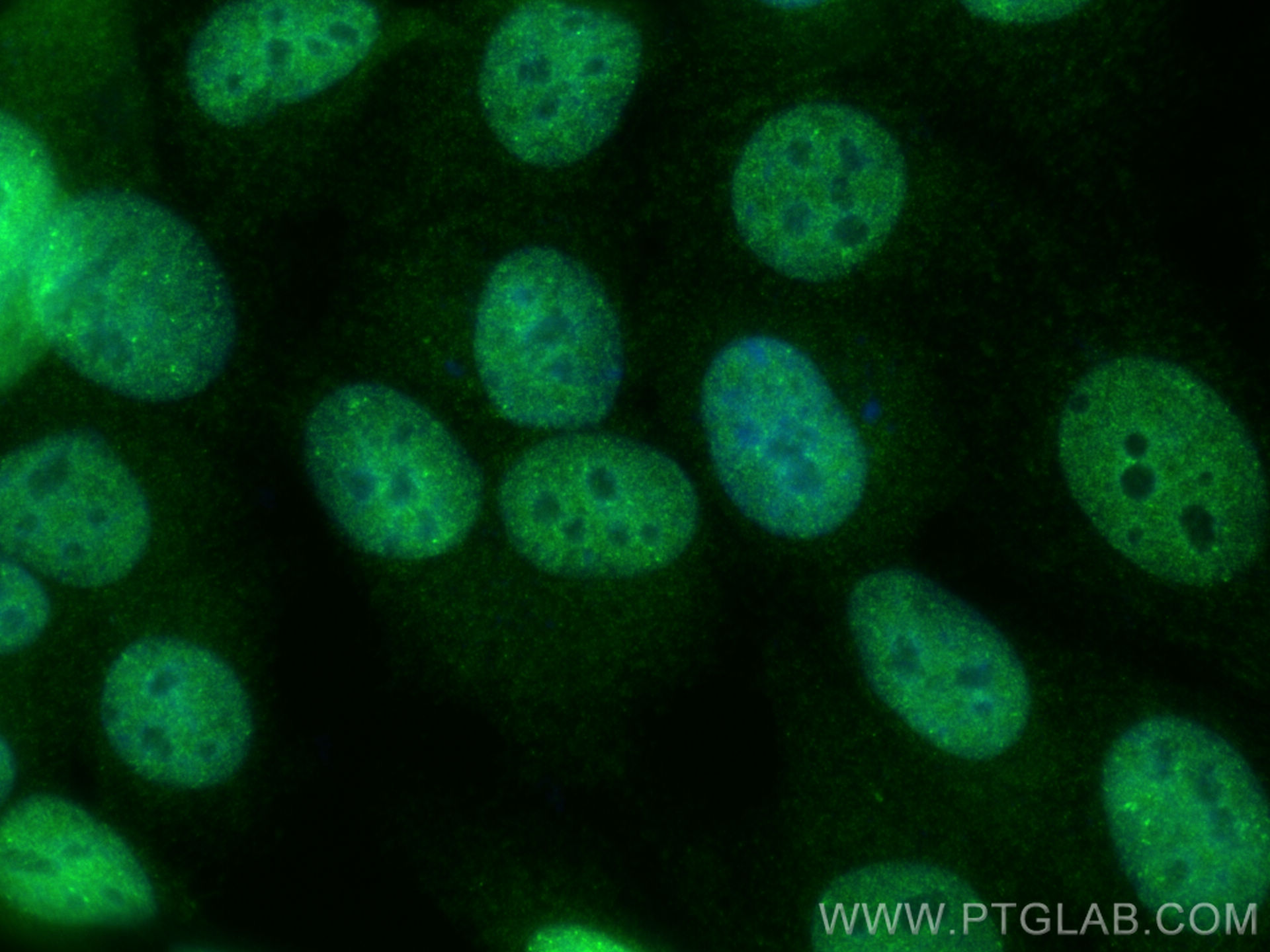
| Positive IF/ICC detected in | MCF-7 cells |
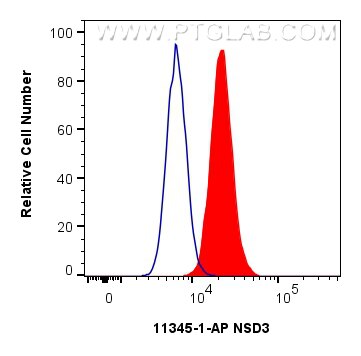
| Positive FC (Intra) detected in | NIH/3T3 cells |
Recommended dilution
| Application | Dilution |
|---|---|
| Western Blot (WB) | WB : 1:500-1:1000 |
| Immunoprecipitation (IP) | IP : 0.5-4.0 ug for 1.0-3.0 mg of total protein lysate |
| Immunohistochemistry (IHC) | IHC : 1:400-1:1600 |
| Immunofluorescence (IF)/ICC | IF/ICC : 1:200-1:800 |
| Flow Cytometry (FC) (INTRA) | FC (INTRA) : 0.25 ug per 10^6 cells in a 100 ul suspension |
| It is recommended that this reagent should be titrated in each testing system to obtain optimal results. | |
| Sample-dependent, Check data in validation data gallery. | |
Product Information
11345-1-AP targets NSD3 in WB, IHC, IF/ICC, FC (Intra), IP, chIP, ELISA applications and shows reactivity with human, mouse, rat samples.
| Tested Reactivity | human, mouse, rat |
| Cited Reactivity | human |
| Host / Isotype | Rabbit / IgG |
| Class | Polyclonal |
| Type | Antibody |
| Immunogen |
CatNo: Ag1894 Product name: Recombinant human WHSC1L1 protein Source: e coli.-derived, PGEX-4T Tag: GST Domain: 1-300 aa of BC012059 Sequence: MDFSFSFMQGIMGNTIQQPPQLIDSANIRQEDAFDNNSDIAEDGGQTPYEATLQQGFQYPATTEDLPPLTNGYPSSISVYETQTKYQSYNQYPNGSANGFGAVRNFSPTDYYHSEIPNTRPHEILEKPSPPQPPPPPSVPQTVIPKKTGSPEIKLKITKTIQNGRELFESSLCGDLLNEVQASEHTKSKHESRKEKRKKSNKHDSSRSEERKSHKIPKLEPEEQNRPNERVDTVSEKPREEPVLKEEAPVQPILSSVPTTEVSTGVKFQVGDLVWSKVGTYPWWPCMVSSDPQLEVHTKI Predict reactive species |
| Full Name | Wolf-Hirschhorn syndrome candidate 1-like 1 |
| Calculated Molecular Weight | 1437 aa, 162 kDa |
| Observed Molecular Weight | 160-170 kDa, 68-72 kDa |
| GenBank Accession Number | BC012059 |
| Gene Symbol | WHSC1L1 |
| Gene ID (NCBI) | 54904 |
| RRID | AB_2216189 |
| Conjugate | Unconjugated |
| Form | Liquid |
| Purification Method | Antigen affinity purification |
| UNIPROT ID | Q9BZ95 |
| Storage Buffer | PBS with 0.02% sodium azide and 50% glycerol, pH 7.3. |
| Storage Conditions | Store at -20°C. Stable for one year after shipment. Aliquoting is unnecessary for -20oC storage. 20ul sizes contain 0.1% BSA. |
Background Information
WHSC1L1, also named as NSD3 and DC28, belongs to the histone-lysine methyltransferase family and SET2 subfamily. It is histone methyltransferase. WHSC1L1 is a potently transforming oncogenes based on the number of altered phenotypes expressed by the cells. It contains a PWWP-domain that is a methyl-lysine recognition motif involved in histone code modification and epigenetic regulation of gene expression. Knockdown of WHSC1L1 in 8p11-12-amplified breast cancer cells resulted in profound loss of growth and survival of these cells. (PMID: 20940404). This antibody recognize the long isoform (160-170 kDa) and short isoform (68-72 kDa).
Protocols
| Product Specific Protocols | |
|---|---|
| FC protocol for NSD3 antibody 11345-1-AP | Download protocol |
| IF protocol for NSD3 antibody 11345-1-AP | Download protocol |
| IHC protocol for NSD3 antibody 11345-1-AP | Download protocol |
| IP protocol for NSD3 antibody 11345-1-AP | Download protocol |
| WB protocol for NSD3 antibody 11345-1-AP | Download protocol |
| Standard Protocols | |
|---|---|
| Click here to view our Standard Protocols |
Publications
What published studies show
The NSD3 Polyclonal antibody (Cat# 11345-1-AP) has 21 citations across 19 journals, including Cancer Research, Molecular Cell, Science Advances, Cell Death & Disease, Cell Reports, and Scientific Reports. Research fields span oncology (lung, breast, prostate, pancreatic, and head-and-neck cancers), epigenetics (histone methylation, H3K36), signaling pathways (NOTCH, STAT3, EGFR), drug discovery (NSD3 inhibitors, PARP resistance), and cell cycle regulation. Applications cited include WB, IHC, IF, IP, and ChIP.
| Species | Application | Title |
|---|---|---|
J Thorac Oncol Translational Analysis of NSD3 Gene Amplification in Lung Squamous Cell Carcinoma: Clinical and Prognostic Insights From Histopathologic Analysis of Patient Samples. | ||
Cancer Res Transforming properties of 8p11-12 amplified genes in human breast cancer.
| ||
Cancer Res NSD3-Induced Methylation of H3K36 Activates NOTCH Signaling to Drive Breast Tumor Initiation and Metastatic Progression. | ||
Mol Cell Isoform-specific function of NSD3 in DNA replication stress confers resistance to PARP inhibitors in prostate cancer.
| ||
Adv Sci (Weinh) Histones Methyltransferase NSD3 Inhibits Lung Adenocarcinoma Glycolysis Through Interacting with PPP1CB to Decrease STAT3 Signaling Pathway | ||









