
Product Information
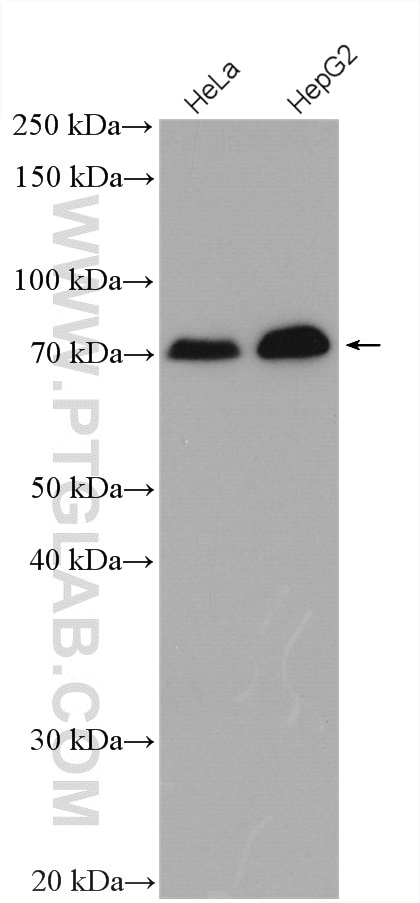
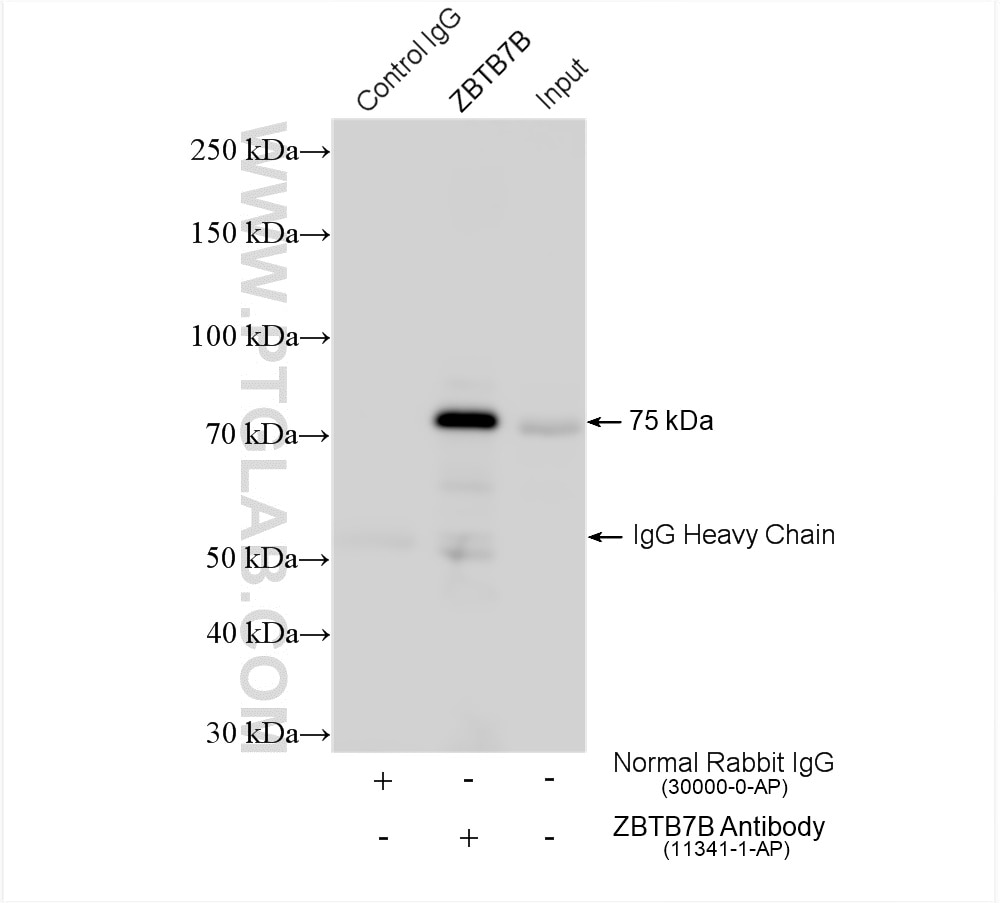
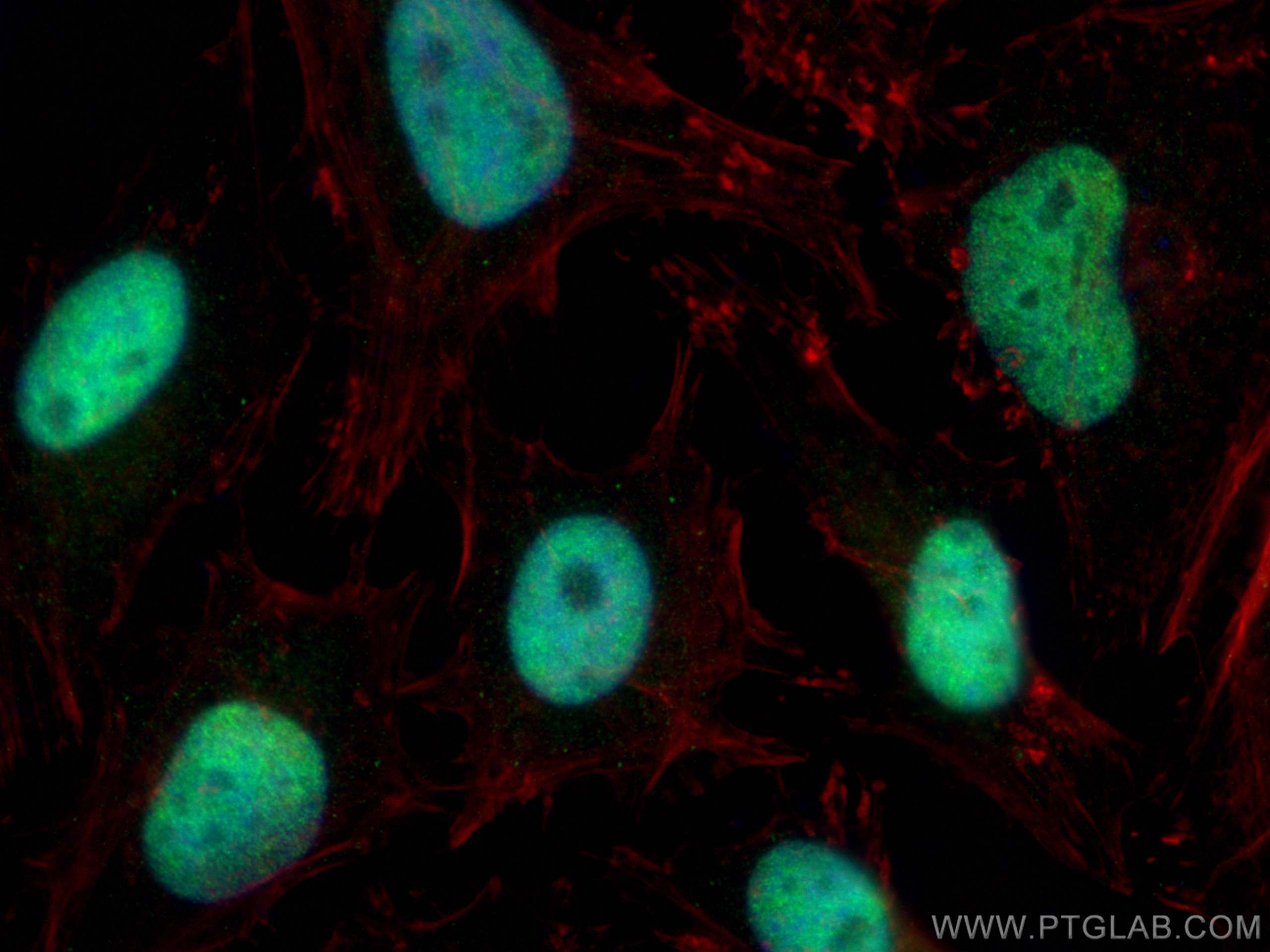
11341-1-PBS targets ZBTB7B in WB, IF/ICC, IP, Indirect ELISA applications and shows reactivity with human, mouse, rat samples.
| Tested Reactivity | human, mouse, rat |
| Host / Isotype | Rabbit / IgG |
| Class | Polyclonal |
| Type | Antibody |
| Immunogen |
CatNo: Ag1888 Product name: Recombinant human ZBTB7B protein Source: e coli.-derived, PGEX-4T Tag: GST Domain: 1-300 aa of BC012070 Sequence: MGSPEDDLIGIPFPDHSSELLSCLNEQRQLGHLCDLTIRTQGLEYRTHRAVLAACSHYFKKLFTEGGGGAVMGAGGSGTATGGAGAGVCELDFVGPEALGALLEFAYTATLTTSSANMPAVLQAARLLEIPCVIAACMEILQGSGLEAPSPDEDDCERARQYLEAFATATASGVPNGEDSPPQVPLPPPPPPPPRPVARRSRKPRKAFLQTKGARANHLVPEVPTVPAHPLTYEEEEVAGRVGSSGGSGPGDSYSPPTGTASPPEGPQSYEPYEGEEEEEELVYPPAYGLAQGGGPPLSP Predict reactive species |
| Full Name | zinc finger and BTB domain containing 7B |
| Calculated Molecular Weight | 539 aa, 58 kDa |
| Observed Molecular Weight | 60-65 kDa |
| GenBank Accession Number | BC012070 |
| Gene Symbol | ZBTB7B |
| Gene ID (NCBI) | 51043 |
| RRID | AB_2217245 |
| Conjugate | Unconjugated |
| Form | Liquid |
| Purification Method | Antigen affinity purification |
| UNIPROT ID | O15156 |
| Storage Buffer | PBS only, pH 7.3. |
| Storage Conditions | Store at -80°C. |
Background Information
ZBTB7B belongs to a large family of transcription factors, generally acting as repressors, characterized by a carboxy-terminal DNA binding domain made of multiple zinc fingers (four in Thpok) and an amino-terminal BTB-POZ domain that mediates homo- (and possibly hetero-) dimerization [PMID: 17084908]. Zbtb7b is up-regulated by MHC-II-restricted thymocytes during their CD4 differentiation and is a major determinant of CD4 lineage choice. Two properties of ZBTB7B deserve attention. First, although Thpok is expressed in a wide variety of cells, its expression in the thymus is highly lineage-specific : CD4 SP thymocytes (and all CD4 T cells) express Thpok, whereas DP and CD8 SP thymocytes do notSecond, both loss- and gain-of-function experiments indicate that Thpok affects lineage choice but not positive selection [PMID: 15729333, 10550051].




