
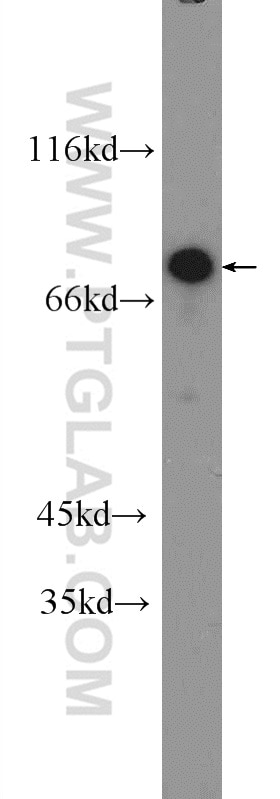
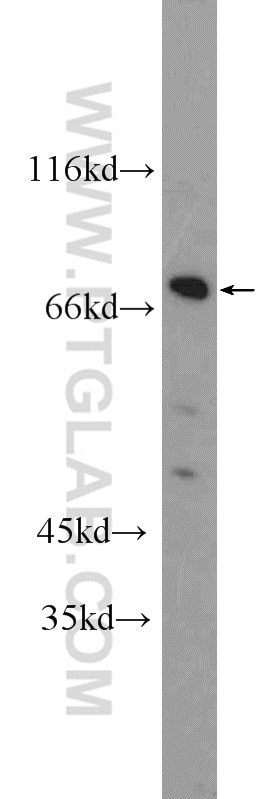
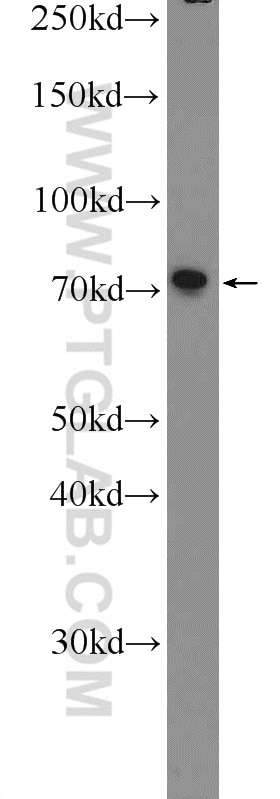
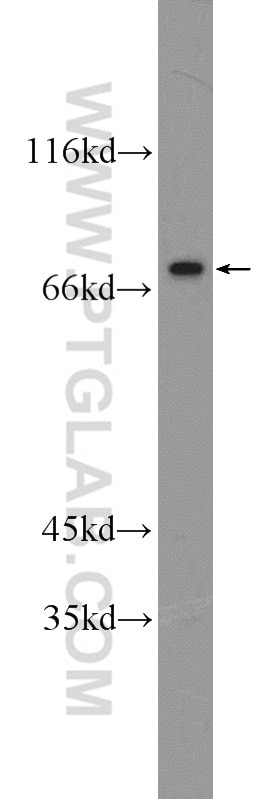

Tested Applications
| Positive WB detected in | Jurkat cells, HeLa cells, MCF-7 cells, PC-3 cells |
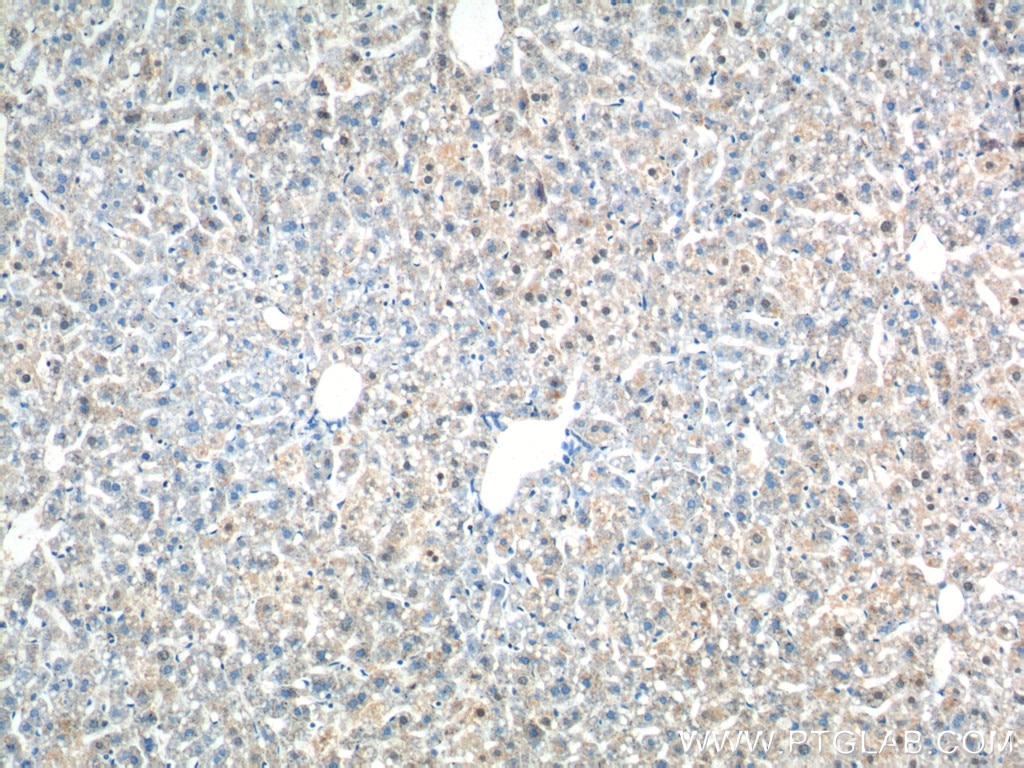
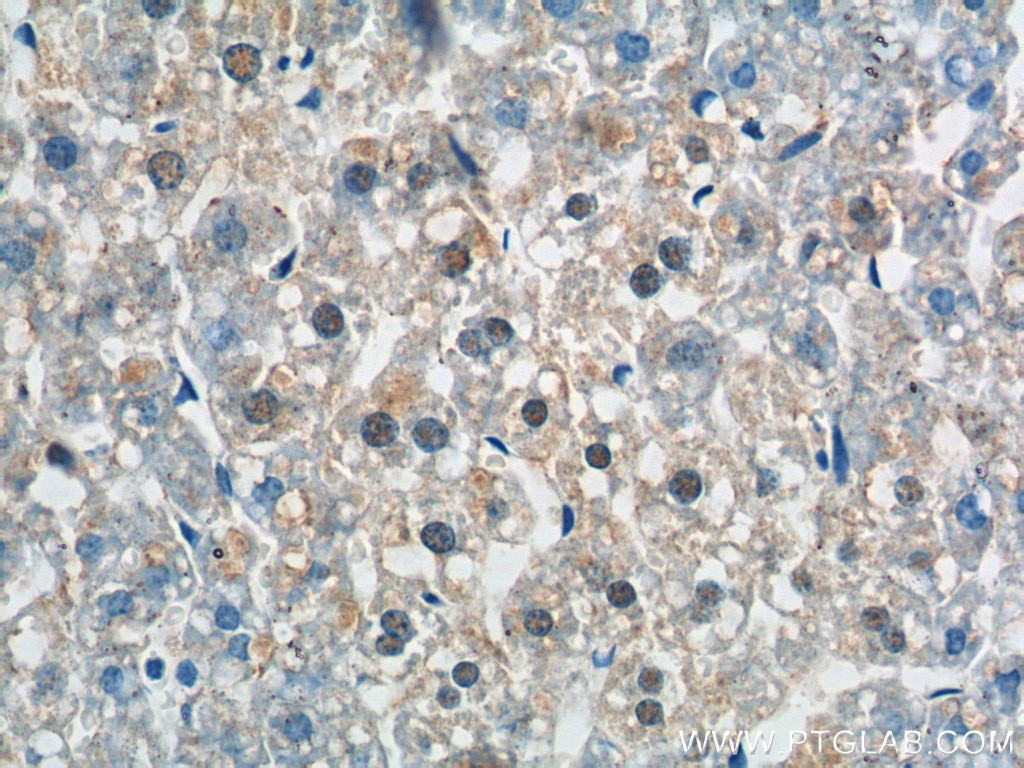
| Positive IHC detected in | mouse liver tissue Note: suggested antigen retrieval with TE buffer pH 9.0; (*) Alternatively, antigen retrieval may be performed with citrate buffer pH 6.0 |
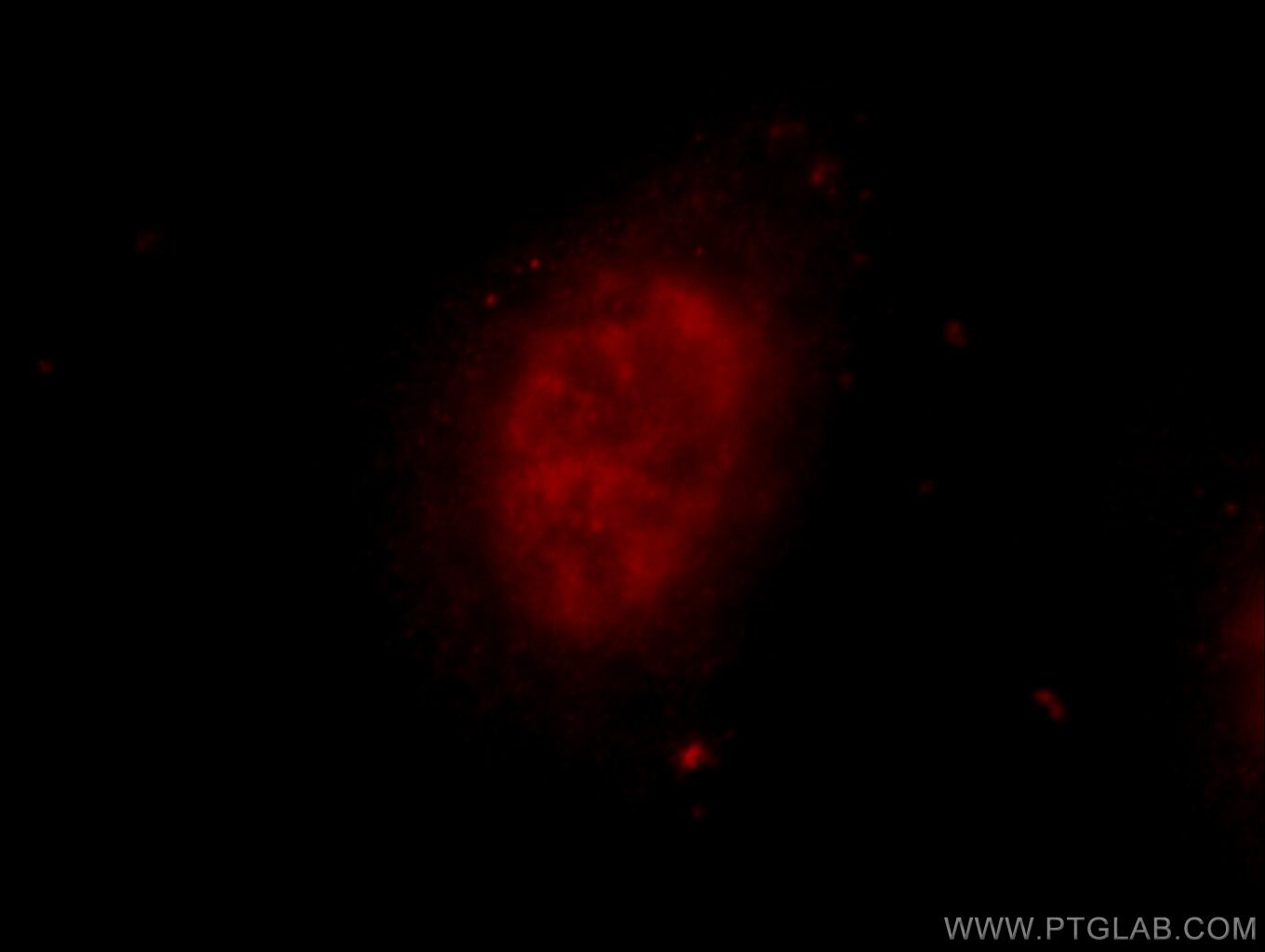
| Positive IF/ICC detected in | HeLa cells |
Recommended dilution
| Application | Dilution |
|---|---|
| Western Blot (WB) | WB : 1:500-1:1000 |
| Immunohistochemistry (IHC) | IHC : 1:50-1:500 |
| Immunofluorescence (IF)/ICC | IF/ICC : 1:10-1:100 |
| It is recommended that this reagent should be titrated in each testing system to obtain optimal results. | |
| Sample-dependent, Check data in validation data gallery. | |
Product Information
25147-1-AP targets ZNF326 in WB, IHC, IF/ICC, ELISA applications and shows reactivity with human, mouse samples.
| Tested Reactivity | human, mouse |
| Cited Reactivity | human, mouse |
| Host / Isotype | Rabbit / IgG |
| Class | Polyclonal |
| Type | Antibody |
| Immunogen |
CatNo: Ag18433 Product name: Recombinant human ZNF326 protein Source: e coli.-derived, PGEX-4T Tag: GST Domain: 207-486 aa of BC090866 Sequence: MGDFGSIHRPGIVVDYQNKSTNVTVAAARGIKRKMMQPFNKPSGTFIKKPKLAKPMEKISLSKSPTKTDPKNEEEEKRRIEARREKQRRRREKNSEKYGDGYRMAFTCSFCKFRTFEEKDIELHLESSSHQETLDHIQKQTKFDKVVMEFLHECMVNKFKKTSIRKQQTNNQTEVVKIIEKDVMEGVTVDDHMMKVETVHCSACSVYIPALHSSVQQHLKSPDHIKGKQAYKEQIKRESVLTATSILNNPIVKARYERFVKGENSFEIQDHSQDQQIEGD Predict reactive species |
| Full Name | zinc finger protein 326 |
| Calculated Molecular Weight | 582 aa, 66 kDa |
| Observed Molecular Weight | 66-70 kDa |
| GenBank Accession Number | BC090866 |
| Gene Symbol | ZNF326 |
| Gene ID (NCBI) | 284695 |
| RRID | AB_2879923 |
| Conjugate | Unconjugated |
| Form | Liquid |
| Purification Method | Antigen affinity purification |
| UNIPROT ID | Q5BKZ1 |
| Storage Buffer | PBS with 0.02% sodium azide and 50% glycerol, pH 7.3. |
| Storage Conditions | Store at -20°C. Stable for one year after shipment. Aliquoting is unnecessary for -20oC storage. 20ul sizes contain 0.1% BSA. |
Protocols
| Product Specific Protocols | |
|---|---|
| IF protocol for ZNF326 antibody 25147-1-AP | Download protocol |
| IHC protocol for ZNF326 antibody 25147-1-AP | Download protocol |
| WB protocol for ZNF326 antibody 25147-1-AP | Download protocol |
| Standard Protocols | |
|---|---|
| Click here to view our Standard Protocols |
Publications
What published studies show
The ZNF326 Polyclonal antibody (Cat# 25147-1-AP) has 3 citations spanning three journals: J Transl Med, Toxicol Sci, and Sci Rep. The associated research fields include colorectal cancer progression and immune evasion (via ZNF326 ADP-ribosylation and TGF-β/SMAD signaling), paraquat-induced neurotoxicity (regulating Zfp326 and Cpne5), and TDP-43 aggregation in neurodegeneration. All citations used WB, with one also employing IF, across human and mouse species.
| Species | Application | Title |
|---|---|---|
J Transl Med Cathepsin E drives colorectal cancer progression and immune evasion via ZNF326 ADP-ribosylation and TGF-β/SMAD activation. | ||
Toxicol Sci LncRNA NR_030777 Alleviates Paraquat-induced Neurotoxicity by Regulating Zfp326 and Cpne5. | ||
Sci Rep TDP-43 aggregation mirrors TDP-43 knockdown, affecting the expression levels of a common set of proteins. |
Reviews
What customers say
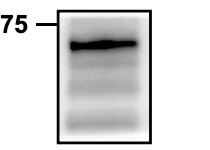
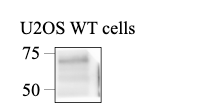
Both reviewers rated the antibody 5 stars for Western Blot. One user tested it on RKO cells and confirmed a clear ZNF326 signal below 75 kDa, noting a few weak non-specific bands. The other tested it on U2OS cells and confirmed detection of a band at the expected molecular weight. Both used a 1:2000 dilution with the same lot. Overall, the antibody performs reliably at the correct size with minimal background.
The reviews below have been submitted by verified Proteintech customers who received an incentive for providing their feedback.
Aleksandr (Verified Customer) (12-16-2024) | Great! Znf326 is visible (below 75 kDa), as well as other weak non-specific bands
 |
Tsimafei (Verified Customer) (08-07-2024) | Antibody detect the band of the correct size
 |








