
Product Information
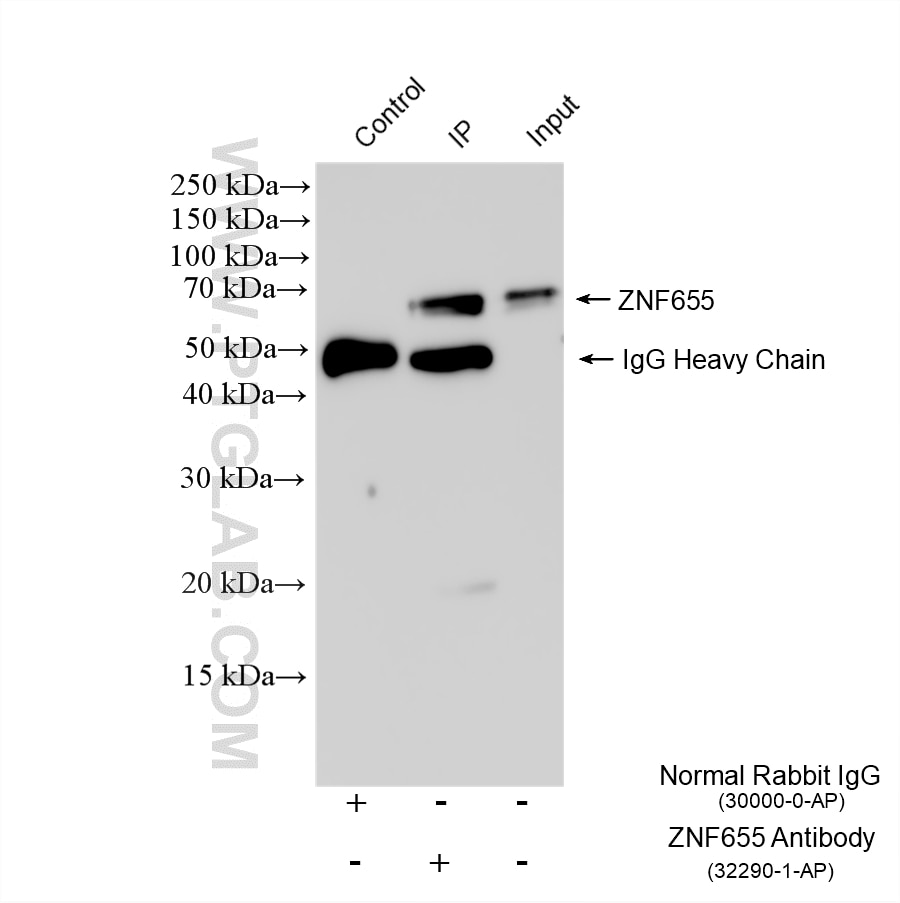
32290-1-PBS targets ZNF655 in IP, Indirect ELISA applications and shows reactivity with human samples.
| Tested Reactivity | human |
| Host / Isotype | Rabbit / IgG |
| Class | Polyclonal |
| Type | Antibody |
| Immunogen |
CatNo: Ag37661 Product name: Recombinant human ZNF655 protein Source: e coli.-derived, PKG Tag: GST Domain: 1-181 aa of BC000823 Sequence: MEEIPAQEAAGSPRVQFQSLETQSECLSPEPQFVQDTDMEQGLTGAPPVPQVPALPREGSPGDQAAALLTARYQEFVTFEDVAVHLTREEWGYLDPVQRDLYREVMLENYGNVVSLGILLRLPTTRIHSVNSCPALSHTQASAFSGETLAVLTAGISKRWPKYRLPIDIARPCSETPFPRL Predict reactive species |
| Full Name | zinc finger protein 655 |
| Calculated Molecular Weight | 57 kDa |
| Observed Molecular Weight | 65 kDa |
| GenBank Accession Number | BC000823 |
| Gene Symbol | ZNF655 |
| Gene ID (NCBI) | 79027 |
| RRID | AB_3742570 |
| Conjugate | Unconjugated |
| Form | Liquid |
| Purification Method | Antigen affinity Purification |
| UNIPROT ID | Q8N720 |
| Storage Buffer | PBS only, pH 7.3. |
| Storage Conditions | Store at -80°C. |
Background Information
ZNF655 protein (zinc finger protein 655) is a transcription factor belonging to the C2H2-type zinc finger protein family. This protein functions within the nucleus, where it binds to specific DNA sequences to regulate the transcriptional expression of downstream target genes. Research indicates that ZNF655 is widely involved in core biological processes such as cell proliferation, differentiation, apoptosis, and the cell cycle. In oncology studies, ZNF655 has been identified as a significant tumor biomarker, exhibiting abnormal expression in various cancers including lung cancer, gastric cancer, and liver cancer. It influences tumor progression and metastasis by regulating apoptosis-related pathways and mechanisms such as epithelial-mesenchymal transition (EMT). Its expression level is closely associated with patient prognosis.


