
Product Information
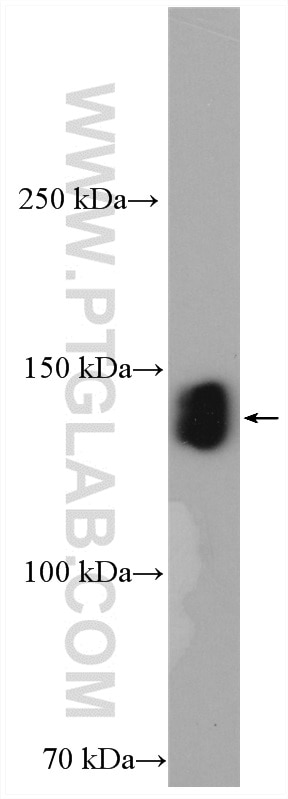
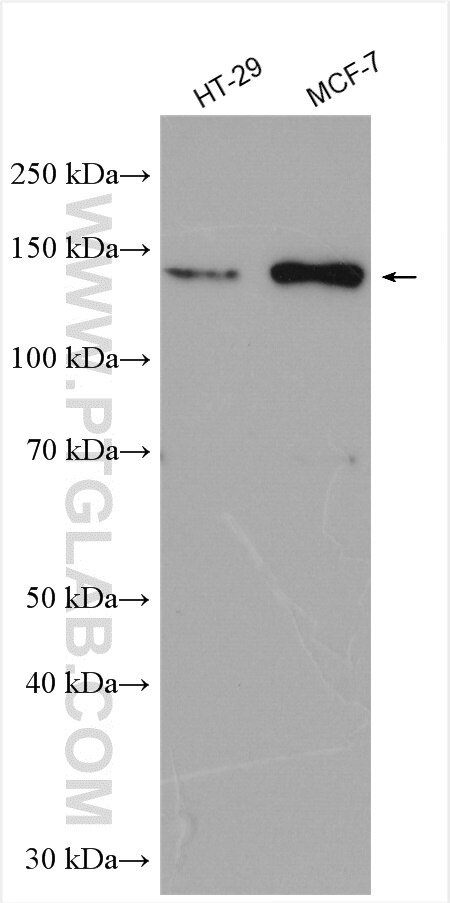
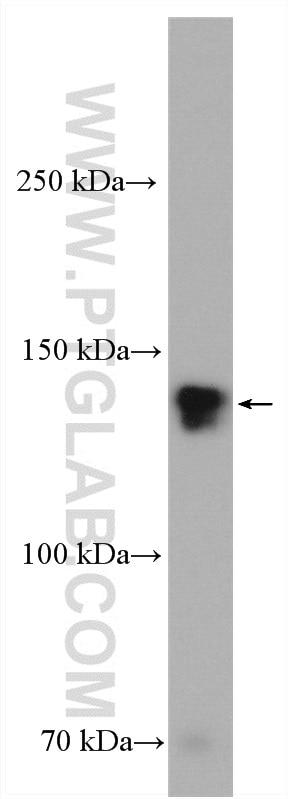
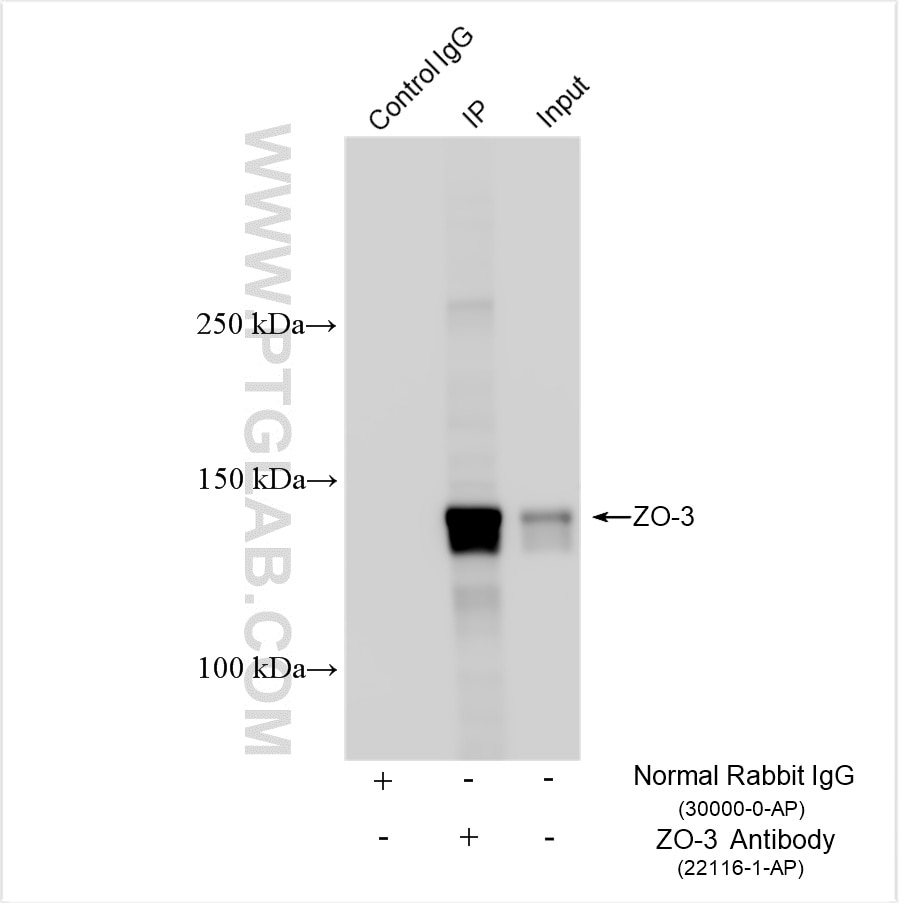
22116-1-PBS targets ZO-3 in WB, IP, Indirect ELISA applications and shows reactivity with human samples.
| Tested Reactivity | human |
| Host / Isotype | Rabbit / IgG |
| Class | Polyclonal |
| Type | Antibody |
| Immunogen |
CatNo: Ag17495 Product name: Recombinant human TJP3 protein Source: e coli.-derived, PET28a Tag: 6*His Domain: 84-330 aa of BC108906 Sequence: SMENATSAFAIQILKTCTKMANITVKRPRRIHLPATKASPSSPGRQDSDEDDGPQRVEEVDQGRGYDGDSSSGSGRSWDERSRRPRPGRRGRAGSHGRRSPGGGSEANGLALVSGFKRLPRQDVQMKPVKSVLVKRRDSEEFGVKLGSQIFIKHITDSGLAARHRGLQEGDLILQINGVSSQNLSLNDTRRLIEKSEGKLSLLVLRDRGQFLVNIPPAVSDSDSSPLEDISDLASELSQAPPSHIPP Predict reactive species |
| Full Name | tight junction protein 3 (zona occludens 3) |
| Calculated Molecular Weight | 952 aa, 105 kDa |
| Observed Molecular Weight | 140 kDa |
| GenBank Accession Number | BC108906 |
| Gene Symbol | ZO-3 |
| Gene ID (NCBI) | 27134 |
| RRID | AB_2878998 |
| Conjugate | Unconjugated |
| Form | Liquid |
| Purification Method | Antigen affinity purification |
| UNIPROT ID | O95049 |
| Storage Buffer | PBS only, pH 7.3. |
| Storage Conditions | Store at -80°C. |
Background Information
Tight junction (or zonula occludens) forms the continuous intercellular barrier between epithelial and endothelial cells, which is required to separate tissue spaces and regulate selective movement of solutes across the epithelium and endothelium (PMID: 20066090). ZO-3 (also known as TJP3)is a key scaffold protein of tight junctions. ZO-3 belongs to a family of multidomain proteins known as the membrane-associated guanylate kinase homologs (MAGUKs).ZO-3 regulates the stability of Cyclin D1, thereby influencing the proliferation of epithelial cells (PMID: 21411630).





