
Tested Applications
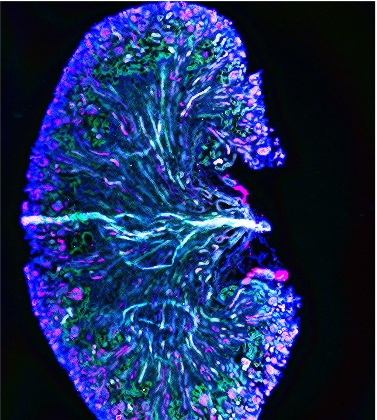
| Positive IF-Fro detected in | mouse kidney tissue |
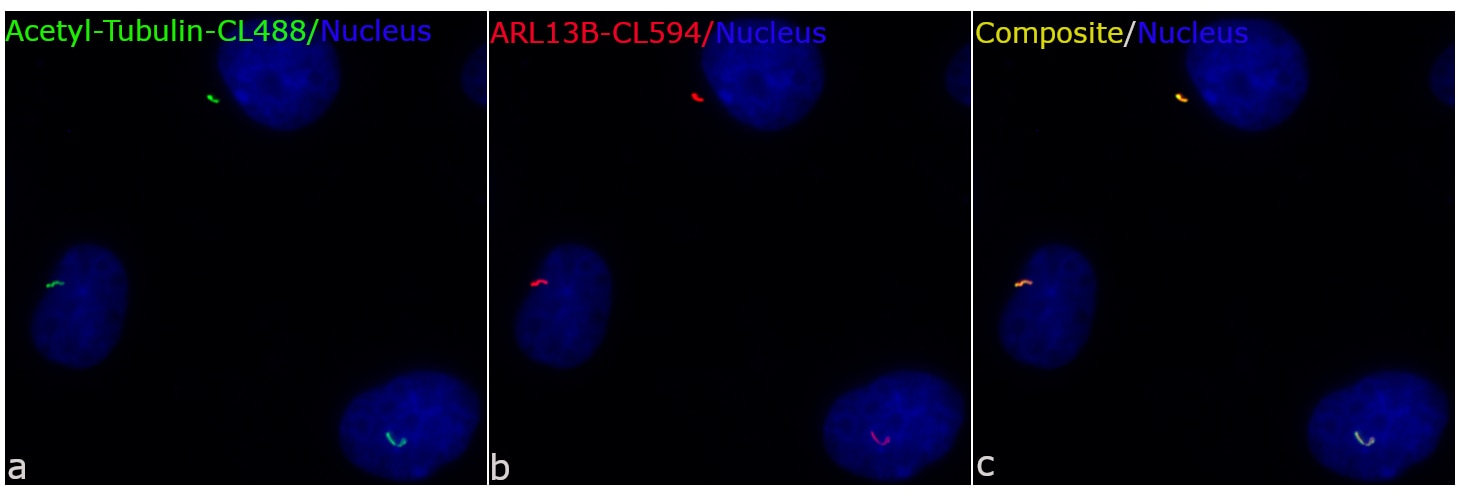
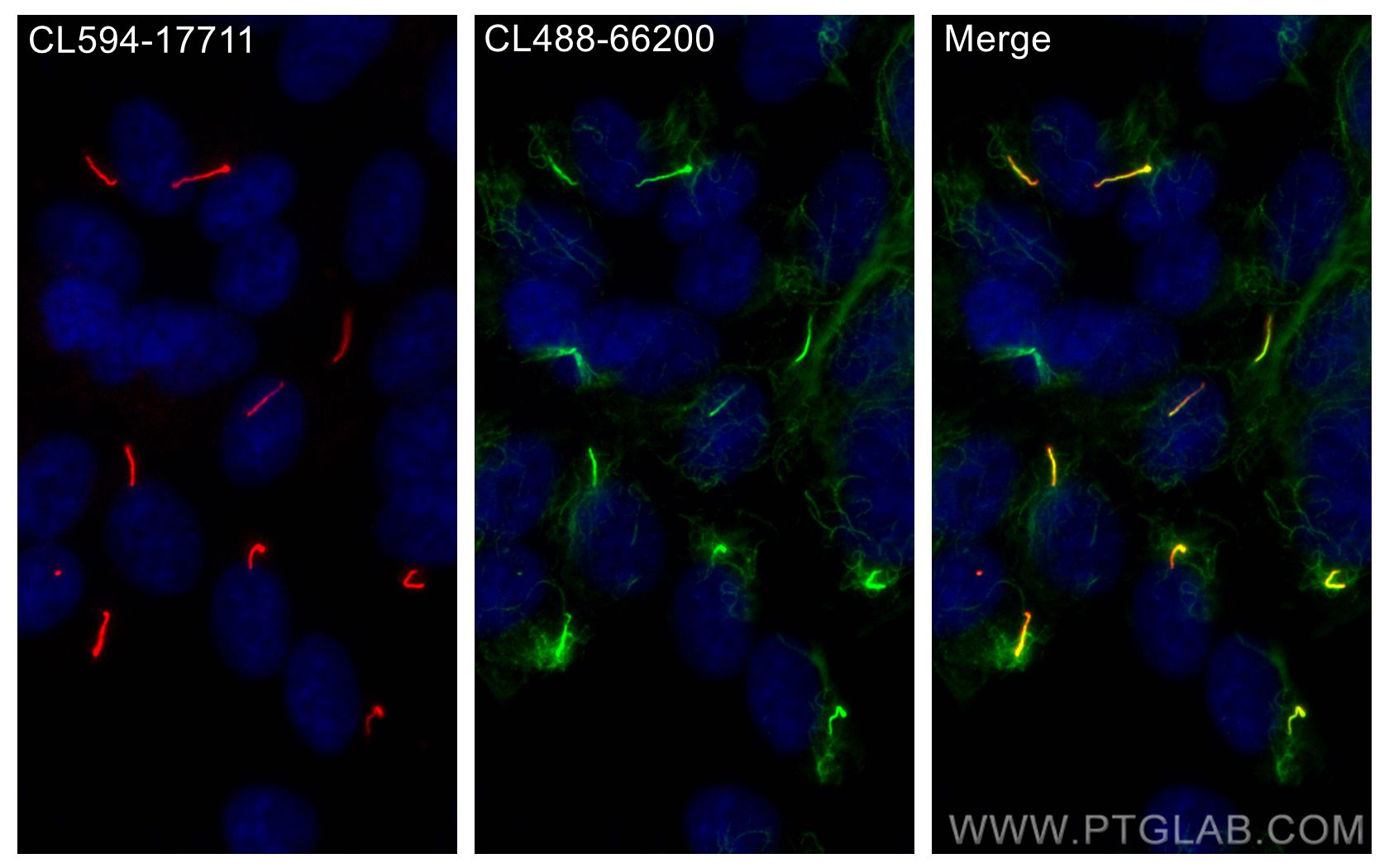
| Positive IF/ICC detected in | MDCK cells, hTERT-RPE1 cells |
Recommended dilution
| Application | Dilution |
|---|---|
| Immunofluorescence (IF)-FRO | IF-FRO : 1:50-1:500 |
| Immunofluorescence (IF)/ICC | IF/ICC : 1:50-1:500 |
| It is recommended that this reagent should be titrated in each testing system to obtain optimal results. | |
| Sample-dependent, Check data in validation data gallery. | |
Published Applications
| IF | See 4 publications below |
Product Information
CL488-66200 targets Acetyl-Tubulin (Lys40) in IF/ICC, IF-Fro applications and shows reactivity with human, mouse, rat, pig, canine samples.
| Tested Reactivity | human, mouse, rat, pig, canine |
| Cited Reactivity | human, rat |
| Host / Isotype | Mouse / IgG1 |
| Class | Monoclonal |
| Type | Antibody |
| Immunogen |
Peptide Predict reactive species |
| Full Name | tubulin, alpha 1a |
| Calculated Molecular Weight | 52 kDa |
| GenBank Accession Number | NM_006009 |
| Gene Symbol | Alpha Tubulin |
| Gene ID (NCBI) | 7846 |
| RRID | AB_2883282 |
| Conjugate | CoraLite® Plus 488 Fluorescent Dye |
| Excitation/Emission Maxima Wavelengths | 493 nm / 522 nm |
| Excitation Laser | Blue laser (488 nm) |
| Form | Liquid |
| Purification Method | Protein G purification |
| UNIPROT ID | Q71U36 |
| Storage Buffer | PBS with 50% glycerol, 0.05% Proclin300, 0.5% BSA, pH 7.3. |
| Storage Conditions | Store at -20°C. Avoid exposure to light. Stable for one year after shipment. Aliquoting is unnecessary for -20oC storage. |
Background Information
What is the molecular weight of acetyl-α-tubulin?
The molecular weight of acetylated tubulin is 52 kD.
Where does the acetylation of Lys 40 occur?
This acetylation occurs inside the microtubule lumen by the α-tubulin acetyltransferase 1 (αTAT1) (PMID: 29207274).
How can acetylation be reversed?
Acetylation of Lys 40 can be reversed by deacetylase 6 (HDAC6), which is mostly cytoplasmic that also deacetylates Hsp90, and sirtuin 2 (SIRT2), which also mainly cytoplasmic and uses NAD as a coenzyme. Unlike HDAC6, SIRT uses both polymerized and soluble tubulin as substrates. Deacetylases are believed to be more active on soluble tubulin, while acetylases function preferentially on stable polymers (PMIDs: 29207274, 30079247, 19185337).
What is the function of acetylation?
Acetylation is a conserved post-translational modification of alpha tubulin at Lys 40 during tubulin assembly, and it correlates to increased microtubule stability and intracellular transport (PMIDs: 29207274, 30079247, 20940043).
Is acetylation of α-tubulin strictly associated with stable microtubules?
Not necessarily, as acetylation can have other effects on microtubule subpopulations (PMID 20940043).
Is ac-tubulin found only in cilia?
Acetylated-α-tubulin is located in cytoplasmic tubulin as well as in cilia; therefore, it is not strictly region-specific (PMID: 30079247).
What are the cellular effects of tubulin acetylation?
Microtubule acetylation seems to provide a critical role in neuronal development and function, and while its effect on cancer cells remains unclear, it has been shown that decreased acetylated α-tubulin impairs neuronal cell line migration. The post-translational modification may also help regulate organelle-independent signalling throughout the cell, supporting the notion of a microtubule network serving as a coordinator of cellular signaling (PMIDs: 29207274, 25503560, 20940043, 19185337).
Protocols
| Product Specific Protocols | |
|---|---|
| IF protocol for CL Plus 488 Acetyl-Tubulin (Lys40) antibody CL488-66200 | Download protocol |
| Standard Protocols | |
|---|---|
| Click here to view our Standard Protocols |
Publications
| Species | Application | Title |
|---|---|---|
Front Cell Dev Biol PIH1D3-knockout rats exhibit full ciliopathy features and dysfunctional pre-assembly and loading of dynein arms in motile cilia | ||
STAR Protoc Isolation, expansion, differentiation, and histological processing of human nasal epithelial cells | ||
BBA Adv The dynamic nature of the coronavirus receptor, angiotensin-converting enzyme 2 (ACE2) in differentiating airway epithelia. | ||
Cell Rep Dairy cow- and avian-origin clade 2.3.4.4b H5N1 induce severe mastitis in lactating goats and transmission to suckling goats | ||
Am J Physiol Lung Cell Mol Physiol Protocol For Differentiating Primary Human Small Airway Epithelial Cells at the Air-liquid Interface |




