

Tested Applications
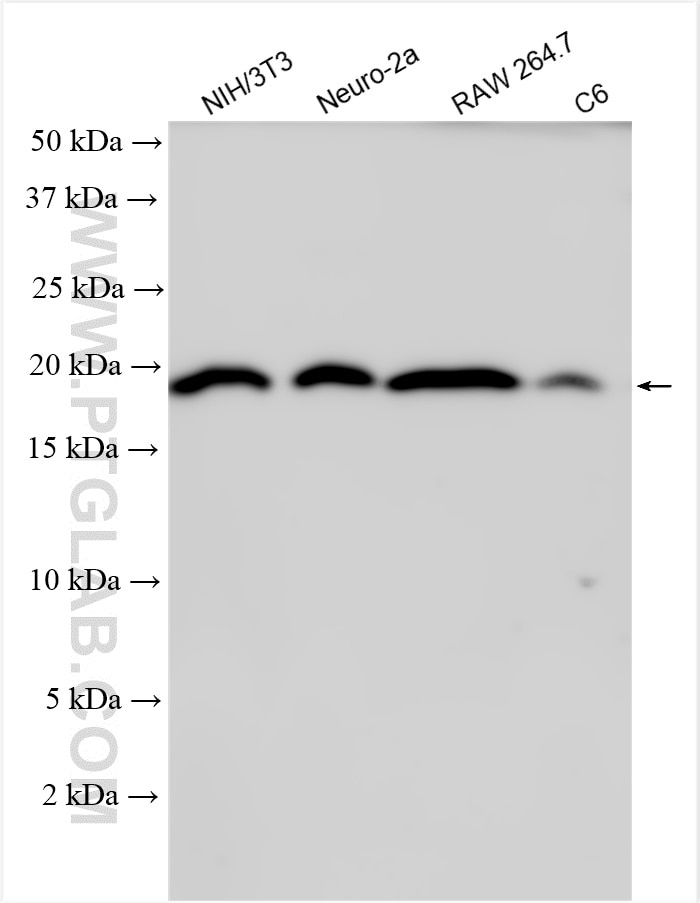
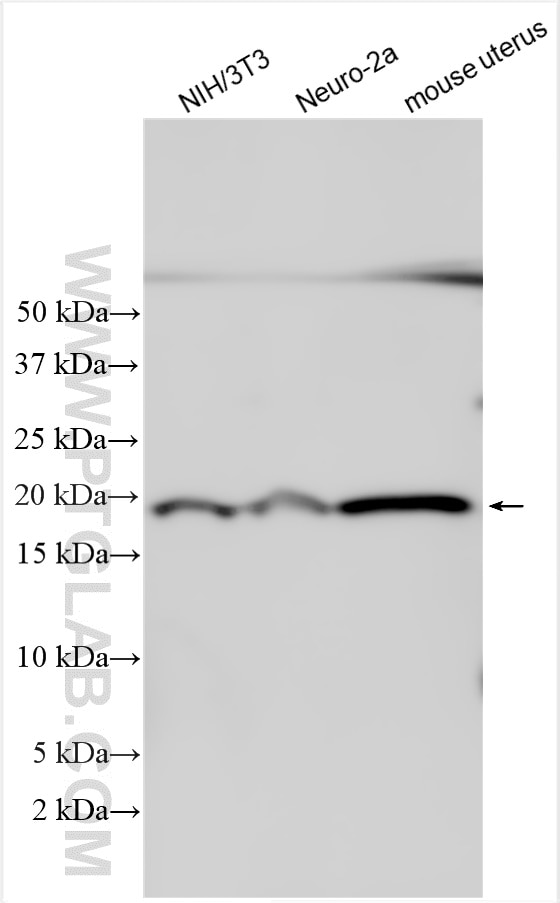
| Positive WB detected in | NIH/3T3 cells, Neuro-2a cells, RAW 264.7 cells, C6 cells, mouse uterus tissue |
Recommended dilution
| Application | Dilution |
|---|---|
| Western Blot (WB) | WB : 1:500-1:2000 |
| It is recommended that this reagent should be titrated in each testing system to obtain optimal results. | |
| Sample-dependent, Check data in validation data gallery. | |
Product Information
28416-1-AP targets CDKN2A/P16-INK4A in WB, IHC, IF, ELISA applications and shows reactivity with mouse, rat samples.
| Tested Reactivity | mouse, rat |
| Cited Reactivity | human, mouse, rat |
| Host / Isotype | Rabbit / IgG |
| Class | Polyclonal |
| Type | Antibody |
| Immunogen |
CatNo: Ag28927 Product name: Recombinant mouse Cdkn2a protein Source: e coli.-derived, PGEX-4T Tag: GST Domain: 1-168 aa of NM_001040654 Sequence: MESAADRLARAAAQGRVHDVRALLEAGVSPNAPNSFGRTPIQVMMMGNVHVAALLLNYGADSNCEDPTTFSRPVHDAAREGFLDTLVVLHGSGARLDVRDAWGRLPLDLAQERGHQDIVRYLRSAGCSLCSAGWSLCTAGNVAQTDGHSFSSSTPRALELRGQSQEQS Predict reactive species |
| Full Name | cyclin-dependent kinase inhibitor 2A |
| Calculated Molecular Weight | 18 kDa |
| Observed Molecular Weight | 18-23 kDa |
| GenBank Accession Number | NM_001040654 |
| Gene Symbol | Cdkn2a |
| Gene ID (NCBI) | 12578 |
| RRID | AB_3086048 |
| Conjugate | Unconjugated |
| Form | Liquid |
| Purification Method | Antigen affinity purification |
| UNIPROT ID | P51480 |
| Storage Buffer | PBS with 0.02% sodium azide and 50% glycerol, pH 7.3. |
| Storage Conditions | Store at -20°C. Stable for one year after shipment. Aliquoting is unnecessary for -20oC storage. 20ul sizes contain 0.1% BSA. |
Background Information
p16INK4a is a pivotal protein encoded by the CDKN2A gene on human chromosome 9p21. It functions as a tumor suppressor and is one of the most important regulators of the cell cycle. It acts as a cyclin-dependent kinase (CDK) inhibitor, specifically binding to CDK4 and CDK6 and blocking their association with cyclin D. Beyond cell-cycle control, p16INK4a is a key mediator of cellular senescence-an irreversible growth-arrest state that limits the expansion of damaged or oncogene-expressing cells. Its expression rises with age and in response to stresses such as DNA damage or oncogenic signaling, making it a biomarker of both biological aging and tumorigenic stress. In human cancers, the p16INK4a-RB pathway is frequently disabled through CDKN2A deletion, mutation, or promoter hyper-methylation, underscoring its importance in tumor suppression.
Protocols
| Product Specific Protocols | |
|---|---|
| WB protocol for CDKN2A/P16-INK4A antibody 28416-1-AP | Download protocol |
| Standard Protocols | |
|---|---|
| Click here to view our Standard Protocols |
Publications
What published studies show
The CDKN2A/P16-INK4A polyclonal antibody (Cat# 28416-1-AP) has 36 citations published in journals including Nature Aging, Nature Communications, Biomaterials, Advanced Materials, Autophagy, Cell Reports, Aging Cell, Journal of Controlled Release, Free Radical Biology and Medicine, and others. Research fields span cellular senescence and aging, intervertebral disc degeneration, osteoarthritis, liver fibrosis, Alzheimer's disease, pulmonary fibrosis, cardiovascular aging, osteoporosis, rheumatoid arthritis, and prostate cancer.
| Species | Application | Title |
|---|---|---|
Adv Mater Ionizable Coenzyme-Engineered Lipid/Fiber Microplexes Boost Ribosomal Translation to Improve mRNA Therapy for Degenerative Diseases. | ||
Nat Aging Single-cell and spatial RNA sequencing identify divergent microenvironments and progression signatures in early- versus late-onset prostate cancer | ||
Autophagy Oxidative stress-preconditioned exosomes target BMF to restore mitophagy for alleviating intervertebral disc degeneration. | ||
Nat Commun Targeting NAT10 alleviates colonic senescence and elderly-onset colitis by disrupting N4-acetylation of DYRK1A | ||
Adv Sci (Weinh) Inhibiting cGAS-STING to Preserve Mitochondrial-Nuclear Communication and Stemness in Young Tendon Stem Cells: A Hydrogel Strategy against Age-Related Tendinopathy. | ||
Biomaterials Ultrasound-responsive piezoelectric hydrogel attenuates oxidative stress-induced nucleus pulposus senescence via AMPK-FOXO1a-mediated mitophagy for intervertebral disc regeneration. |



