



Tested Applications
| Positive WB detected in | HeLa cells, SH-SY5Y cells, Jurkat cells |
| Positive IHC detected in | human placenta tissue Note: suggested antigen retrieval with TE buffer pH 9.0; (*) Alternatively, antigen retrieval may be performed with citrate buffer pH 6.0 |
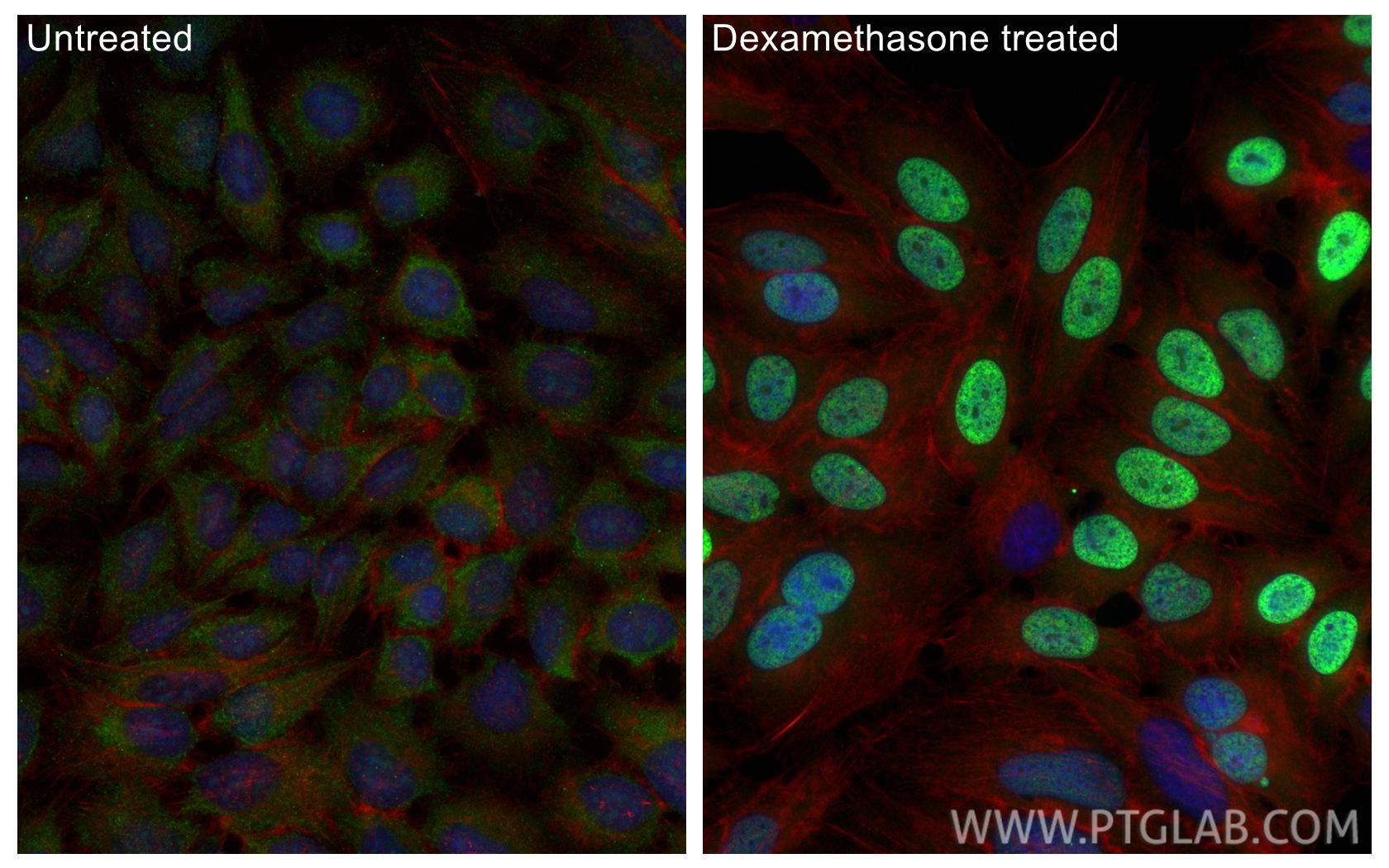
| Positive IF/ICC detected in | Dexamethasone treated HepG2 cells |
Recommended dilution
| Application | Dilution |
|---|---|
| Western Blot (WB) | WB : 1:1000-1:8000 |
| Immunohistochemistry (IHC) | IHC : 1:20-1:200 |
| Immunofluorescence (IF)/ICC | IF/ICC : 1:300-1:1200 |
| It is recommended that this reagent should be titrated in each testing system to obtain optimal results. | |
| Sample-dependent, Check data in validation data gallery. | |
Product Information
23317-1-AP targets p57Kip2 in WB, IHC, IF/ICC, CoIP, ELISA applications and shows reactivity with human samples.
| Tested Reactivity | human |
| Cited Reactivity | human |
| Host / Isotype | Rabbit / IgG |
| Class | Polyclonal |
| Type | Antibody |
| Immunogen |
CatNo: Ag19849 Product name: Recombinant human CDKN1C protein Source: e coli.-derived, PGEX-4T Tag: GST Domain: 1-316 aa of BC067842 Sequence: MSDASLRSTSTMERLVARGTFPVLVRTSACRSLFGPVDHEELSRELQARLAELNAEDQNRWDYDFQQDMPLRGPGRLQWTEVDSDSVPAFYRETVQVGRCRLLLAPRPVAVAVAVSPPLEPAAESLDGLEEAPEQLPSVPVPAPASTPPPVPVLAPAPAPAPAPVAAPVAAPVAVAVLAPAPAPAPAPAPAPAPVAAPAPAPAPAPAPAPAPAPAPDAAPQESAEQGANQGQRGQEPLADQLHSGISGRPAAGTAAASANGAAIKKLSGPLISDFFAKRKRSAPEKSSGDVPAPCPSPSAAPGVGSVEQTPRKRLR Predict reactive species |
| Full Name | cyclin-dependent kinase inhibitor 1C (p57, Kip2) |
| Calculated Molecular Weight | 316 aa, 32 kDa |
| Observed Molecular Weight | 57 kDa |
| GenBank Accession Number | BC067842 |
| Gene Symbol | p57 Kip2/CDKN1C |
| Gene ID (NCBI) | 1028 |
| RRID | AB_2879254 |
| Conjugate | Unconjugated |
| Form | Liquid |
| Purification Method | Antigen affinity purification |
| UNIPROT ID | P49918 |
| Storage Buffer | PBS with 0.02% sodium azide and 50% glycerol, pH 7.3. |
| Storage Conditions | Store at -20°C. Stable for one year after shipment. Aliquoting is unnecessary for -20oC storage. 20ul sizes contain 0.1% BSA. |
Background Information
CDKN1C, also named as p57KIP2 and KIP2, belongs to the CDI family. CDKN1C is a potent tight-binding inhibitor of several G1 cyclin/CDK complexes (cyclin E-CDK2, cyclin D2-CDK4, and cyclin A-CDK2) and, to lesser extent, of the mitotic cyclin B-CDC2. It is a negative regulator of cell proliferation. CDKN1C may play a role in maintenance of the non-proliferative state throughout life.
Protocols
| Product Specific Protocols | |
|---|---|
| IF protocol for p57Kip2 antibody 23317-1-AP | Download protocol |
| IHC protocol for p57Kip2 antibody 23317-1-AP | Download protocol |
| WB protocol for p57Kip2 antibody 23317-1-AP | Download protocol |
| Standard Protocols | |
|---|---|
| Click here to view our Standard Protocols |
Publications
What published studies show
The p57Kip2 Polyclonal antibody (Cat# 23317-1-AP) has 11 citations. These appear in journals including Molecular Cell, Cell Death & Disease, Clinical Cancer Research, Oncogene, Neoplasia, European Journal of Medical Research, FASEB Journal, Cancer Medicine, Experimental Cell Research, and Reproduction Biology. Research fields span cancer biology (bladder, lung, prostate, liver, neuroblastoma, renal cell carcinoma), cell cycle regulation, DNA mismatch repair, stem cell rejuvenation, and ovarian granulosa cell growth, with applications mainly in Western blot and IHC.
| Species | Application | Title |
|---|---|---|
Cell Death Dis The FOXM1/RNF26/p57 axis regulates the cell cycle to promote the aggressiveness of bladder cancer. | ||
Clin Cancer Res microRNA-221 Enhances MYCN via Targeting Nemo-like Kinase and Functions as an Oncogene Related to Poor Prognosis in Neuroblastoma. | ||
Oncogene Dual network analysis of transcriptome data for discovery of new therapeutic targets in non-small cell lung cancer | ||
Oncogene PTPRZ1 dephosphorylates and stabilizes RNF26 to reduce the efficacy of TKIs and PD-1 blockade in ccRCC | ||
Neoplasia FAM111B enhances glycolysis and promotes metastasis of prostate cancer by upregulating LDHA |




