

Tested Applications
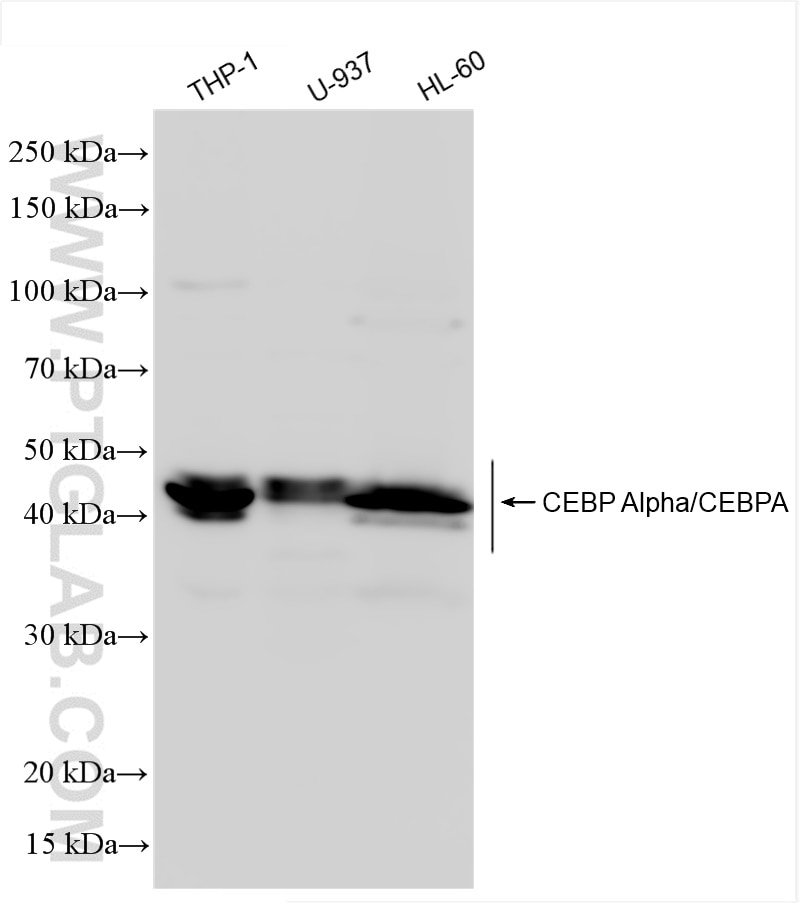
| Positive WB detected in | THP-1 cells, U-937 cells, HL-60 cells |
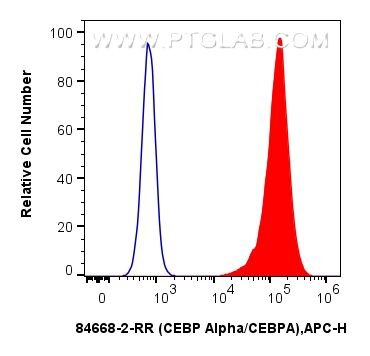
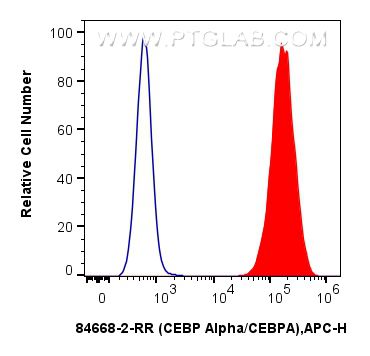
| Positive FC (Intra) detected in | HeLa cells, HepG2 cells |
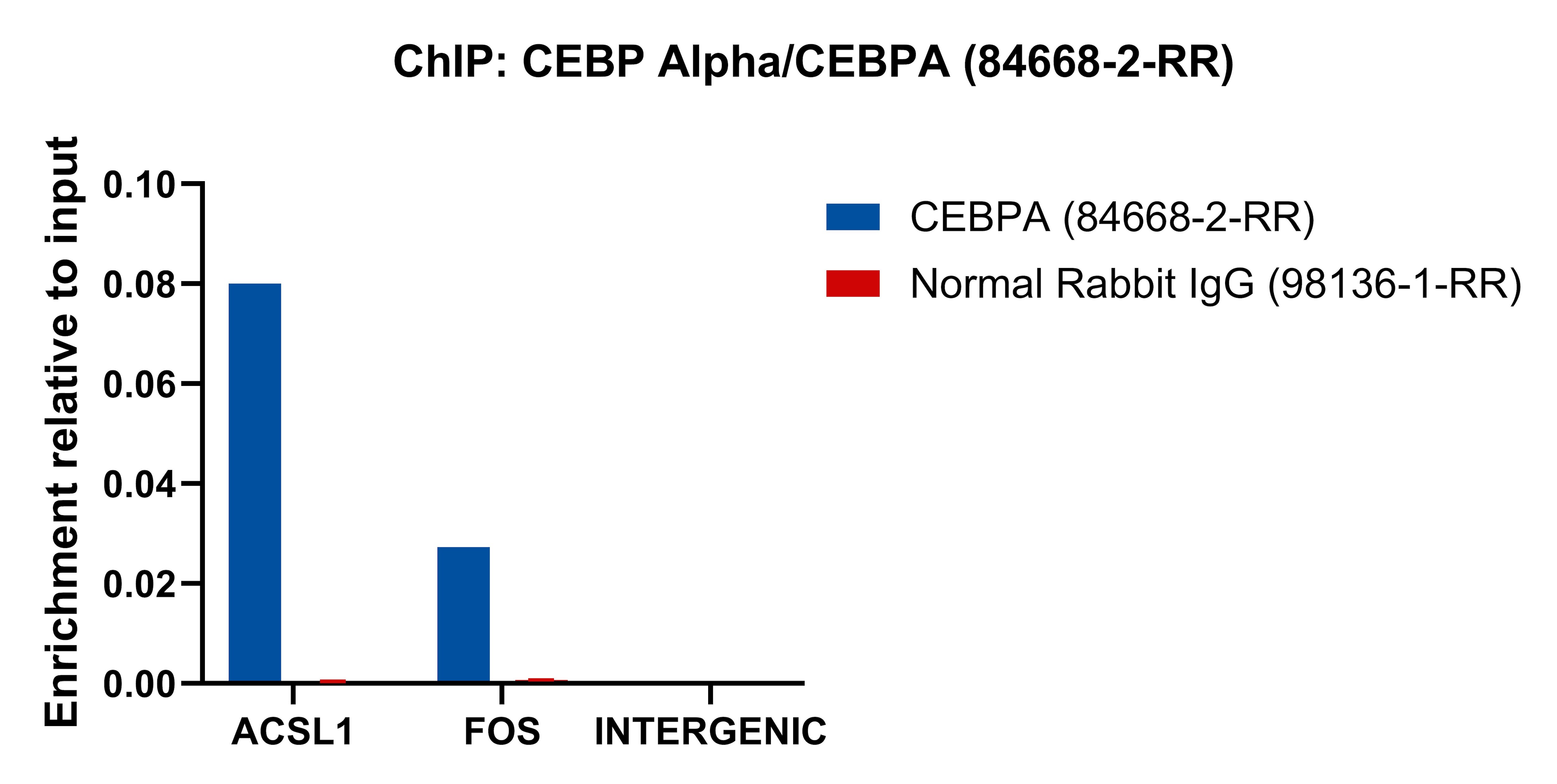
| Positive ChIP-qPCR detected in | THP-1 cells |
Recommended dilution
| Application | Dilution |
|---|---|
| Western Blot (WB) | WB : 1:5000-1:50000 |
| Flow Cytometry (FC) (INTRA) | FC (INTRA) : 0.25 ug per 10^6 cells in a 100 µl suspension |
| CHIP-QPCR | CHIP-QPCR : 1:10-1:100 |
| It is recommended that this reagent should be titrated in each testing system to obtain optimal results. | |
| Sample-dependent, Check data in validation data gallery. | |
Product Information
84668-2-RR targets CEBP Alpha/CEBPA in WB, FC (Intra), ELISA, ChIP-qPCR applications and shows reactivity with human samples.
| Tested Reactivity | human |
| Cited Reactivity | human |
| Host / Isotype | Rabbit / IgG |
| Class | Recombinant |
| Type | Antibody |
| Immunogen |
CatNo: Ag29947 Product name: Recombinant human CEBPA protein Source: e coli.-derived, PGEX-4T Tag: GST Domain: 1-125 aa of NM_004364 Sequence: MESADFYEAEPRPPMSSHLQSPPHAPSSAAFGFPRGAGPAQPPAPPAAPEPLGGICEHETSIDISAYIDPAAFNDEFLADLFQHSRQQEKAKAAVGPTGGGGGGDFDYPGAPAGPGGAVMPGGAH Predict reactive species |
| Full Name | CCAAT/enhancer binding protein (C/EBP), alpha |
| Calculated Molecular Weight | 38 kDa |
| Observed Molecular Weight | 40-45 kDa |
| GenBank Accession Number | NM_004364 |
| Gene Symbol | CEBPA |
| Gene ID (NCBI) | 1050 |
| RRID | AB_3743646 |
| Conjugate | Unconjugated |
| Form | Liquid |
| Purification Method | Protein A purification |
| UNIPROT ID | P49715 |
| Storage Buffer | PBS with 0.02% sodium azide and 50% glycerol, pH 7.3. |
| Storage Conditions | Store at -20°C. Stable for one year after shipment. Aliquoting is unnecessary for -20oC storage. 20ul sizes contain 0.1% BSA. |
Background Information
CEBPA and its isoforms play important roles in lineage determination and gene activation in a variety of cell types by activating transcription from lineage-specific promoters. CEBPA is a DNA-binding protein that recognizes two different motifs: the CCAAT homology common to many promoters and the enhanced core homology common to many enhancers. In hematopoiesis, C/EBPa is a key factor in driving the development of myeloid cells interacting with a variety of factors, including c-Myc, PU.1, and microRNAs. It can also form heterodimers with the related proteins CEBP-beta and CEBP-gamma. The encoded protein has been shown to bind to the promoter and modulate the expression of the gene encoding leptin which plays an important role in body weight homeostasis. CEBPA can interact with CDK2 and CDK4, thereby inhibiting these kinases and causing growth arrest in cultured cells. Several pathways have been implicated as the means by which CEBPA mediates cell cycle arrest and proliferation, including p21, cyclin-dependent kinases and the E2F complex via c-Myc. The calcualted molecular weight of CEBPA is 38 kDa, but modified CEBPA is about 42 kDa (PMID: 19623175).
Protocols
| Product Specific Protocols | |
|---|---|
| WB protocol for CEBP Alpha/CEBPA antibody 84668-2-RR | Download protocol |
| Standard Protocols | |
|---|---|
| Click here to view our Standard Protocols |
Publications
What published studies show
The CEBP Alpha/CEBPA Recombinant monoclonal antibody (clone 242101C10), catalog number 84668-2-RR, has 1 total citation. It appears in Experimental Cell Research, in a study investigating a nucleus-associated miR-661-C/EBPα-PPARγ regulatory axis that skews bone marrow stromal cell (BMSC) lineage commitment in subchondral osteonecrosis of the femoral head (SONFH). The associated research fields include transcriptional regulation, cell fate determination, and bone pathology.
| Species | Application | Title |
|---|---|---|
Exp Cell Res A nucleus-associated miR-661-C/EBPα-PPARγ regulatory axis skews BMSC lineage commitment in SONFH. |






