

Tested Applications
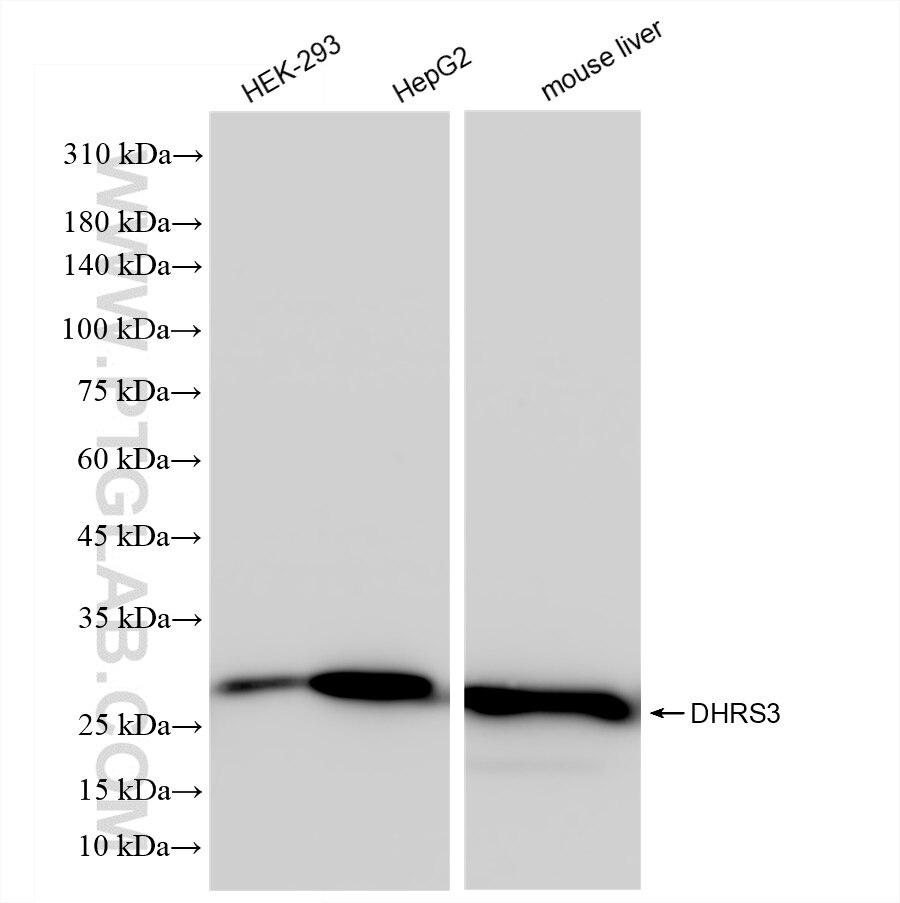
| Positive WB detected in | HEK-293 cells, HepG2 cells, mouse liver tissue |
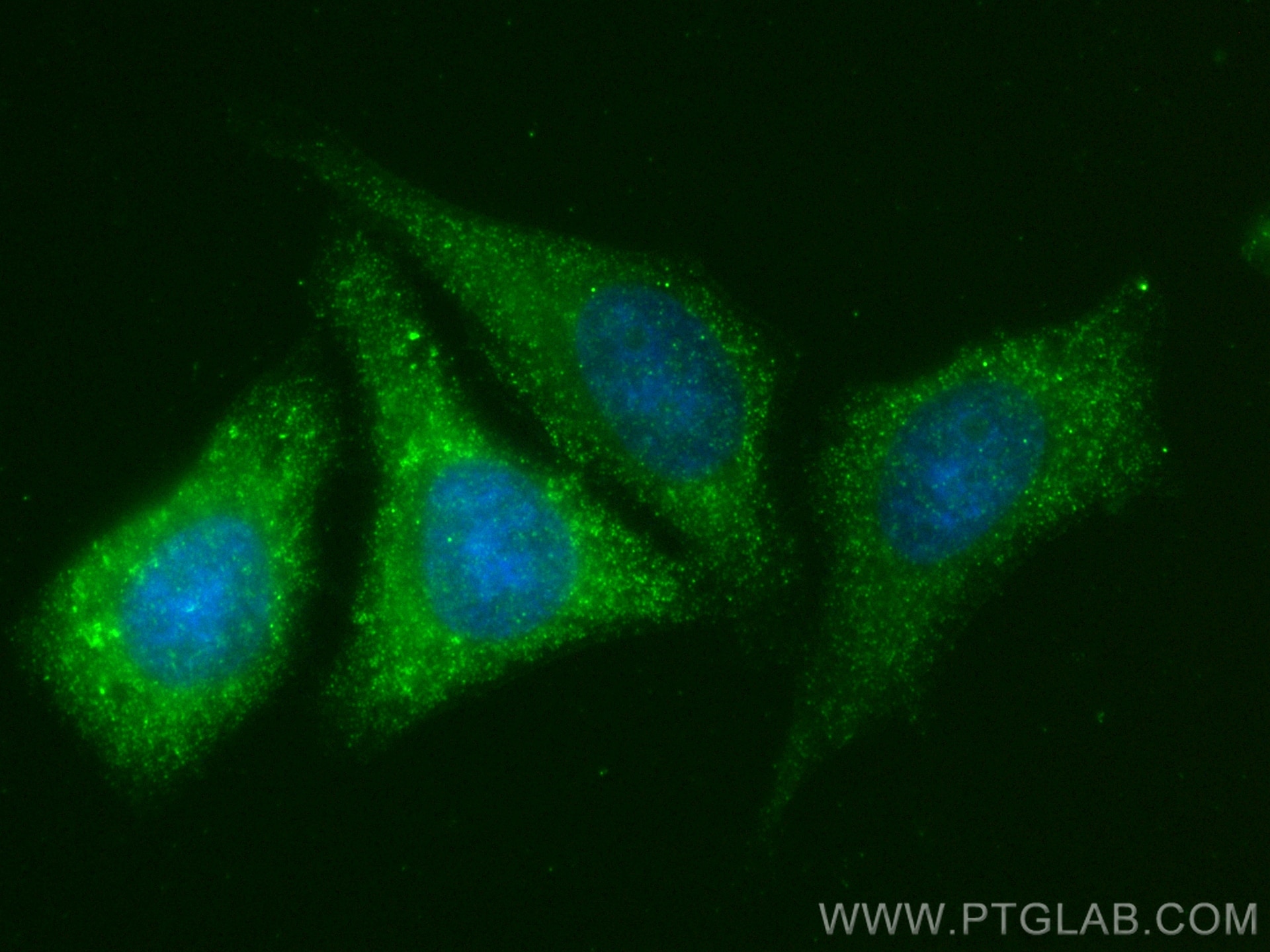
| Positive IF/ICC detected in | HepG2 cells |
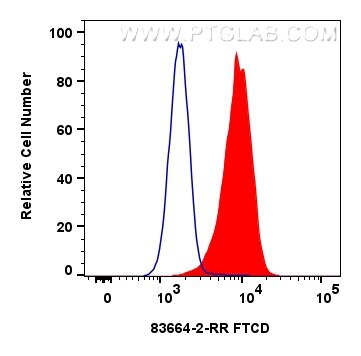
| Positive FC (Intra) detected in | HepG2 cells |
Recommended dilution
| Application | Dilution |
|---|---|
| Western Blot (WB) | WB : 1:5000-1:50000 |
| Immunofluorescence (IF)/ICC | IF/ICC : 1:50-1:500 |
| Flow Cytometry (FC) (INTRA) | FC (INTRA) : 0.25 ug per 10^6 cells in a 100 µl suspension |
| It is recommended that this reagent should be titrated in each testing system to obtain optimal results. | |
| Sample-dependent, Check data in validation data gallery. | |
Product Information
83581-3-RR targets DHRS3 in WB, IF/ICC, FC (Intra), ELISA applications and shows reactivity with human, mouse, rat samples.
| Tested Reactivity | human, mouse, rat |
| Host / Isotype | Rabbit / IgG |
| Class | Recombinant |
| Type | Antibody |
| Immunogen |
CatNo: Ag7589 Product name: Recombinant human DHRS3 protein Source: e coli.-derived, PGEX-4T Tag: GST Domain: 1-302 aa of BC002730 Sequence: MVWKRLGALVMFPLQMIYLVVKAAVGLVLPAKLRDLSRENVLITGGGRGIGRQLAREFAERGARKIVLWGRTEKCLKETTEEIRQMGTECHYFICDVGNREEVYQTAKAVREKVGDITILVNNAAVVHGKSLMDSDDDALLKSQHINTLGQFWTTKAFLPRMLELQNGHIVCLNSVLALSAIPGAIDYCTSKASAFAFMESLTLGLLDCPGVSATTVLPFHTSTEMFQGMRVRFPNLFPPLKPETVARRTVEAVQLNQALLLLPWTMHALVILKSILPQAALEEIHKFSGTYTCMNTFKGRT Predict reactive species |
| Full Name | dehydrogenase/reductase (SDR family) member 3 |
| Calculated Molecular Weight | 34 kDa |
| Observed Molecular Weight | 30-34 kDa |
| GenBank Accession Number | BC002730 |
| Gene Symbol | DHRS3 |
| Gene ID (NCBI) | 9249 |
| RRID | AB_3671195 |
| Conjugate | Unconjugated |
| Form | Liquid |
| Purification Method | Protein A purification |
| UNIPROT ID | O75911 |
| Storage Buffer | PBS with 0.02% sodium azide and 50% glycerol, pH 7.3. |
| Storage Conditions | Store at -20°C. Stable for one year after shipment. Aliquoting is unnecessary for -20oC storage. 20ul sizes contain 0.1% BSA. |
Background Information
DHRS3(Short-chain dehydrogenase/reductase 3) is also named as retSDR1,DD83.1 and belongs to the short-chain dehydrogenases/reductases (SDR) family. It catalyzes the reduction of all-trans-retinal to all-trans-retinol in the presence of NADPH. It is detected high levels of expression in fetal kidney, liver, and lung and in adult heart, placenta, lung, liver, kidney, pancreas, thyroid, testis, stomach, trachea, spinal cord and lower levels in skeletal muscle, intestine, and lymph node. retSDR1 is barely detectable in adrenals, brain, thymus, and hematopoietic tissues(PMID:11861404). retSDR1 may play a more general role in retinol metabolism since its expression was observed in many fetal and adult tissues(PMID:20543567).
Protocols
| Product Specific Protocols | |
|---|---|
| FC protocol for DHRS3 antibody 83581-3-RR | Download protocol |
| IF protocol for DHRS3 antibody 83581-3-RR | Download protocol |
| WB protocol for DHRS3 antibody 83581-3-RR | Download protocol |
| Standard Protocols | |
|---|---|
| Click here to view our Standard Protocols |
Publications
What published studies show
The DHRS3 Recombinant monoclonal antibody (240545D8), catalog number 83581-3-RR, has a total of 1 citation. It appears in Free Radical Biology and Medicine (IF: 8), published in 2026. The associated research field is cancer biology, specifically investigating YTHDF2-mediated m6A RNA modification of DHRS3 in driving radioresistance in esophageal squamous cell carcinoma through redox regulation at organelle contacts.
| Species | Application | Title |
|---|---|---|
Free Radic Biol Med YTHDF2-m6A regulation of DHRS3 at LRAT-organized organelle contacts orchestrates redox to drive radioresistance in esophageal squamous cell carcinoma. |





