

Tested Applications
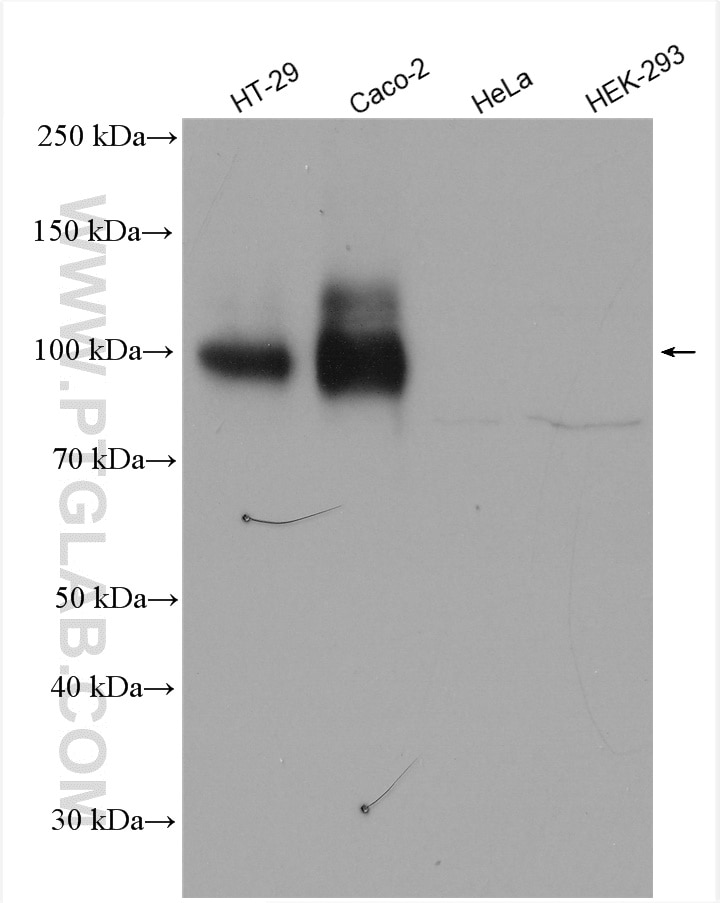
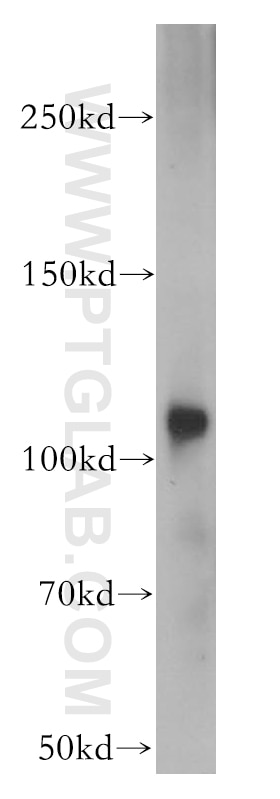
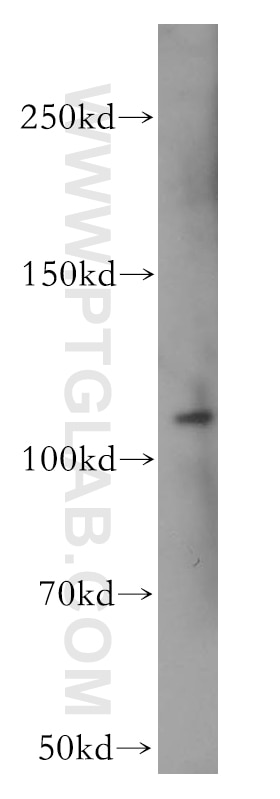
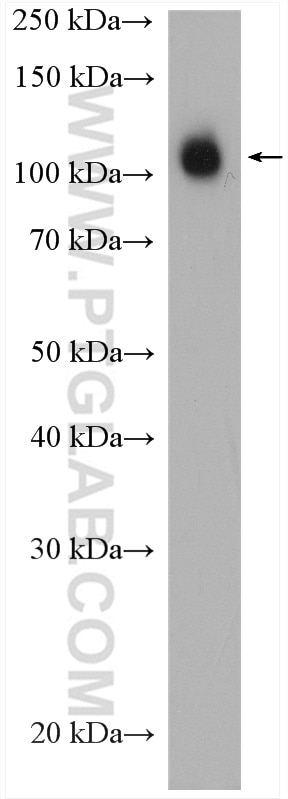
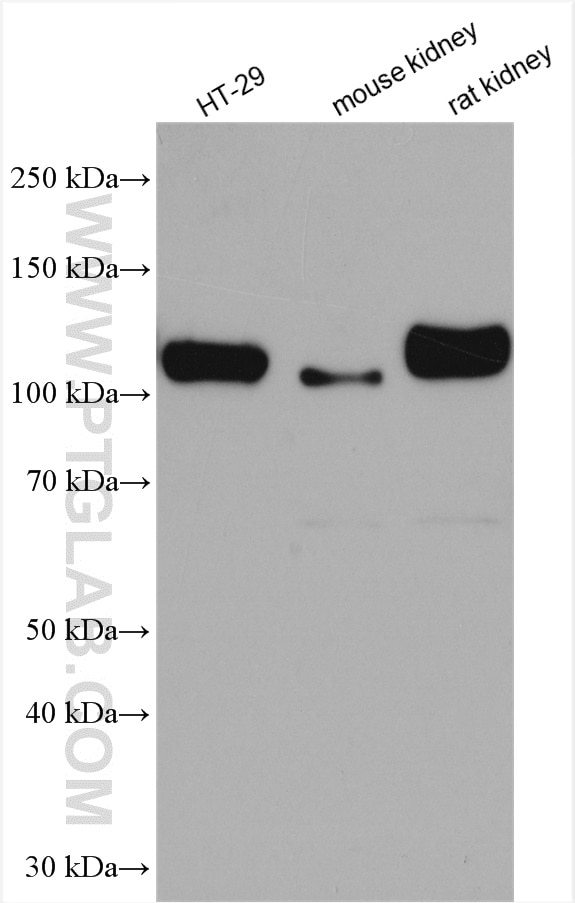
| Positive WB detected in | HT-29 cells, mouse kidney tissue, mouse pancreas tissue, rat kidney tissue, Caco-2 cells |
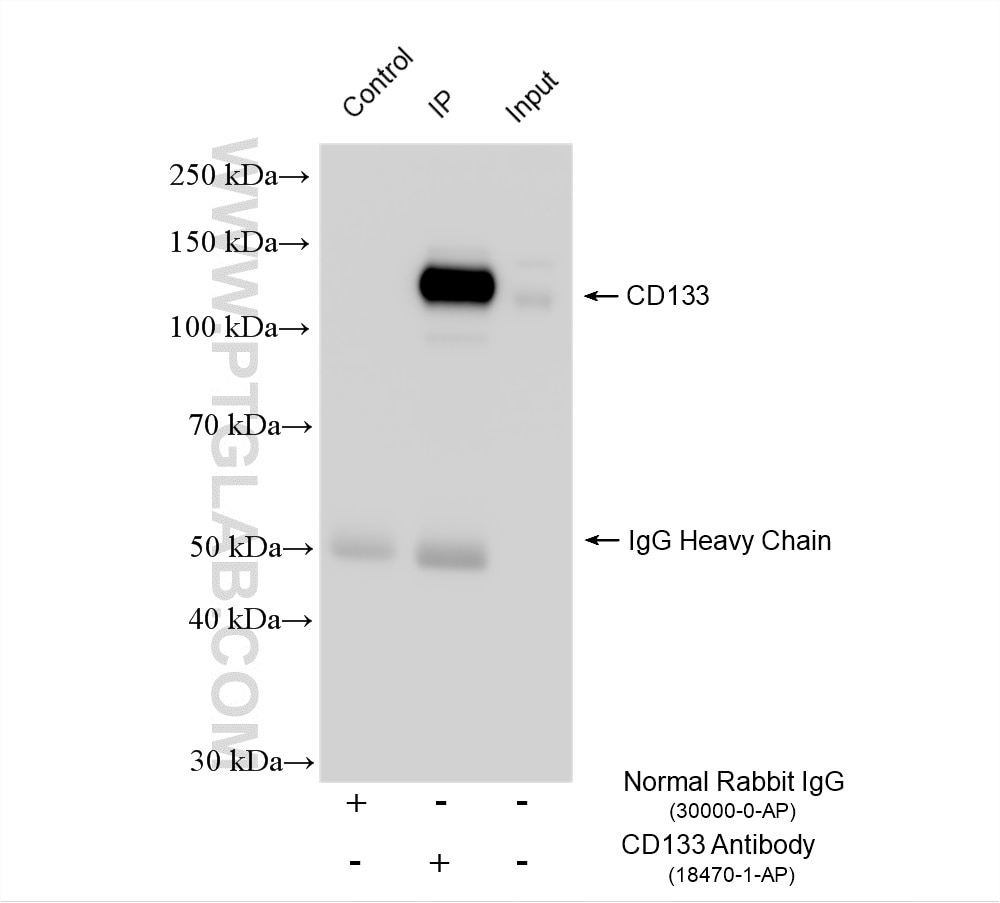
| Positive IP detected in | HT-29 cells |
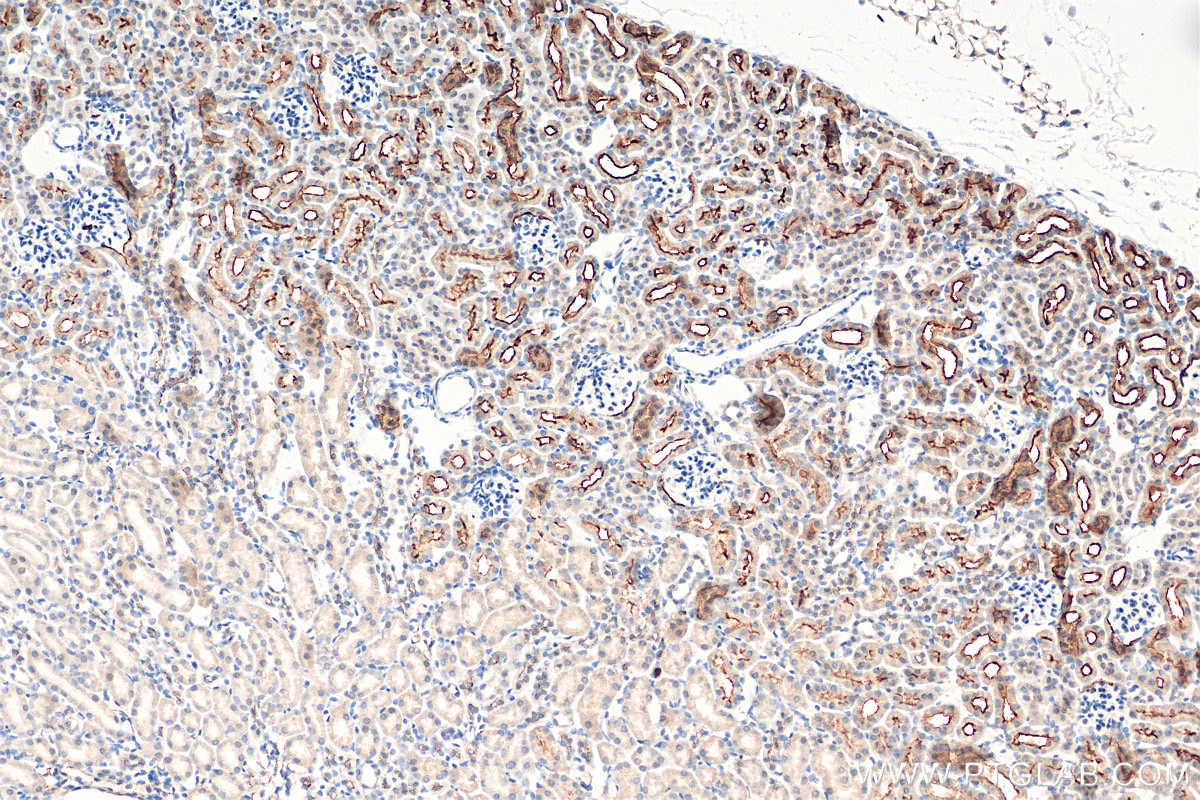
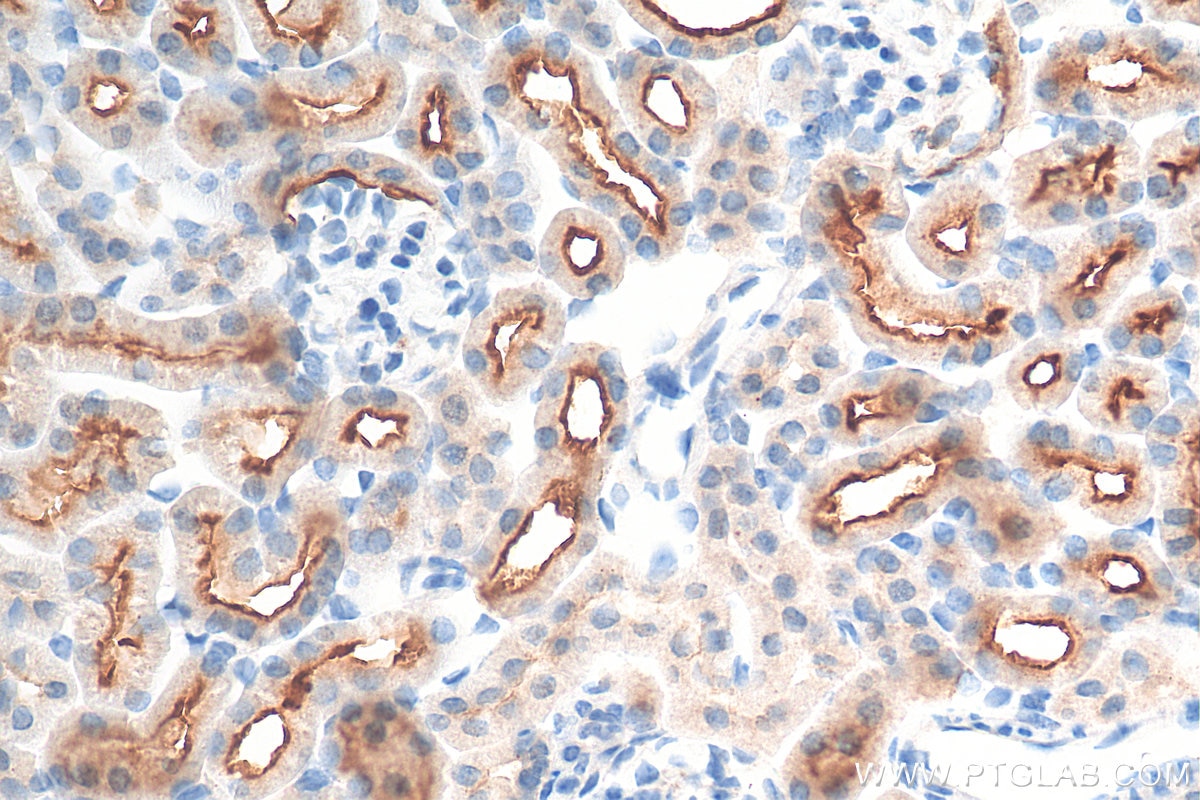
| Positive IHC detected in | mouse kidney tissue Note: suggested antigen retrieval with TE buffer pH 9.0; (*) Alternatively, antigen retrieval may be performed with citrate buffer pH 6.0 |
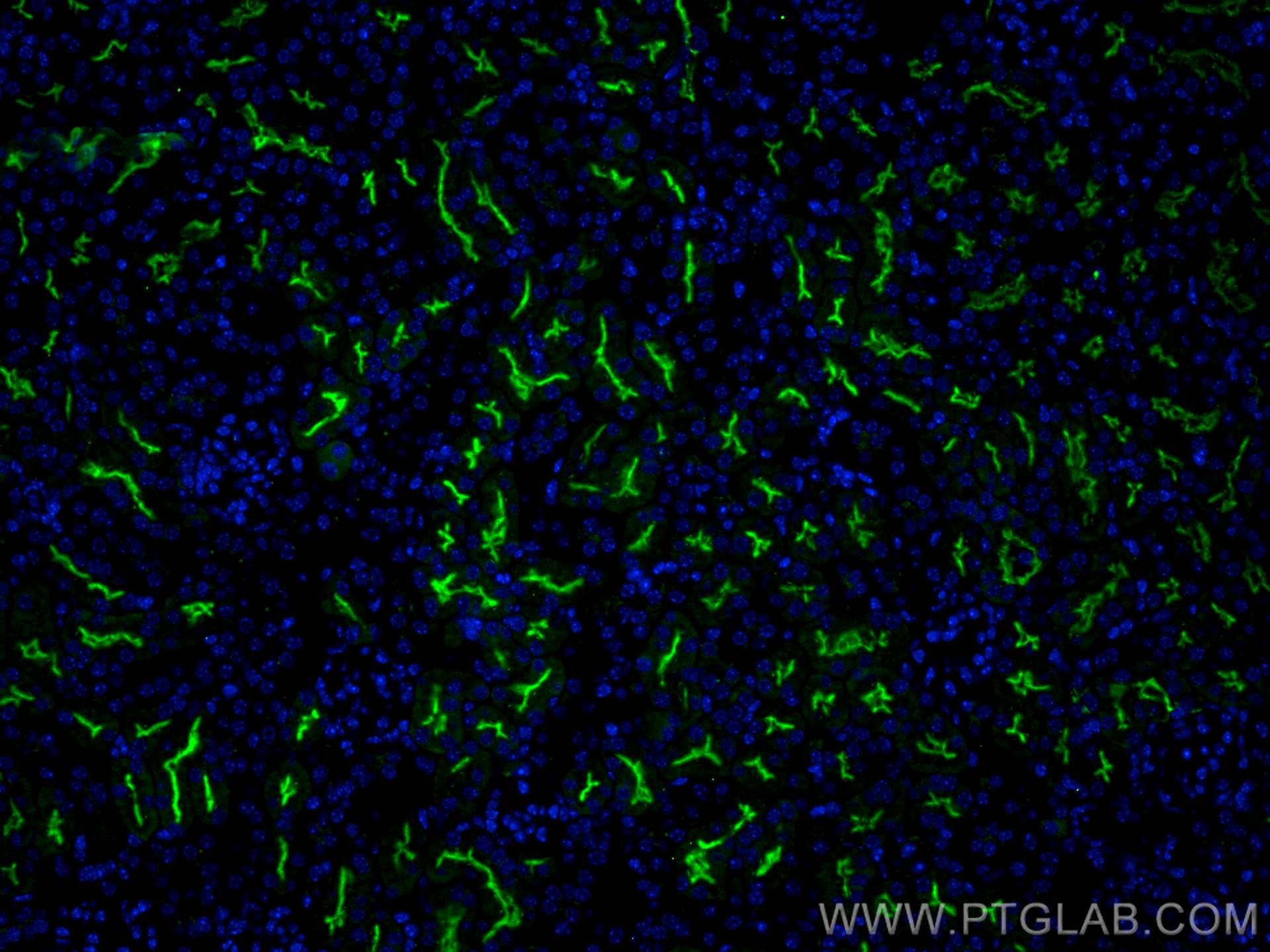
| Positive IF-P detected in | mouse kidney tissue |
Recommended dilution
| Application | Dilution |
|---|---|
| Western Blot (WB) | WB : 1:2000-1:10000 |
| Immunoprecipitation (IP) | IP : 0.5-4.0 ug for 1.0-3.0 mg of total protein lysate |
| Immunohistochemistry (IHC) | IHC : 1:4000-1:16000 |
| Immunofluorescence (IF)-P | IF-P : 1:50-1:500 |
| It is recommended that this reagent should be titrated in each testing system to obtain optimal results. | |
| Sample-dependent, Check data in validation data gallery. | |
Product Information
18470-1-AP targets CD133 in WB, IHC, IF-P, IP, ELISA applications and shows reactivity with human, mouse, rat samples.
| Tested Reactivity | human, mouse, rat |
| Cited Reactivity | human, mouse, rat |
| Host / Isotype | Rabbit / IgG |
| Class | Polyclonal |
| Type | Antibody |
| Immunogen |
CatNo: Ag13328 Product name: Recombinant human CD133 protein Source: e coli.-derived, PGEX-4T Tag: GST Domain: 806-856 aa of BC012089 Sequence: LAKYYRRMDSEDVYDDVETIPMKNMENGNNGYHKDHVYGIHNPVMTSPSQH Predict reactive species |
| Full Name | prominin 1 |
| Calculated Molecular Weight | 97 kDa |
| Observed Molecular Weight | 115 kDa-120 kDa |
| GenBank Accession Number | BC012089 |
| Gene Symbol | CD133 |
| Gene ID (NCBI) | 8842 |
| RRID | AB_2172859 |
| Conjugate | Unconjugated |
| Form | Liquid |
| Purification Method | Antigen affinity purification |
| UNIPROT ID | O43490 |
| Storage Buffer | PBS with 0.02% sodium azide and 50% glycerol, pH 7.3. |
| Storage Conditions | Store at -20°C. Stable for one year after shipment. Aliquoting is unnecessary for -20oC storage. 20ul sizes contain 0.1% BSA. |
Background Information
CD133, also known as PROM1 (prominin-1) or AC133, belongs to the prominin family. CD133 is a transmembrane glycoprotein with an NH2-terminal extracellular domain, five transmembrane loops and a cytoplasmic tail. The expression of CD133 has been reported in hematopoietic stem cells, endothelial progenitor cells, neuronal and glial stem cells, suggesting the potential role of CD133 as a cell surface marker of adult stem cells. CD133 has also been reported as a marker of cancer stem cells in various human tumors.
Protocols
| Product Specific Protocols | |
|---|---|
| IF protocol for CD133 antibody 18470-1-AP | Download protocol |
| IHC protocol for CD133 antibody 18470-1-AP | Download protocol |
| IP protocol for CD133 antibody 18470-1-AP | Download protocol |
| WB protocol for CD133 antibody 18470-1-AP | Download protocol |
| Standard Protocols | |
|---|---|
| Click here to view our Standard Protocols |
Publications
What published studies show
The CD133 Polyclonal antibody (Cat# 18470-1-AP) has 321 total citations. Publications appear in high-impact journals including Cell Stem Cell, Nature Cell Biology, Cancer Research, Nature Communications, Theranostics, Cell Death & Differentiation, Oncogene, Advanced Science, and Journal of Experimental & Clinical Cancer Research. Research fields predominantly encompass cancer stem cell biology, glioblastoma, hepatocellular carcinoma, colorectal cancer, and lung cancer, with emphasis on stemness maintenance, EMT, chemoresistance, and signaling pathways such as Wnt/β-catenin, Notch, PI3K/AKT, and STAT3.
| Species | Application | Title |
|---|---|---|
Cell Stem Cell Glioblastoma stem cell-specific histamine secretion drives pro-angiogenic tumor microenvironment remodeling | ||
Nat Cell Biol Merkel cell polyomavirus activates LSD1-mediated blockade of non-canonical BAF to regulate transformation and tumorigenesis. | ||
Cancer Res Oncogenic Role of SND1 in Development and Progression of Hepatocellular Carcinoma. | ||
Cancer Res Low-dose IFN-γ induces tumor cell stemness in the tumor microenvironment of non-small cell lung cancer. | ||
Cancer Res STRAP promotes stemness of human colorectal cancer via epigenetic regulation of the NOTCH pathway. | ||
Autophagy ATP6V1D drives hepatocellular carcinoma stemness and progression via both lysosome acidification-dependent and -independent mechanisms |










